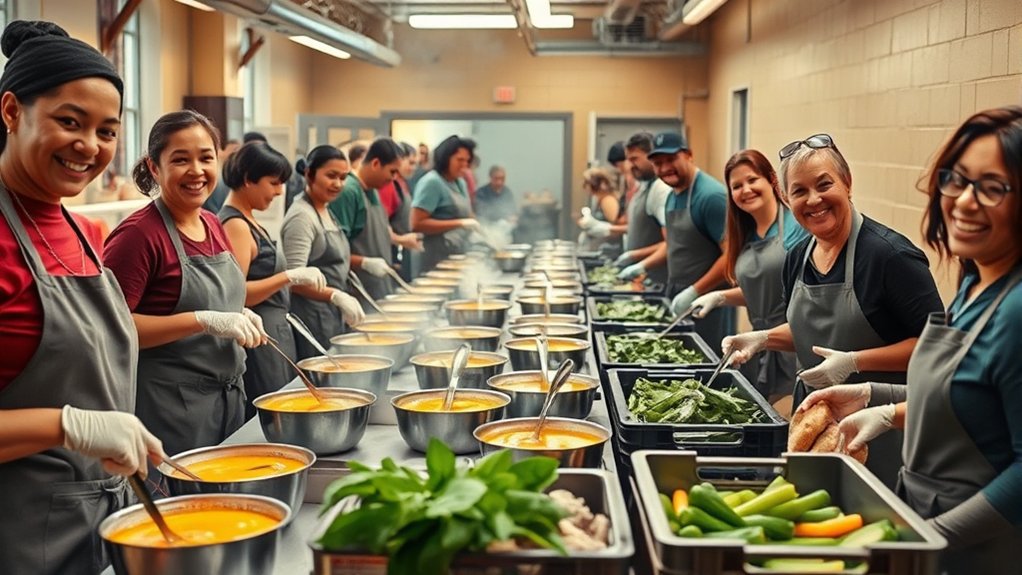
How Do I Volunteer at a Soup Kitchen
If you’re wondering how to volunteer at a soup kitchen, the first step is finding a place that fits your schedule and values. You might feel unsure about where to begin or what to expect, but reaching out to local organizations can clarify their current needs and how you can help.
Once you’ve made that connection, you’ll uncover ways to contribute that go beyond just serving meals. Volunteering at a soup kitchen can involve tasks like food preparation, organizing donations, or providing support to guests in other meaningful ways.
Finding a Local Soup Kitchen
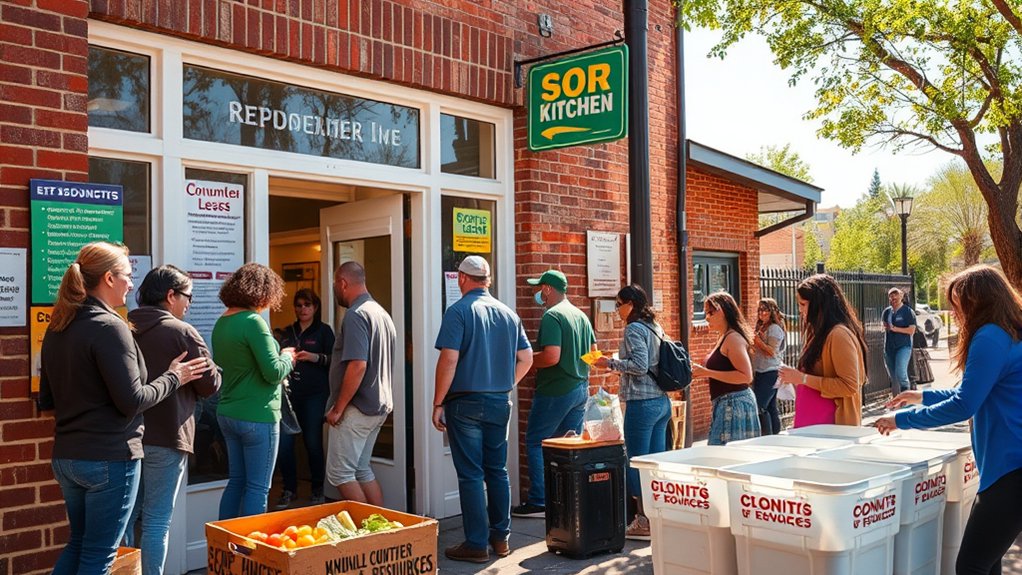
Where do you start when you want to give your time to a soup kitchen? Begin by researching local options. Check community centers, religious organizations, or online volunteer platforms. Finding a local soup kitchen that aligns with your schedule and values makes your contribution more meaningful.
Many soup kitchens rely heavily on finding volunteers like you to help with daily operations, from serving meals to organizing donations. When you reach out, ask about their current needs and how you can best support them, whether that’s prepping food, distributing meals, or sorting donated goods.
Remember, your willingness to step in and help eases their workload and benefits those in need. Don’t hesitate to connect with multiple organizations; this can increase your chances of finding a perfect fit.
How Often Can You Volunteer?
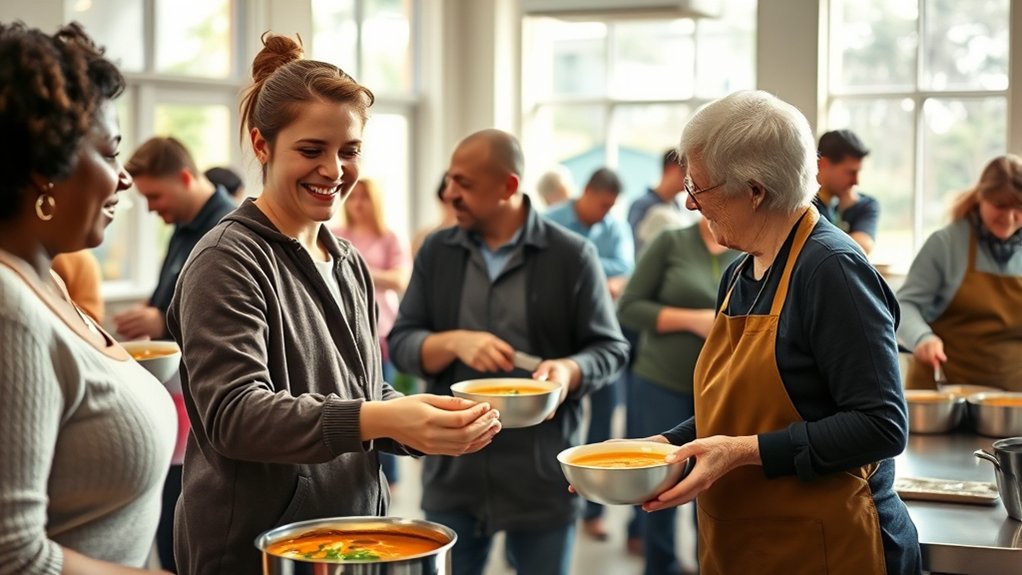
How often can you volunteer without feeling overwhelmed? It depends on your scheduling availability and personal energy. Start by assessing how much time you can realistically dedicate.
Volunteering regularly is rewarding, but overcommitting can lead to burnout. Soup kitchens often appreciate volunteers who have consistent availability, whether weekly, biweekly, or monthly.
Here’s a simple guide to help you decide:
| Frequency | Time Commitment | Ideal For |
|---|---|---|
| Weekly | 2-4 hours | Those with flexible schedules |
| Biweekly | 2-4 hours | People balancing work/family |
| Monthly | 2-4 hours | Busy individuals new to volunteering |
Volunteer Roles You Can Try at Soup Kitchens
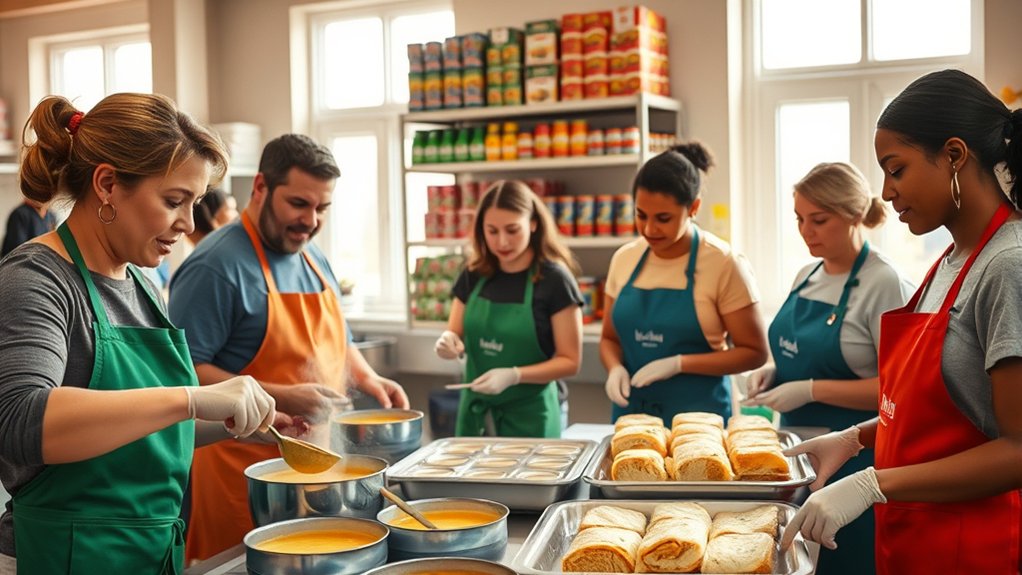
Once you’ve figured out how often you can volunteer, it’s helpful to explore the different roles available at a soup kitchen. Knowing the volunteer roles lets you find a position that fits your skills and comfort level.
Determining your volunteer schedule and understanding available roles helps match your skills and comfort at the soup kitchen.
You might start by assisting with meal preparation, which includes basic kitchen responsibilities like chopping vegetables or assembling plates. If you enjoy interacting with people, serving food or welcoming guests can be incredibly rewarding.
Some soup kitchens also need help with cleaning and organizing supplies, vital roles that keep the kitchen running smoothly. Remember, every task, big or small, contributes to the community’s well-being.
By choosing a role that suits you, you’ll feel more connected and motivated. Don’t hesitate to ask staff about their needs; they often appreciate volunteers who are flexible and eager to help.
Volunteering at a soup kitchen isn’t just about giving food; it’s about spreading kindness and hope through your actions.
Getting Ready for Your Volunteer Day
Preparing thoughtfully for your volunteer day sets the stage for a meaningful and smooth experience at the soup kitchen. Start by getting ready the night before. Lay out comfortable clothes that you don’t mind getting a bit messy, and check if the kitchen has specific dress codes like wearing closed-toe shoes or an apron.
Packing essentials is key. Bring a water bottle to stay hydrated, a small snack if the shift is long, and any personal items like hand sanitizer or a notepad if you want to jot down reflections. Don’t forget to carry your identification and any paperwork the organization might require.
Planning your transportation in advance ensures you arrive on time, reducing stress. By preparing carefully and packing essentials, you’ll feel confident and ready to focus on helping others. Your thoughtful preparation honors the commitment you’re making and helps create a positive impact from the moment you step through the door.
What to Expect on Your First Day Volunteering
Arriving at the soup kitchen for your first volunteer shift can bring a mix of excitement and nervousness. During your first day onboarding, you’ll likely start with a volunteer orientation where staff will introduce you to the kitchen’s layout, safety protocols, and your specific tasks.
This session helps you feel comfortable and prepared, so don’t hesitate to ask questions. You’ll meet other volunteers and team members, creating a supportive atmosphere right away. Expect to receive clear instructions, whether you’re serving meals, prepping food, or cleaning up.
The pace might feel fast at times, but remember, everyone’s there to help and learn together. Your efforts, no matter how small, contribute to a welcoming environment for those in need.
Embrace this new experience with an open heart and a willingness to grow. You’re making a meaningful difference from day one.
Tips to Make a Meaningful Impact at Soup Kitchens
You’ll make the biggest difference by listening carefully and speaking kindly to everyone you meet. Showing genuine respect and empathy helps create a welcoming space where people feel valued.
Effective Communication Skills
How can you connect deeply with those you serve at a soup kitchen? Start by practicing effective listening. Pay close attention to what people say and how they say it. This shows you value their experiences and helps you respond thoughtfully.
Use a clear tone when you speak, avoiding jargon or rushed words, so your message is easy to understand and welcoming. Remember, communication isn’t just about talking; it’s about creating a comfortable space where everyone feels heard.
Being mindful of your voice and body language can make interactions more genuine and impactful. When you communicate this way, you build trust and foster a meaningful connection that goes beyond handing out meals. Your words and attentiveness become a bridge to kindness and support.
Respectful and Empathetic Attitude
Why does showing respect and empathy matter so much when volunteering at a soup kitchen? Because your attitude shapes the experience for everyone involved. Respect and empathy build trust and dignity, essential for meaningful connections.
To maintain this, you must also guard against compassion fatigue, which can dull your sensitivity over time. Here’s how to practice a respectful and empathetic attitude:
- Listen actively without judgment, honoring each person’s story.
- Show cultural sensitivity by respecting diverse backgrounds and customs.
- Offer kindness, keeping in mind small gestures can have big impacts.
- Recognize your limits to prevent compassion fatigue and stay emotionally healthy.
How to Stay Connected and Volunteer at Soup Kitchens Long-Term
To make a lasting difference, you’ll want to build consistent volunteer habits that fit your schedule. Staying connected with the soup kitchen team helps you feel supported and part of a community.
Building Consistent Volunteer Habits
When do you feel most motivated to keep giving your time? Building consistent volunteer habits at a soup kitchen starts with recognizing your own motivation and using it to create lasting routines.
Effective time management plays a crucial role in this process. Here’s how you can build habits that stick:
- Schedule volunteer shifts like important appointments to prioritize your commitment.
- Set small, achievable goals to maintain enthusiasm and track progress.
- Reflect on your experiences regularly to stay connected with your purpose.
- Prepare for each visit by organizing what you’ll need, reducing stress and making volunteering easier.
Connecting With Soup Kitchen Teams
How can you deepen your connection with the soup kitchen team to make your volunteer experience more meaningful and sustainable? Start by engaging in open dialogue about volunteering culture. Ask questions, share your experiences, and listen actively to understand the team’s values and challenges. This builds trust and shows your genuine interest.
Consistent collaboration with kitchen staff is key. Offer your help beyond assigned tasks and be flexible when needs shift. By working side by side, you’ll foster strong relationships and a sense of community.
Staying connected means showing up with enthusiasm and respect, which encourages others to rely on you. When you feel part of the team, your commitment naturally grows, making your volunteer journey more rewarding and long-lasting.
Balancing Volunteering and Life
Wondering how you can keep volunteering at soup kitchens without feeling overwhelmed? Balancing volunteering and life requires intentional effort, but it’s definitely doable. Staying connected long-term means creating a sustainable rhythm that fits your lifestyle.
Here are four tips to help you maintain life balance while volunteering:
- Schedule shifts that complement your existing commitments to avoid burnout.
- Communicate openly with the soup kitchen team about your availability and limits.
- Set realistic goals for how often you can volunteer without sacrificing self-care.
- Reflect regularly on your experience to ensure volunteering remains fulfilling and energizing.
Frequently Asked Questions
Do I Need Any Special Training to Volunteer at a Soup Kitchen?
You don’t need special training, but you’ll likely attend a volunteer orientation and complete basic food safety training.
These steps prepare you to help safely, confidently, and compassionately, making your volunteer experience meaningful and impactful.
Are There Age Restrictions for Volunteering at Soup Kitchens?
Age requirements vary by soup kitchen, but many have volunteer programming for teens with parental consent. Check specific guidelines so you can contribute safely and meaningfully. Your willingness to help truly makes a difference!
Can I Volunteer at a Soup Kitchen if I Have Dietary Restrictions?
You might think dietary restrictions block your chance, but they don’t! Soup kitchens value dietary accommodations and follow strict food safety policies.
Just communicate your needs, and you’ll find meaningful ways to help and inspire others.
Is It Possible to Volunteer at Multiple Soup Kitchens Simultaneously?
Yes, you can manage simultaneous volunteering at multiple locations if you plan your schedule carefully. Balancing commitments shows dedication, and your efforts will make a bigger impact. Just communicate clearly with each kitchen to coordinate effectively.
How Do Soup Kitchens Handle Volunteer Background Checks?
Soup kitchens usually conduct background checks to guarantee safety, but they respect your privacy concerns by keeping your information confidential.
You can volunteer confidently, knowing they balance trust with protecting your personal details.