Are There Different Size Shower Heads
Imagine stepping into a shower where water cascades from a compact, focused stream or gently falls from a broad, rainfall-style head. You might not realize it, but there are different size shower heads available, each designed to deliver a distinct experience. Understanding these differences can help you choose the right fit for your space and water pressure needs.
But how exactly does size impact performance and comfort? Exploring the variety in shower head sizes reveals how they influence water flow, coverage, and overall shower enjoyment. Whether you prefer a concentrated spray or a wide, enveloping rinse, size plays a key role in your daily routine.
Key Takeaways
- Shower heads come in various sizes, typically ranging from 4 to 12 inches in diameter.
- Smaller heads (4 to 6 inches) focus water flow for higher perceived pressure and space efficiency.
- Larger heads (8 to 12 inches or more) provide broader coverage but may lower perceived pressure if flow is limited.
- Size affects spray radius, water pressure, and coverage area, influencing shower experience and water consumption.
- Material and style choices often vary by size to balance durability, aesthetics, and installation practicality.
What Are the Common Shower Head Sizes Available?
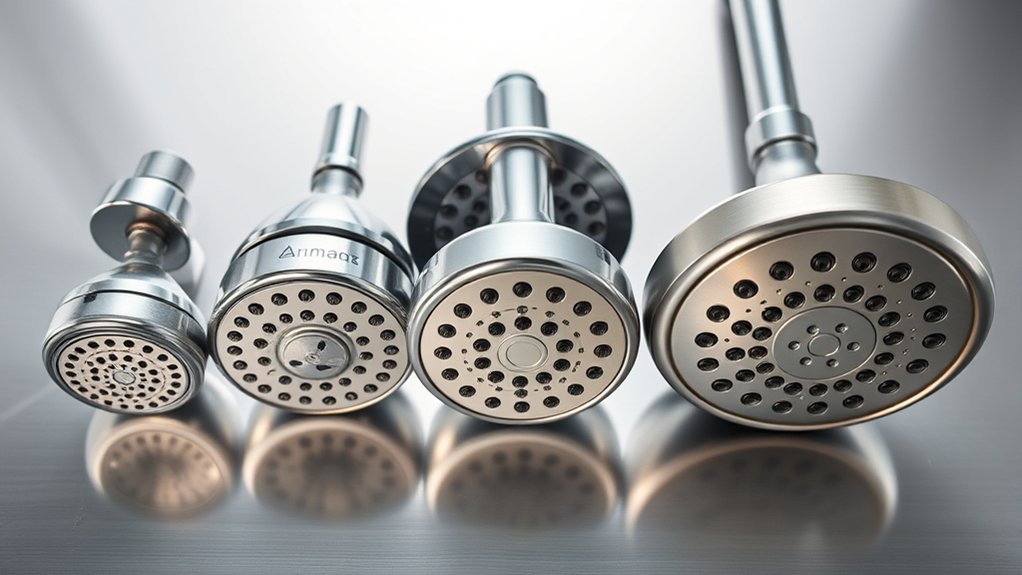
What sizes do shower heads typically come in? Most standard shower heads range from 4 to 12 inches in diameter. Smaller models, around 4 to 6 inches, focus water flow into a concentrated stream, enhancing water pressure.
Larger shower heads, often 8 to 12 inches or more, provide a broad coverage area but may reduce perceived water pressure if your plumbing system can’t supply sufficient flow. When conducting a size comparison, consider how diameter affects both spray radius and water pressure.
Larger heads generally require higher water flow rates to maintain pressure. Understanding these dimensions helps you select a shower head that balances coverage with adequate water pressure, ensuring optimal performance without compromising your bathroom’s plumbing capabilities.
How to Measure Your Space Before Choosing a Shower Head Size
How do you guarantee your new shower head fits perfectly within your bathroom space? Start by measuring the height from the shower arm to the floor, ensuring the shower head suits your needs without causing discomfort.
Next, assess the width and depth of the shower stall or enclosure to determine how large the shower head can be without overwhelming the space. In urban bathrooms, where space planning is critical, precise measurements prevent overcrowding and maintain functionality.
Use a tape measure to record dimensions accurately, noting any obstructions like shelves or niche placements. Finally, compare your measurements with shower head specifications. This methodical approach ensures you select a size that maximizes comfort and efficiency while respecting the spatial constraints typical of urban bathrooms.
How Does Shower Head Size Affect Water Pressure?
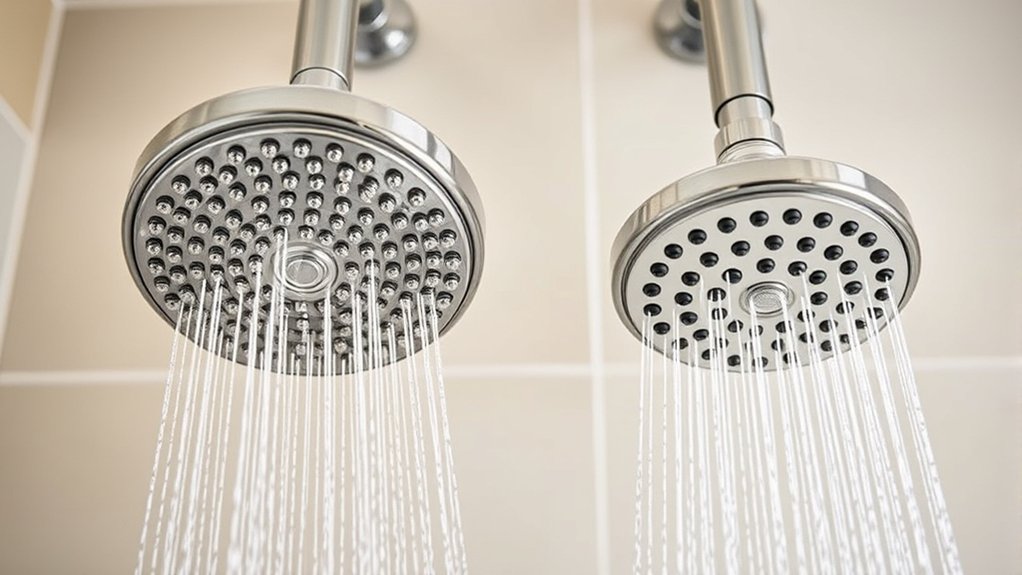
When you choose a larger shower head, you’ll often see a lower water pressure because the flow rate spreads across a wider coverage area. Conversely, smaller heads concentrate water flow, which can increase pressure at the outlet.
Keep in mind that your home’s plumbing and water supply also play essential roles in how pressure varies with different shower head sizes.
Impact On Flow Rate
Why does the size of a shower head influence your water pressure? When you perform a size comparison, larger shower heads typically have more nozzles, which can spread the water flow over a wider area. This distribution can reduce the velocity of water exiting each nozzle, making the pressure feel lower even though the overall water flow rate (measured in gallons per minute) remains constant.
Conversely, smaller shower heads concentrate water through fewer nozzles, increasing the velocity and perceived pressure. However, your home’s plumbing system and flow restrictors also play key roles in limiting maximum flow.
Coverage Area Differences
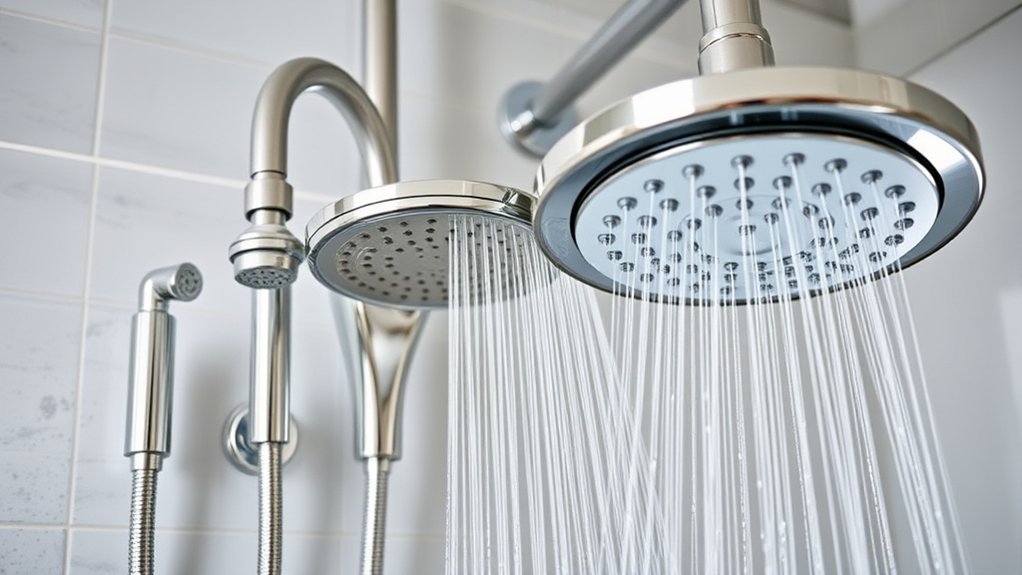
Where your water lands in the shower depends largely on the size of the shower head. Larger shower heads provide wider coverage areas but require careful consideration of size compatibility and installation spacing to maintain efficient water delivery.
If the head is too large for your plumbing or mounting setup, uneven water distribution can occur.
Key points to consider include:
- Larger heads spread water over a broader area
- Smaller heads concentrate flow, increasing perceived pressure
- Installation spacing affects spray reach and overlap
- Size compatibility ensures optimal water flow without loss
- Adjusting shower arm length can improve coverage with larger heads
Pressure Variation Factors
How does shower head size influence the water pressure you experience? Larger shower heads often reduce perceived pressure because they distribute the same water flow over a wider area.
However, size alone isn’t the sole factor; the internal design and flow restrictors can markedly impact pressure. Focusing solely on size without considering flow rate or plumbing conditions is an unrelated topic and can mislead your expectations.
Also, using water pressure measured in PSI as the only metric is an irrelevant metric for shower head performance since it doesn’t account for flow distribution. When selecting a shower head, prioritize models designed to optimize pressure with their size, ensuring a balance between coverage and force. This practical approach helps you avoid common misconceptions tied to size alone.
Which Shower Head Sizes Work Best for Small Bathrooms?
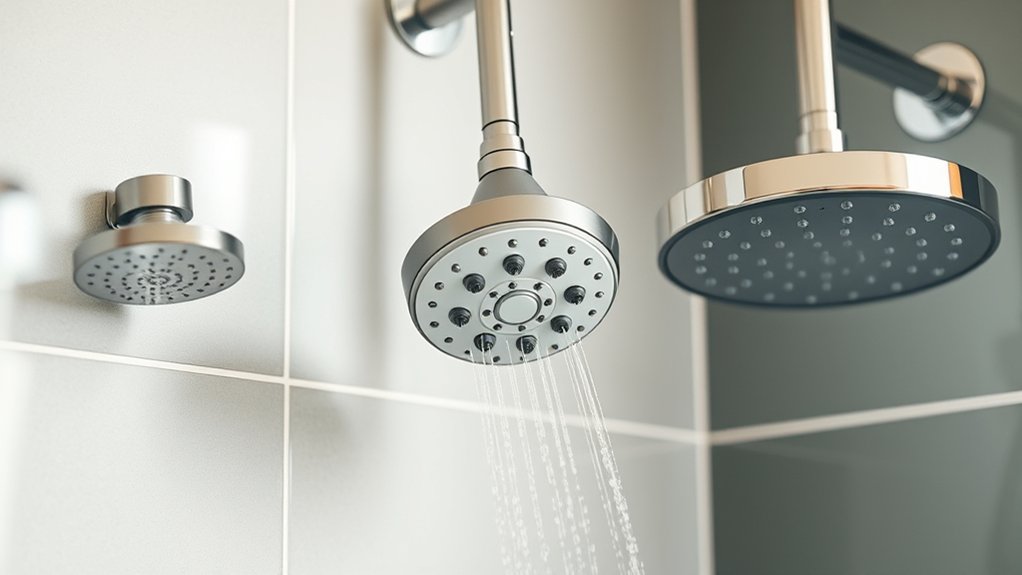
In small bathrooms, you need shower heads that are compact without sacrificing functionality. Choosing a smaller diameter model helps maximize space efficiency and prevents overwhelming the area.
Focus on designs that maintain strong water flow while fitting neatly into limited shower enclosures.
Compact Shower Head Options
What size shower head fits best in a small bathroom? Compact shower heads typically range from 4 to 6 inches in diameter, making them ideal for limited spaces. Their compact design ensures efficient water coverage without overwhelming the area.
When selecting, consider budget options that don’t sacrifice performance.
Key factors to evaluate include:
- Diameter between 4 and 6 inches for optimal space use
- Lightweight materials for easier installation
- Water flow rates compliant with local regulations
- Adjustable spray patterns for versatility
- Durable finishes that resist corrosion
Maximizing Space Efficiency
Why prioritize shower head size when maximizing space efficiency in small bathrooms? Size constraints directly impact comfort and usability. Choosing a compact shower head, generally between 4 to 6 inches in diameter, saves space without sacrificing water coverage.
Consider material options like lightweight plastics or slimline metals that reduce bulk and add durability.
| Size (inches) | Material Options |
|---|---|
| 4 | Plastic, Stainless Steel |
| 5 | Aluminum, Chrome |
| 6 | Brass, Plastic |
| 7 | Stainless Steel, Chrome |
| 8 | Brass, Aluminum |
Select smaller sizes with materials that resist corrosion and weigh less. This approach optimizes room layout and ensures practicality under tight size constraints.
What Are the Benefits of Large Rainfall Shower Heads?
How does a large rainfall shower head enhance your shower experience? It delivers a wide, even water distribution that simulates natural rainfall, providing thorough coverage and a soothing sensation.
When selecting one, consider material durability to ensure longevity, especially in hard water areas. Price tiers vary widely, reflecting differences in build quality and features.
Key benefits include:
- Extensive water coverage for efficient rinsing
- Consistent water pressure despite larger size
- Enhanced relaxation through gentle, natural flow
- Durable materials resisting corrosion and wear
- Variety of price tiers to fit different budgets
Balancing Shower Head Size and Spray Pattern for Optimal Comfort
When choosing a shower head, you need to balance its size with the spray pattern to achieve supreme comfort. Larger heads distribute water over a wider area, but if the spray pattern is too diffuse, you might lose water pressure, reducing the cleansing effect.
Conversely, smaller heads with concentrated sprays can feel intense but cover less skin. Consider the mounting angle to optimize water flow direction, ensuring the spray hits your body evenly without waste.
Additionally, pairing your shower head with a compatible color temperature for your bathroom lighting enhances the overall sensory experience, making water feel warmer or cooler visually. By carefully selecting size, spray pattern, mounting angle, and ambient color temperature, you ensure a shower that’s both effective and comfortable.
Does Shower Head Size Affect Water Usage and Efficiency?
Does shower head size directly impact your water usage and overall efficiency? Yes, it does, but not in isolation. Larger shower heads generally use more water, but efficiency depends on flow rate controls and design.
When considering size, you must also factor in space safety and legal compliance, which regulate maximum allowable flow rates to conserve water.
Keep these points in mind:
- Larger heads may increase water consumption if unregulated
- Flow restrictors help maintain legal compliance
- Smaller heads can save water but might reduce coverage
- Space safety requires appropriate installation to avoid leaks or hazards
- Efficiency hinges on technology, not just size
Which Materials and Styles Suit Different Shower Head Sizes?
Which materials and styles best complement different shower head sizes depends largely on your bathroom’s design and functional needs. For smaller shower heads, you’ll want materials known for material durability like stainless steel or brass, which maintain integrity despite compact dimensions.
Choosing durable materials like stainless steel or brass ensures small shower heads remain both functional and stylish.
These materials also provide a sleek aesthetic finish that suits minimalist or modern styles. Larger shower heads often use chrome or polished nickel finishes to enhance visual impact while ensuring resistance to corrosion and wear.
Styles like rain shower heads demand robust construction to support their size and weight, so prioritize materials with proven longevity. Meanwhile, adjustable or handheld shower heads benefit from lightweight yet durable plastics combined with metal accents, balancing ease of use with durability.
Matching material durability and aesthetic finish to size ensures reliability and design harmony.
Where to Buy Shower Heads by Size and Price
Selecting the right shower head size and material is only part of the equation; knowing where to find options that fit your budget and specifications can streamline your purchase. To optimize price comparisons and retailer options, consider these sources:
- Home improvement stores for a wide range of sizes and installation basics guidance
- Online marketplaces offering competitive pricing and customer reviews
- Specialty plumbing retailers with expert advice on materials and cleaning tips
- Discount outlets where you can find quality shower heads at reduced prices
- Manufacturer websites for warranties, detailed specs, and direct purchasing
Frequently Asked Questions
How Often Should I Clean My Shower Head to Maintain Performance?
You should clean your shower head every 1-3 months; studies show mineral buildup reduces flow by 20%. Regular cleaning frequency guarantees performance maintenance, preventing clogging and maintaining optimal water pressure for efficient, consistent use.
Can Shower Head Size Impact the Temperature of the Water?
Yes, shower head size can impact water temperature. Larger heads often reduce water pressure, affecting heat delivery.
Nozzle design also plays a role by controlling flow rate, so you’ll want to balance these factors for consistent warmth.
Are There Shower Heads Designed Specifically for Hard Water Areas?
You’ll find shower heads designed like armor against hard water, featuring special hard water designs and varying shower head sizes to combat mineral buildup efficiently. These practical models ensure steady flow and durability in tough conditions.
How Do Adjustable Shower Heads Differ From Fixed-Size Ones?
Adjustable shower heads let you customize spray patterns and water flow, unlike fixed ones that offer a single, unchangeable spray.
You’ll enjoy flexibility with adjustable vs fixed options for tailored comfort and efficiency in your shower.
What Is the Average Lifespan of a Standard Shower Head?
You can expect a standard shower head lifespan of about 6 to 10 years. Keep in mind, higher water temperature impact accelerates wear, so regulating heat helps extend your shower head’s effective service life.