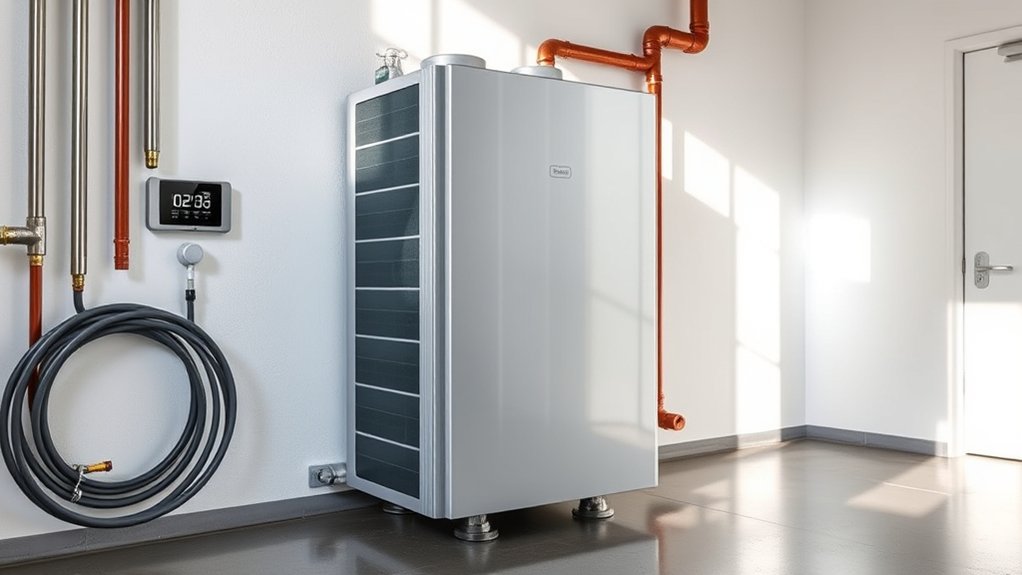
Are Heat Pump Hot Water Heaters Worth It
If you’re considering an upgrade to your home’s water heating system, heat pump hot water heaters are worth it to explore due to their notable boost in energy efficiency. These units often cut electricity use by more than half compared to traditional electric water heaters, making them an attractive option for many homeowners.
However, their higher upfront cost and reliance on specific conditions like climate and available space can complicate the decision. Understanding how these factors influence performance and potential savings is essential before making a choice.
Carefully evaluating your home’s needs and the local environment will help determine if a heat pump hot water heater is the right investment for you.
Key Takeaways
- Heat pump water heaters use 50–60% less electricity than conventional electric heaters, significantly reducing energy bills and carbon emissions.
- They perform best in moderate to warm climates, with efficiency dropping below 40°F, affecting overall savings in colder regions.
- Higher upfront costs, including installation and electrical upgrades, extend payoff time but can be offset by energy savings and tax incentives.
- Longer heating times and space requirements, such as ventilation and conditioned installation space, may impact convenience and setup complexity.
- Maintenance involves regular filter cleaning and coil inspections, essential for sustaining efficiency and prolonging the unit’s lifespan.
How Do Heat Pump Water Heaters Work?
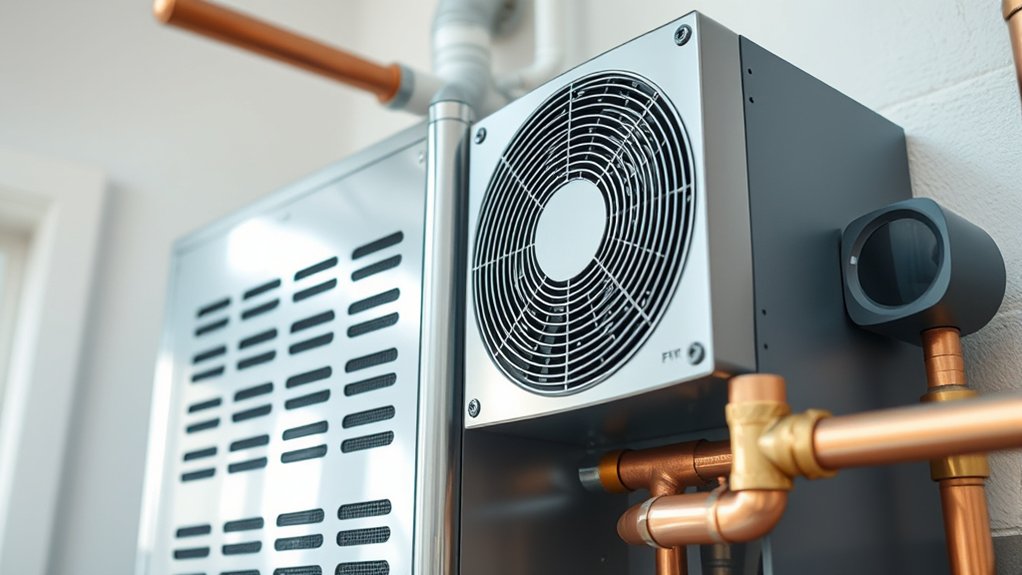
How exactly do heat pump water heaters operate? You’ll find they extract heat from the surrounding air using a refrigeration cycle, transferring it to water stored in the tank. The heat pump compresses a refrigerant, raising its temperature, then passes it through a heat exchanger to warm the water.
This process consumes considerably less electricity than traditional electric resistance heating. However, you should consider efficiency tradeoffs: heat pumps perform optimally in moderate to warm environments and may lose efficiency in colder conditions, requiring supplemental heating.
You’ll also notice that heat pump water heaters take longer to heat water compared to conventional models. Understanding these operational principles and efficiency tradeoffs helps you evaluate whether a heat pump water heater suits your specific energy needs and environmental conditions.
Which Homes Benefit Most From Heat Pump Water Heaters?
Where do heat pump water heaters deliver the greatest advantages? They typically benefit homes in moderate to warm climates, where ambient air temperatures support efficient heat extraction. If your home has sufficient space for air circulation around the unit, you’ll maximize performance.
Additionally, residences subject to progressive energy policy frameworks often gain financially from available tax incentives, reducing upfront costs. Homes with electric water heating systems see the most significant operational savings, as heat pumps consume less electricity compared to traditional resistive heaters.
Conversely, in colder climates or poorly ventilated spaces, efficiency declines, making alternatives more practical. Evaluating your local energy policy and available tax incentives is essential to determine if a heat pump water heater will offer you optimal energy savings and return on investment.
What Are the Installation and Maintenance Needs?
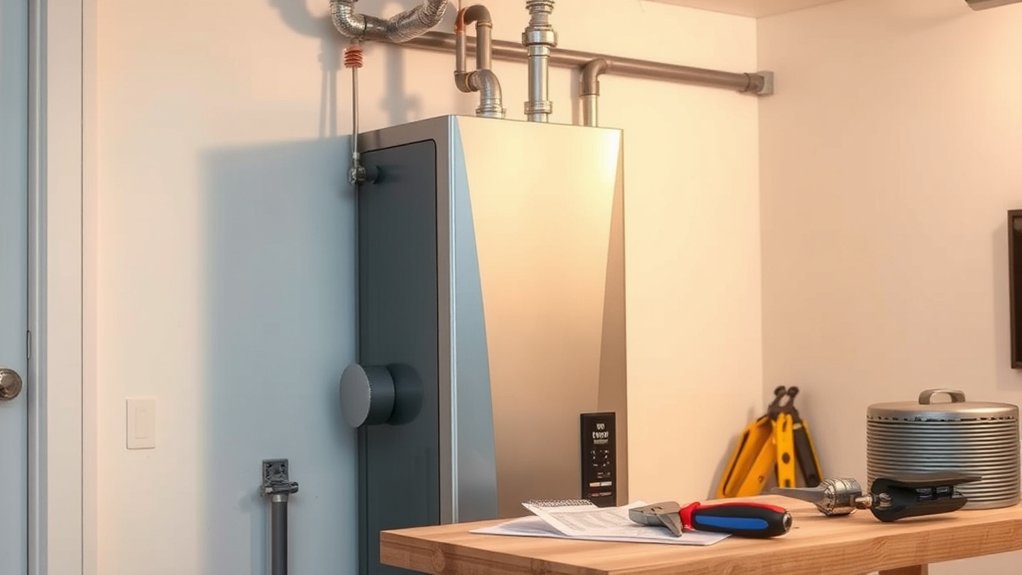
Understanding the specific installation and maintenance requirements helps you fully assess the practicality of adopting a heat pump water heater. Installation considerations include space availability, electrical capacity, and ventilation needs, which can differ substantially from conventional units.
Maintenance routines typically involve regular filter cleaning, condenser coil checks, and periodic inspections to ensure optimal efficiency and longevity.
| Installation Considerations | Maintenance Routines |
|---|---|
| Requires 750–1,000 sq. ft. | Clean air filters every 6 months |
| Needs 240V dedicated circuit | Inspect coils annually |
| Must have proper ventilation | Check condensate drain quarterly |
| Professional installation preferred | Monitor system for unusual noises |
| Placement affects efficiency | Replace anode rod every 3–5 years |
These factors influence upfront costs and ongoing care, shaping your decision process.
How Does Climate Affect Heat Pump Water Heater Performance?
You’ll notice that temperature directly impacts a heat pump water heater’s efficiency, with colder climates reducing its performance. Humidity also plays a critical role by affecting the unit’s ability to transfer heat effectively.
Additionally, seasonal variations can cause fluctuations in energy consumption and hot water availability.
Temperature Impact On Efficiency
How does climate influence the efficiency of heat pump water heaters? The key factor is temperature stability. Heat pumps extract heat from ambient air, so consistent moderate temperatures enhance their efficiency.
When outdoor temperatures remain stable, the system approaches energy parity, delivering nearly equivalent energy output to input. However, in colder climates with frequent temperature drops, efficiency declines as the unit works harder to extract heat, increasing energy consumption.
Conversely, very warm climates also affect performance, but less dramatically. Understanding your local temperature fluctuations helps you predict heat pump efficiency and potential energy savings.
To maximize benefits, you want a climate where temperature stability reduces strain on the system, maintaining high efficiency and ensuring that your investment in a heat pump water heater is justified.
Humidity’s Role In Operation
Why does humidity matter for heat pump water heaters? Humidity directly affects the system’s ability to transfer heat efficiently. High humidity can reduce evaporator coil effectiveness by saturating the air, limiting heat extraction. Conversely, low humidity may improve heat transfer but can lead to increased defrost cycles, impacting performance. Effective humidity management is crucial to maintain optimal operation.
You’ll want to ensure proper airflow optimization around the unit to support consistent moisture removal and prevent coil icing. In humid climates, enhanced ventilation reduces moisture buildup, preserving efficiency. Conversely, in drier environments, controlling airflow minimizes unnecessary defrosting.
Understanding and managing humidity enables you to maintain stable heat pump water heater performance, maximizing energy savings and operational lifespan without compromising functionality.
Seasonal Performance Variations
When do heat pump water heaters perform best throughout the year? They tend to operate most efficiently in moderate to warm climates where ambient temperatures remain above 40°F (4°C).
Seasonal reliability varies markedly with climate; in colder months, performance can degrade as the unit extracts less heat from cooler air, potentially increasing energy use. You should consider noise concerns, as compressors may run more frequently or at higher capacity during cold seasons, which can raise operational noise levels.
Conversely, in humid or warmer environments, heat pump water heaters maintain consistent efficiency and quieter operation, enhancing seasonal reliability. Understanding your local climate’s temperature range helps you anticipate performance fluctuations and decide if a heat pump water heater matches your hot water needs year-round.
How Much Does It Cost to Install a Heat Pump Water Heater?
Determining the installation cost of a heat pump water heater requires evaluating several factors, including unit price, labor, and potential modifications to your home’s electrical or plumbing systems. When considering a cost comparison with traditional electric heaters, installation logistics such as space for ventilation and electrical capacity upgrades influence total expenses.
Below is a breakdown of typical cost components:
| Cost Component | Estimated Range | Notes |
|---|---|---|
| Unit Price | $1,200 – $2,500 | Depends on capacity and brand |
| Labor | $500 – $1,000 | Installation complexity varies |
| Electrical Upgrades | $300 – $800 | May include circuit breaker install |
| Plumbing Modifications | $200 – $600 | Adjustments for water connections |
Understanding these factors helps you assess the total investment accurately.
How Much Energy Can You Save With a Heat Pump Water Heater?
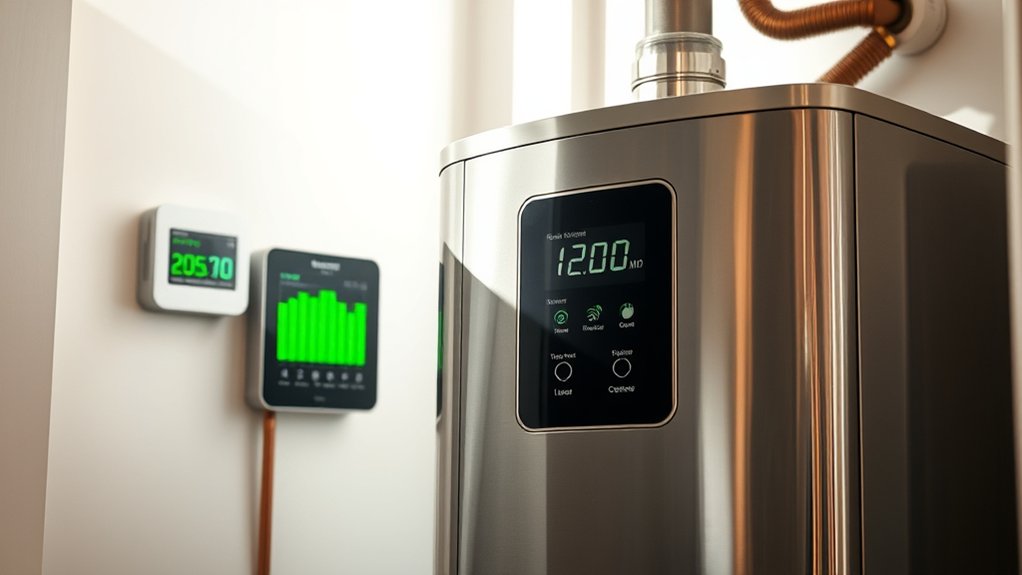
After considering the installation costs of a heat pump water heater, the next step is to evaluate the potential energy savings it offers. Heat pump water heaters achieve higher heater efficiency by extracting ambient heat rather than generating it directly, leading to significant energy reductions.
Evaluating energy savings is crucial after installation, as heat pump water heaters efficiently extract ambient heat for significant reductions.
To quantify your savings, consider these factors:
- Heat pump water heaters use 50-60% less electricity than conventional electric units.
- Savings depend on your local climate impact. Warmer, humid environments enhance efficiency.
- Reduced energy consumption lowers greenhouse gas emissions, benefiting the environment.
- The efficiency gain varies by model, with Energy Factor (EF) ratings indicating performance.
When Does a Heat Pump Water Heater Pay Off Financially?
How quickly you recoup the investment in a heat pump water heater depends on several variables, including upfront costs, energy prices, and your household’s hot water usage. An effective swap balances these factors against hidden costs like installation complexity or maintenance.
Here’s a simplified snapshot:
| Factor | Impact on Payoff Time |
|---|---|
| Initial Purchase Price | Higher costs extend payoff |
| Local Energy Rates | Higher rates shorten payoff |
| Household Hot Water Use | Greater use shortens payoff |
| Installation Complexity | Adds hidden costs, delays payoff |
| Maintenance Requirements | Ongoing costs affect payoff |
Analyzing these lets you estimate when your investment breaks even. If your energy savings outweigh upfront and hidden expenses within 5-7 years, the swap is financially effective. Otherwise, consider if alternative upgrades better suit your scenario.
What Are the Environmental Benefits of Heat Pump Water Heaters?
You’ll find that heat pump water heaters substantially reduce carbon emissions by using electricity more efficiently than traditional models. Their high energy efficiency directly lowers your environmental footprint and decreases demand on fossil fuel resources.
Additionally, these systems promote sustainable resource use by leveraging ambient air heat rather than relying solely on direct energy input.
Reduced Carbon Emissions
Why do heat pump water heaters substantially reduce carbon emissions compared to traditional models? Their design leverages superior water heating efficiency and a longer appliance lifecycle, which collectively minimize energy consumption and emissions.
You benefit from increased energy diversity, as these systems often integrate seamlessly with renewable electricity sources. This integration enhances grid resilience by reducing peak demand pressures.
- Heat pumps transfer heat rather than generate it, cutting energy use.
- Their efficiency lowers fossil fuel dependency, directly reducing carbon output.
- Extended appliance lifecycle reduces manufacturing and disposal emissions.
- Compatibility with renewable energy supports cleaner grid operation.
Energy Efficiency Impact
Building on the carbon emission reductions achieved by heat pump water heaters, their energy efficiency plays a pivotal role in environmental performance. You’ll find that these systems use electricity to transfer heat rather than generate it, achieving efficiencies two to three times higher than conventional electric water heaters.
This efficiency aligns with evolving energy policy goals aimed at reducing overall energy consumption and greenhouse gas emissions. However, you must consider refrigerant safety since heat pumps rely on refrigerants with varying global warming potentials. Selecting units with low-GWP refrigerants and proper containment reduces environmental risks.
Sustainable Resource Use
Although heat pump water heaters primarily focus on energy efficiency, they also contribute considerably to sustainable resource use. By optimizing energy usage, they reduce reliance on fossil fuels, thereby lowering greenhouse gas emissions.
When you choose a heat pump water heater, you actively support sustainable resource management through:
- Decreased electricity demand, easing strain on power grids.
- Reduced water consumption due to advanced insulation minimizing heat loss.
- Lower material waste, as these units have longer lifespans compared to conventional heaters.
- Enhanced integration with renewable energy sources, further promoting clean energy usage.
Understanding these benefits helps you appreciate how heat pump water heaters not only save energy but also align with broader environmental sustainability goals, making them a prudent choice for resource-conscious consumers.
What Are Common Drawbacks of Heat Pump Water Heaters: And How to Fix Them?
How do heat pump water heaters fall short despite their efficiency? Common drawbacks include their dependence on ambient air temperature, slower heating speeds, and higher upfront costs.
You should consider that these units perform optimally in spaces maintained between 40°F and 90°F; in colder climates, efficiency drops significantly. Also, their heat extraction creates excess moisture, which may require additional ventilation.
To fix these issues, install the unit in a conditioned space to maintain optimal temperature. Incorporate a backup electric resistance heater to compensate for slower heating during high demand or cold spells.
Finally, evaluate the total cost of ownership, factoring in installation and potential maintenance. By addressing these user considerations, you can maximize performance and cost-effectiveness, despite inherent limitations.
Frequently Asked Questions
Are Heat Pump Water Heaters Noisy During Operation?
You won’t find heat pump water heaters excessively noisy during operation; their sound levels typically range between 40-50 decibels, comparable to a quiet conversation. Proper installation minimizes noisy operation, ensuring efficient and unobtrusive performance.
Can Heat Pump Water Heaters Be Integrated With Solar Panels?
Yes, you can integrate heat pump water heaters with solar panels to optimize energy use. However, you’ll likely need electrical upgrades to handle variable inputs and ensure seamless integration with your home’s existing systems.
How Long Is the Typical Warranty for Heat Pump Water Heaters?
Like a clock from the Renaissance, your heat pump water heater’s warranty duration typically spans 5 to 10 years. This service coverage usually includes parts and labor, ensuring reliable performance and protection against early malfunctions.
Do Heat Pump Water Heaters Require Special Electrical Upgrades?
You might need upfront electrical upgrades for heat pump hot water heaters, depending on your home’s existing system. Installation considerations include circuit capacity and wiring, ensuring safe, efficient operation without overloading your electrical panel or causing disruptions.
Are There Rebates or Incentives Available for Heat Pump Water Heaters?
You might think rebates are rare, but many rebate programs exist for heat pump water heaters. Just check incentive timelines carefully, as they vary by region and utility, ensuring you maximize your potential savings efficiently.
Conclusion
If you want to cut energy costs and shrink your carbon footprint, heat pump water heaters are worth serious consideration. They work smarter, not harder, by extracting heat from the air and using far less electricity than conventional units.
While upfront costs and climate factors require careful thought, pairing them with renewables and backup systems can tip the scales in your favor. In the long run, efficiency and savings often outweigh the initial investment.
Making heat pump hot water heaters worth it depends on your specific situation, but for many homes, they prove to be a wise and sustainable choice.