Can a Bedside Commode Be Used as a Shower Chair
Picture yourself needing a stable seat while showering, but only having a bedside commode at hand.
Can a bedside commode be used as a shower chair? It might seem like a convenient solution, but there are important safety and design differences you need to consider before making that choice.
Understanding these distinctions can help you avoid potential risks and find the best option for your needs.
Let’s explore what sets these two apart and why it matters for your safety.
Key Takeaways
- Bedside commodes lack waterproof materials and non-slip feet, making them less safe than shower chairs in wet environments.
- Shower chairs are specifically designed with drainage holes, rust-resistant materials, and slip-resistant feet for bath safety.
- Using a bedside commode in the shower risks instability, slipping, and corrosion due to water exposure.
- Non-slip mats and height adjustments can improve bedside commode safety but don’t fully replace shower chair features.
- Regular inspection and maintenance are critical if using a commode in the shower to prevent rust and ensure stability.
What Is a Bedside Commode and How Does It Work
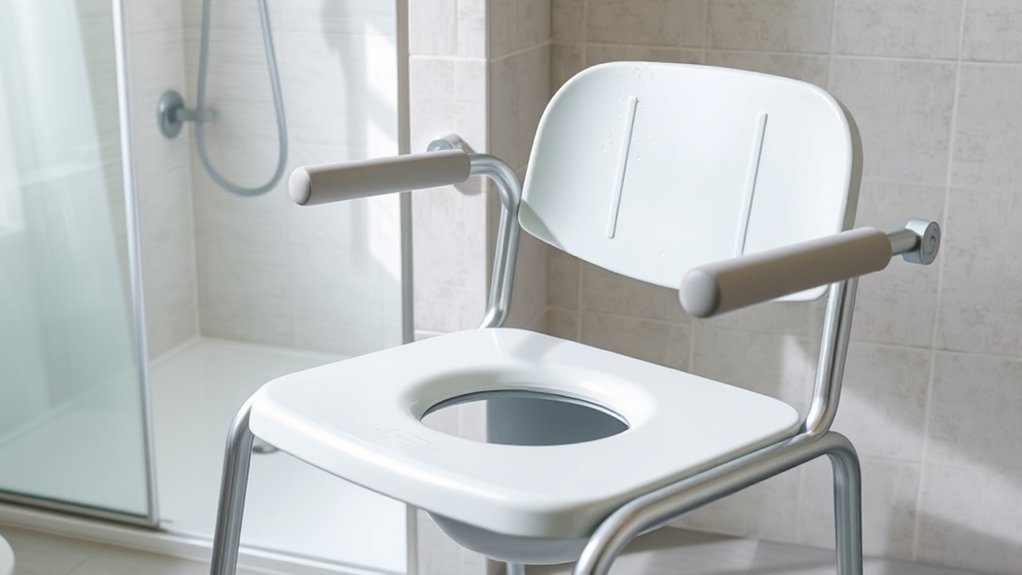
A bedside commode is a portable toilet designed to provide convenience and safety for those who have difficulty reaching a bathroom. When selecting one, you’ll want to pay close attention to comparing widths to ensure it fits comfortably in your space and suits your body size.
The frame typically supports a removable bucket beneath the seat, making it easy to empty and clean. Following strict cleaning protocols is essential to maintain hygiene and prevent infections. Regularly disinfect the bucket and frame after each use.
Most commodes also feature adjustable height and armrests, helping you maintain stability and ease when sitting or standing. Understanding these practical details can help you choose and use a bedside commode effectively, enhancing your comfort and independence.
How Is a Shower Chair Designed Differently
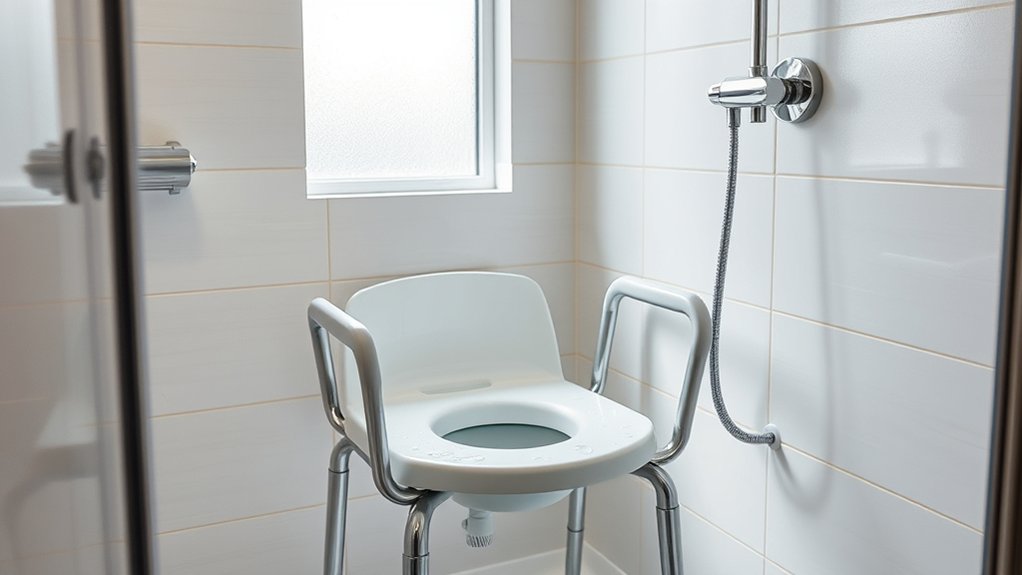
How does a shower chair differ from a bedside commode in its design? A shower chair is specifically engineered to handle wet environments, addressing key design challenges like stability on slippery surfaces and corrosion resistance.
Unlike commodes, shower chairs use waterproof materials such as plastic and rust-proof metals to ensure longevity despite constant moisture exposure. Waterproofing considerations extend to non-slip feet and drainage holes that prevent water pooling, reducing fall risks and discomfort.
Shower chairs feature waterproof materials, non-slip feet, and drainage holes to enhance safety and durability in wet environments.
The seat often features a contoured, open design for better water flow and user comfort during showers. While both devices offer support, a shower chair prioritizes safety and hygiene in wet conditions, making it uniquely suited for bathing needs.
Understanding these differences helps you choose the right aid for your daily routine.
Can You Use a Bedside Commode Safely in the Shower?
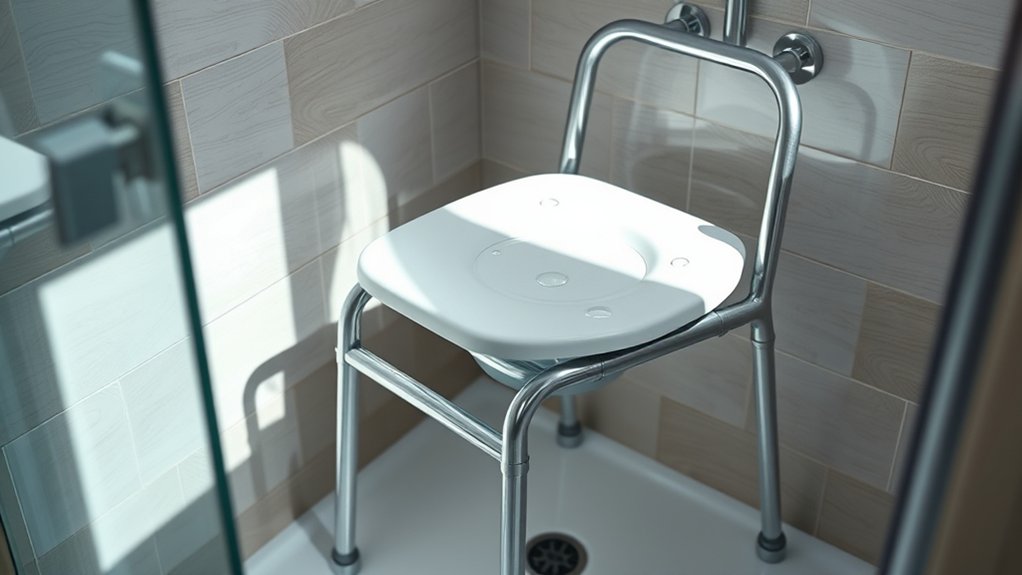
When considering whether you can safely use a bedside commode in the shower, it’s important to recognize the key safety and hygiene concerns involved. Bedside commodes aren’t specifically designed for wet, slippery environments, which can affect your bed mobility and increase fall risk.
Unlike shower chairs, they often lack non-slip feet and water-resistant materials crucial for home safety. If you decide to use one in the shower, ensure it’s stable, rust-resistant, and easy to clean to prevent infections.
Always test its sturdiness on a dry surface before use, and consider adding non-slip mats in your shower area. Prioritize your comfort and safety by consulting with healthcare professionals about the best equipment for your specific needs.
Common Safety Risks When Using a Commode in the Shower
When using a bedside commode in the shower, you need to watch for stability and balance problems that could lead to falls. Water exposure can cause rust and weaken the frame, making it unsafe over time.
Being aware of slippery surfaces is also essential to prevent accidents while you’re bathing.
Stability And Balance Issues
Why does stability matter so much when using a bedside commode as a shower chair? When managing incontinence, you rely on secure, steady support to prevent falls or injuries. Unstable seating can increase risks, especially during caregiver communication when assistance is needed.
Ensuring balance reduces anxiety and promotes safer transfers.
| Risk Factor | Potential Issue | Prevention Tip |
|---|---|---|
| Wobbly frame | Falls or slips | Check leg grips and tighten bolts |
| Wet surfaces | Slippery base | Use non-slip mats or grips |
| Uneven weight distribution | Tipping over | Avoid leaning or sudden moves |
Prioritize stability to protect yourself and caregivers during incontinence management in the shower.
Water Damage And Rust
How can water damage and rust compromise your safety when using a bedside commode as a shower chair? Bedside commodes aren’t designed for constant exposure to water, so their materials often lack the waterproofing needed.
Over time, water can seep into joints and metal parts, leading to rust and weakening the structure. This corrosion increases the risk of sudden failure, which can be dangerous amid shower hazards.
The bedside limitations mean these commodes don’t have coatings or seals to prevent moisture damage, unlike shower chairs built specifically for wet environments. If you choose to use a commode in the shower, inspect it regularly for signs of rust or water damage.
Replacing corroded parts or switching to a proper shower chair can help you avoid accidents caused by compromised equipment.
Slip And Fall Hazards
Where do slip and fall hazards most commonly arise when you use a bedside commode in the shower? These risks often stem from factors that compromise stability and safety. Addressing them is crucial, balancing ethical considerations with promoting user independence.
- Wet surfaces: Water pooling around the commode can create slippery spots.
- Lack of grip: Commode legs or feet without non-slip materials increase fall risk.
- Improper placement: Positioning the commode on uneven or unstable flooring causes wobbling.
- User mobility: Limited strength or balance can lead to accidental slips while transferring.
To minimize hazards, ensure the commode has non-slip feet, position it securely, and consider assistive devices. Prioritizing safety respects ethical considerations while supporting your ability to maintain independence.
Why Materials and Waterproofing Matter for Shower Use
What happens when water meets materials not designed for wet environments? You risk corrosion, mold growth, and structural failure, which can compromise safety.
When choosing a bedside commode for shower use, pay close attention to materials and waterproofing. Proper durability testing ensures the frame withstands moisture without weakening, while adequate weight capacity guarantees stability during use.
Waterproof coatings or rust-resistant metals are essential to maintain integrity over time.
| Material | Waterproofing Quality | Durability Testing | Weight Capacity |
|---|---|---|---|
| Plastic | High | Moderate | Moderate |
| Aluminum | High | High | High |
| Steel (non-coated) | Low | High | High |
| Stainless Steel | High | High | Very High |
Choosing the right materials helps keep you safe and comfortable in the shower.
When Is a Shower Chair a Better Choice Than a Commode?
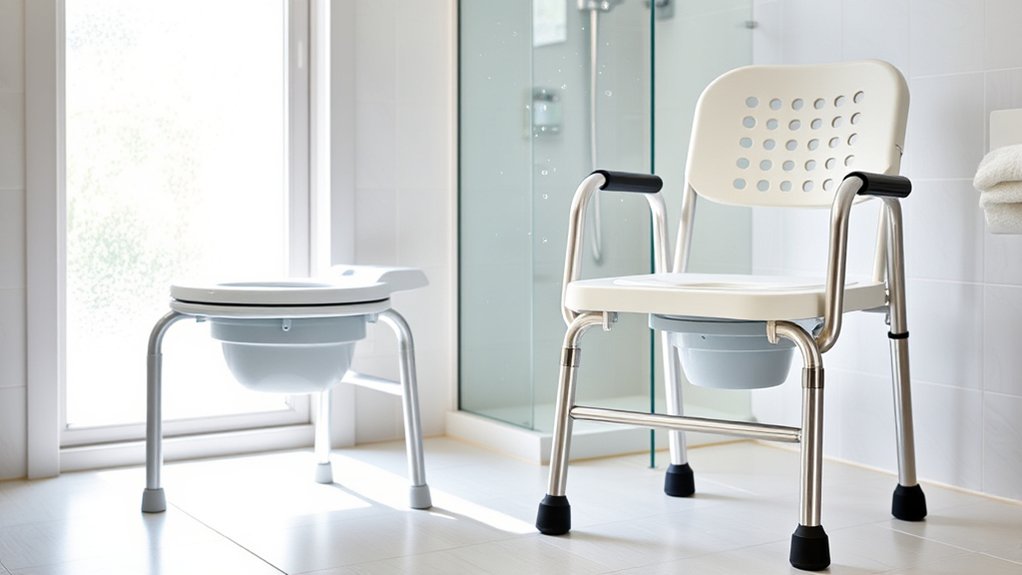
Why might you choose a shower chair over a bedside commode for bathing? The answer lies in safety, comfort, and design. Shower chairs are specifically made to support you during showering, unlike commodes, which serve a different purpose.
Here are four reasons a shower chair is a better choice:
- Stability: Shower chairs have non-slip feet to prevent falls on wet surfaces.
- Waterproofing: Materials resist water and mold better than commodes.
- Comfort: Shower chairs often feature backrests and armrests for added support.
- Hygiene: Designed to drain water quickly, reducing bacterial growth.
Using a commode as a shower chair may seem convenient but is an unrelated topic that leads to off topic safety concerns. Stick with a shower chair for bathing to ensure your well-being.
Key Features to Look for in a Shower Chair
Choosing the right shower chair can make a big difference in your safety and comfort during bathing. Just like playground etiquette ensures safety and respect, a good shower chair should offer sturdy support and ease of use.
Think about features that promote stability, comfort, and hygiene, similar to how pet therapy focuses on well-being and gentle care.
| Feature | Why It Matters |
|---|---|
| Non-slip feet | Prevents slipping, like rules in playground etiquette |
| Waterproof seat | Ensures hygiene and durability, akin to pet therapy’s gentle approach |
| Adjustable height | Customizes comfort and safety for you |
Using a Bedside Commode Safely in the Shower
How can you safely use a bedside commode in the shower without risking falls or injury? First, ensure the commode is designed for wet environments or has rust-resistant materials. Unrelated considerations like stability and weight capacity are crucial. Never compromise on these topic ideas. Follow these steps:
- Place non-slip mats under the commode to prevent sliding.
- Adjust the height so your feet rest flat on the floor.
- Secure any locks or brakes firmly before use.
- Avoid using a commode with broken or loose parts.
Cleaning and Maintaining a Commode for Shower Use
Once you’ve set up your bedside commode securely for shower use, keeping it clean and well-maintained becomes a top priority to prevent infections and prolong its lifespan. Start by rinsing the commode thoroughly after each use to remove soap residue and prevent mildew.
Use a mild, non-abrasive cleanser with warm water for daily cleaning, avoiding harsh chemicals that could damage the materials. Regularly inspect the commode for signs of rust or wear, which can compromise safety.
Don’t forget to dry it completely to reduce mold growth. Discussion idea two involves checking and tightening all screws and adjustable parts weekly to ensure stability. By following these practical steps, you’ll maintain a hygienic, durable commode that supports your shower routine safely and comfortably.
Budget and Space Tips for Choosing Between Both
Where can you find the best balance between budget and space when deciding between a bedside commode and a shower chair? Understanding bedside practicality alongside budget considerations helps you make a smart choice that fits your living space and financial plan.
- Measure your bathroom and bedroom space carefully to ensure either option fits without clutter.
- Prioritize multifunctional commodes if you want to save on buying separate shower chairs.
- Compare prices, keeping in mind that some bedside commodes are pricier but offer more features.
- Consider your long-term needs; investing in durable equipment may reduce replacement costs.
Frequently Asked Questions
Can a Bedside Commode Be Used Outdoors?
You can use a bedside commode outdoors, but you should consider its weather resistance. Most aren’t designed for prolonged outdoor usage, so exposure to rain or sun might damage it. Protect it to guarantee durability and safety.
How Do Bedside Commodes Assist With Nighttime Bathroom Trips?
Bedside commodes boost bedside safety by balancing and brightening your path, enhancing nighttime mobility. They reduce risky trips, offering reliable relief right beside your bed.
This helps you move confidently and comfortably throughout the night.
Are There Weight Limits for Bedside Commodes?
Yes, bedside commode weight limits vary, so you should check the specific model’s capacity. Also, consider outdoor usability considerations like stability and weather resistance to ensure safety and comfort when using it outside.
Can Children Use a Bedside Commode Safely?
Of course, you’d trust a bedside commode as a playground. It’s just perfect! Seriously though, with proper bedside compatibility and caregiver training, kids can use it safely.
Always prioritize supervision and tailor to their specific needs.
Do Bedside Commodes Require Assembly or Special Tools?
You don’t typically need special tools for bedside commode assembly; many offer tool-free assembly for bedside compatibility. This practical design helps you set it up quickly, ensuring safety and convenience without extra hassle or equipment.