Are All Shower Faucets the Same Size
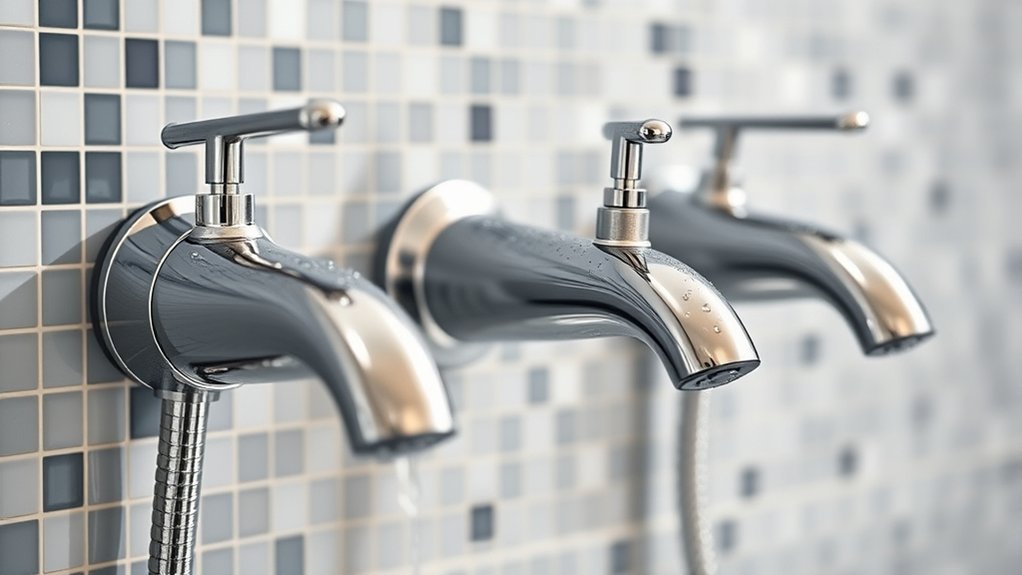
You might assume all shower faucets are the same size, but that’s not the case. Different plumbing systems and valve types require varying dimensions, from standard 1/2-inch connections to less common sizes like 3/8 or 3/4 inch. Even the spacing between handles can differ, impacting fit and function.
Understanding these variations is essential before making a replacement or upgrade. Otherwise, you risk compatibility issues that could complicate your project. Taking the time to measure and verify your existing setup will save you headaches down the line.
Key Takeaways
- Shower faucets commonly use a standard 1/2 inch diameter, but sizes vary with 3/4 inch and 3/8 inch options for different needs.
- Valve types and handle configurations affect the faucet’s overall size and installation requirements.
- Single-handle faucets usually have a 6-8 inch diameter footprint, while dual-handle setups require 8-12 inches center-to-center spacing.
- Plumbing connection types like 1/2 inch IPS or 1/2 inch NPT influence compatibility and fitting sizes.
- Faucet size depends on retrofit versus new installations, plumbing setup, and compatibility with existing pipe materials and layouts.
Are All Shower Faucets the Same Size?
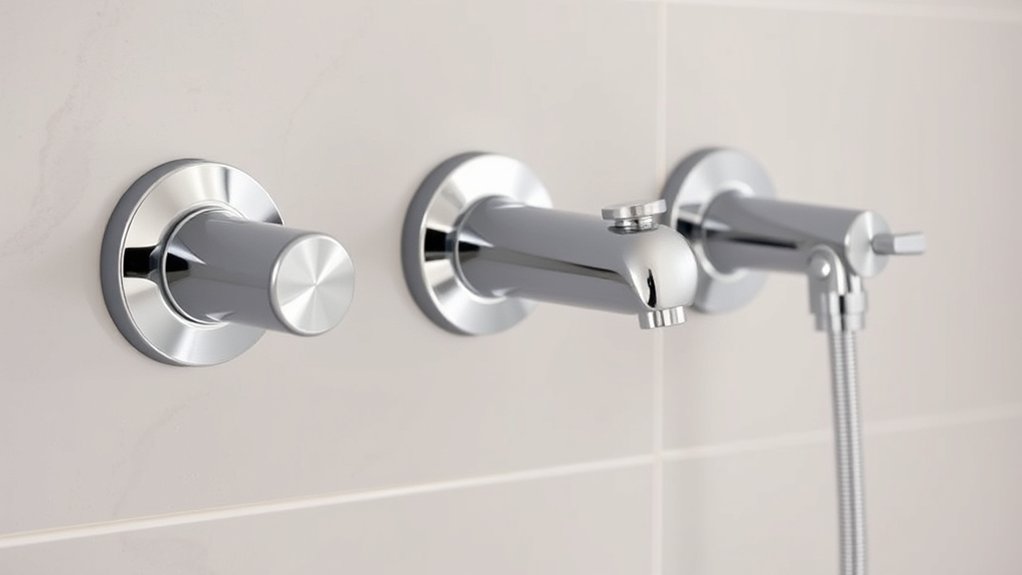
How do shower faucet sizes vary, and why does it matter? You’ll find that shower faucet sizes differ primarily due to design standards and plumbing requirements. Historical trends show a gradual shift from large, bulky fixtures to more compact, efficient designs.
This evolution reflects both technological advances and changing user preferences. When considering diversity considerations, manufacturers offer multiple sizes to accommodate varying wall thicknesses, pipe diameters, and installation spaces.
You can’t assume one size fits all because regional plumbing codes and fixture types influence dimensions. Understanding these variations helps you select the right faucet, ensuring compatibility and optimal water flow.
Common Shower Faucet Sizes and Configurations
You’ll find that most shower faucets feature a standard diameter, typically 1/2 inch, to fit common plumbing lines. Valve types vary between pressure-balancing, thermostatic, and manual, each affecting control precision and safety.
Understanding handle configurations, from single to multi-handle setups, helps you choose the right faucet for your system’s layout.
Standard Faucet Diameter
What size does a standard shower faucet typically have? Most standard shower faucets feature a diameter of 1/2 inch, which balances water pressure and faucet aesthetics effectively. This size supports a stable flow rate without compromising the fixture’s visual appeal. However, variations exist depending on plumbing systems and design preferences.
| Faucet Diameter | Common Use | Water Pressure Impact |
|---|---|---|
| 1/2 inch | Residential showers | Optimal balance |
| 3/4 inch | Larger homes | Higher pressure |
| 3/8 inch | Specialty fixtures | Lower pressure |
| 1/2 inch IPS | Standard plumbing | Industry standard |
| 1/2 inch NPT | Threaded connections | Secure fitting |
Understanding these sizes helps you choose faucets that meet both performance and aesthetic needs.
Valve and Handle Types
Beyond faucet diameters, understanding valve and handle types is key to selecting the right shower faucet configuration. You need to ensure size compatibility between the valve and handle to guarantee smooth operation and proper water flow control.
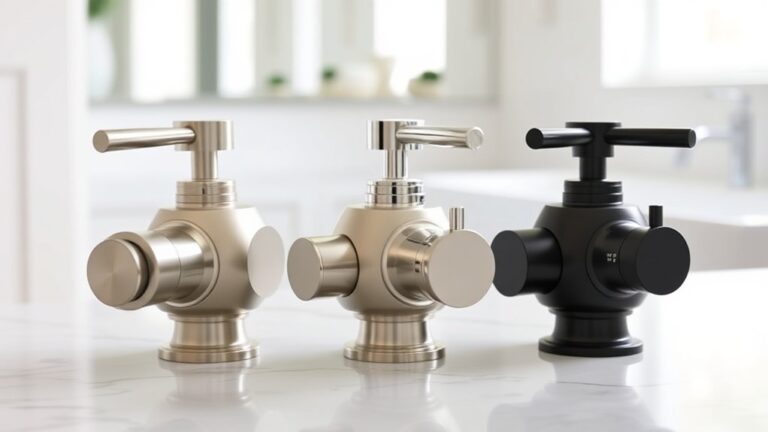
Common valve types include single-handle cartridge, pressure-balancing, and thermostatic valves, each requiring specific handle designs. For example, a single-handle valve often pairs with a lever or knob handle, while thermostatic valves may use specialized handles for precise temperature adjustments.
Valve compatibility is crucial because mismatched components can lead to leaks or inefficient function. When replacing or upgrading faucets, verify both valve and handle sizes and types align with your existing plumbing setup to avoid installation issues and ensure optimal performance.
Configuration Variations Explained
How do various shower faucet configurations affect sizing and installation? Different setups, such as single-handle, dual-handle, and thermostatic, dictate the mounting dimensions and plumbing connections you need to consider. This is especially important when integrating alternative bathroom designs or eco-friendly fixtures.
Sizing varies to accommodate these configurations, impacting both retrofit and new installations.
| Configuration | Typical Size (inches) | Notes |
|---|---|---|
| Single-handle | 6-8 (diameter) | Simplifies installation; compact |
| Dual-handle | 8-12 (center-to-center) | Allows precise temperature control |
| Thermostatic | 10-14 (width) | Requires extra space for valves |
Understanding these variations ensures you select the correct faucet size to fit your plumbing layout and sustainability goals.
How to Measure Your Existing Shower Faucet Correctly
To measure your existing shower faucet accurately, start by determining the width between the outer edges of the handles or trim.
Next, inspect the pipe connections behind the assembly to identify their size and type, as this affects compatibility. These precise measurements guarantee you select the correct replacement or upgrade.
Measuring Faucet Width
Where exactly should you measure when determining your shower faucet’s width? Focus on the distance between the outer edges of the faucet handles or knobs, as this represents the true width you’ll need to match. Use a tape measure to get an exact figure in inches or millimeters.
Avoid including escutcheons or decorative plates, since those can vary and affect fitment. Accurate measurement is essential, especially when shopping for replacement parts or upgrades, so you don’t waste time or money.
Just like shopping etiquette for kitchen faucets, where you check handle spacing and mounting holes carefully, this precision prevents installation issues. Measuring faucet width correctly ensures your new shower faucet aligns perfectly with your existing setup, saving you hassle during installation.
Checking Pipe Connections
When inspecting your shower faucet’s pipe connections, focus on identifying the type, size, and spacing of the existing plumbing fittings. Properly checking pipe connections ensures compatibility with your new faucet and prevents leaks or installation issues.
Start by examining the pipe material. Common types include copper, PVC, or galvanized steel, as this influences the fitting type required. Next, measure the distance between the hot and cold water inlets (center-to-center spacing) using a tape measure for accuracy. Finally, determine the pipe diameter to confirm standard sizing.
- Identify pipe material for appropriate fitting compatibility
- Measure inlet spacing precisely to match faucet dimensions
- Verify pipe diameter to ensure proper connection and seal
Accurate checking pipe connections guarantees a smooth faucet replacement process.
Which Plumbing Setups Affect Shower Faucet Size?
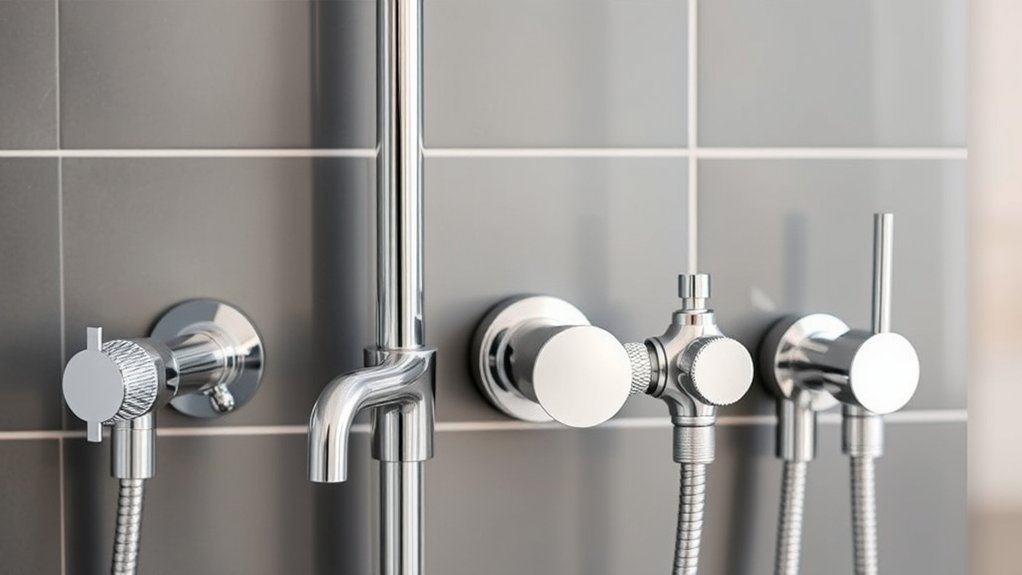
How do different plumbing setups influence the size of your shower faucet? The configuration of your home’s plumbing system directly affects installation compatibility and, consequently, the faucet size you can use.
For example, single-handle setups often require smaller valves and compact faucet bodies, while dual-handle systems need more space to accommodate separate hot and cold valves. Additionally, wall thickness and pipe alignment play essential roles; if pipes are recessed deeply or spaced irregularly, you might need a faucet with an extended trim or larger escutcheon plate.
Accessibility considerations also come into play. If your plumbing is hard to reach, you may prefer faucets designed for easier maintenance that fit specific dimensional requirements. Understanding these factors ensures you select a faucet size that fits seamlessly with your existing plumbing layout.
Tips for Choosing the Right Shower Faucet Size
Selecting the right shower faucet size depends heavily on understanding your plumbing setup and the space available for installation. To avoid installation challenges, you need to consider compatibility and precise measurements before purchasing.
Here are key tips for choosing the right size:
- Measure the distance between supply lines accurately to ensure universal compatibility with your faucet.
- Check the rough-in valve specifications, as mismatched sizes can complicate installation or require additional modifications.
- Account for shower enclosure dimensions to select a faucet size that fits without overcrowding or interfering with other fixtures.
What to Do If Your Shower Faucet Size Doesn’t Fit
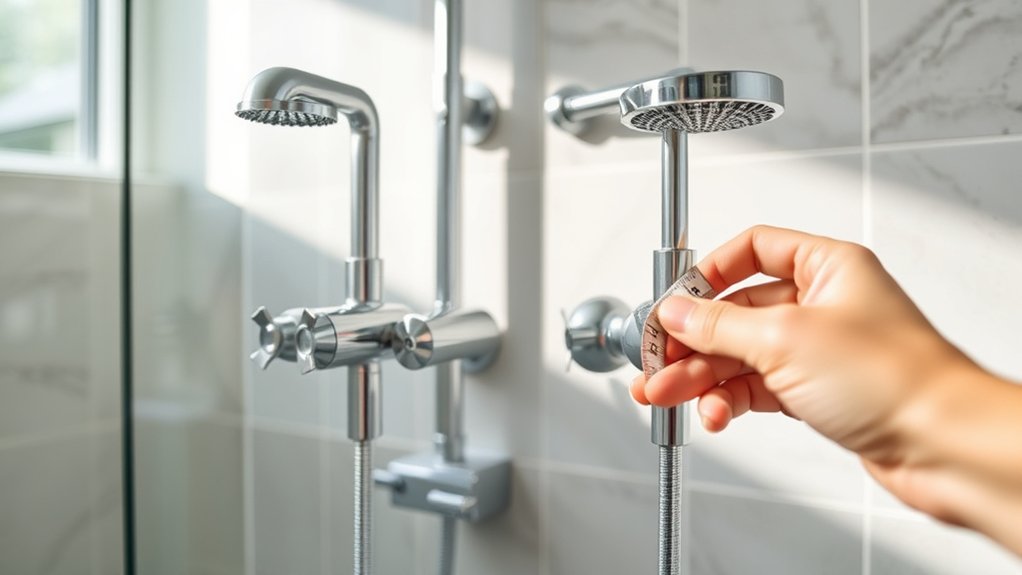
What steps should you take if your shower faucet size doesn’t match your existing plumbing? First, assess the exact dimensions and connections of your current setup to identify incompatibilities.
Next, consider using adapter fittings designed to bridge differing sizes, preventing a costly shower nuisance caused by leaks or improper sealing. If adapters aren’t viable, you might need to modify plumbing, which requires professional assistance to avoid damage.
Always factor these adjustments into your faucet budgeting to ensure you cover potential installation or replacement costs. Additionally, check manufacturer specifications for compatibility and warranty conditions.
Frequently Asked Questions
How Do I Clean and Maintain My Shower Faucet?
You’ll want to adopt cleaning routines like a Victorian butler. Regularly scrub with mild detergent, avoid harsh chemicals, and check seals.
Maintenance tips include inspecting for leaks and lubricating moving parts to ensure smooth operation and longevity.
What Materials Are Shower Faucets Typically Made From?
Shower faucets typically use brass or stainless steel due to materials sourcing focused on corrosion resistance and durability. Plastic components appear for cost-efficiency but lack longevity.
You’ll want corrosion-resistant metals for long-term performance.
Are There Water-Saving Shower Faucet Options Available?
You don’t need a time machine to find water-saving options; modern shower faucets use high efficiency valves that reduce flow without sacrificing pressure. This helps you conserve water while maintaining a comfortable, efficient shower experience.
Can I Install a Shower Faucet Myself Without Professional Help?
You can install a shower faucet yourself if you have basic plumbing skills. Are shower faucets universal? Not always.
Check compatibility and follow precise instructions for installation DIY to guarantee a secure, leak-free setup.
How Do I Fix a Leaking Shower Faucet?
Tighten the leaky handle, replace the faulty cartridge, and seal all connections. You’ll stop drips, restore flow, and prevent damage.
Use proper tools, turn off water, and follow manufacturer instructions precisely for effective repair.