Are You Supposed to Wash Your Feet in the Shower
You might wonder if washing your feet in the shower is really necessary or just an extra step. While it’s easy to overlook, washing your feet in the shower is an important part of maintaining good hygiene. Neglecting this simple habit can lead to unpleasant odor, bacteria buildup, and even fungal infections.
Understanding why and how to properly clean your feet can make a significant difference in your daily hygiene routine. Let’s explore why this small effort matters more than you might think.
Key Takeaways
- Washing feet daily in the shower is essential to remove sweat, dirt, and bacteria that accumulate from wearing shoes.
- Proper foot washing prevents odor, fungal infections, and skin issues by cleansing between toes and soles thoroughly.
- Feet should be washed with warm water and mild soap, gently scrubbing but avoiding harsh or abrasive tools.
- Thorough drying after washing, especially between toes, is crucial to prevent moisture buildup and bacterial growth.
- Incorporating foot washing into the shower routine supports overall hygiene and promotes comfort after long shoe wear.
Why Washing Your Feet in the Shower Is Important for Hygiene
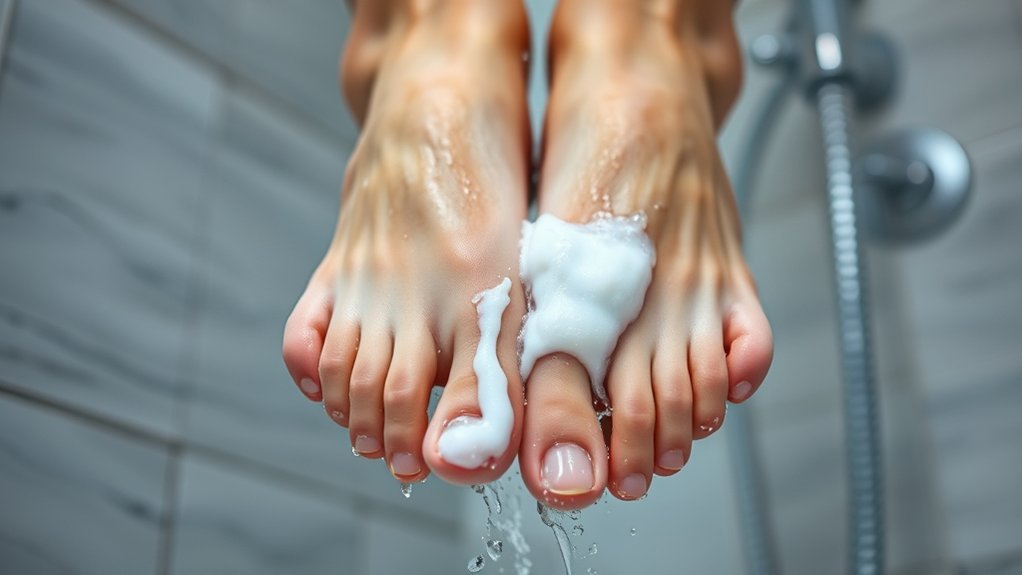
Washing your feet in the shower plays a pivotal role in maintaining overall hygiene. You might overlook your feet during your routine, but consistent feet care is essential to prevent the buildup of sweat, dirt, and dead skin.
Neglecting this can lead to unpleasant foot odor, which often results from bacteria thriving in moist, unclean environments. By thoroughly cleaning your feet, including between the toes, you reduce the risk of fungal infections and keep your skin healthy.
Thoroughly cleaning your feet, especially between toes, prevents odor and fungal infections for healthier skin.
Proper feet care also helps you stay comfortable, especially if you wear closed shoes for long hours. Incorporating foot washing into your shower routine ensures you address areas prone to odor and infection, promoting overall cleanliness and well-being.
Don’t underestimate the importance of this simple step in your hygiene regimen.
How Often Should You Wash Your Feet in the Shower?
How frequently should you focus on cleaning your feet during your shower routine? Ideally, you should wash your feet every time you shower. Daily washing is essential because your feet interact closely with footwear fashion and foot storage conditions, which can harbor sweat and bacteria.
Neglecting foot hygiene can lead to discomfort regardless of your shoe style or storage habits.
| Frequency | Footwear Fashion Impact | Foot Storage Influence |
|---|---|---|
| Daily | Prevents buildup from daily wear | Reduces moisture and odor |
| Every other day | Risk increases with synthetic shoes | Footbeds can trap bacteria |
| Weekly | Not recommended for active use | Prolonged dampness risk |
| Rarely | High risk of skin issues | Promotes fungal growth |
Maintaining consistent foot washing supports overall foot health and complements your footwear fashion choices.
How Washing Your Feet Prevents Odor and Infections
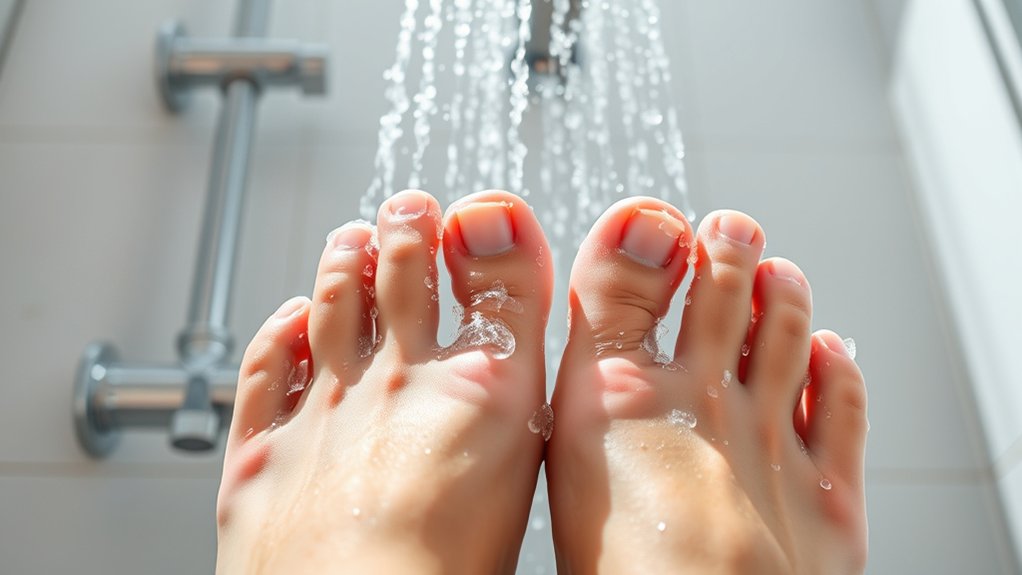
You should wash your feet daily to remove sweat, dirt, and bacteria that cause odor and infections. Regular cleansing helps prevent the growth of fungi and harmful microorganisms.
After washing, drying your feet thoroughly is essential to maintain healthy skin and avoid fungal issues.
Importance of Daily Cleansing
Keeping your feet clean every day plays an essential role in preventing unpleasant odors and infections. Incorporating foot care into your shower rituals ensures you maintain healthy skin and overall hygiene.
When you wash your feet daily, you remove sweat, dirt, and dead skin cells that can accumulate and cause problems.
Here are three key benefits of daily foot cleansing:
- Reduces odor by eliminating sweat and bacteria buildup.
- Prevents skin issues such as dryness, cracking, and fungal infections.
- Promotes comfort and freshness, especially after long days on your feet.
Bacteria and Fungi Prevention
Why does washing your feet regularly matter when it comes to preventing odor and infections? Your feet create a warm, moist environment that encourages bacteria and fungi growth. By thoroughly washing your feet during showers, you remove sweat, dead skin cells, and microorganisms that cause unpleasant odors and infections such as athlete’s foot.
Maintaining good footwear hygiene complements this practice; regularly cleaning your shoes and rotating pairs reduces microbial buildup. Additionally, paying attention to your laundry habits, washing socks in hot water and avoiding wearing the same pair repeatedly, prevents contamination and reinfection.
Together, these steps form a comprehensive approach to foot care, reducing the risk of bacterial and fungal issues and keeping your feet healthy and odor-free. Ignoring foot washing undermines these efforts and increases susceptibility to infections.
Benefits of Proper Drying
Thoroughly washing your feet sets the stage for effective drying, which plays a key role in preventing odor and infections. Proper drying removes residual moisture that can foster bacterial and fungal growth, especially in warm, damp environments created by your footwear.
Using moderate water temperature during washing helps avoid skin irritation, making drying more effective. To maintain optimal footwear hygiene, focus on these three steps:
- Pat your feet dry gently but completely, paying special attention to areas between the toes.
- Use a clean towel to avoid transferring bacteria or fungi back onto your skin.
- Allow your feet to air dry for a few minutes before putting on socks or shoes to ensure no hidden moisture remains.
Following these practices helps protect your feet from odor and infection.
What Happens If You Don’t Wash Your Feet Regularly?
If you don’t wash your feet regularly, sweat and bacteria can accumulate, leading to unpleasant odor. This build-up also increases your risk of skin issues like athlete’s foot and infections.
Keeping your feet clean is essential to prevent these common problems.
Odor and Bacteria Build-Up
Bacteria and odor thrive on your feet when you skip washing them regularly. Neglecting this simple hygiene step can result in unpleasant foot odor and an accumulation of bacteria that affect your overall foot health.
Here’s what happens if you don’t wash your feet:
- Increased Foot Odor: Sweat and bacteria combine, producing a strong, unpleasant smell that’s hard to mask.
- Bacteria Build-Up: Your feet, especially between toes and around toe nails, become breeding grounds for bacteria, increasing the risk of discomfort.
- Visible Dirt and Dead Skin: Without washing, dirt and dead skin cells accumulate, making your feet appear unclean and contributing to odor.
Washing your feet regularly prevents these issues, keeping your feet fresh and reducing the likelihood of bacterial growth and persistent foot odor.
Skin Issues and Infections
What happens to your skin when you skip washing your feet regularly? Neglecting this simple hygiene step can lead to various skin issues and infections. Dead skin, sweat, and dirt accumulate, creating a breeding ground for fungi and bacteria that compromise your footwear health.
This can cause athlete’s foot, fungal infections, and worsen the condition of your toe nails, requiring treatment.
| Skin Issue | Consequence |
|---|---|
| Fungal Infection | Redness, itching, scaling |
| Athlete’s Foot | Cracked skin, discomfort |
| Nail Fungus | Thickened, discolored nails |
To protect your feet, wash them thoroughly and address any toe nails treatment promptly. This keeps your footwear health intact and prevents infections.
How to Wash Your Feet for Cleanliness and Health
How should you wash your feet to maintain optimal cleanliness and health? Proper foot care is essential, and adapting your shower habits can make a big difference. Follow these steps to keep your feet clean and healthy:
- Use warm water and mild soap: Gently cleanse your feet, paying attention to the areas between your toes where dirt and bacteria accumulate.
- Scrub thoroughly but gently: Use a soft brush or washcloth to remove dead skin without causing irritation, promoting better hygiene and skin health.
- Dry completely: After washing, dry your feet thoroughly, especially between the toes, to prevent fungal infections and maintain skin integrity.
Incorporating these habits into your routine ensures effective foot care and supports overall hygiene during your showers.
Common Mistakes to Avoid When Washing Your Feet
Why do some foot-washing routines fail to keep your feet truly clean and healthy? Often, it’s due to common mistakes that undermine effective foot care during your shower routine.
| Mistake | Why to Avoid It |
|---|---|
| Skipping between toes | Moisture and dirt accumulate, causing odor and infections |
| Using harsh soaps | Strips natural oils, leading to dry, cracked skin |
| Rushing the process | Leaves dirt and bacteria behind, compromising cleanliness |
Avoid these errors by thoroughly washing between your toes, using gentle soap, and taking time to cleanse your feet properly. This approach ensures your foot care routine promotes skin health and prevents common problems like fungal infections.
When to Take Extra Care Washing Your Feet (Injuries, Infections, Diabetes)
Taking the time to wash your feet properly becomes even more important when you have injuries, infections, or conditions like diabetes. Your foot care and shower routine must adapt to protect vulnerable skin and prevent complications. Here are three crucial situations to take extra care:
- Injuries: Clean wounds gently to avoid irritation and reduce infection risk. Avoid harsh scrubbing near cuts or blisters.
- Infections: If you notice redness, swelling, or unusual odor, be meticulous with cleaning, but avoid excessive moisture that can worsen fungal infections.
- Diabetes: Since diabetes can impair healing and sensation, inspect your feet daily during your shower routine and cleanse carefully to prevent unnoticed damage.
Do You Need Special Soap or Tools to Wash Your Feet?
Which products and tools truly make a difference when washing your feet? Generally, you don’t need special soap; a mild, moisturizing soap works well to clean without drying your skin.
Mild, moisturizing soap is usually enough for cleaning your feet without causing dryness.
However, if you follow certain footwear trends that involve heavy use of closed or synthetic shoes, you might benefit from antifungal or deodorizing soaps to combat odor and bacteria.
As for tools, a soft foot brush or sponge can help remove dead skin and improve circulation, enhancing the effects of a foot massage. Avoid harsh scrubs or abrasive devices that could irritate sensitive skin.
Ultimately, the key is gentle cleansing and thorough rinsing. Specialized products can help but aren’t mandatory for effective foot hygiene.
Where Washing Your Feet Fits Into Your Shower Routine
Where exactly should you include foot washing in your shower routine to ensure optimal cleanliness? Proper timing and technique in your shower routine enhance footwear hygiene and overall foot care. Follow this guide:
- Begin by rinsing your feet to remove surface dirt and sweat accumulated from footwear.
- Apply soap or body wash, focusing on areas prone to bacteria buildup like between toes and the soles.
- Rinse thoroughly last to wash away all soap residue and loosened debris.
Incorporating foot washing at these stages keeps your feet clean and reduces the risk of fungal infections linked to poor footwear hygiene. Remember, consistent attention during your shower routine ensures your feet remain healthy and fresh.
Frequently Asked Questions
Can Washing Feet in Cold Water Be Effective?
Yes, washing feet in cold water can be effective. You’ll get washing feet benefits like reducing inflammation, tightening skin, and improving circulation.
Cold water effectiveness depends on your goal, so choose temperature based on desired results consistently.
Is It Necessary to Dry Feet Thoroughly After Showering?
Yes, you should always dry feet thoroughly after showering to prevent moisture buildup, which can lead to fungal infections.
Proper foot hygiene includes drying between toes to keep your skin healthy and avoid unpleasant odors or irritations.
Can Washing Feet Too Often Cause Skin Dryness?
Washing your feet too often can dry your skin like leaves in autumn, harming foot health. Adjust your shower routines to balance cleanliness and moisture, ensuring your skin stays healthy without becoming overly dry or irritated.
Are Foot Scrubs Helpful During Shower Foot Washing?
Yes, foot scrubs offer benefits by exfoliating dead skin, improving smoothness during shower foot washing.
But you should avoid overuse, as exfoliation drawbacks include irritation and dryness, so use scrubs gently and sparingly for best results.
Should You Wash Feet Differently in Summer Versus Winter?
You should adjust your foot washing routine seasonally; 60% of people experience dry skin in winter. Prioritize summer care with lighter cleansing and winter care by moisturizing thoroughly to prevent cracking and maintain healthy feet year-round.