Are Silicone Shower Scrubbers Safe
Did you know that traditional loofahs can harbor up to 10 million bacteria per square inch? When considering silicone shower scrubbers, it’s important to understand how this material impacts hygiene and skin health.
Silicone shower scrubbers are gaining popularity due to their unique properties.
Silicone’s non-porous nature helps reduce bacterial buildup compared to traditional loofahs. But is it truly safer for your skin? Exploring these factors will help you make a more informed choice about your shower routine.
Key Takeaways
- Silicone shower scrubbers are made from non-toxic, food-grade silicone that is durable and safe for skin use.
- Their non-porous surface resists bacterial buildup, reducing infection risk compared to traditional sponges.
- Silicone is hypoallergenic and gentle, minimizing skin irritation and allergic reactions.
- Regular cleaning and thorough drying are essential to maintain hygiene and prevent mold growth.
- Experts recommend replacing silicone scrubbers every 3 to 12 months to ensure safety and effectiveness.
What Are Silicone Shower Scrubbers Made Of?
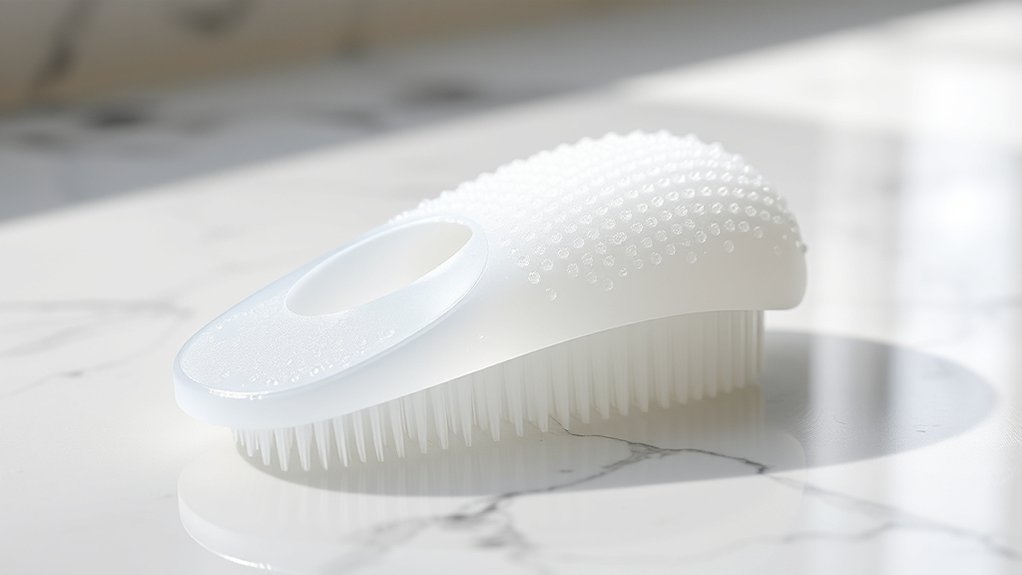
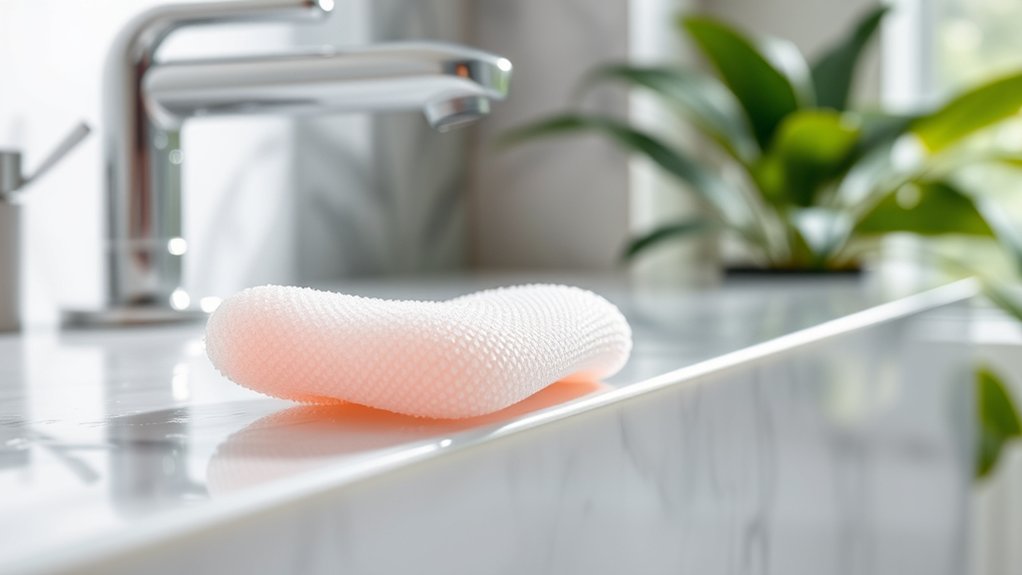
Silicone shower scrubbers are primarily made of food-grade silicone, a durable and flexible polymer known for its safety and non-toxicity. These scrubbers are crafted from materials designed to withstand heat, moisture, and repeated use without degrading.
Because they’re made of materials that resist bacterial growth and don’t harbor mold like traditional sponges, they address common safety concerns associated with bath accessories. When you choose a silicone scrubber, you’re selecting a product manufactured with high-quality, non-toxic components that minimize risks of skin irritation or allergic reactions.
Understanding what these scrubbers are made of helps you make informed decisions about their suitability for your daily hygiene routine, ensuring both effectiveness and peace of mind.
Are Silicone Shower Scrubbers Safe? Bacteria and Skin Sensitivity
Anyone concerned about hygiene will appreciate that these shower scrubbers resist bacterial buildup far better than traditional sponges. Silicone’s non-porous surface limits bacteria transmission, reducing infection risk. Plus, it’s gentle on your skin, lowering the chance of skin irritation.
Here’s what you should know:
- Silicone’s smooth texture discourages bacteria growth compared to porous materials.
- You can easily clean and dry silicone scrubbers, preventing bacterial colonies.
- The hypoallergenic nature of silicone minimizes allergic reactions and skin irritation.
- Regular cleaning is still essential to maintain hygiene and skin health.
Silicone Shower Scrubbers vs. Traditional Loofahs: Which Is Cleaner?
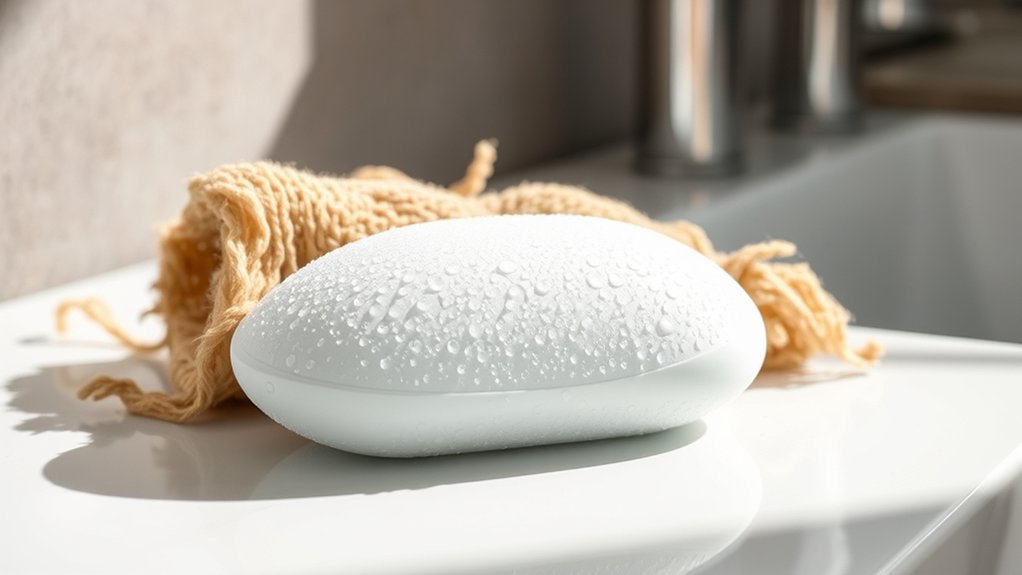
How do silicone shower scrubbers compare to traditional loofahs when it comes to cleanliness? Silicone scrubbers are generally cleaner because their non-porous surface resists bacterial growth and mold better than loofahs.
Unlike loofahs, which absorb water and trap moisture, silicone scrubbers dry quickly, reducing mold risk. This means you don’t have to worry about cleaning frequency as much, although regular rinsing and drying remain essential.
Traditional loofahs require more frequent deep cleaning and replacement to prevent mold buildup and bacterial contamination. If you’re aiming for a cleaner option that demands less maintenance, silicone scrubbers offer a clear advantage.
Their design supports mold prevention naturally, making them a safer, more hygienic choice for your shower routine.
Cleaning and Maintaining Your Silicone Shower Scrubber
When should you clean your silicone shower scrubber to keep it in optimal condition? Regular cleaning is essential to prevent bacteria buildup and maintain hygiene. Here’s how to properly care for it:
- Rinse thoroughly after each use to remove soap and debris.
- Soak weekly in a mixture of warm water and mild detergent or vinegar to disinfect.
- Air dry completely in a well-ventilated area to avoid moisture retention.
- Avoid harsh chemicals or abrasive scrubbers to prolong its lifespan and reduce environmental impact.
When to Replace Your Silicone Shower Scrubber
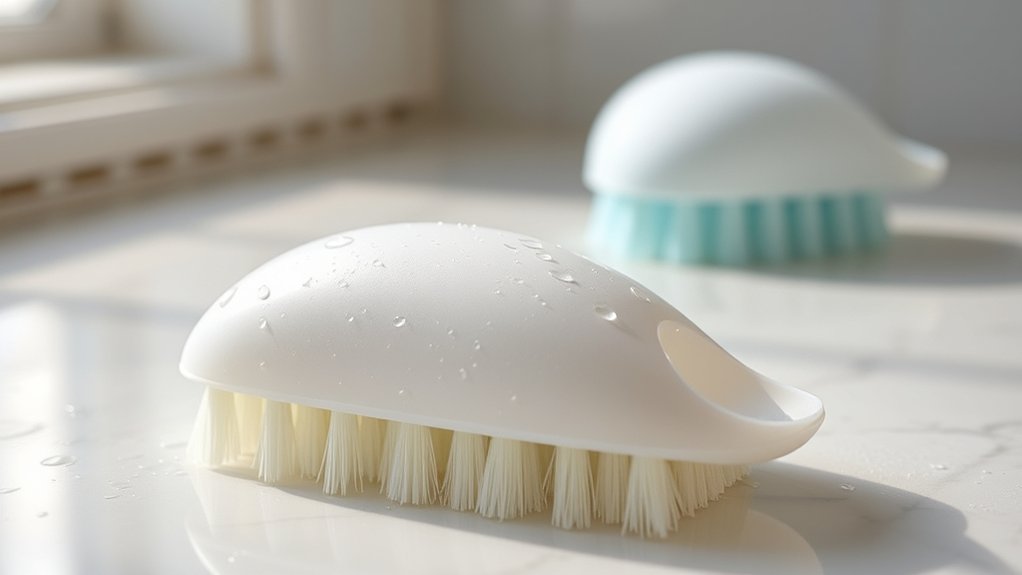
You should replace your silicone shower scrubber when you notice signs of wear, such as cracks, tears, or loss of flexibility. Experts generally recommend changing it every six to twelve months to maintain hygiene and effectiveness.
Keeping track of these indicators guarantees your scrubber remains safe and functional.
Signs of Wear
Why should you pay close attention to the condition of your silicone shower scrubber? Over time, wear can compromise its effectiveness and hygiene. Silicone scrubbers, unlike wearable fabrics, don’t absorb water but can still degrade, trapping bacteria or causing skin irritation.
Being aware of signs of wear helps prevent issues like fragrance allergies or skin sensitivity.
Here are four key signs to watch for:
- Tearing or cracking indicates material breakdown that can harbor bacteria.
- Loss of flexibility reduces scrubbing efficiency.
- Discoloration suggests mold or mildew growth.
- Persistent odor signals buildup of residues despite cleaning.
Replacing your scrubber promptly ensures safe, hygienic use and prevents skin problems.
Recommended Replacement Frequency
How often should you replace your silicone shower scrubber to maintain optimum hygiene and performance? Experts generally recommend replacing it every three to six months, depending on your cleaning habits and usage frequency.
While silicone is durable and resists bacterial buildup better than traditional scrubbers, regular replacement prevents the accumulation of oils, dead skin cells, and soap scum that can harbor microbes. If you notice signs of wear, such as tears or discoloration, replace it sooner to ensure safety.
Maintaining consistent cleaning habits, rinsing thoroughly and allowing it to air dry, can extend its lifespan but won’t eliminate the need for periodic replacement. Adhering to these replacement intervals helps you enjoy the full benefits of your silicone scrubber without compromising hygiene.
Tips for Safe and Effective Use of Silicone Shower Scrubbers
When should you replace your silicone shower scrubber to maintain optimal hygiene and effectiveness? Regular replacement reduces bacteria growth and prevents irritation, especially if you have sensitive skin.
Replace your silicone shower scrubber regularly to reduce bacteria and prevent skin irritation, especially for sensitive skin.
To use your scrubber safely and effectively, follow these tips:
- Clean your scrubber thoroughly after each use with soap and hot water to minimize bacteria growth.
- Allow it to dry completely in a well-ventilated area to prevent mold and mildew.
- Avoid sharing your scrubber to reduce the risk of cross-contamination, particularly if you have skin sensitivity.
- Inspect it regularly for signs of wear or discoloration and replace it every 3-4 months or sooner if hygiene is compromised.
Common Myths and Facts About Silicone Shower Scrubbers
What misconceptions might you have about silicone shower scrubbers? Let’s clear up common myth vs fact statements to address safety misconceptions and help you use these tools confidently.
| Myth | Fact |
|---|---|
| Silicone scrubbers harbor bacteria easily | Their non-porous surface resists bacterial buildup well. |
| They’re abrasive and damage skin | Silicone is gentle, suitable for sensitive skin types. |
| They wear out quickly | Silicone is durable and can last months with proper care. |
| They’re unsafe for all skin types | They’re safe for most, but always patch test if unsure. |
Knowing these facts helps you avoid false worries and enjoy the benefits of silicone shower scrubbers safely.
Frequently Asked Questions
Can Silicone Shower Scrubbers Help Exfoliate Dead Skin?
As your fingertips glide over the silicone scrubber, you’ll notice it gently lifts dead skin, delivering exfoliation benefits without harsh abrasion.
It’s perfect if you’re mindful of skin sensitivity and want effective, soothing cleansing.
Are Silicone Scrubbers Suitable for All Skin Types?
You’ll find silicone scrubbers generally offer excellent skin type compatibility, but you should consider sensitivity considerations if you have very delicate or reactive skin.
Always test gently first to ensure it suits your unique skin needs.
Do Silicone Scrubbers Cause Any Allergic Reactions?
However, silicone scrubbers rarely trigger allergic reactions. You might still experience skin irritation if you have sensitive skin. Their hypoallergenic nature generally minimizes risks, but always test on a small area to confirm your skin reacts well.
Can Silicone Scrubbers Be Used With Body Wash or Soap?
You can confidently use silicone shower scrubbers with body wash or soap. Their silicone compatibility ensures soap safe usage, allowing effective cleansing without degrading the scrubber or affecting your skin’s health.
Are Silicone Shower Scrubbers Environmentally Friendly?
You should know silicone shower scrubbers are somewhat eco friendly but raise concerns due to limited biodegradability. Check labeling accuracy carefully, as many products lack clear eco certifications, ensuring you make a more informed, sustainable choice.