Are Shower and Toilet Drains Connected
You might assume shower and toilet drains run separately, but shower and toilet drains are often connected through carefully designed plumbing lines. Understanding how these drains merge, vent, and flow is crucial to avoid common issues like clogs or odors.
Proper slope, fitting types, and venting ensure everything works smoothly. Before you inspect your system or consider repairs, it helps to know why these connections exist and how they follow specific plumbing codes.
Key Takeaways
- Shower and toilet drains typically run separately before merging into a common waste stack or main sewer line.
- Shower drains carry gray water, while toilet drains handle heavier black water waste, requiring separate venting.
- The connection between shower and toilet drains uses sanitary tees or wye fittings for smooth flow and backflow prevention.
- Proper venting maintains air pressure, reduces odors, and ensures efficient drainage for both shower and toilet lines.
- Separate drain lines simplify maintenance and reduce cross-contamination risks, but they converge downstream in the plumbing system.
Why Do Shower and Toilet Drains Usually Have Separate Lines?

Why do shower and toilet drains typically run through separate lines? You’ll find that separating these lines helps prevent cross-contamination and maintains proper system function.
The shower drain carries mostly gray water, so it requires less ventilation. However, the toilet vent needs to manage stronger odors and gases from black water waste, so it’s designed with specific venting requirements to maintain air pressure and prevent siphoning of traps.
Keeping these lines separate also simplifies maintenance and reduces clog risks since toilet waste is heavier and more prone to blockages. When you design or inspect plumbing, you’ll see that shower drains connect to the drainage system independently to ensure smooth flow, while the toilet vent works to balance air pressure for efficient waste removal without backflow or odors.
How Do Shower and Toilet Drain Lines Connect and Merge?
You’ll find that shower and toilet drain lines typically run separately before they connect to a common waste stack or main sewer line. The plumbing layout ensures wastewater from both fixtures merges efficiently while preventing backflow or blockages.
Understanding this connection helps you troubleshoot drainage issues and maintain proper flow.
Drain Line Plumbing Layout
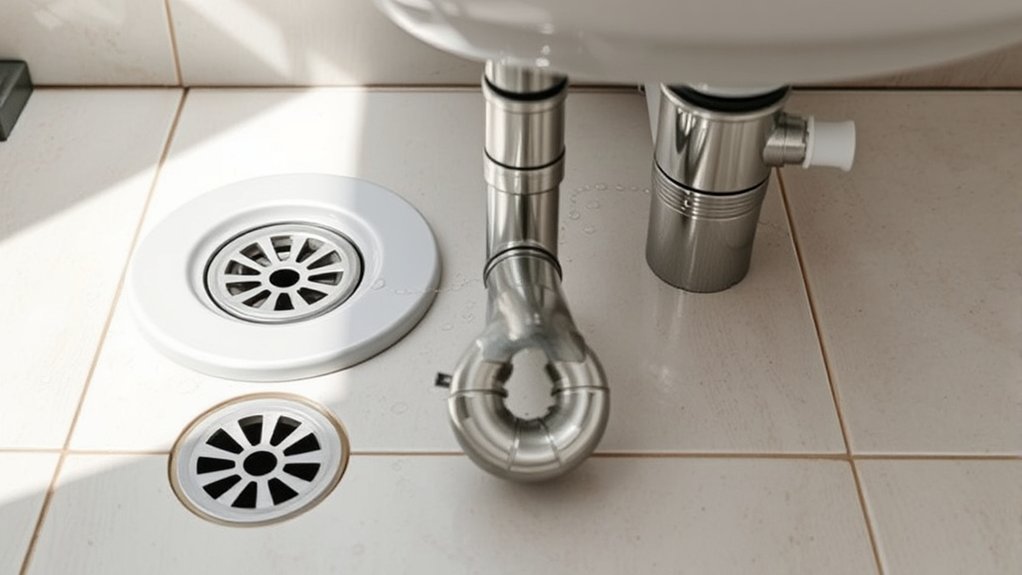
How exactly do shower and toilet drain lines connect and merge within a typical plumbing system? Understanding the drain line plumbing layout clarifies this connection. Both fixtures usually tie into a common branch drain line before reaching the main soil stack.
Here’s how the layout typically works:
- The shower drain line slopes at least 1/4 inch per foot toward the main drain to prevent standing water.
- The toilet connects directly to a 3- or 4-inch soil pipe designed to handle solid waste.
- Both lines converge at a sanitary tee or wye fitting, ensuring smooth wastewater transition.
- The combined flow continues vertically through the main stack, vented properly to avoid pressure buildup.
This arrangement ensures efficient drainage while maintaining proper venting and slope throughout the plumbing layout.
Wastewater Flow Connection
Understanding the physical layout of shower and toilet drain lines sets the stage for examining how their wastewater flows connect and merge within the system. Typically, these drains originate separately but converge into a common branch pipe before entering the main sewer line.
You’ll find the shower’s wastewater line joining the toilet’s drain via a Y- or T-fitting, designed to promote smooth flow and prevent backflow. This connection ensures proper venting and hydraulic efficiency.
Which Plumbing Codes Matter for Shower and Toilet Drains?
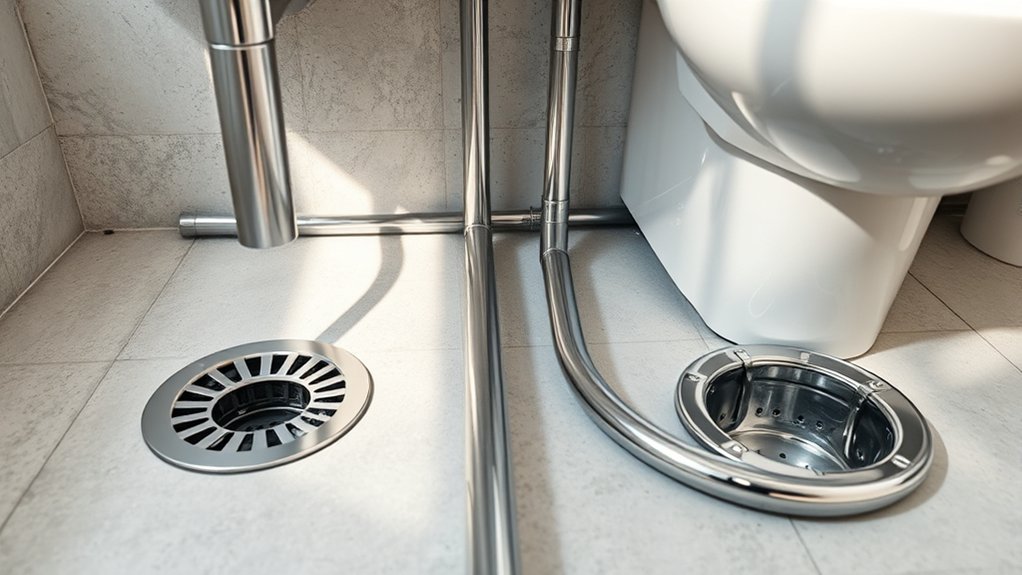
You’ll need to follow the International Plumbing Code as a baseline for connecting shower and toilet drains, since it sets the national standards. However, local codes can vary, so always check for specific regulations in your area.
Pay close attention to drainage and venting standards to ensure proper flow and prevent sewer gas leaks.
International Plumbing Code
Why do plumbing codes matter when dealing with shower and toilet drains? The International Plumbing Code (IPC) sets standards ensuring your drains function properly and prevent health hazards. It regulates critical aspects like drain sizing and vent requirements to avoid clogs and sewer gas leaks.
Here’s what the IPC governs for shower and toilet drains:
- Proper drain sizing to handle waste volume and flow rate.
- Vent requirements that maintain air pressure and prevent trap siphoning.
- Connection standards ensuring separate fixtures drain correctly without cross-contamination.
- Material specifications to guarantee durability and compliance with safety norms.
Following the IPC helps you install a reliable, code-compliant drainage system, reducing risks of blockages and odors while protecting your home’s plumbing integrity.
Local Code Variations
How do local plumbing codes impact the installation of shower and toilet drains? Local codes often modify or add specific requirements beyond national standards, affecting how you connect and route these drains.
Depending on your jurisdiction, you might encounter unique rules for pipe materials, slope gradients, or trap requirements for shower drains and toilet drains. Some areas require separate drain lines to prevent cross-contamination, while others allow combined lines under strict conditions.
You’ll need to consult your municipality’s plumbing code, as it governs permissible configurations and ensures compliance with local health and safety regulations. Ignoring these local variations can lead to failed inspections or costly rework.
Always verify the local code first to ensure your shower drains and toilet drains installation meets all mandatory standards.
Drainage and Venting Standards
Although local codes set specific rules, national plumbing standards primarily govern drainage and venting systems for shower and toilet drains. These codes ensure proper drain venting to prevent sewer gas from entering your living space and maintain efficient wastewater flow.
When working on or inspecting these systems, you should focus on:
- International Plumbing Code (IPC), widely adopted, outlines vent sizing and placement.
- Uniform Plumbing Code (UPC), emphasizes venting requirements to control sewer gas.
- National Standard Plumbing Code (NSPC), details standards for drain pipe connections.
- Local amendments may add specific provisions based on regional conditions.
Common Problems Caused by Shared or Connected Drain Lines
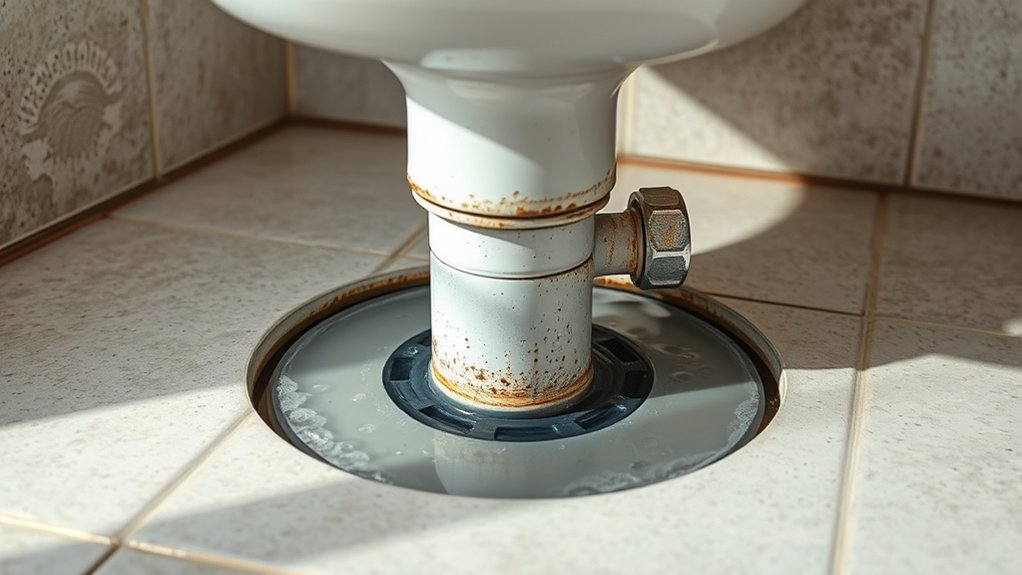
What issues might arise when shower and toilet drains share the same line? One common problem is frequent clogs caused by combined waste and hair buildup. Toilet waste often contains solids that can lodge in pipes, while shower drains accumulate soap scum and hair, making blockages more likely.
This complicates shower maintenance, requiring more frequent cleaning to prevent backups. Additionally, improper toilet etiquette, such as flushing inappropriate items, can exacerbate these clogs. Another issue is odor transfer; gases from toilet drains can migrate into shower drains if venting is inadequate, causing unpleasant smells.
You might also experience slow drainage in one fixture when the other is in use due to shared piping restricting flow. Understanding these practical challenges helps you maintain your plumbing system efficiently and avoid costly repairs.
Signs Your Shower or Toilet Drain Connection Is Failing
Why might you notice persistent slow drainage or recurring clogs in both your shower and toilet? It often signals a failing connection between these drains. Issues in shared drain lines can cause backups and odors, impacting bathroom ventilation and overall hygiene.
Here are four signs to watch for:
- Gurgling sounds from drains when water flows, indicating trapped air due to blockages.
- Water pooling around shower drains or toilet bases, showing leaks or misaligned pipes.
- Frequent clogs despite using water saving fixtures designed to reduce flow and pressure.
- Unpleasant sewer odors in the bathroom, suggesting venting problems affecting air circulation.
Addressing these symptoms promptly helps maintain efficient drainage and prevents damage to your plumbing system.
How Understanding Drain Connections Can Help Your Plumbing Maintenance
How do your shower and toilet drains interact within your plumbing system? Understanding their connection helps you maintain optimal shower efficiency and ensures your toilet fixtures function properly.
Both drains typically converge into a common waste line, meaning a blockage or issue in one can affect the other. By knowing this, you can monitor water flow and pressure changes more effectively, identifying problems early.
This insight guides your maintenance schedule, focusing on joint areas prone to wear or buildup. Also, it helps you select appropriate cleaning methods and tools that protect both shower and toilet components.
Ultimately, grasping these connections allows you to avoid costly repairs, maintain hygiene standards, and sustain efficient drainage across your bathroom plumbing system.
How to Prevent Clogs Between Shower and Toilet Drains
Recognizing the shared pathways between your shower and toilet drains highlights the importance of proactive measures to keep them clear. While it might seem like an unrelated topic or random tangent, addressing potential blockages early prevents costly repairs.
To prevent clogs, you should:
- Regularly clean drain covers to stop hair and debris accumulation.
- Avoid flushing non-degradable items down the toilet, as they can cause blockages downstream.
- Use enzyme-based drain cleaners monthly to break down organic buildup without harming pipes.
- Install hair traps in the shower drain to minimize hair entry into the pipes.
When to Call a Plumber for Shower and Toilet Drain Issues
When should you call a plumber for shower and toilet drain issues? If you notice persistent slow drainage, frequent backups, or foul odors, it’s time to seek professional help. Don’t fall for common maintenance myths suggesting DIY fixes always suffice. Improper handling can worsen blockages or damage pipes.
Also, venting misconceptions often lead homeowners to overlook essential vent pipe problems that cause drainage inefficiencies. A plumber can accurately diagnose whether the issue stems from clogged drains, venting failures, or damaged sewer lines.
Additionally, if multiple fixtures back up simultaneously, this signals a main line problem requiring expert intervention. Addressing these concerns promptly prevents costly repairs and ensures your drainage system functions smoothly. Trust a professional rather than risking ineffective DIY attempts that may exacerbate the problem.
Tips for Maintaining Healthy Shower and Toilet Drain Lines
Why prioritize regular maintenance for your shower and toilet drain lines? Neglecting them can cause blockages, odors, and costly repairs. Staying proactive prevents issues and extends your plumbing’s lifespan.
Regularly maintaining shower and toilet drains prevents blockages, odors, and expensive repairs while extending plumbing life.
Follow these four tips:
- Use strainers to catch hair and debris, preventing unrelated topic blockages.
- Avoid flushing off topic items like wipes or sanitary products; they clog pipes.
- Schedule periodic inspections and cleanings to detect early signs of buildup or damage.
- Use enzymatic drain cleaners monthly; they break down organic matter without harming pipes.
Frequently Asked Questions
Can a Shower Drain Cause Toilet Odors to Enter the Bathroom?
Yes, shower odors can cause drain odors to enter your bathroom if venting or traps fail, allowing sewer gases from connected plumbing to escape. Properly sealed traps and vent systems prevent these unpleasant odors effectively.
Are There Health Risks From Shared Shower and Toilet Drain Lines?
Imagine a party where germs RSVP uninvited. Shared drains can invite harmful bacteria, but worrying about unrelated topics like drain layout causes irrelevant concerns. You should maintain traps and venting to minimize real health risks effectively.
How Much Does It Cost to Separate Connected Shower and Toilet Drains?
You’ll find drain separation cost estimates typically range from $1,000 to $3,500, depending on plumbing complexity and local labor rates.
Plan for potential permits and inspections to ensure code compliance during the project.
Can DIY Methods Fix a Connected Shower and Toilet Drain Issue?
You can attempt DIY remedies for connected plumbing issues, but precise diagnosis and proper venting often require professional tools. For lasting fixes, avoid guesswork; improper handling may worsen drainage or cause odors.
Consider expert assistance.
Do Different Drain Types Affect Water Pressure in Showers or Toilets?
You won’t notice different drain types affecting water pressure directly; instead, improper drain venting disrupts airflow, impacting wastewater current and pressure balance in showers or toilets.
Proper venting ensures consistent, efficient water flow in your plumbing system.