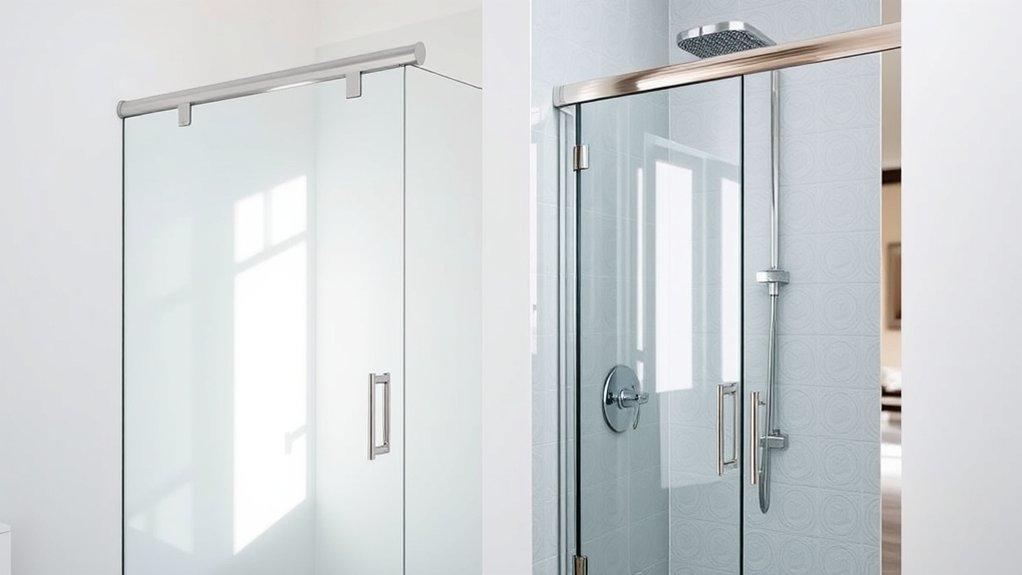
Are Sliding Shower Doors Better Than Hinged
Choosing between sliding shower doors and hinged doors isn’t always a straightforward decision—it often depends on factors you might not immediately consider. You’ll want to think about space constraints, ease of access, and how much upkeep you’re willing to handle.
While sliding doors save valuable floor space, hinged doors offer wider entry. The best choice hinges on your bathroom layout and lifestyle, but there’s more to weigh before you decide.
Key Takeaways
- Sliding shower doors save space by eliminating door swing, making them ideal for small bathrooms with tight layouts.
- Hinged doors provide wider entry and easier access to shower controls when fully opened.
- Sliding door tracks require regular cleaning to prevent sticking. Hinged doors need periodic hinge tightening.
- Sliding doors typically cost more upfront due to complex track systems and custom glass installation.
- Sliding doors offer a sleek, modern look; hinged doors deliver classic style with visible hardware options.
Sliding vs. Hinged Shower Doors: Which One Is Right for You?
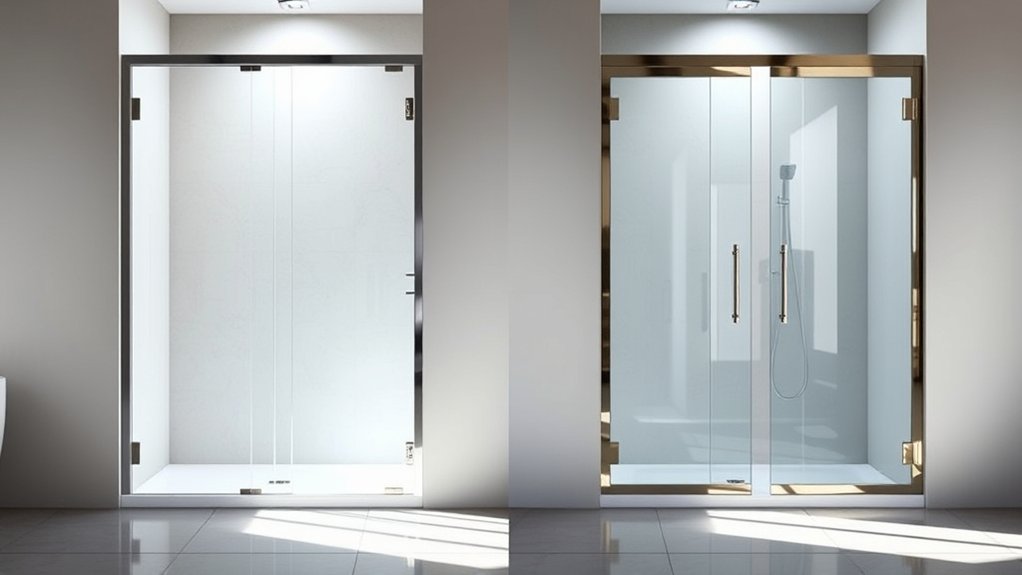
How do you decide between sliding and hinged shower doors for your bathroom? First, consider your space. Sliding doors are ideal for tight bathrooms since they don’t require extra clearance to open. Hinged doors, however, need enough room to swing open comfortably.
Next, think about maintenance. Sliding doors have tracks that can collect grime, requiring regular cleaning to function smoothly. Hinged doors are easier to wipe down but might need more robust hinges for durability.
Also, evaluate accessibility: hinged doors offer a wider entry, which can be helpful if you need more space to move in and out. Finally, weigh your lifestyle needs and bathroom layout carefully.
Modern Sliding vs. Classic Hinged Shower Door Styles
Choosing between sliding and hinged shower doors involves more than just function; style plays a big role in how your bathroom looks and feels. Sliding door aesthetics tend to be sleek and contemporary, featuring clean lines and minimalistic frames that blend seamlessly with modern decor.
Choosing sliding or hinged shower doors impacts both function and the overall style of your bathroom space.
In contrast, hinged door hardware often offers a classic, timeless appeal with visible hinges and handles that can be ornate or traditional. When selecting, consider how these elements complement your bathroom’s overall design. Picture this:
- Smooth, frameless sliding doors enhancing a streamlined, modern space
- Polished chrome hinges adding vintage charm to a tiled shower
- Frosted sliding panels creating a subtle, soft-light effect
- Brass or bronze hinged door hardware providing warmth and character
Both styles offer distinct visual impacts, so choose the one that matches your personal taste and bathroom vibe.
How Sliding Shower Doors Save Space
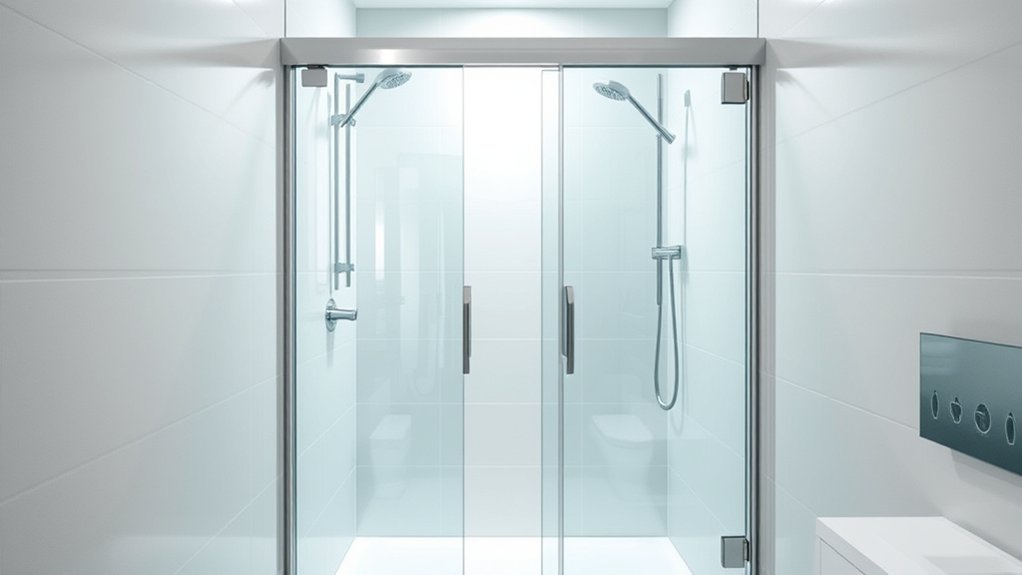
Wondering how to maximize your bathroom’s layout without compromising on style? Sliding shower doors offer excellent space optimization by eliminating the need for door clearance that hinged doors require.
Instead of swinging outward, sliding doors glide smoothly along fixed door tracks installed at the top and bottom of your shower enclosure. This design means you won’t have to worry about a door hitting towels, fixtures, or narrowing the available floor space.
The door tracks keep the panels aligned and stable, ensuring smooth operation while maintaining a sleek, streamlined look. By choosing sliding doors, you can make the most of limited bathroom real estate, creating a more open and functional environment without sacrificing ease of use or aesthetic appeal.
Why Hinged Shower Doors Offer Easy Access
While sliding shower doors excel at saving space, hinged shower doors provide a different kind of convenience: easy and unobstructed access to your shower. You’ll appreciate how they swing fully open, giving you a wide entryway without any overlap or track interference. This makes cleaning and maintenance simpler, too, unlike some unrelated subtopic concerns like water leakage patterns.
When considering two word discussion ideas like “door clearance,” hinged doors clearly offer ample room to maneuver.
Here’s what easy access looks like with hinged doors:
- Wide opening for stepping in comfortably
- Full reach to all shower controls
- Unhindered access for cleaning glass panels
- Easy installation of grab bars or accessories
Choosing hinged doors means prioritizing straightforward access without compromise.
Sliding vs. Hinged Shower Doors: Accessibility and Safety Compared
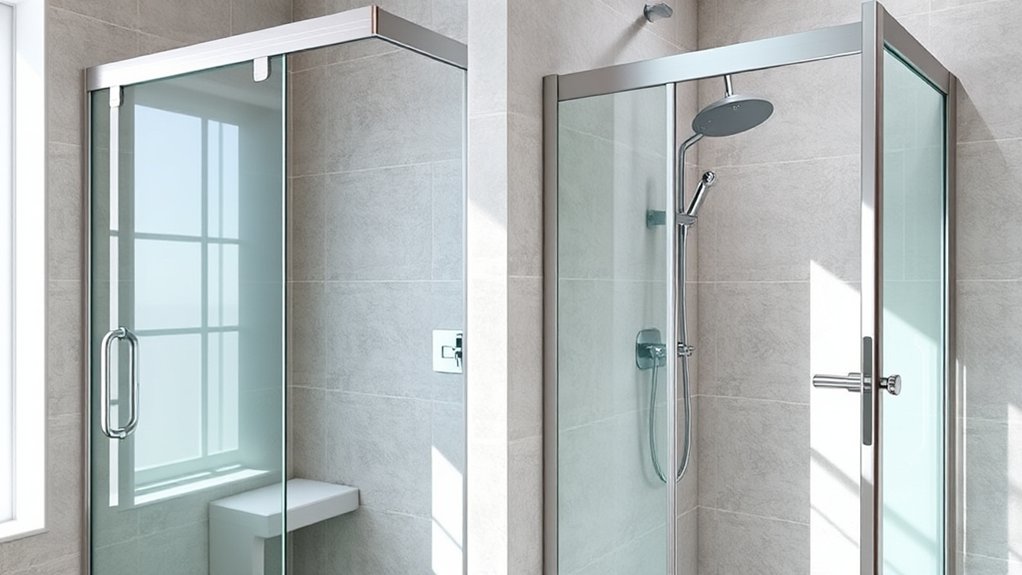
When choosing between sliding and hinged shower doors, you’ll want to consider how easily you can enter and exit the shower. Sliding doors save space but may limit your opening width, while hinged doors offer a full opening for easier access.
You should also compare safety features like secure handles, tempered glass, and smooth operation to ensure your shower stays safe and user-friendly.
Ease Of Entry
How easily you can enter your shower depends largely on the type of door you choose. Sliding doors offer consistent ease of entry, as they glide smoothly without requiring extra space to swing open. Hinged doors, meanwhile, swing outward and need clearance, which might hinder access in smaller bathrooms. Consider how each option fits with your bathroom’s layout to maintain design harmony.
With sliding doors, you’ll notice:
- No obstruction in the bathroom pathway
- Steady, controlled movement for easy access
- Ideal for narrow spaces or tight corners
- Seamless integration with modern, minimalist styles
Hinged doors, although classic, demand more room, potentially complicating your shower entry. Your choice impacts daily convenience and the overall flow of your bathroom.
Safety Features Comparison
Choosing between sliding and hinged shower doors affects more than just entry convenience. It also influences your bathroom’s safety and accessibility. Sliding doors typically offer enhanced safety features due to their fixed tracks and smooth gliding mechanism, reducing the risk of sudden door swings that can cause accidents.
They often come with tempered glass and durable hardware, ensuring long-lasting durability and resistance to shattering. Hinged doors, while providing wider openings, require adequate clearance to avoid hitting objects or people. This can pose safety concerns in tight spaces.
Their durability depends on robust hinges and seals to prevent leaks and maintain stability. When prioritizing safety features, consider your bathroom layout and how each door type’s durability and operation might impact daily use and accident prevention.
Installing Sliding vs. Hinged Shower Doors: What to Expect
Although both sliding and hinged shower doors serve the same purpose, their installation processes differ substantially in complexity and time. When installing sliding doors, you’ll focus on fitting tracks securely at the top and bottom to ensure smooth operation and proper moisture control.
Hinged doors require precise alignment of hinges and sealing to prevent leaks.
Here are key installation considerations:
- Measuring the opening accurately for a perfect fit
- Securing wall brackets or tracks firmly
- Applying waterproof seals along edges
- Testing door swing or slide for obstruction-free movement
Sliding doors often take longer due to track installation but offer better moisture containment. Hinged doors may install faster but demand careful sealing to avoid water escaping. Knowing these differences helps you prepare for what’s ahead.
Cleaning and Maintaining Sliding and Hinged Doors
When should you clean your shower doors to keep them looking their best and functioning smoothly? Ideally, you should perform cleaning maintenance at least once a week to prevent soap scum and mineral buildup.
For sliding doors, focus on the tracks and rollers. Debris can cause jamming or uneven movement. Use a small brush or vacuum to clear dirt, then wipe with a mild cleaner.
Hinged doors require you to pay close attention to the door hardware, such as hinges and handles, to avoid rust or stiffness. Regularly apply a silicone-based lubricant to keep hinges operating quietly.
In both door types, squeegee glass panels after each use to reduce water spots. Consistent cleaning maintenance extends the life of your doors and ensures smooth operation every day.
Cost Comparison: Are Sliding Shower Doors More Expensive?
Keeping your shower doors clean and well-maintained helps avoid unexpected repair costs, but you might wonder how initial expenses compare between sliding and hinged options. In a cost comparison, sliding doors generally come with a higher upfront price due to their complex track systems and custom glass panels.
Hinged doors tend to be more affordable and often have a shorter installation timeline. However, sliding doors can save space, potentially reducing overall bathroom renovation costs.
Consider these factors:
- Price of glass panels and frames
- Complexity of track and roller systems
- Labor time required for precise installation
- Potential need for wall modifications
Understanding these details helps you decide which door type fits your budget and project timeline best.
Common Problems With Sliding and Hinged Doors and How to Avoid Them
What issues might you face with sliding and hinged shower doors, and how can you prevent them? Sliding doors often struggle with track buildup, causing sticking or jamming. Clean the tracks regularly to avoid this and ensure smooth operation.
Hinged doors may become misaligned or develop loose hinges, affecting their swing and seal. Tighten screws periodically and check alignment to maintain functionality.
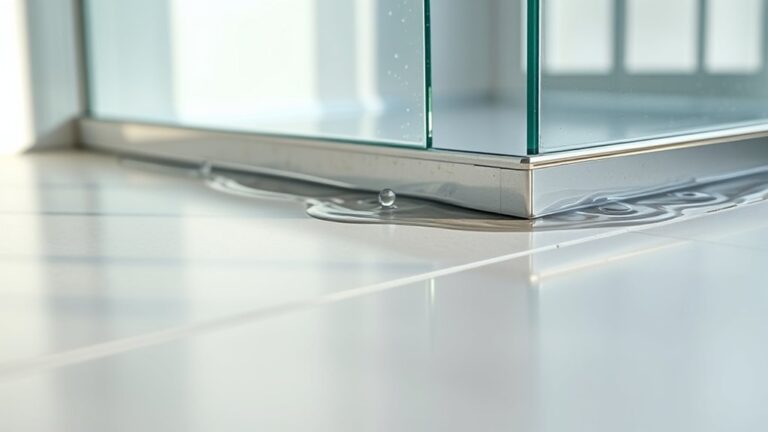
Both door types can suffer from water leakage, especially if seals wear out. Inspect and replace seals as needed to protect your bathroom’s interior decor.
Choosing the right glass textures can also help reduce water spots and enhance privacy. By addressing these common problems proactively, you’ll keep your shower doors functional and stylish, ensuring they complement your bathroom’s design without frequent repairs.
Frequently Asked Questions
Can Sliding or Hinged Doors Be Customized With Frosted Glass?
About 70% of homeowners opt for custom frosted glass in shower doors. You can customize both sliding and hinged doors with frosted glass, ensuring a sleek installation finish that adds privacy and style to your bathroom effortlessly.
Do Sliding Shower Doors Require Special Track Lubrication?
Yes, sliding shower doors do require sliding track lubrication to ensure smooth operation. Regular door maintenance, including cleaning and lubricating the track, prevents sticking, reduces wear, and extends the door’s lifespan.
Are Sliding or Hinged Doors Compatible With Bathtubs?
You won’t believe it, but sliding and hinged doors both fit bathtubs well! Sliding vs hinged, sliding doors need durable door tracks, while hinged doors offer easier access and simpler maintenance. Choose based on space and durability needs.
Can Sliding Shower Doors Be Installed on Uneven Floors?
You can install sliding shower doors on uneven floors, but it requires adjustments like shimming or leveling.
Don’t confuse this with unrelated topics or irrelevant ideas like door style preferences; focus on proper installation techniques instead.
What Types of Warranties Are Available for Sliding and Hinged Doors?
You’ll find warranty options covering defects, hardware, and glass coatings for both sliding and hinged doors. These warranties typically range from one year to lifetime, so check specifics to ensure coverage matches your needs and installation type.