Are You Supposed to Put Lotion on After a Shower
You might not realize it, but applying lotion right after your shower can noticeably impact your skin’s hydration. Putting lotion on after a shower helps lock in moisture while your skin is still damp, making it more receptive to moisturizing ingredients. This step supports your skin’s natural barrier and keeps it healthy.
Missing this crucial step could lead to increased dryness and irritation. Understanding the science behind this timing reveals why your routine might need a simple adjustment for healthier skin. By applying lotion immediately after showering, you maximize hydration and maintain smooth, supple skin.
Key Takeaways
- Applying lotion immediately after showering locks in moisture and helps restore the skin’s hydration barrier disrupted by water and heat.
- Skin is more permeable and receptive to lotion absorption when damp, enhancing moisture retention and preventing dryness.
- Post-shower moisturizing supports skin health by maintaining barrier function, reducing irritation, and promoting balanced skin microflora.
- Choosing fragrance-free, hypoallergenic lotions with hydrating ingredients like hyaluronic acid and ceramides minimizes irritation and maximizes hydration.
- Skipping lotion after a shower can lead to rapid moisture loss, dryness, weakened barrier integrity, and increased risk of skin irritation.
Why Applying Lotion After Showering Prevents Dry Skin
Why does applying lotion immediately after showering help prevent dry skin? When your skin is damp, it’s more permeable and primed to absorb moisture. Locking in hydration at this stage prevents water loss through evaporation, which is the primary reason to skip lotion after drying off completely.
Applying lotion right after your shower creates a barrier that seals moisture, maintaining skin elasticity and preventing dryness. Even at spa temperatures, which are often warm and humid, your skin benefits from immediate hydration to counterbalance any moisture loss.
Skipping this step allows natural oils to wash away, leading to dehydration. So, promptly moisturizing after a shower ensures your skin retains best hydration, supporting its natural protective functions and preventing the discomfort and damage associated with dry skin.
How Hot Water Dries Out Your Skin
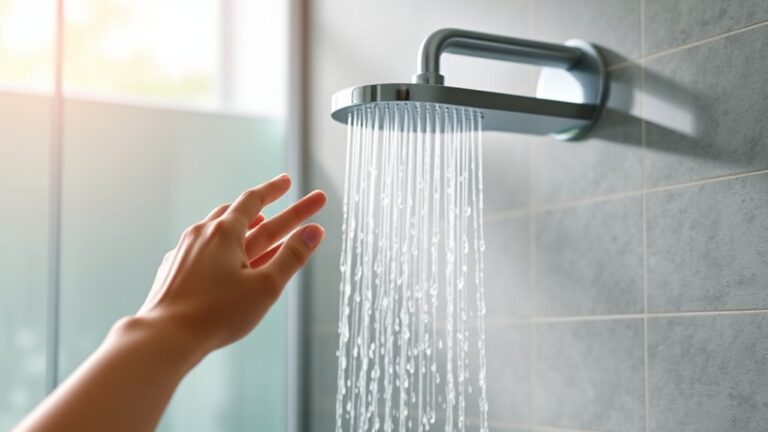
When you shower with hot water, it strips away the natural oils that protect your skin’s moisture barrier. This causes increased water evaporation from the skin’s surface, leading to dryness.
Understanding this process helps explain why applying lotion after a shower is essential to restore hydration.
Effects of Hot Water
How does hot water affect your skin’s moisture balance? When you expose your skin to hot water, it disrupts the natural lipid barrier that retains moisture. This barrier, composed mainly of oils, helps keep your skin hydrated and protected.
Hot water causes these oils to dissolve faster, leading to increased water evaporation from the skin’s surface. As a result, your skin feels dry and tight after a shower. While some two word discussion ideas might explore unrelated topics like “skin elasticity” or “temperature regulation,” focusing on hot water’s direct impact clarifies why you should avoid overly hot showers.
Moisture Loss Mechanism
Although hot water feels soothing, it actively strips away the natural oils that form your skin’s protective barrier. This barrier prevents excessive moisture loss, so when it’s compromised, water evaporates rapidly from your skin’s surface, leading to dryness.
The heat also alters the lipid structure within your skin cells, weakening their cohesion and further increasing transepidermal water loss. Understanding lotion chemistry helps you counteract this effect: lotions contain occlusive agents that seal moisture in and humectants that attract water to your skin.
Applying lotion immediately after your shower, during optimal shower timing, capitalizes on your skin’s residual dampness, enhancing hydration. Delaying lotion application allows more moisture to escape, reducing its efficacy. To maintain hydration, keep showers brief, avoid hot water, and apply lotion promptly to restore your skin’s protective barrier.
Best Time for Post-Shower Moisturizing
Why does timing matter for applying lotion after a shower? Your skin is most receptive to moisturizing immediately after showering because its pores are open, and the surface is slightly damp. Applying lotion within three to five minutes helps lock in hydration before evaporation causes moisture loss.
Think of it like finishing a puzzle game quickly—you capture the full picture before pieces shift. Delaying lotion application is like letting moisture escape, similar to how a soft drink loses carbonation if left open. For optimal skin hydration, you should apply lotion while your skin is still damp but not dripping wet.
This timing maximizes the lotion’s ability to form a protective barrier, preventing dryness and maintaining your skin’s natural softness effectively.
How to Apply Lotion to Lock in Hydration
Applying lotion correctly is essential to lock in hydration and maximize its benefits. Hydration science shows that applying lotion within three minutes post-shower helps trap moisture before it evaporates.
Start by gently patting your skin dry, leaving it slightly damp. Then, dispense a moderate amount of lotion and apply it evenly using upward, circular motions to stimulate circulation and promote absorption. Focus on dry areas like elbows and knees.
Fragrance considerations matter too. Choose lotions with subtle or no scent to avoid skin irritation, especially if your skin is sensitive. Avoid rubbing vigorously, as this can disrupt the skin barrier.
Best Lotions for Post-Shower Moisturizing
When choosing a post-shower lotion, focus on hydrating ingredients like hyaluronic acid, glycerin, and ceramides to restore moisture effectively.
If you have dry skin, opt for richer, emollient formulas that provide long-lasting hydration. For normal to oily skin, lightweight lotions absorb quickly without clogging pores, balancing moisture without heaviness.
Hydrating Ingredients to Seek
Which ingredients truly boost skin hydration after a shower? When choosing lotions, focus on key lotion ingredients scientifically proven to enhance skin hydration. These components attract and lock in moisture, supporting your skin’s barrier function.
- Hyaluronic Acid A powerful humectant, it binds water molecules, increasing skin hydration exponentially.
- Glycerin This well-studied humectant draws moisture from the environment into the skin, maintaining hydration levels.
- Ceramides Lipids that restore the skin’s protective barrier, reducing water loss and improving overall hydration.
Selecting lotions with these ingredients ensures optimal moisture retention post-shower, improving skin softness and resilience. Prioritize formulations that combine humectants and barrier-repairing agents for maximum effectiveness.
Best Lotions for Dry Skin
How do you choose the best lotion to effectively hydrate dry skin after a shower? Focus on formulations that restore the skin barrier and lock in moisture. Look for lotions containing humectants like glycerin or hyaluronic acid, which attract water to the skin’s surface.
Emollients such as ceramides and fatty acids help repair and smooth dry skin by replenishing lipids. The lotion benefits include reducing transepidermal water loss and improving skin elasticity. Avoid products with irritants like alcohol or fragrance that can exacerbate dryness.
Applying lotion within minutes post-shower maximizes absorption by sealing in hydration. By selecting scientifically backed ingredients, you ensure optimal nourishment and protection for dry skin, promoting comfort and resilience after every shower.
Lightweight vs. Rich Formulas
Why choose between lightweight and rich lotion formulas after a shower? Your skin’s needs vary based on factors like heat sensitivity and fragrance safety. Lightweight lotions absorb quickly, ideal if you’re prone to heat sensitivity or prefer minimal fragrance exposure. Rich formulas deliver intense hydration, perfect for dry or cracked skin.
Consider these points when selecting:
- Skin Type: Lightweight suits normal to oily skin; rich benefits dry or sensitive skin.
- Heat Sensitivity: Lightweight lotions reduce irritation risks in hot environments.
- Fragrance Safety: Opt for fragrance-free or hypoallergenic options to avoid reactions.
Selecting the right formula post-shower optimizes moisture retention while respecting your skin’s unique characteristics, ensuring effective and safe hydration every time.
How to Choose the Right Lotion for Your Skin Type
When selecting a lotion, understanding your skin type plays a crucial role in achieving ideal hydration and health. For oily skin, choose non-comedogenic, lightweight lotions that hydrate without clogging pores.
Dry skin benefits from richer, emollient formulas containing humectants like glycerin or hyaluronic acid to retain moisture. Sensitive skin requires fragrance-free, hypoallergenic lotions to minimize irritation. Fragrance concerns are crucial here since scented products often trigger reactions.
Combination skin calls for balanced lotions that hydrate dry areas without exacerbating oiliness. Pay attention to ingredient lists to match lotions with your skin’s needs precisely.
Why You Shouldn’t Skip Lotion After Showering
Choosing the right lotion tailored to your skin type sets the stage for effective hydration, but applying it promptly after showering plays an equally important role. When you skip lotion, your skin loses moisture rapidly due to the evaporation of water from its surface.
Here’s why you shouldn’t skip it:
- Locking Moisture: Applying lotion immediately seals in water, maintaining your skin’s hydration balance.
- Barrier Repair: Lotions containing essential oils support the skin’s protective barrier, reducing dryness and irritation.
- Fragrance Safety: Choosing lotions without harsh fragrances minimizes the risk of allergic reactions, ensuring your skin stays healthy.
How Moisturizing After a Shower Keeps Your Skin Healthy Over Time
How exactly does moisturizing after a shower contribute to long-term skin health? When you apply lotion immediately post-shower, you lock in hydration, preventing water loss that leads to dryness and irritation.
This practice supports the integrity of your skin barrier, which is crucial for maintaining a balanced skin microflora, a community of beneficial microorganisms that protect against pathogens. Consistently moisturized skin reduces the risk of disruptions to this microflora, promoting resilience and overall skin health.
Additionally, choosing fragrance-free or hypoallergenic lotions minimizes the risk of fragrance sensitivity, which can cause inflammation or allergic reactions over time. By incorporating moisturizing into your routine, you actively preserve your skin’s moisture balance, protect its ecosystem, and reduce susceptibility to irritants, ensuring healthier skin as you age.
Frequently Asked Questions
Can I Use Body Oil Instead of Lotion After a Shower?
Yes, you can use body oil instead of lotion after a shower. Post shower oils act as effective moisturizer alternatives by sealing in hydration and nourishing your skin.
They enhance moisture retention with a scientifically proven occlusive barrier.
Should I Dry off Completely Before Applying Lotion?
You shouldn’t dry off completely before applying lotion. Using a gentle drying technique, patting your skin slightly damp, enhances moisture retention by locking in water, optimizing lotion absorption, and maintaining your skin’s hydration effectively.
Is It Necessary to Exfoliate Before Moisturizing?
You don’t have to exfoliate before moisturizing, but exfoliation timing matters. It removes dead skin, enhancing lotion aftercare by improving absorption.
Aim to exfoliate 1-3 times weekly, then apply lotion aftercare for optimal skin health.
Can Lotion Cause Breakouts if Applied After Showering?
Lotion breakouts can sneak up like shadows if you use products with comedogenic ingredients. If you have sensitive skin, choose non-comedogenic lotions to avoid irritation and clogged pores, ensuring effective and safe skin care after showering.
How Often Should I Reapply Lotion Throughout the Day?
You should reapply lotion every 4-6 hours to maintain optimal hydration timing.
If you have fragrance sensitivity, choose fragrance-free options and limit applications to avoid irritation while ensuring consistent skin hydration throughout the day.