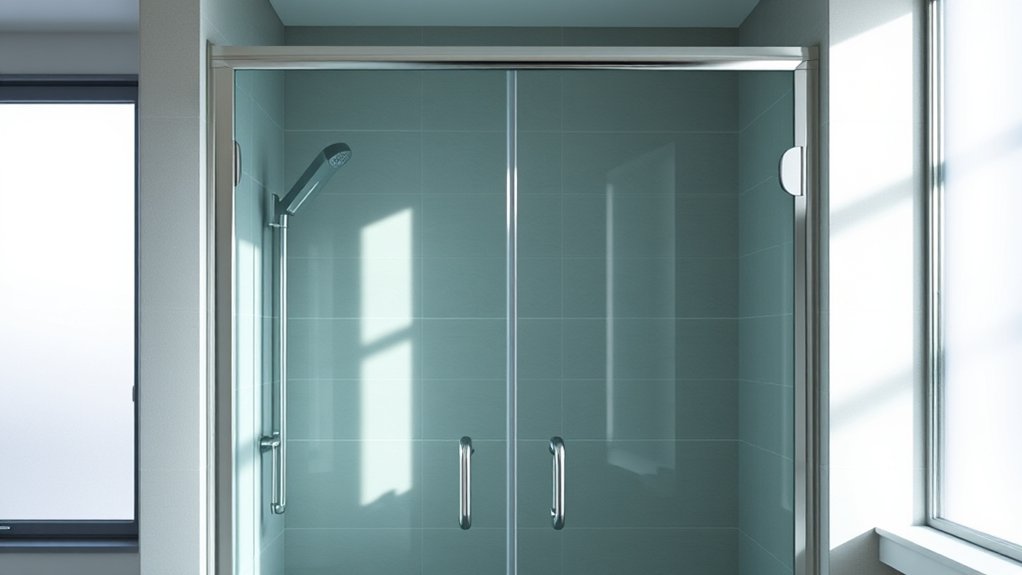
Are Shower Doors Standard Sizes
You might expect shower doors standard sizes to be readily available, but that’s not always the case. Your bathroom’s unique layout, wall thickness, and niche shape often mean off-the-shelf options won’t fit perfectly.
Knowing how to measure accurately and understanding common size ranges can save you time and frustration. Before you choose a door, it’s important to contemplate these factors—otherwise, you could end up with a poor fit or costly adjustments.
Key Takeaways
- Shower doors often come in standard sizes, typically 22 to 36 inches wide and 70 to 78 inches tall.
- Sliding shower doors usually range from 48 to 60 inches wide with panels between 22 and 36 inches each.
- Standard sizes fit typical openings, but irregular bathroom shapes may require custom or adjustable doors.
- Accurate measurements of width, height, and frame clearance are essential to ensure proper fit and function.
- Custom shower doors are available for niches, curved stalls, or irregular angles that standard sizes can’t accommodate.
Why Standard Shower Doors Often Don’t Fit Your Bathroom
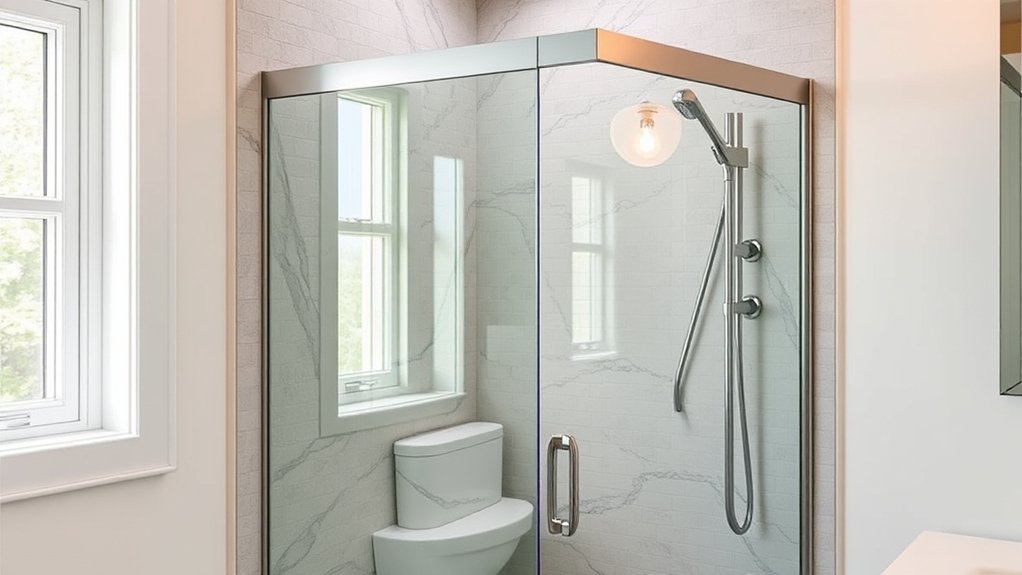
Why do standard shower doors often fail to fit your bathroom perfectly? The main reason is that bathrooms come in all shapes and sizes, while standard doors are made to fit typical openings.
When you try to install a standard door, you might notice gaps or awkward fits that affect door aesthetics and overall function. These gaps can lead to water leaks, which increase the risk of mold prevention problems.
Mold thrives in damp, poorly sealed environments, so a door that doesn’t fit well can cause long-term damage. To avoid this, you’ll want to measure your shower space carefully and consider custom or adjustable options that match your bathroom’s unique dimensions. This will help you maintain both style and hygiene effectively.
Typical Shower Door Sizes and Dimensions
When choosing a shower door, you’ll find common widths typically range from 22 to 36 inches. Heights usually fall between 70 and 76 inches to fit most bathroom setups.
Knowing these standard dimensions helps you pick a door that suits your space without major adjustments.
Common Width Measurements
How wide should your shower door be? Most shower doors come in common widths ranging from 22 to 36 inches, but your choice depends on your shower opening size and layout.
To ensure smooth operation, consider door clearance, the space needed for the door to open without obstruction. This often adds an extra inch or two to your overall width requirement. Also, keep glass thickness in mind; thicker glass can influence the door frame size and weight, affecting installation and durability.
Standard widths typically increase in two-inch increments, so you’ll likely find a size that fits your space without custom ordering. Measuring your opening accurately and factoring in door clearance and glass thickness will help you pick a door that fits perfectly and functions well every day.
Standard Height Options
What height should your shower door be to fit both your space and needs? Standard shower door heights usually range between 70 and 78 inches, balancing practicality and style. Choosing the right height helps avoid common design pitfalls like water leakage or awkward gaps.
Here’s a quick guide to standard heights:
| Height (inches) | Best For |
|---|---|
| 70 | Compact spaces, budget-friendly |
| 72-74 | Most standard bathrooms |
| 76-78 | Taller users, modern designs |
When installing, consider installation hacks such as adjustable tracks or custom trims to handle uneven ceilings or walls. Picking the correct height ensures your shower door functions well and fits seamlessly within your bathroom’s layout.
Common Shower Door Types and Size Ranges
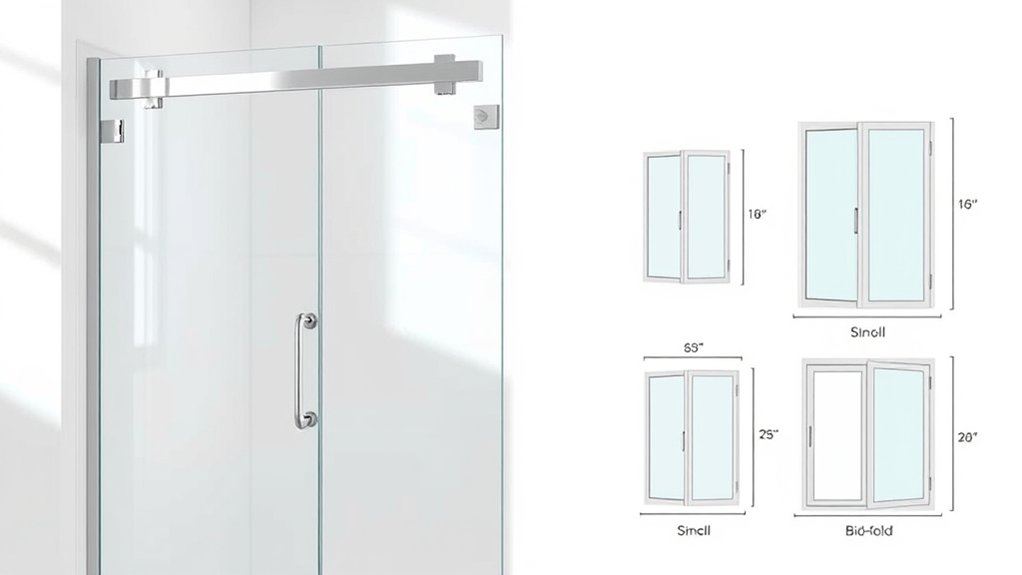
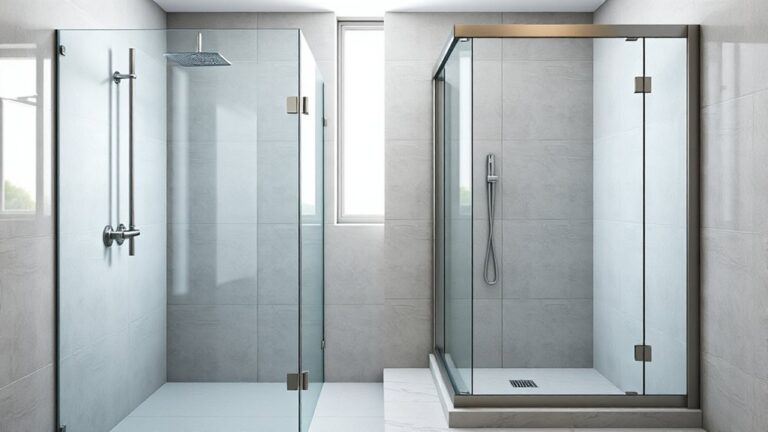
When choosing a shower door, you’ll find sliding doors typically range from 48 to 60 inches wide and about 72 inches tall. Frameless doors, on the other hand, often come in custom sizes but usually fall within similar height ranges.
Knowing these dimensions helps you pick the right door type for your space.
Sliding Door Dimensions
Wondering if sliding shower doors come in standard dimensions? Yes, they typically range from 22 to 36 inches per panel, with total widths between 48 to 60 inches. Heights usually fall between 58 and 72 inches. These measurements fit most standard shower openings, but always measure your space before buying.
Sliding doors suit various bathroom sizes and styles, and you can choose from different color schemes to match your décor. When picking a sliding door, consider maintenance tips like cleaning the tracks regularly to ensure smooth operation and prevent buildup. Proper care extends your door’s lifespan.
Sliding doors save space and offer easy access, making them a popular, practical choice for many bathrooms. Check manufacturer specs for exact sizes to find the perfect fit.
Frameless Door Measurements
How do frameless shower doors measure up compared to other types? Frameless doors typically come in standard widths ranging from 22 to 36 inches and heights between 72 and 78 inches, but frameless measurements are more flexible since they’re custom-cut to fit your space precisely.
Because these doors lack a frame, hinge alignment becomes essential; even slight misalignments can cause operational issues or leaks. When planning your frameless door, you’ll want to measure the shower opening carefully, considering the thickness of the glass, usually 3/8 to 1/2 inch.
Proper hinge alignment ensures smooth swinging and durability, especially in tight or irregular spaces. By understanding these key dimensions, you can confidently choose a frameless shower door that fits perfectly and functions well.
How Shower Door Materials Affect Size and Installation
Why do shower door materials play a pivotal role in determining size and installation? Different materials, like glass thickness or metal framing, directly impact your shower door’s dimensions and how it fits. For instance, heavier materials may require sturdier support and precise measurements to ensure a secure fit.
You should also consider refinishing finishes. The material’s surface treatment affects durability and maintenance, influencing your choice. Plus, material choices often come with specific warranty implications; some manufacturers void warranties if you alter or refinish the door improperly.
Knowing these factors helps you pick the right size and installation method, avoiding costly mistakes. By paying attention to material properties, you ensure your shower door fits well, lasts longer, and meets warranty requirements, making installation smoother and more reliable.
Measuring Your Shower Opening Accurately
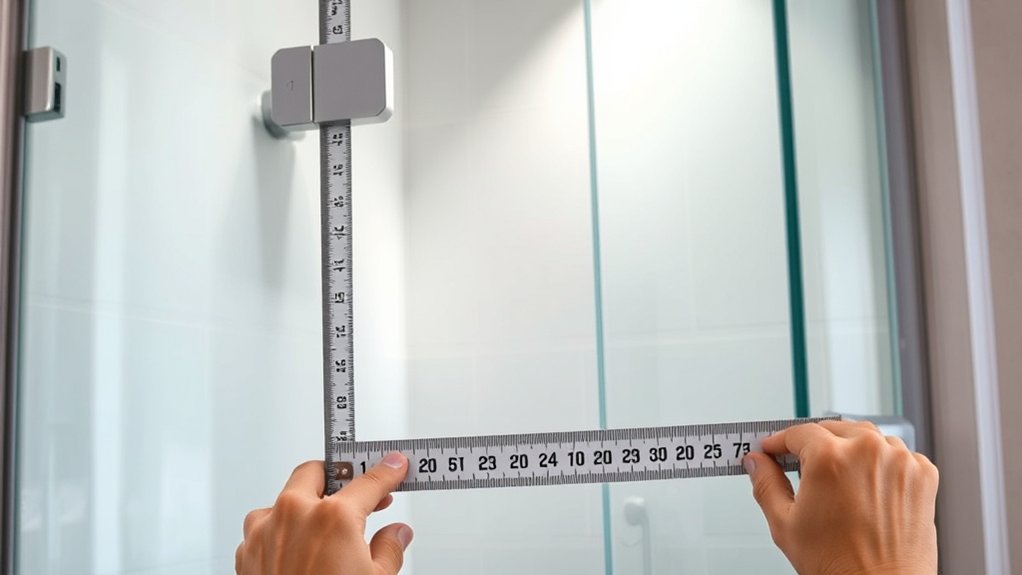
Where do you start when preparing to install a new shower door? The first step is taking an accurate measurement of your shower opening. Use a metal tape measure to record the width at the top, middle, and bottom, since walls may not be perfectly straight. Note the smallest measurement to ensure the door fits properly.
Next, measure the height from the base to the top edge of the opening at multiple points. Accurate measurement is essential for a smooth door installation and to prevent leaks or gaps. Double-check your numbers before ordering any doors.
Adjusting Standard Shower Door Sizes for Odd Spaces
When your shower space doesn’t match standard dimensions, you’ll need to adapt your door choice accordingly. Measurement challenges often arise with odd-shaped or irregular shower openings, making it essential to take precise and multiple measurements. Focus on width, height, and any angles that deviate from the norm.
Retrofit considerations come into play when modifying existing frames or walls to accommodate a slightly larger or smaller door size. You might need to trim door panels or adjust hinges to ensure a proper fit without compromising functionality.
When to Choose Custom Shower Doors
How do you know if a custom shower door is the right choice for your bathroom? If your space features a custom niche or curved stalls, standard sizes likely won’t fit properly.
Custom shower doors allow you to tailor the dimensions exactly to your unique layout, ensuring a perfect seal and smooth operation. You’ll also want to consider custom doors if your shower has irregular angles or unusual configurations that standard doors can’t accommodate.
Opting for a custom solution prevents leaks, drafts, and installation headaches. Plus, it enhances the overall look and function of your bathroom by fitting seamlessly within your design. Choosing custom shower doors gives you flexibility and peace of mind when standard options just don’t cut it.
Where to Buy Standard and Custom Shower Doors
Finding the right place to buy your shower doors depends on whether you need standard sizes or custom options. If you want upscale profiles, specialty stores and high-end showrooms are excellent, offering tailored designs and premium materials.
For budget constraints, large home improvement chains provide a wide range of standard doors at competitive prices. Online retailers can also be a convenient choice, offering both standard and custom doors with varying price points.
Here’s where you can start looking:
- Home improvement stores: Great for standard sizes and budget-friendly options.
- Specialty bathroom showrooms: Ideal for upscale profiles and custom designs.
- Online marketplaces: Convenient, with a mix of standard and customizable choices.
This approach helps you balance quality, style, and cost effectively.
Tips for Picking the Right Shower Door Size
What measurements do you need to ensure your shower door fits perfectly? Start by measuring the width and height of your shower opening at multiple points to account for any irregularities. Check the door’s frame thickness and clearance space for smooth operation.
Considering concept feasibility, evaluate whether a standard size suits your bathroom layout or if a custom door is necessary. Don’t forget to factor in the door swing direction and accessibility.
When choosing the size, keep your home decor style in mind to maintain a cohesive look. Proper measurements prevent installation issues and improve usability.
Taking these steps ensures your shower door complements your space functionally and aesthetically, making your bathroom both stylish and practical.
Frequently Asked Questions
How Do Shower Door Hinges Affect Installation and Durability?
You’ll notice shower hinge gaps impact both installation ease and longevity. Proper alignment from durability testing ensures smooth movement and prevents leaks or wear.
You’ll want hinges that fit perfectly and withstand daily use.
What Maintenance Is Required for Different Shower Door Materials?
You’ll maintain materials like glass by cleaning regularly to prevent water spots, while metal frames need rust checks. Proper maintenance supports installation durability, ensuring your shower door stays functional and looks good longer.
Can Shower Doors Be Installed on Bathtubs as Well?
Of course, shower doors can’t be installed on bathtubs except they can! You just need to check shower size standards and tub compatibility.
With the right fit, you’ll enjoy a sleek, splash-free bath-shower combo!
How Do Water Seals Impact Shower Door Performance?
Water seals improve shower door performance by preventing leaks and water damage.
You’ll want to guarantee proper hinge installation durability, as secure hinges keep the door aligned, maintaining effective water seal performance over time for a long-lasting shower.
Are There Eco-Friendly Shower Door Options Available?
Yes, you can find eco-friendly options for shower doors made from recycled materials like glass and aluminum. Choosing these helps reduce waste and energy use, making your bathroom upgrade both stylish and sustainable.