Are Shower Puffs Bad
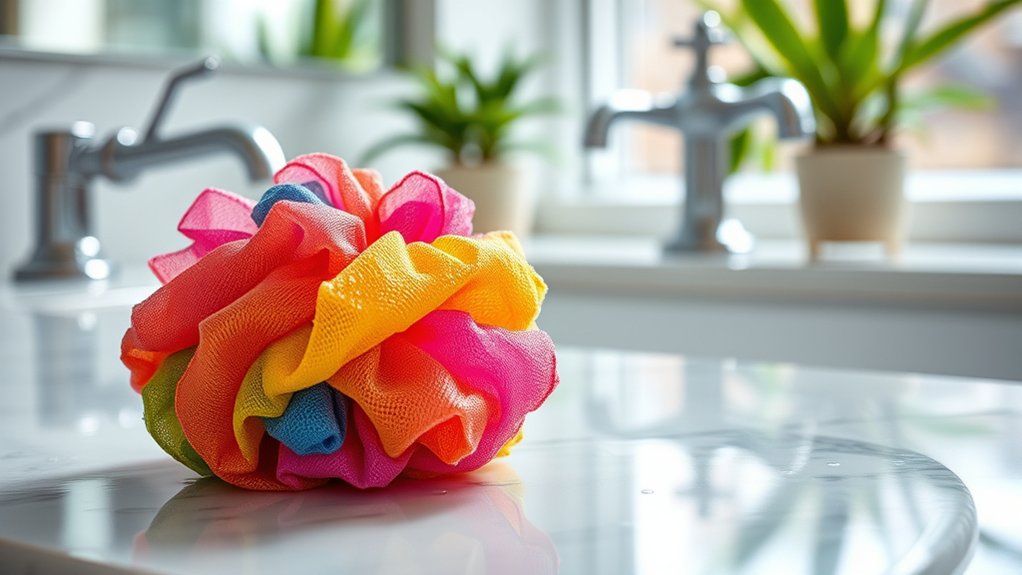
You might not realize it, but using a shower puff can pose risks you hadn’t considered. These popular cleansing tools trap moisture, creating an environment where bacteria and mold thrive. Shower puffs, if not properly maintained, can become a breeding ground for germs.
Over time, this buildup can irritate your skin or even lead to infections, especially if you use harsh soaps or fragrances. Understanding how to manage these risks is key to deciding if a shower puff is right for you. Taking proper care of your shower puff can help minimize potential problems.
Key Takeaways
- Shower puffs can harbor bacteria and mold due to retained moisture, increasing the risk of skin infections and allergic reactions.
- Regular weekly cleaning with hot water and antibacterial soap is essential to minimize microbial growth on shower puffs.
- Using shower puffs too long without replacement (beyond 3 to 4 weeks) raises contamination and skin irritation risks.
- Synthetic fibers and scented puffs may cause mechanical irritation or trigger fragrance sensitivities, especially on sensitive skin.
- Safer alternatives like natural loofahs, silicone scrubbers, or exfoliating gloves reduce microbial buildup and improve hygiene.
What Are Shower Puffs and How Do They Work?
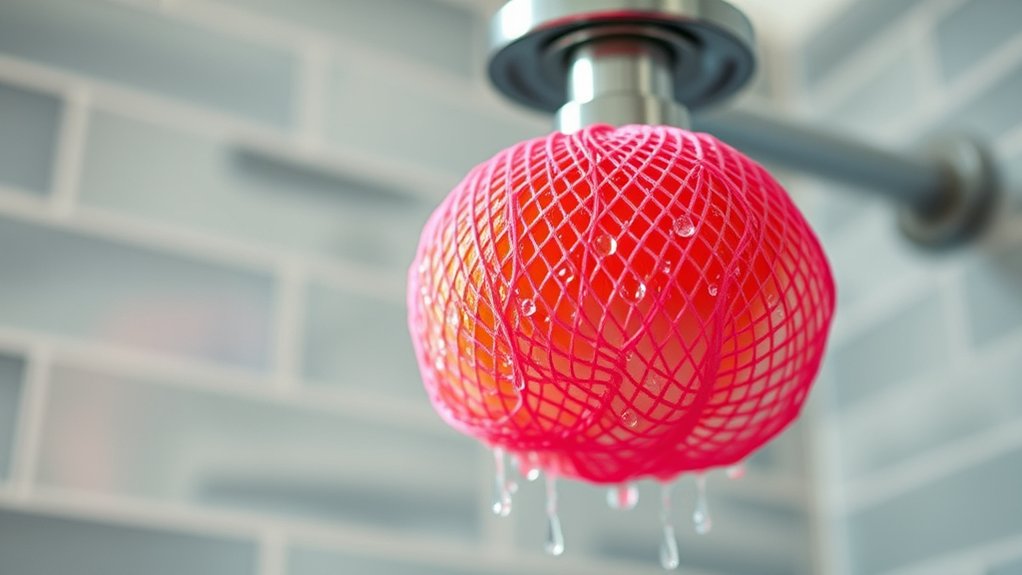
Shower puffs, also known as mesh bath sponges, are designed to create a rich lather by trapping and agitating soap or body wash when you rub them against your skin. So, what are they exactly? They consist of a synthetic mesh material, typically nylon, gathered into a spherical, porous shape.
This structure increases surface area, allowing them to hold soap efficiently. How they work involves the mechanical action of friction combined with the mesh’s ability to trap soap molecules. When you squeeze or rub the puff, it generates foam by mixing air, water, and soap.
This foam aids in cleansing by lifting dirt and oils from your skin. Their design optimizes lather production while providing gentle exfoliation, enhancing your shower experience with effective cleansing.
Are Shower Puffs Bad for Your Skin and Health?
You should know that shower puffs can harbor bacteria if they remain damp, increasing infection risks. They may also cause skin irritation, especially if you have sensitive skin or use them too aggressively.
Proper hygiene, like regular cleaning and thorough drying, is essential to minimize these health concerns.
Bacteria Growth Risks
How often do you replace your bath accessories? Shower puffs provide a moist environment that promotes bacteria growth and mold risks, making frequent replacement essential.
These accessories retain water, creating ideal conditions for microbes to thrive. Studies show that bacteria such as Staphylococcus aureus and Pseudomonas aeruginosa can colonize shower puffs, increasing infection risk.
Mold growth is also common, potentially causing allergic reactions or respiratory issues. To minimize these risks, rinse your shower puff thoroughly after each use and allow it to dry completely in a well-ventilated area.
Replace your shower puff every three to four weeks or sooner if you notice discoloration or an odor. By managing bacteria growth and mold risks, you can maintain better hygiene and reduce potential health hazards linked to shower puff use.
Skin Irritation Potential
Why might your skin react negatively to certain bath accessories? Shower puffs often contain synthetic fibers that can cause mechanical irritation, especially if you apply too much pressure.
Additionally, many shower puffs are infused with fragrances or used alongside heavily scented body washes, which can trigger fragrance sensitivity. This sensitivity may result in redness, itching, or rash-like symptoms.
If you have sensitive or compromised skin, the combination of friction and exposure to irritants increases the risk of skin irritation. Moreover, repetitive use without proper rinsing can trap residual soap and bacteria, further aggravating your skin’s barrier function.
To minimize risks, it’s important to recognize how these factors contribute to irritation and choose bath accessories that align with your skin’s tolerance levels, especially if you experience fragrance sensitivity.
Hygiene Maintenance Tips
When should you replace or clean your shower puff to maintain optimal hygiene? Experts recommend cleaning your puff weekly with hot water and antibacterial soap to inhibit bacterial and fungal growth. Replace it every three to four weeks to prevent microbial buildup, which can harm your skin.
You might have heard hygiene myths suggesting that rinsing is enough; however, thorough drying and regular disinfection are essential. Avoid storing your puff in damp environments since moisture promotes pathogen proliferation, reducing product longevity and increasing infection risk.
Using a clean, dry puff ensures effective exfoliation without compromising skin health. By following these hygiene maintenance tips, you reduce microbial contamination, extend your shower puff’s safe usability, and protect your skin from irritation and potential infections.
Why Shower Puffs Can Harbor Bacteria and Mold
Where do the bacteria and mold in shower puffs come from? Shower puffs provide an ideal environment for bacteria growth and mold risk due to their frequent exposure to moisture, warmth, and organic matter like dead skin cells. These factors create a damp, nutrient-rich habitat where microorganisms thrive.
The synthetic mesh material traps water, making it slow to dry, which further promotes microbial proliferation. Additionally, the repeated use without thorough drying increases the accumulation of biofilms, slimy layers of bacteria and fungi.
Since shower puffs often remain in humid bathrooms, the lack of ventilation exacerbates this issue. This combination of moisture retention, organic residue, and insufficient drying significantly raises the likelihood that your shower puff harbors harmful bacteria and mold, potentially affecting your skin health.
How to Keep Your Shower Puff Clean and Safe
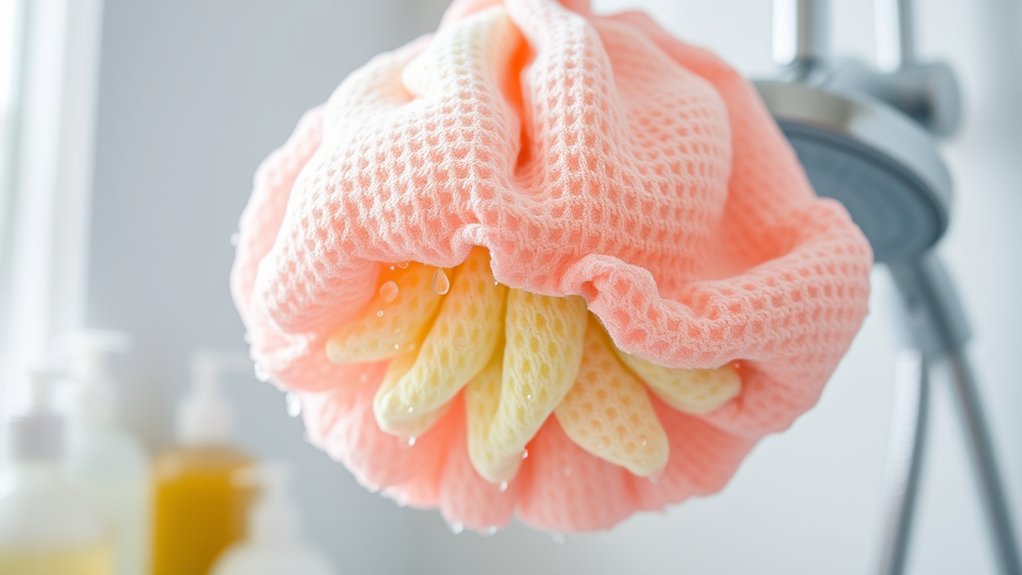
To keep your shower puff clean and safe, you need to focus on proper drying techniques, effective cleaning methods, and timely replacement. Make sure to dry it thoroughly after each use to prevent microbial growth.
Regularly disinfect your puff and replace it every few weeks to maintain hygiene.
Regular Drying Techniques
How often you dry your shower puff considerably impacts its cleanliness and safety. Regular drying is essential to prevent microbial growth caused by residual moisture. To maintain effective moisture control, you should adopt consistent drying habits.
After use, squeeze out excess water without wringing, then:
- Hang the puff in a well-ventilated area
- Avoid storing it in enclosed spaces like shower caddies
- Ensure it dries completely between uses
- Rotate between multiple puffs to allow thorough drying
- Replace the puff regularly, as worn materials retain moisture
These practices reduce the risk of bacteria and mold proliferation. Implementing regular drying techniques prolongs the puff’s hygienic condition, minimizing potential skin irritations or infections linked to damp environments.
Proper Cleaning Methods
Maintaining a clean shower puff requires regular and effective cleaning methods to prevent bacterial and fungal buildup. After each use, rinse your shower puff thoroughly with hot water to remove soap residue and dead skin cells.
Weekly, soak it in a mixture of equal parts white vinegar and warm water for 5–10 minutes; this disinfects without harsh chemicals. Alternatively, you can use a diluted bleach solution, but rinse thoroughly afterward to protect skin moisture.
Avoid storing your shower puff in damp, enclosed bathroom storage areas, as moisture retention encourages microbial growth. Instead, hang it in a well-ventilated spot to dry completely between uses.
Proper cleaning methods and appropriate bathroom storage significantly reduce contamination risks, helping maintain healthy skin moisture and preventing skin irritations caused by dirty shower puffs.
Replacement Frequency Guidelines
When should you replace your shower puff to make sure it remains hygienic and safe? Adhering to proper replacement frequency is essential to prevent bacterial and fungal growth. Experts recommend following strict replacement guidelines to minimize health risks associated with prolonged use of damp, porous materials.
Consider these key points for replacement frequency:
- Replace your shower puff every 3 to 4 weeks.
- Increase frequency if you notice an odor or discoloration.
- Replace immediately if mold or mildew appears.
- Avoid sharing puffs to reduce contamination risk.
- Store your puff in a dry, ventilated area to slow microbial growth.
When and Why to Replace Your Shower Puff
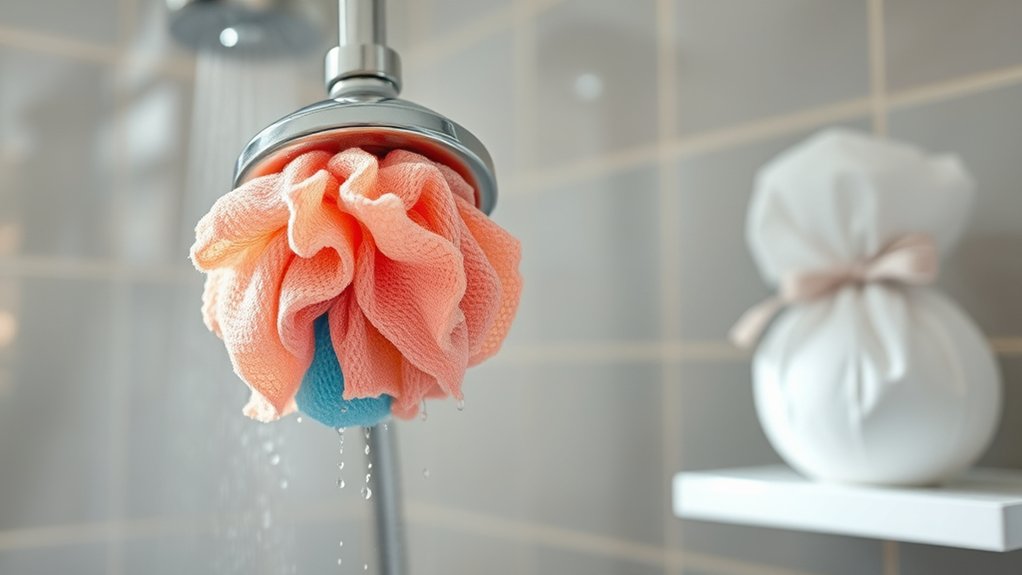
Why should you replace your shower puff regularly? Over time, shower puffs accumulate bacteria, fungi, and dead skin cells, creating an environment that can trigger skin irritation or infections. Following a recommended replacement frequency, typically every three to four weeks, helps minimize microbial buildup.
If you notice a foul odor, discoloration, or fraying, it’s a clear sign to replace your puff immediately. Prolonged use beyond the replacement frequency can exacerbate skin issues, particularly for sensitive or acne-prone skin.
Safer Alternatives to Shower Puffs
Since shower puffs can harbor bacteria and fungi despite regular replacement, exploring safer alternatives can help you maintain better skin hygiene. You should consider healthy alternatives that reduce microbial growth and provide effective exfoliation without irritation.
Here are five safer options:
- Natural loofahs: biodegradable, antimicrobial properties, gentle exfoliation
- Silicone scrubbers: non-porous, easy to clean, durable
- Washcloths: washable, quick-drying, reduces bacterial buildup
- Konjac sponges: plant-based, soft texture, promotes skin cell renewal
- Exfoliating gloves: reusable, improves circulation, easy maintenance
Choosing these alternatives minimizes bacterial colonization and promotes healthier skin. By switching to natural loofahs or silicone scrubbers, you can maintain cleanliness while avoiding the risks associated with typical shower puffs.
Frequently Asked Questions
Can Shower Puffs Cause Allergic Reactions?
Yes, shower puffs can cause allergic reactions, especially if you have fragrance sensitivity. The synthetic materials and added scents may irritate your skin.
Choose hypoallergenic options and clean them regularly to reduce risks effectively.
Do Shower Puffs Affect Water Usage?
Using shower puffs can increase water usage by up to 15%, as they encourage longer showers for better lather.
You should monitor your shower time to minimize water consumption while still enjoying your shower puff’s benefits.
Are Shower Puffs Environmentally Friendly?
You’ll find shower puffs have a moderate environmental impact due to synthetic materials and limited biodegradability. Compared to natural alternatives, they offer affordability but less eco-friendliness.
Can Children Safely Use Shower Puffs?
You can safely let children use shower puffs if you monitor for mold and bacteria buildup. Choosing soft bath textures reduces skin irritation, supporting child safety while maintaining effective cleansing during baths or showers.
How Do Shower Puffs Compare to Washcloths?
When comparing shower puffs vs washcloths, you’ll find puffs provide gentler, more thorough daily exfoliation benefits by creating rich lather. Washcloths offer firmer scrubbing, better for targeted cleansing but may irritate sensitive skin more.