Are Shower Shoes Necessary
You might underestimate the risks of going barefoot in shared or public showers, but shower shoes are necessary to protect your feet from fungi, bacteria, and viruses thriving on wet surfaces.
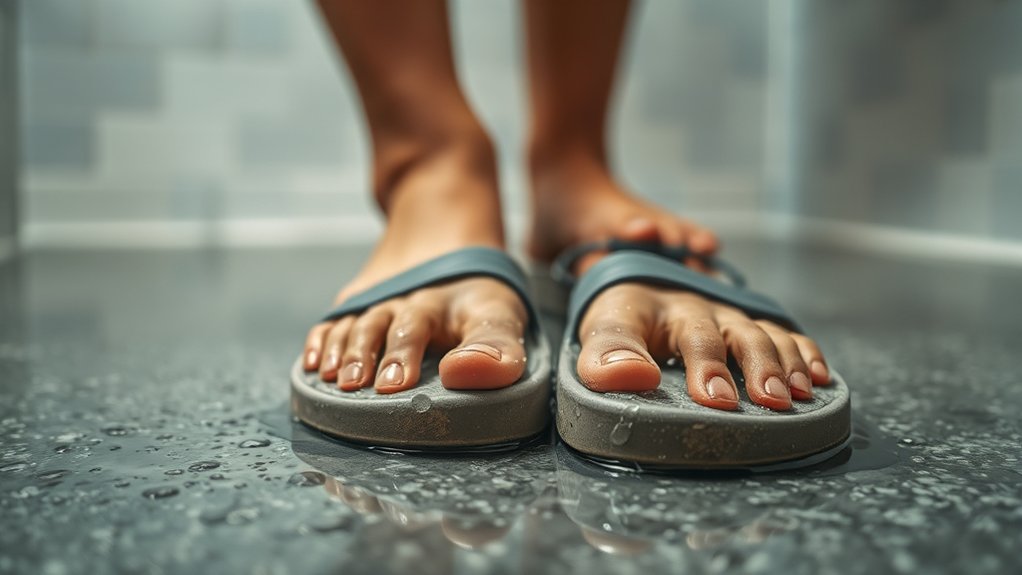
Shower shoes act as a protective barrier, reducing infection risk and preventing slips on slippery floors. Understanding when and why these simple footwear choices matter can considerably impact your foot health and safety.
This is especially important in environments that aren’t as clean or private as your own bathroom. Using shower shoes helps maintain hygiene and prevents uncomfortable or harmful foot conditions.
Key Takeaways
- Shower shoes protect feet from fungi, bacteria, and viruses commonly found on moist public shower floors.
- Wearing shower shoes reduces risks of athlete’s foot, plantar warts, fungal nail infections, and skin abrasions.
- Shower shoes prevent slips and falls by providing non-slip traction on wet, slippery shower surfaces.
- They serve as a hygienic barrier, limiting direct contact with contaminated floors and supporting foot health.
- Shower shoes are strongly recommended in communal showers (gyms, pools, dorms) and advised in shared home showers.
Risks of Going Barefoot Without Shower Shoes
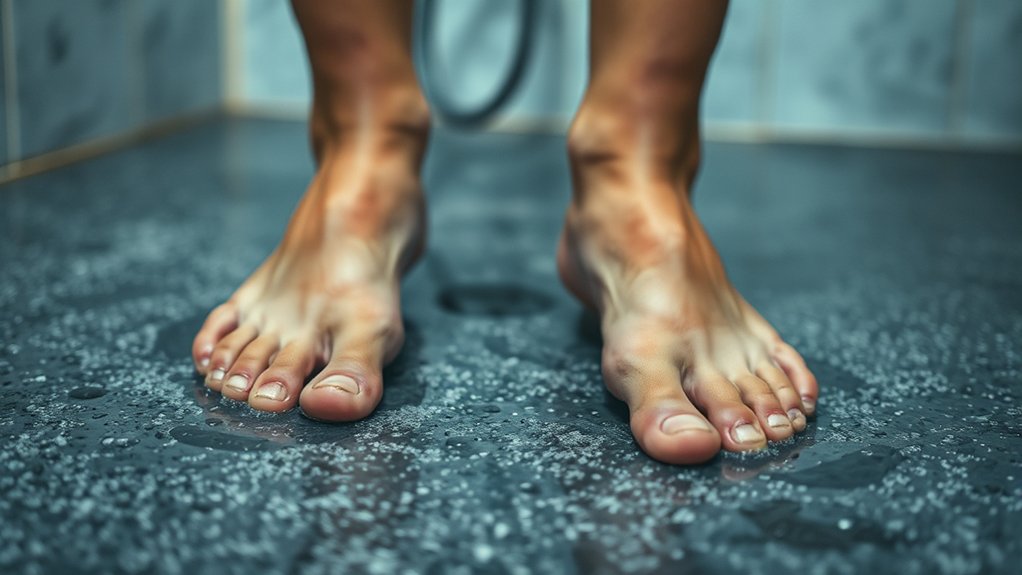
Why risk your foot health by going barefoot in communal showers? The barefoot dangers in public showers are significant and well-documented. Walking without protection exposes you to fungi, bacteria, and viruses thriving on moist surfaces. These pathogens cause athlete’s foot, plantar warts, and fungal nail infections.
Additionally, public showers often have rough or uneven flooring, increasing the risk of cuts and abrasions. Such skin breaks provide entry points for infections, potentially leading to more severe complications. You also face the risk of slipping on wet surfaces, which can cause injuries.
Given these hazards, going barefoot in public showers exposes your feet to avoidable health risks. Awareness of these dangers empowers you to make informed decisions about foot hygiene and safety in communal shower environments.
How Shower Shoes Protect Your Feet From Germs
Protecting your feet from the germs present in communal showers requires more than just awareness. It demands effective barriers. Shower shoes serve as a physical shield, minimizing direct contact with surfaces that harbor bacteria, fungi, and viruses.
By wearing shower shoes, you significantly reduce the risk of germ transmission, which commonly occurs through contact with contaminated floors. This barrier prevents pathogens from settling on your skin, lowering your chance of infections such as athlete’s foot or plantar warts.
Incorporating shower shoes into your routine supports proper foot hygiene by limiting exposure to harmful microorganisms. Maintaining foot hygiene is critical in communal environments, and shower shoes act as a practical, preventative measure to maintain a cleaner, safer condition for your feet.
How Shower Shoes Prevent Slips and Falls
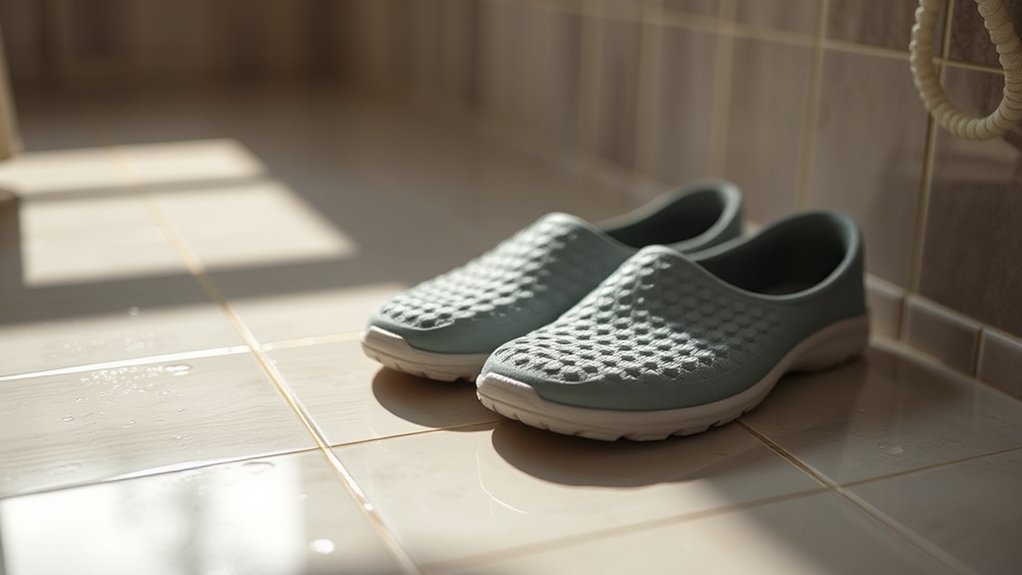
Slippery surfaces in communal showers create a significant hazard that can lead to falls and injuries. To effectively address slip prevention, shower shoes incorporate specialized tread design that enhances traction on wet, smooth floors.
When you wear these shoes, the tread channels water away, reducing the risk of hydroplaning and increasing your stability. The materials used are often non-slip rubber or textured soles, which maximize grip without compromising comfort.
By choosing shower shoes with an optimized tread pattern, you actively minimize your chances of slipping. This functional design feature is essential in maintaining safety in environments where moisture and soap residues create a slippery surface.
Consequently, shower shoes serve as a practical tool in slip prevention, safeguarding you against common shower-related accidents.
When and Where to Wear Shower Shoes
When should you wear shower shoes to maximize their protective benefits? Always use them in public showers, where shower etiquette calls for personal hygiene and safety. Public showers, found in gyms, pools, and dormitories, expose you to bacteria, fungi, and slippery surfaces, increasing infection and injury risks.
In contrast, private showers, such as those at home, typically present lower risks; however, if multiple people share the space or if the floor remains wet, wearing shower shoes remains advisable. Shower etiquette emphasizes protecting yourself and others by minimizing contamination.
Consequently, you should consistently wear shower shoes in public showers and consider them in private settings where hygiene or slip hazards are concerns. This approach ensures optimal protection, aligning with best practices for personal care and safety.
Best Materials for Shower Shoes
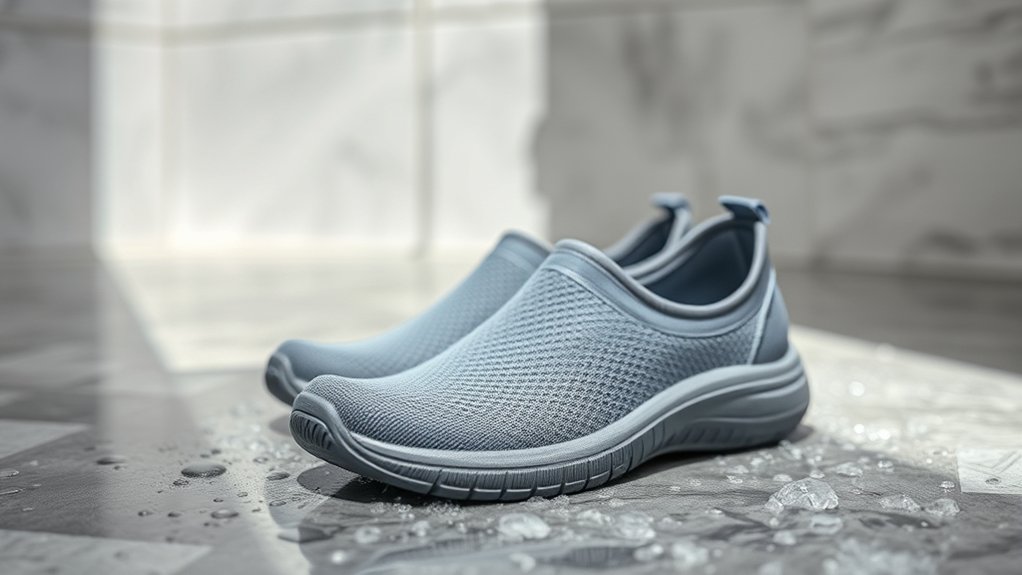
You’ll want shower shoes made from durable, waterproof materials to guarantee longevity and hygiene. Look for options with quick-drying fabrics to prevent moisture buildup and bacterial growth.
Additionally, comfortable non-slip soles are essential for safety on wet surfaces.
Durable Waterproof Materials
Because shower shoes are constantly exposed to water and moisture, they must be made from durable waterproof materials to ensure longevity and hygiene. You should look for materials like EVA (ethylene vinyl acetate) and rubber, which provide excellent water resistance and durability.
These materials resist water absorption, reducing the risk of bacterial growth and unpleasant odors. Additionally, they maintain structural integrity despite frequent exposure to wet environments.
Durable waterproof materials also offer slip resistance, enhancing safety on wet surfaces. Avoid porous fabrics or materials that degrade quickly when wet.
Quick-Drying Fabric Options
Durable waterproof materials provide a solid foundation for shower shoes, but quick-drying fabrics further enhance their practicality by minimizing moisture retention. When selecting shower shoes, you should prioritize quick drying fabric that efficiently channels moisture away from your skin.
Materials such as polyester blends and nylon are commonly used due to their inherent moisture wicking fibers, which accelerate evaporation and reduce bacterial growth. These fibers help maintain a dry environment inside the shoe, preventing discomfort and potential fungal infections.
Additionally, quick drying fabric ensures that your shower shoes remain lightweight and hygienic after repeated exposure to water. By focusing on fabrics engineered with moisture management properties, you can optimize both the functionality and longevity of your shower shoes, making them a more effective protective accessory.
Comfortable Non-Slip Soles
How do you ensure your shower shoes provide both comfort and safety? Prioritize materials that blend comfortable cushioning with optimal grip efficiency. The sole must absorb impact while preventing slips on wet surfaces.
Consider these top materials for non-slip shower shoe soles:
- EVA foam: Lightweight, offers excellent cushioning and moderate grip efficiency.
- Rubber: Durable with superior traction, providing reliable slip resistance.
- TPR (Thermoplastic Rubber): Combines flexibility and grip, enhancing comfort.
- PU (Polyurethane): Provides firm cushioning and strong slip resistance.
Selecting soles from these materials ensures you maintain comfort without compromising safety. Focus on a balance between softness for prolonged wear and a textured surface for secure footing in humid, slippery environments.
How to Choose Shower Shoes for Your Lifestyle
Where will you primarily use your shower shoes? Identifying this helps ensure lifestyle compatibility and proper size and fit considerations. For frequent gym users, lightweight, quick-drying shoes work best. If you’re in a communal shower, prioritize antimicrobial materials. Consider your foot shape and ensure the shoes fit snugly without pinching or slipping.
| Use Case | Key Feature |
|---|---|
| Gym | Lightweight, Breathable |
| Pool | Quick-drying, Non-slip |
| Dormitory | Antimicrobial, Compact |
| Travel | Foldable, Durable |
| Home | Comfortable, Easy to Clean |
Choosing shower shoes aligned with your lifestyle optimizes hygiene, comfort, and durability, preventing discomfort and infections effectively.
Tips to Keep Your Shower Shoes Clean and Odor-Free
To maintain your shower shoes, you should clean them regularly using mild soap and water to remove bacteria and grime. Dry them thoroughly to prevent moisture buildup, which can cause odors.
Additionally, using odor-neutralizing sprays or powders can help keep them fresh between uses.
Regular Cleaning Methods
When should you clean your shower shoes to maintain hygiene and prevent odors? Regular cleaning is essential to inhibit bacterial growth and maintain freshness. You should clean them at least once a week or more frequently if you use them daily.
Follow these precise methods for effective maintenance:
- Rinse thoroughly with warm water after each use to remove soap and debris.
- Use a mild detergent or antibacterial soap to scrub all surfaces gently.
- Allow shoes to air dry completely in a well-ventilated area away from direct sunlight.
- Occasionally, soak them in a diluted vinegar solution (1 part vinegar to 3 parts water) to eliminate stubborn residues.
Adhering to these regular cleaning methods ensures your shower shoes remain hygienic, durable, and odor-free.
Effective Odor Prevention
Maintaining clean shower shoes through regular washing greatly reduces bacterial buildup, but preventing odors requires additional attention. To optimize odor control, focus on the shoe’s material science; select shoes made from antimicrobial, quick-drying materials such as EVA or rubber.
After use, thoroughly dry your shoes in a well-ventilated area to inhibit microbial growth responsible for odor. Incorporate routine disinfection by soaking shoes in diluted antiseptic solutions or using sprays designed to eliminate bacteria.
Avoid storing damp shoes in enclosed spaces, as moisture promotes odor-causing bacteria. Additionally, rotating multiple pairs allows shoes sufficient drying time between uses, further minimizing odor development.
Frequently Asked Questions
Can Shower Shoes Be Worn Outside the Bathroom?
Yes, you can wear shower shoes outside the bathroom, but for optimal home hygiene, limit their use to wet areas. Their footwear versatility is practical, yet using dedicated shoes for different spaces reduces contamination risks effectively.
Are Shower Shoes Suitable for Children?
Yes, shower shoes are kid friendly and help reduce slippery hazards in wet areas. They provide essential grip and protection, minimizing infection risks and falls.
This makes them suitable and advisable for children in communal shower settings.
How Long Do Shower Shoes Typically Last?
Shower shoes typically last a couple weeks with regular use before showing wear or odor buildup.
Your exact duration depends on material quality and usage frequency, so monitor them closely to maintain hygiene and foot protection.
Can Shower Shoes Cause Foot Odor?
You might think shower shoes cause foot odor, but with proper shower hygiene, they actually aid odor prevention by minimizing direct contact with bacteria.
Keeping them clean and dry guarantees they won’t contribute to unpleasant smells.
Are There Eco-Friendly Shower Shoe Options?
Yes, you can find eco-friendly shower shoes made from sustainable, biodegradable materials combined with water-resistant designs. These options minimize environmental impact while providing durability and hygiene, making them a responsible choice for regular use in wet environments.