Are Shower Brushes Good for You
If you’ve ever noticed your skin feeling rough or flaky after a shower, using a shower brush might be something to contemplate. Shower brushes are good for you because they exfoliate dead skin cells and can help moisturizers absorb more effectively. However, their benefits depend heavily on how and when you use them.
Understanding the right technique and choosing the appropriate brush for your skin type can make a significant difference in your skincare routine. With proper use, a shower brush can enhance your skin’s smoothness and overall health.
Key Takeaways
- Shower brushes exfoliate dead skin cells, promoting smoother, brighter skin and improved cell renewal.
- Proper brush choice and gentle use minimize irritation, ensuring safe and effective skin cleansing.
- Regular brushing enhances cleansing by reaching difficult areas and helps moisturizers absorb better.
- Using shower brushes 2–3 times weekly balances exfoliation without damaging the skin barrier.
- Sensitive or damaged skin requires soft bristles and cautious use to avoid redness or dryness.
What Are Shower Brushes and How Do They Work?

How do shower brushes work, and what exactly are they? Shower brushes are tools designed to assist with cleansing your skin by gently removing dead cells through exfoliation.
Shower brushes help cleanse your skin by gently exfoliating and removing dead cells for a smoother texture.
Exfoliation is the process of sloughing off the outer layer of dead skin, promoting cell renewal and smoother skin texture. When you use a shower brush, its bristles stimulate this process by physically scrubbing your skin.
To maintain hygiene, it’s crucial to know how to sanitize your shower brush properly. After each use, rinse it thoroughly with hot water and a mild antibacterial soap, then allow it to air dry completely in a well-ventilated area.
Regular sanitization prevents bacterial buildup, ensuring the brush remains safe and effective for your skin.
What Skin Benefits Do Shower Brushes Provide?
Why should you consider incorporating a shower brush into your skincare routine? Using one can enhance your skin’s overall health in several evidence-backed ways. Here are four key skin benefits shower brushes provide:
- Exfoliation: They remove dead skin cells, promoting smoother, brighter skin.
- Improved Skin Hydration: By eliminating buildup, they help moisturizers absorb more effectively, supporting better skin hydration.
- Oil Balance Regulation: Regular brushing can help clear excess oils without stripping your skin, maintaining a healthy oil balance.
- Enhanced Cleansing: Brushes reach areas your hands might miss, ensuring thorough removal of dirt, sweat, and impurities.
Incorporating a shower brush supports your skin’s natural functions and improves its appearance, making it a valuable addition to your regimen.
Do Shower Brushes Really Boost Circulation and Detox?
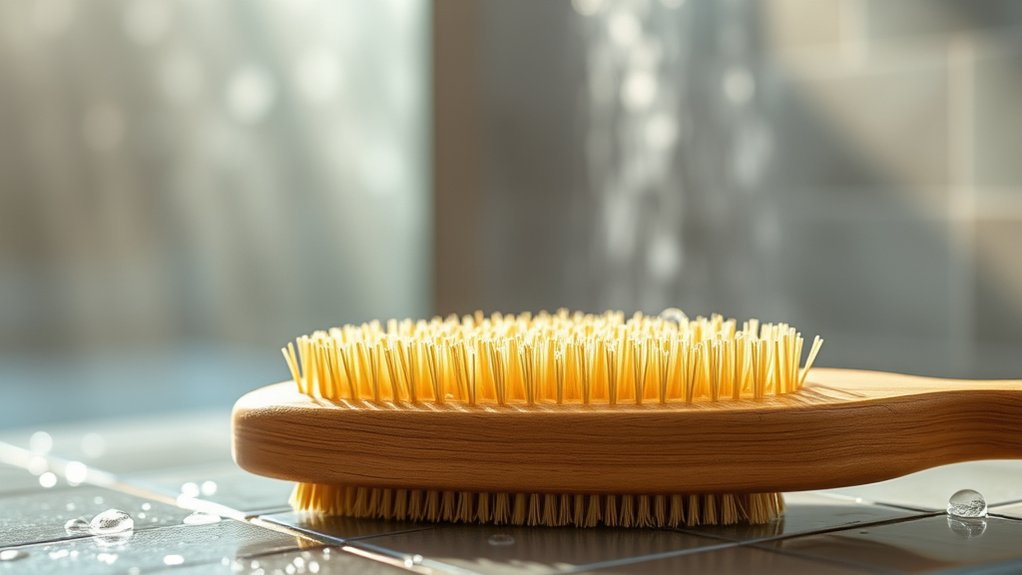
Beyond improving skin texture and cleanliness, many people wonder if shower brushes can actually stimulate blood flow and aid in detoxification. While gentle brushing does promote mild circulation by stimulating the skin’s surface, scientific evidence supporting significant detox effects remains limited.
Your body naturally eliminates toxins through the liver and kidneys, so relying on shower brushes for detox might overstate their role. Incorporating shower brushes into your care routines can enhance your sensory experience and may support skin renewal, but avoid excessive pressure to reduce humor risk, such as skin irritation or microtears.
Which Skin Types Benefit Most From Shower Brushes?
Which skin types respond best to shower brushing depends largely on individual sensitivities and conditions. Generally, shower brushes can benefit several skin types when used with attention to product safety:
1. Normal skin
Tolerates regular exfoliation, promoting smoothness and circulation.
2. Oily skin
Helps remove excess sebum and unclog pores effectively.
3. Dry skin
Benefits from gentle brushing combined with moisturizing products to prevent irritation.
4. Combination skin
Allows targeted exfoliation on oilier areas while being gentle on drier zones.
If your skin type is sensitive or prone to conditions like eczema, choose soft bristles and test product safety carefully. Always start with mild pressure to avoid compromising your skin barrier. This targeted approach ensures you get the most from shower brushes without adverse effects.
When Should You Avoid Using Shower Brushes?

When might you need to skip using a shower brush? If you have sensitive, irritated, or broken skin, it’s best to avoid shower brushes to prevent further damage. Conditions like eczema, psoriasis, or sunburn make exfoliation risky.
Shower brush safety is crucial. Using one on compromised skin can worsen inflammation or cause infections. Also, if you notice redness, pain, or excessive dryness after brushing, discontinue use immediately.
Always prioritize safety—stop using a shower brush if redness, pain, or dryness occurs to prevent further skin issues.
Exfoliation cautions include avoiding vigorous scrubbing and steering clear of areas with open wounds or rashes. Additionally, if you’re prone to allergies or have recently undergone skin treatments like chemical peels or laser therapy, give your skin time to heal before using a shower brush.
Prioritize your skin’s condition to ensure safe and effective exfoliation.
Can You Overdo It? Risks of Using Shower Brushes Too Much
How often should you use a shower brush without causing harm? Overdoing it can lead to skin irritation, dryness, and even microtears. While shower brushes offer exfoliation benefits, daily use risks outweigh advantages if not managed carefully.
Here are key risks of excessive use:
- Skin barrier disruption: Frequent brushing may strip natural oils, leading to dryness and sensitivity.
- Inflammation: Overuse can cause redness, itching, or exacerbate conditions like eczema.
- Microbial imbalance: Excessive exfoliation might disturb your skin’s microbiome, increasing infection risk.
- Physical damage: Applying too much pressure or brushing too often can cause tiny skin abrasions.
To avoid these risks, be mindful of how often and how intensely you use your shower brush to maintain healthy skin integrity.
How to Use a Shower Brush Safely and Effectively
Balancing the benefits of shower brushes with potential risks requires a careful approach to their use. To address safety concerns and improve technique tips, you should start by selecting a brush with soft bristles and avoid excessive pressure.
Always wet your skin first to reduce irritation. Clean the brush regularly to prevent bacteria build-up.
| Step | Action | Reason |
|---|---|---|
| Preparation | Wet skin and brush | Reduces friction |
| Usage | Gentle circular motions | Prevents skin damage |
| Maintenance | Rinse and dry brush | Avoids bacterial growth |
How Often Should You Use a Shower Brush for Best Results?
You should adjust how often you use a shower brush based on your skin type and sensitivity. For most people, 2 to 3 times per week is effective without causing irritation.
If you have sensitive or dry skin, using the brush less frequently can help maintain skin health while still providing benefits.
Frequency Recommendations
Regularly incorporating a shower brush into your routine can enhance skin exfoliation and circulation without causing irritation, provided you use it appropriately. To maximize benefits, consider these frequency recommendations based on discussion ideas and a frequency focused approach:
- Use the brush 2-3 times per week to avoid over-exfoliation.
- Limit brushing sessions to 3-5 minutes, focusing on gentle circular motions.
- Allow at least one day between sessions to let your skin recover.
- Adjust frequency if you notice redness or sensitivity, reducing use accordingly.
Following these guidelines helps you maintain healthy skin while preventing irritation. Using a shower brush daily is generally unnecessary and may disrupt your skin’s natural barrier, so stick to a balanced routine for best results.
Skin Type Considerations
How often should you use a shower brush to suit your skin type? If you have sensitive or dry skin, limit brushing to 1–2 times per week using soft-bristled brushes made from gentle product materials like natural fibers or silicone. Overuse may cause irritation or exacerbate dryness.
For normal to oily skin, you can brush more frequently, about 3–4 times weekly, with medium-firm bristles to effectively exfoliate and stimulate circulation. People with acne-prone skin should choose non-abrasive materials and use the brush sparingly to avoid inflammation.
Always monitor how your skin responds and adjust frequency accordingly. Selecting the right product materials tailored to your skin type ensures optimal benefits while minimizing risks. Tailoring your routine this way supports healthy, balanced skin without compromising its natural barrier.
Best Shower Brushes for Different Skin Types
Which shower brush suits your skin type best? Choosing the right brush not only enhances exfoliation benefits but also guarantees shower brush safety by preventing irritation. Consider these options based on your skin:
Selecting the right shower brush boosts exfoliation benefits while ensuring safety by minimizing skin irritation.
- Sensitive Skin: Soft bristle brushes reduce irritation risk and support gentle exfoliation frequency.
- Oily Skin: Medium-firm brushes help unclog pores and remove excess oils effectively.
- Dry Skin: Natural bristle brushes with moisturizing properties prevent over-exfoliation.
- Combination Skin: Dual-texture brushes offer adjustable exfoliation to balance varying skin needs.
Always adjust exfoliation frequency to your skin’s response, avoiding overuse that may cause damage. Using the correct brush tailored to your skin type promotes healthy skin renewal and maximizes shower brush safety.
Frequently Asked Questions
Can Shower Brushes Help With Cellulite Reduction?
You shouldn’t expect shower brushes to reduce cellulite significantly; cellulite misconceptions often overstate their effectiveness. While they can improve skin texture and circulation, evidence doesn’t support shower brush effectiveness in actually diminishing cellulite.
Are Shower Brushes Safe to Use on Sensitive Facial Skin?
Shower brushes are generally safe for facial skin if you choose ones designed for sensitive skin. You should avoid harsh scrubbing to maintain hygiene without irritating sensitivity, ensuring gentle cleansing that supports skin health effectively.
How Do Shower Brushes Compare to Loofahs in Hygiene?
Shower brush hygiene often surpasses loofahs since brushes dry faster, reducing bacterial growth. In loofah comparison, loofahs tend to trap moisture, fostering microbes.
You should clean either regularly to maintain proper hygiene and skin health.
Can Shower Brushes Cause Allergic Reactions?
Yes, shower brushes can cause allergic reactions depending on the brush materials used. If you’re sensitive to synthetic fibers or certain natural bristles, you might experience skin irritation.
Choose hypoallergenic, dermatologist-tested options carefully.
What Materials Are Used to Make Eco-Friendly Shower Brushes?
Eco-friendly shower brushes use materials like bamboo, natural sisal, and organic cotton, supporting sustainable manufacturing. These choices reduce environmental impact while providing durable, biodegradable options that align with your commitment to eco-friendly personal care products.