Are in Shower Moisturizers Good
Much like a skilled locksmith securing a door, in-shower moisturizers are designed to lock in hydration right after cleansing. Are in-shower moisturizers good for enhancing skin barrier function, or do they simply add a layer of convenience? This question often arises when considering their place in a skincare routine.
These products offer immediate moisture retention on damp skin, which can feel refreshing and time-saving. However, their effectiveness compared to traditional lotions isn’t always straightforward.
Understanding both the benefits and limitations of in-shower moisturizers can help you decide if they fit your personal skincare needs.
Key Takeaways
- In-shower moisturizers effectively lock in moisture immediately after cleansing by creating a hydrating barrier on damp skin.
- They enhance skin hydration more efficiently than dry-applied lotions but may provide less long-lasting moisture than creams.
- Ideal for dry or sensitive skin, they support barrier repair with fewer irritants and better absorption on wet skin.
- Convenience encourages consistent use, making them suitable for quick routines without leaving greasy residue.
- However, they can dilute on wet skin, sometimes cause fragrance sensitivity, and offer less hydration than post-shower creams.
How Do In-Shower Moisturizers Actually Work?
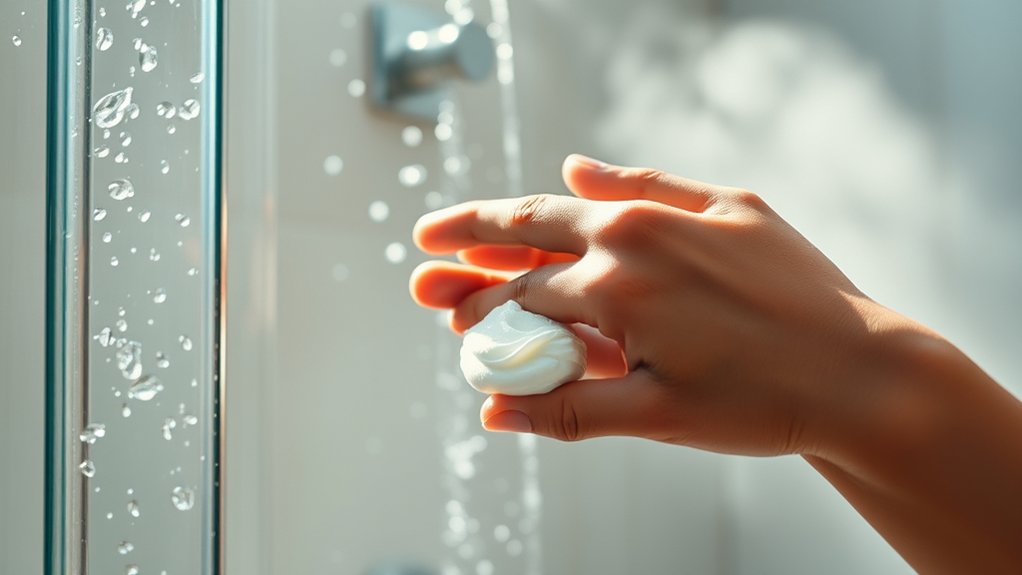
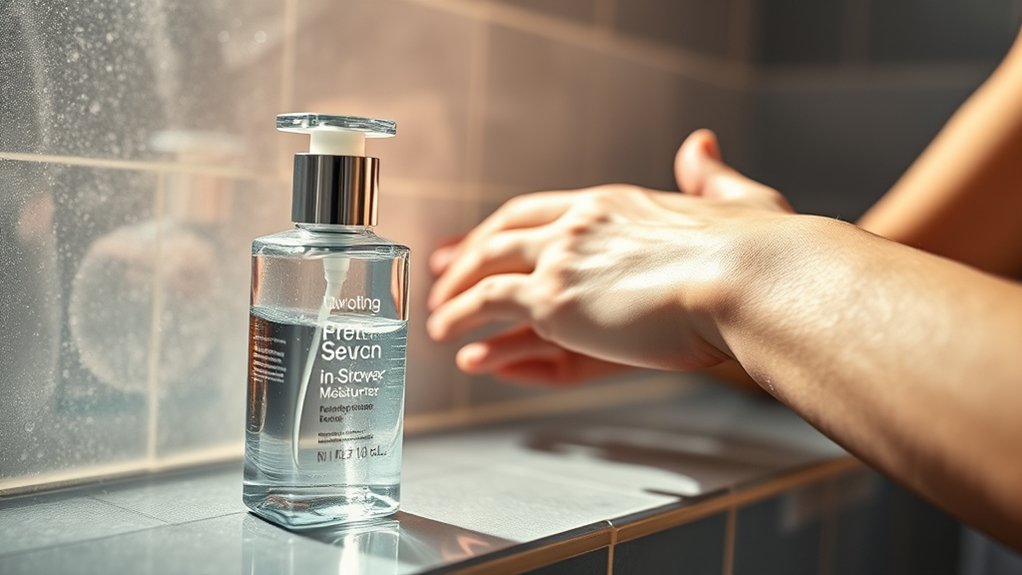
How exactly do in-shower moisturizers work? These products rely on in shower chemistry to lock in moisture immediately after cleansing. When you apply the moisturizer while your skin is still wet, the formulation interacts with the residual water, creating a hydrating barrier that prevents transepidermal water loss.
This process enhances skin hydration more effectively than applying lotion to dry skin. The texture preference plays a critical role in efficacy; lighter, gel-based formulas spread easily on wet skin, while richer creams may feel heavy or leave residue.
Benefits of In-Shower Moisturizers
Why choose in-shower moisturizers over traditional lotions? In-shower moisturizers efficiently hydrate dry skin by sealing moisture immediately after cleansing, reducing transepidermal water loss. This method supports skin barrier repair and helps maintain hydration balance.
Additionally, these products often contain fewer irritants, making them suitable if you have fragrance sensitivity. Applying while your skin is still damp enhances absorption, delivering active ingredients more effectively than lotions applied to dry skin.
This convenience encourages consistent use, which is vital for managing chronic dryness. Clinical studies suggest that in-shower moisturizers can improve skin hydration levels without leaving a greasy residue.
Are In-Shower Moisturizers As Effective As Lotions?
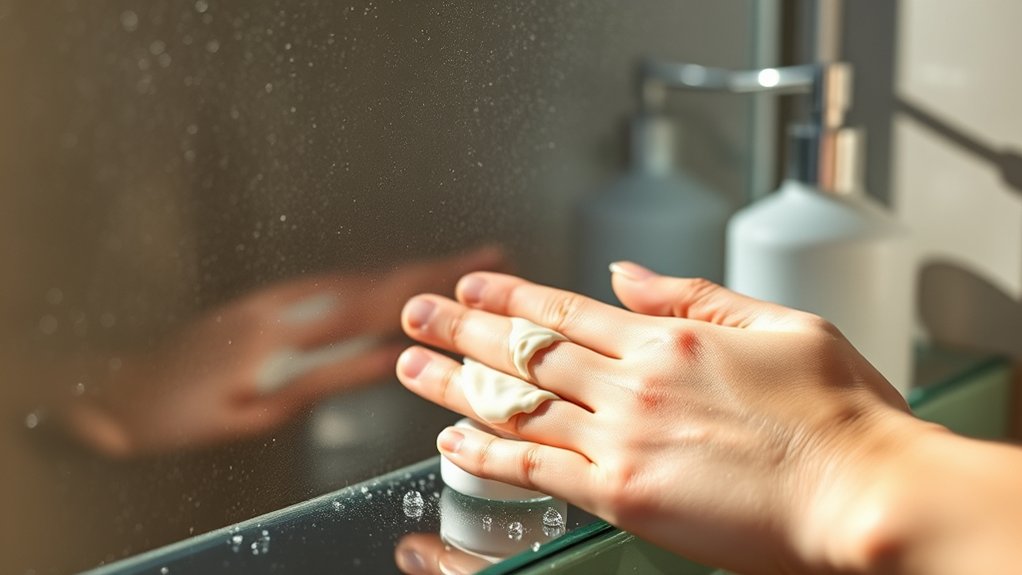
When comparing in-shower moisturizers to traditional lotions, you’ll find that both effectively enhance skin hydration but through different mechanisms. In-shower application locks in moisture immediately after cleansing, while lotions form a barrier on dry skin. Consider these points:
- Absorption Efficiency: Lotions penetrate dry skin more slowly but sustain hydration longer.
- Hydration Timing: In-shower moisturizers capitalize on damp skin, reducing water loss faster.
- Scent Preferences: Lotions often offer a broader range of fragrances, while in-shower products prioritize mild, quick-drying scents.
- Skin Barrier Impact: Both support skin barrier function, but lotions may better suit very dry or sensitive skin due to occlusive ingredients.
Ultimately, effectiveness depends on your skin type and routine. You can choose based on convenience or scent preferences without sacrificing hydration quality.
Who Should Use In-Shower Moisturizers?
Who benefits most from using in-shower moisturizers? Individuals with dry or sensitive skin often see the greatest advantage from incorporating moisturizer application into their in shower routine. These products help lock in hydration immediately after cleansing, reducing transepidermal water loss.
You should consider in-shower moisturizers if you struggle with skin that feels tight or flaky post-shower. Additionally, people with limited time for traditional moisturizing steps may find this method efficient, as it combines hydration with cleansing.
However, optimal results depend on applying the product on damp skin and rinsing as directed. Clinical studies indicate that this approach supports skin barrier function and enhances hydration levels comparably to conventional lotions when used correctly.
Therefore, if convenience and maintaining skin moisture are priorities, in-shower moisturizers may suit your skincare regimen.
Common Drawbacks of In-Shower Moisturizers
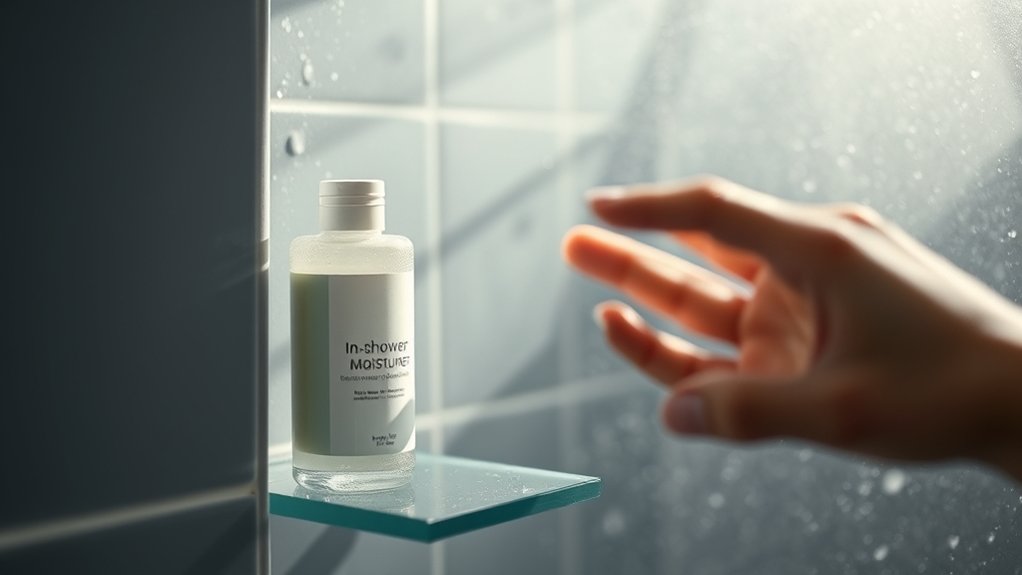
How effective are in-shower moisturizers compared to traditional methods? While they offer convenience, you should be aware of several drawbacks:
- Reduced Hydration: Studies indicate they may not lock in moisture as effectively as creams applied post-shower.
- Fragrance Concerns: Many formulations contain fragrances that can irritate sensitive skin or cause allergic reactions.
- Packaging Waste: Frequent use leads to increased plastic waste, raising environmental concerns.
- Application Challenges: Applying on wet skin can dilute the product, reducing efficacy and leading to inconsistent coverage.
Clinically, these factors suggest in-shower moisturizers might not suit everyone, especially those requiring intense hydration or with sensitive skin. Balancing convenience with these limitations is essential for optimal skincare outcomes.
How to Choose the Right In-Shower Moisturizer
You’ll want to select an in-shower moisturizer that matches your specific skin type to avoid irritation or inadequate hydration. Check the ingredient list carefully for safety and proven efficacy, focusing on non-comedogenic and hypoallergenic components.
Prioritize products clinically shown to enhance moisture retention without disrupting your skin’s natural barrier.
Skin Type Considerations
When selecting an in-shower moisturizer, which skin characteristics demand your attention? Your skin type heavily influences the product’s efficacy and tolerance. Consider these factors:
- Dry skin: Choose formulations with humectants like glycerin that hydrate without leaving an oily residue.
- Oily or acne-prone skin: Avoid products with intense fragrance and heavy emollients that may exacerbate oiliness or clog pores.
- Sensitive skin: Opt for hypoallergenic, fragrance-free options to minimize irritation risks.
- Normal skin: You have flexibility but prioritize lightweight, non-greasy textures to maintain balance.
Ingredient Safety Check
Prioritize scrutinizing ingredient lists to ensure safety and efficacy in in-shower moisturizers. You’ll want to avoid products with known irritants or allergens, especially if you have sensitive skin.
Look for formulations free from parabens, sulfates, and phthalates, as these can disrupt skin barrier function. Fragrance concerns are significant; synthetic fragrances often cause irritation or allergic reactions, so opt for fragrance-free or naturally scented options supported by dermatological testing.
Focus on clinically validated moisturizing agents like glycerin, ceramides, and hyaluronic acid to ensure effective hydration without compromising skin integrity. Always check for non-comedogenic labels if you’re prone to acne.
Moisture Retention Benefits
Selecting an in-shower moisturizer involves more than just ingredient safety; understanding how well a product supports moisture retention is key to maintaining healthy skin. When choosing one, consider these factors:
- Occlusive Agents: Look for ingredients like dimethicone or oils that prevent water loss effectively.
- Humectants: Components such as glycerin attract and bind moisture to the skin.
- In Shower Fragrance: Opt for mild or fragrance-free versions to minimize irritation and preserve skin barrier function.
- Packaging: Prefer products in plastic packaging designed to limit contamination and maintain formula stability.
These criteria ensure your moisturizer not only hydrates but also locks in moisture post-shower. Proper selection based on these parameters maximizes hydration benefits and supports skin barrier integrity.
Frequently Asked Questions
Can In-Shower Moisturizers Be Used on Sensitive Skin?
You can use in-shower moisturizers on sensitive skin if you check the in shower ingredients carefully, avoiding irritants.
Monitor for sensitive skin reactions, and choose products with hypoallergenic, fragrance-free formulas to minimize adverse effects.
Are In-Shower Moisturizers Safe for Children?
Think of in-shower safety as a tightrope walk; you can use moisturizers for kids, but only those formulated for sensitive skin and pediatric use. Always patch-test first and consult a pediatrician to avoid irritation or allergies.
How Long Do In-Shower Moisturizers Typically Last on the Skin?
In-shower moisturizers typically last 4 to 6 hours on your skin, depending on formulation and skin type. Their in shower duration complements your skincare routine compatibility by providing hydration without interfering with subsequent products.
Can In-Shower Moisturizers Be Used With Body Scrubs?
You can use in-shower moisturizers with body scrubs, but for optimal skin hydration benefits, apply scrubs first, rinse thoroughly, then use moisturizers.
This ensures proper scrubs interaction and maintains in-shower moisturizers compatibility without irritation.
Do In-Shower Moisturizers Have Any Environmental Impacts?
Yes, in-shower moisturizers can contribute to environmental impact through chemical runoff and non-recyclable packaging.
You should choose products with biodegradable formulas and packaging sustainability certifications to minimize ecological harm effectively.