Are Crocs Shower Shoes
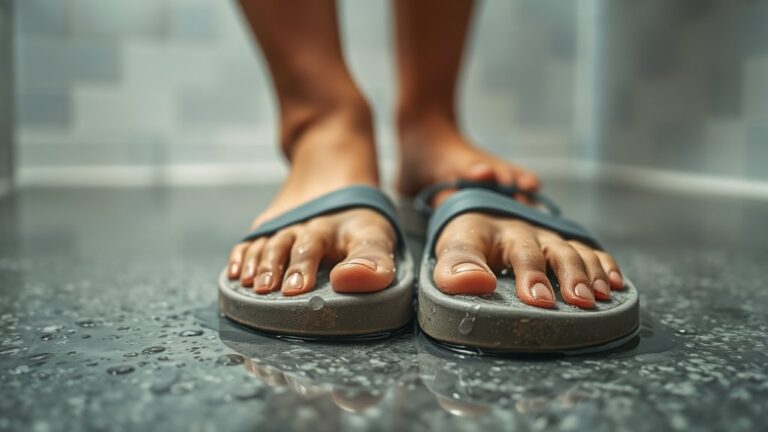
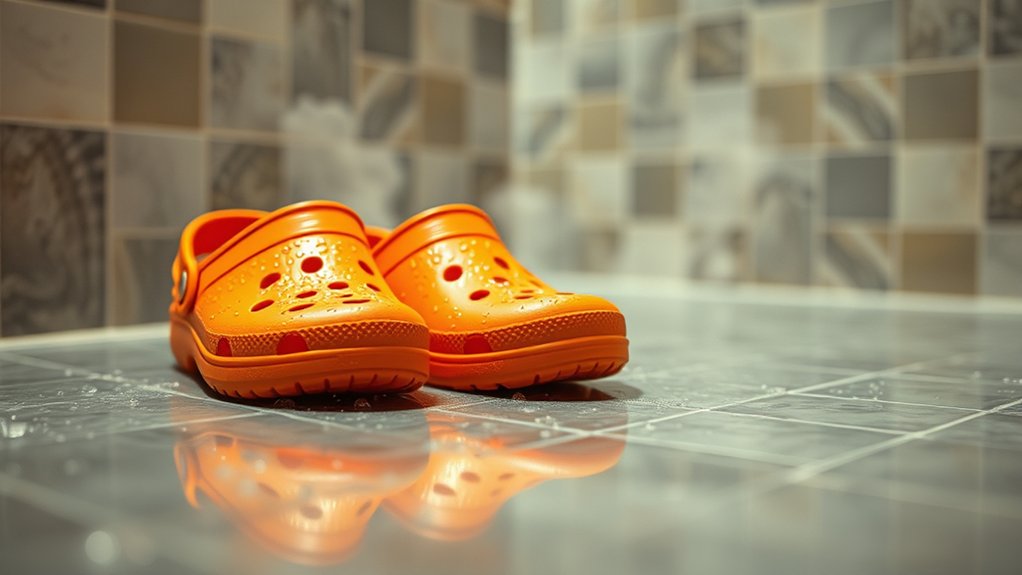
When you step into a wet, slippery environment like a shower, are Crocs shower shoes a good choice?
Choosing the right footwear is essential for safety and hygiene in such settings. Crocs, made from water-resistant Croslite material, seem like a practical option.
But how well do they truly perform in preventing slips and ensuring comfort? Understanding their design and features can help you decide if they meet the specific demands of shower use. Alternatively, you might find that another choice serves you better.
Key Takeaways
- Crocs are water-resistant and quick-drying, making them suitable for shower use.
- Croslite material provides slip resistance and prevents water damage and microbial growth.
- Ventilation holes improve airflow and drainage, reducing moisture buildup inside the shoe.
- Textured soles offer grip but may not fully prevent slipping on very smooth, wet surfaces.
- For heavy-duty grip or fungal protection, consider specialized alternatives beyond Crocs.
What Makes Good Shower Shoes
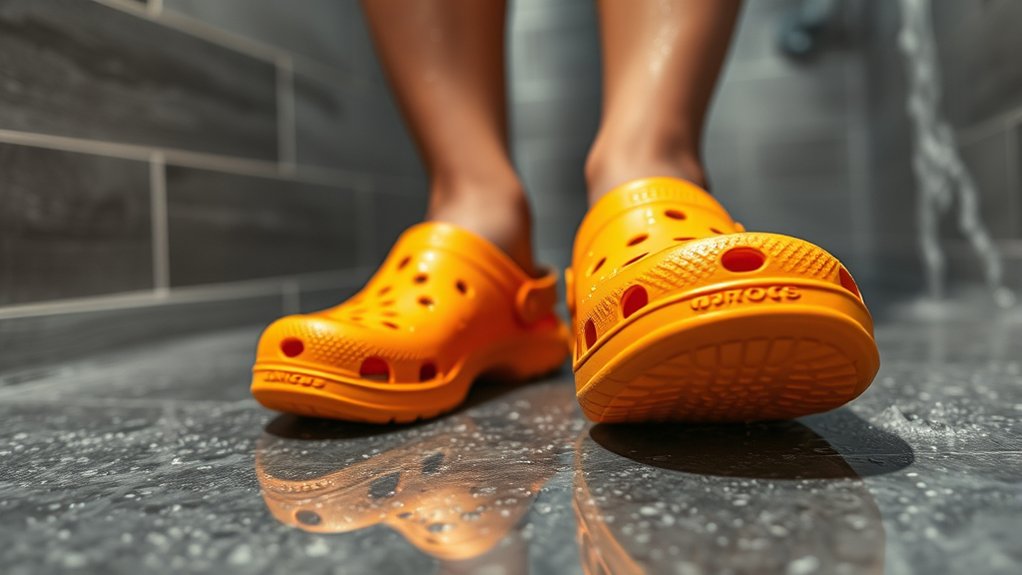
What defines good shower shoes? You need footwear that combines protection, comfort, and longevity. Crocs durability plays a crucial role here; their Croslite material resists water damage, molds, and mildew, ensuring extended use in wet conditions.
Equally important is shower shoe fit. It must provide a secure, snug hold without causing pressure points, allowing water to drain efficiently while preventing slips. The sole should be thick enough to shield your feet from rough surfaces but flexible enough to support natural movement.
Ventilation holes enhance breathability to reduce moisture buildup inside the shoe. When choosing shower shoes, prioritize materials and design that maintain structural integrity over time and offer an ergonomic fit tailored to your foot’s shape. This combination guarantees both safety and comfort during everyday use.
Are Crocs Slip-Resistant Shower Shoes?
You need shower shoes that provide reliable traction to prevent slips on wet surfaces. Crocs incorporate slip-resistant outsoles designed with specialized tread patterns to enhance grip.
Let’s evaluate how these features perform in typical wet environments.
Slip-Resistance Features
How effectively do Crocs perform in wet, slippery environments like showers? Their slip-resistance features are critical for shower safety and rely on design and material properties. You’ll find that Crocs offer:
- Textured outsoles – Crocs feature patterned treads that enhance grip on slick surfaces, reducing slip risk.
- Croslite™ material – This proprietary resin provides inherent traction while maintaining Crocs durability under moisture exposure.
- Water drainage holes – Strategically placed holes prevent water buildup, minimizing hydroplaning and maintaining consistent contact with the floor.
While these elements improve slip resistance, remember that no shoe can guarantee complete slip-proof performance. However, Crocs’ combination of durable materials and thoughtful design contributes significantly to shower safety, making them a practical choice if you prioritize reducing fall hazards in wet areas.
Performance On Wet Surfaces
Building on their slip-resistance features, Crocs demonstrate reliable performance on wet surfaces, including showers. The footwear materials, primarily Croslite™ foam, offer inherent water resistance and quick drainage through strategically placed ventilation holes. This design minimizes water retention, reducing slip risk.
The outsole’s tread pattern enhances grip by increasing surface contact and channeling water away efficiently. When you consider discussion ideas around slip-resistance, Crocs stand out due to their balance of cushioning and traction. However, while Crocs perform well on wet tiles, their effectiveness can vary on oily or heavily soaped surfaces.
How Crocs Are Designed for Shower Use
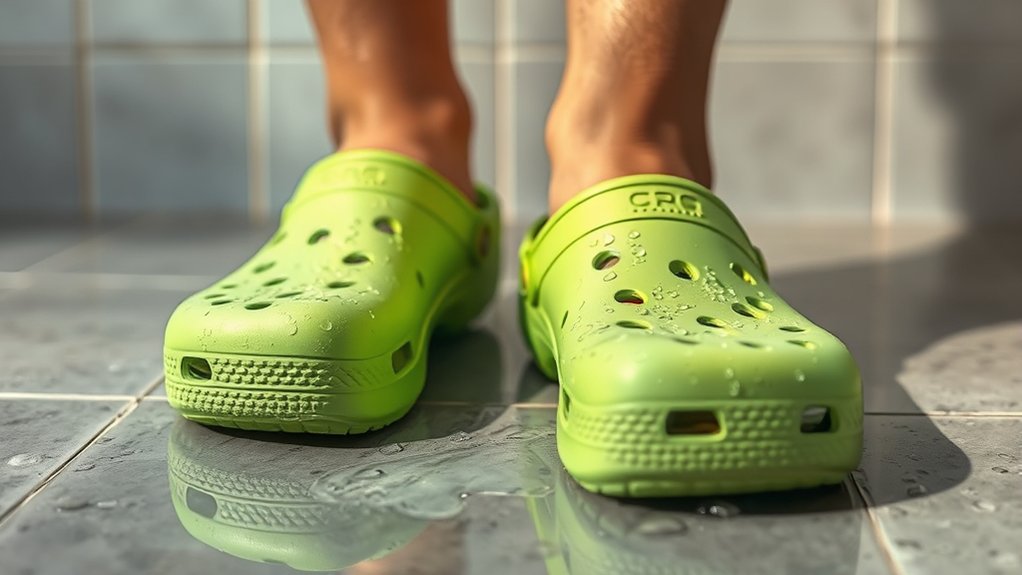
Although shower environments demand specific footwear features, Crocs incorporate several design elements that make them especially suited for this purpose. When you wear Crocs in the shower, you benefit from:
Crocs offer specialized design features that make them ideal for safe and comfortable shower use.
- Crocs ventilation: Their strategically placed holes ensure continuous airflow, reducing moisture buildup and promoting quick drying, which minimizes the risk of fungal growth.
- Rubber tread: The non-slip rubber tread on the sole provides reliable traction on wet and slippery shower surfaces, enhancing your stability and safety.
- Water-resistant Croslite™ material: This proprietary resin resists water absorption, maintains lightweight comfort, and prevents degradation from prolonged exposure to moisture.
These features collectively ensure that Crocs maintain durability, hygiene, and functionality in wet shower conditions, making them a technically sound choice for shower footwear.
Pros of Using Crocs as Shower Shoes
Why choose Crocs as your shower shoes? Crocs offer a combination of functionality and comfort, making them ideal for wet environments. Their Croslite™ material ensures water resistance and quick drying, reducing slip hazards.
You’ll appreciate the secure fit enabled by accurate Crocs sizing, which prevents water from pooling inside. Additionally, their ventilation holes promote airflow and drainage, enhancing hygiene.
Crocs colorways provide versatility, allowing you to select styles that suit your personal preference without compromising practicality. Their lightweight construction minimizes foot fatigue during prolonged use.
Cons and Drawbacks of Crocs in the Shower
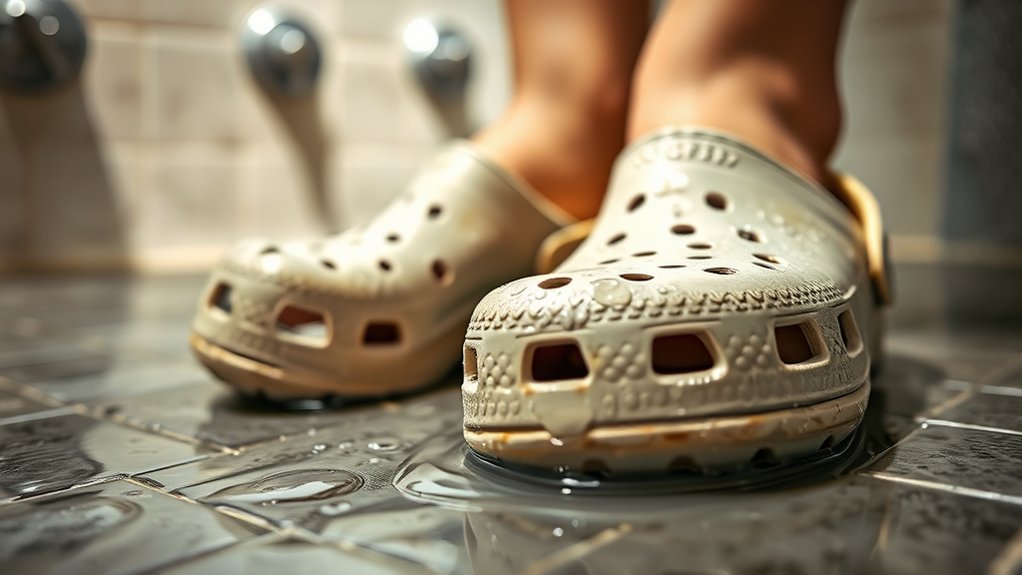
You should be aware that Crocs can present slip hazards on wet, smooth shower surfaces despite their tread design. Additionally, water retention within the shoe’s structure may cause discomfort or prolonged moisture exposure.
Finally, continuous moisture can affect Crocs’ material durability, potentially reducing their lifespan in shower environments.
Slip Hazard Concerns
How secure are Crocs when wet, especially on slippery shower surfaces? While Crocs offer some traction, they present notable slip hazard concerns that you must consider. The Pros and Cons of using Crocs in the shower highlight critical Safety Considerations regarding slip resistance.
- The Croslite™ material, though water-resistant, can become slick on smooth shower floors, reducing grip.
- The tread pattern on Crocs is shallow and may not effectively channel water away, increasing slip risk.
- Crocs’ loose fit can cause foot instability, making it easier to lose balance on wet surfaces.
These factors indicate that, despite their convenience, Crocs may not provide optimal slip protection, posing a safety risk in wet environments such as showers.
Water Retention Issues
In the context of water retention in Crocs during shower use, it’s essential to understand how their design impacts moisture management. Crocs feature numerous ventilation holes intended to promote airflow and drainage, but these same openings can allow water to pool within the shoe’s footbed, creating localized moisture retention.
This trapped water can increase humidity around your feet, potentially leading to discomfort or skin irritation if worn for extended periods. Additionally, the Croslite™ material, while water-resistant, can retain moisture on its surface, further contributing to a damp environment inside the shoe.
You should also recognize that the combination of moisture and humidity may encourage bacterial growth if the Crocs don’t dry promptly. Consequently, while Crocs handle water exposure better than many shoes, they still present notable water retention issues in the shower setting that you need to address.
Durability Under Moisture
Why does moisture pose a challenge to Crocs’ durability in shower environments? Despite being made from Croslite™, a proprietary resin that includes recycled materials, constant exposure to water can degrade the shoe’s structural integrity over time. You should consider these key drawbacks:
- Prolonged moisture weakens the foam matrix, leading to faster wear and loss of cushioning.
- Damp conditions promote microbial growth, increasing allergen exposure risks and potential skin irritations.
- Repeated wet-dry cycles cause material fatigue, resulting in cracks and reduced lifespan.
While Crocs offer water resistance, their durability under persistent shower moisture is limited. If you rely on them long-term in such environments, expect diminished performance and potential health concerns from allergen buildup. Choose footwear designed specifically for wet, high-moisture conditions to avoid these issues.
Best Crocs Styles for Shower Shoes
Which Crocs styles excel as shower shoes depends on their design features and material properties. You want styles with ample ventilation holes for water drainage and quick drying.
Classic Crocs Clogs provide optimal breathability and slip resistance due to their Croslite material sole. The LiteRide collection offers enhanced cushioning and lightweight support, improving comfort during prolonged shower use.
Avoid fully enclosed models, as they trap moisture and increase fungal risk. Additionally, select colors and designs that align with your shower fashion preferences without compromising Crocs aesthetics.
Neutral tones or simple patterns maintain a clean look, while still performing technically. Prioritize styles with textured soles to reduce slipping on wet surfaces.
Keeping Crocs Clean and Safe in the Shower
How do you guarantee your Crocs remain hygienic and safe for shower use? Maintaining cleanliness is crucial, especially given Crocs pricing that reflects quality and durability. To preserve Crocs aesthetics and functionality, follow these steps:
- Regular Cleaning: Rinse your Crocs thoroughly after each shower to remove soap residue and prevent bacterial buildup.
- Deep Disinfection: Weekly, soak them in a mixture of water and mild disinfectant to eliminate microbes without damaging the material.
- Proper Drying: Air-dry your Crocs in a well-ventilated area away from direct sunlight to avoid warping or fading, preserving both their look and structural integrity.
When to Choose Other Shower Shoes Over Crocs
While maintaining Crocs for shower use can keep them clean and functional, there are situations where alternative shower shoes offer better performance or protection. If you encounter environments with abrasive surfaces, Crocs’ tread wear may degrade rapidly, compromising grip and safety.
In such cases, shoes designed with reinforced soles and specialized tread patterns provide superior durability and traction. Additionally, if odor control is a priority, consider shower shoes constructed with antimicrobial materials or enhanced ventilation systems.
Crocs, made from Croslite foam, can retain moisture and odors despite cleaning, which may be problematic during extended use. When you need maximum protection against fungal infections or require shoes that withstand heavy-duty use, opting for alternatives specifically engineered for these conditions ensures optimal hygiene, safety, and longevity beyond what Crocs can consistently offer.
Final Verdict: Are Crocs Right for Your Shower?
Ultimately, deciding whether Crocs are right for your shower depends on your specific needs for comfort, durability, and hygiene. Based on rigorous comfort testing and analysis of material properties, Crocs offer significant advantages but also some limitations. Consider these factors:
Choosing Crocs for shower use hinges on your comfort, durability, and hygiene priorities.
- Comfort Testing: Crocs provide excellent cushioning and water drainage, reducing slip risk and foot fatigue during shower use.
- Durability: The Croslite material resists water damage and microbial growth, ensuring longevity in wet environments.
- Color Trends: While aesthetics don’t impact function, Crocs’ wide color range allows you to match personal style with practicality.
If your priority is a lightweight, quick-drying shoe with proven hygiene benefits, Crocs are a strong choice. However, if you require enhanced grip or specialized support, evaluate alternatives accordingly.
Frequently Asked Questions
Can Crocs Be Worn Barefoot in the Shower?
You absolutely can’t go barefoot in the shower without risking slippery chaos. Crocs barefoot provide essential grip and drainage.
Their design makes them superior shower footwear, ensuring safety and hygiene with durable, water-resistant materials engineered for wet environments.
Are Crocs Waterproof or Water-Resistant?
Crocs aren’t fully waterproof but excel in water-resistant performance due to their Croslite™ material.
The waterproof debate centers on material durability versus complete water impermeability, where Crocs prioritize comfort, quick drying, and slip resistance instead.
Do Crocs Dry Quickly After Shower Use?
Yes, Crocs dry quickly after shower use due to their Croslite material, which guarantees quick drying and resists water absorption.
Their material durability also prevents damage from frequent exposure to moisture, maintaining performance over time.
Can Crocs Cause Foot Odor After Shower Use?
Imagine you wear Crocs after showering but don’t dry your feet properly; Crocs smell can develop due to trapped moisture. Maintaining strict shower hygiene prevents bacterial growth, reducing odor risk when you use Crocs regularly.
Are Crocs Suitable for Communal Shower Environments?
Yes, Crocs are suitable for communal showers due to their water-resistant material and slip-resistant soles.
Compared to sandals, Crocs require minimal maintenance routines, making them hygienic and practical for shared wet environments.