Are Bonnets and Shower Caps the Same
You might assume bonnets and shower caps are interchangeable since both protect your hair, but their purposes and designs differ substantially.
Bonnets focus on reducing friction and preserving moisture overnight, while shower caps are built to keep water out during showers.
Understanding these differences can transform how you care for your hair, especially when deciding which option suits your routine best.
Let’s explore what sets bonnets and shower caps apart and when each one truly shines.
Key Takeaways
- Bonnets are designed for nighttime hair care to reduce friction and preserve moisture during sleep, unlike shower caps.
- Shower caps are waterproof and primarily used to keep hair dry during showers and bathing.
- Bonnets use soft, breathable fabrics like silk or satin, while shower caps often have plastic or vinyl waterproof linings.
- Bonnets focus on hair health and moisture retention overnight; shower caps focus on water protection and scalp hygiene.
- Though a shower cap can temporarily substitute for a bonnet, it lacks breathability and softness needed for prolonged wear.
What Bonnets Do for Your Hair
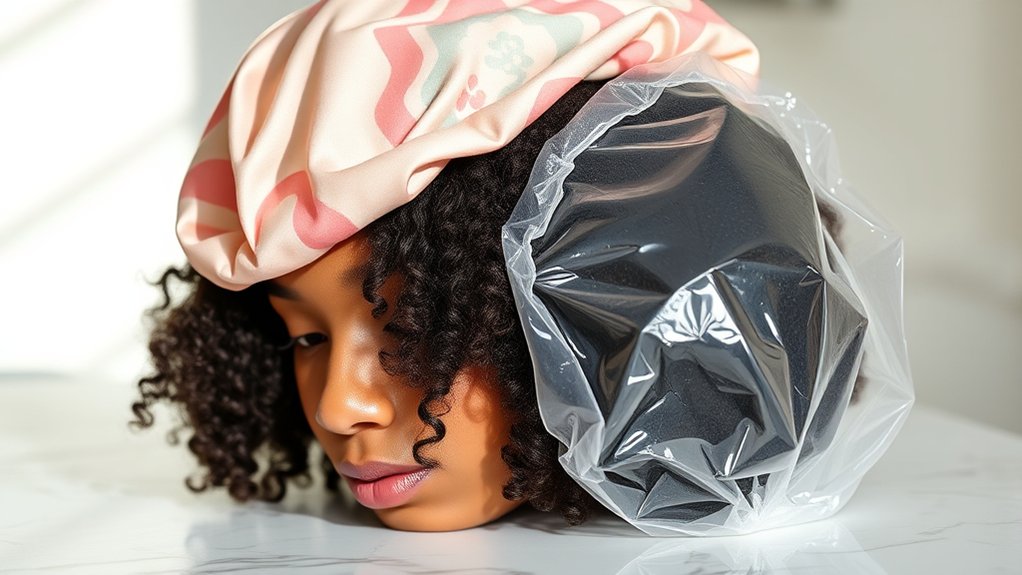
How exactly do bonnets benefit your hair? You might assume they’re just a quaint fashion alternative, but bonnets serve a practical role beyond conceptual myths. They protect your hair from friction caused by tossing and turning during sleep, which reduces breakage and split ends.
Unlike other head coverings, bonnets maintain your hair’s moisture by minimizing contact with absorbent pillowcases. This preservation helps prevent dryness and frizz, especially for curly or textured hair types. When you choose a bonnet made from silk or satin, you’re optimizing this protective effect.
What Shower Caps Are Meant For
You use shower caps primarily to shield your hair from water, preventing unwanted dampness during showers. They also help maintain your hair’s natural moisture by creating a protective barrier.
Additionally, shower caps can boost the effectiveness of hair treatments by trapping heat and enhancing absorption.
Protecting Hair From Water
Why does keeping your hair dry during a shower matter? Shower caps are specifically designed to shield your hair from water, preserving its style and health. Whether part of your bedtime routine or essential for travel packing, they offer practical benefits. Here’s why you should use one:
- Prevents hair from becoming damp, avoiding frizz and damage.
- Saves time by reducing the need for frequent washing or styling.
- Protects hairstyles, such as blowouts or braids, extending their longevity.
- Maintains scalp hygiene by preventing excess moisture buildup.
Using a shower cap thoughtfully integrates into your daily habits, ensuring your hair stays intact and manageable. This protection is especially useful during showers when you want to focus on cleansing your body without compromising your hair’s condition.
Maintaining Hair Moisture
Frequently, maintaining hair moisture requires more than just applying conditioners or oils. It demands creating a protective barrier that locks in hydration. Shower caps excel at this by sealing your hair, preventing moisture loss caused by air exposure.
When you wear a shower cap, it traps steam and natural oils close to your strands. This supports the retention of glossy textures and prevents dryness. This is especially important if you regularly engage in heat styling, as heat can strip moisture from your hair, leaving it brittle and dull.
Enhancing Treatment Effects
How can shower caps substantially boost the effectiveness of hair treatments? Shower caps create a controlled environment, locking in heat and moisture to activate and deepen treatment absorption.
While bonnet pros include gentle moisture retention during sleep, shower cap cons emerge when you need intensified treatment effects, as bonnets don’t trap heat as effectively.
To maximize treatment benefits, you should:
- Apply the treatment evenly throughout your hair.
- Cover with a shower cap to seal in moisture and warmth.
- Allow heat buildup to open hair cuticles for better penetration.
- Rinse thoroughly after the recommended time for optimal results.
Key Differences Between Bonnets and Shower Caps
What sets bonnets apart from shower caps often comes down to their design, purpose, and material. You’ll notice bonnets are crafted primarily to protect hair during sleep, aligning with care routines focused on reducing breakage and maintaining moisture.
Shower caps, however, serve a more functional role by shielding hair from water during bathing. From a design perspective, bonnets tend to be softer and more breathable, often reflecting current fashion trends with varied patterns and fabrics.
Shower caps prioritize waterproofing, featuring plastic or vinyl materials that ensure hair stays dry. Understanding these differences helps you choose the right option based on your needs, whether that’s nurturing your hair overnight or preventing dampness during showers, highlighting how each item fits distinct roles within your hair care regimen.
Best Fabrics for Bonnets and Shower Caps
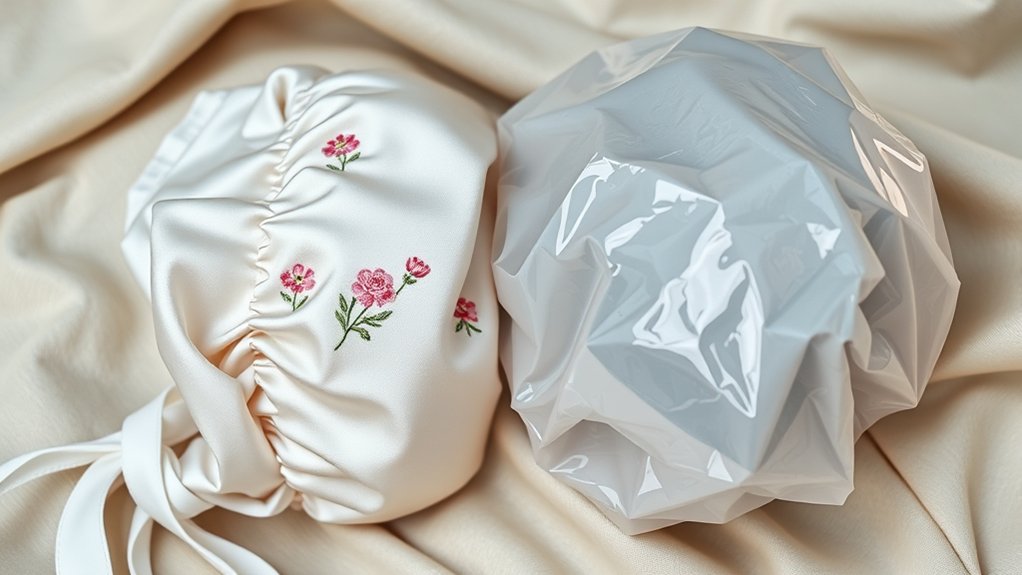
Which fabrics truly enhance the effectiveness of bonnets and shower caps? Choosing the right material impacts comfort, durability, and protection. Here are the top four fabrics you should consider:
1. Silk
Renowned for its smooth texture, silk minimizes friction, making it ideal for preserving hair health. It requires gentle care tips like hand washing.
2. Satin
A cost-effective alternative to silk, satin provides a similar smooth finish and is often used in travel essentials due to easy maintenance.
3. Polyester
Common in shower caps, waterproof polyester repels moisture effectively but demands regular cleaning to avoid mildew.
4. Nylon
Lightweight and water-resistant, nylon is practical for shower caps and travel essentials but may not be as gentle on hair.
Selecting these fabrics ensures your bonnet or shower cap performs at its best while fitting your lifestyle needs.
How Bonnets Prevent Hair Breakage and Dryness
You’ll notice that bonnets play a key role in locking in moisture, which keeps your hair hydrated and less prone to dryness. By reducing friction between your hair and pillowcases, they help minimize breakage during sleep.
The choice of fabric also matters, as certain materials offer a protective barrier that preserves your hair’s health over time.
Moisture Retention Benefits
How exactly do bonnets help in retaining moisture to prevent hair breakage and dryness? Bonnets create a controlled environment that enhances moisture retention by limiting exposure to air and external elements. Their material durability plays a crucial role in maintaining this balance over time.
- The fabric’s weave minimizes moisture loss by reducing evaporation from hair strands.
- Durable materials like silk or satin preserve natural oils, essential for hydration.
- Bonnets shield hair from drying factors, such as cold air or heated environments.
- Consistent moisture retention strengthens hair cuticles, lowering breakage risk.
Friction Reduction Effects
A bonnet substantially reduces friction between your hair and surfaces like pillowcases, preventing the mechanical stress that leads to breakage and dryness. By creating a smooth barrier, it minimizes tugging and tangling, which are common culprits in hair damage.
This friction reduction is essential because repeated rubbing, especially during sleep, weakens hair strands over time. You’ll also appreciate how the bonnet’s design balances effective protection with headwear comfort, ensuring it stays in place without causing discomfort.
Unlike rough fabrics, bonnets often use soft, silky materials that glide over your hair, further reducing friction. This careful combination of material choice and fit makes bonnets a practical solution to maintain hair integrity, especially if you want to avoid dryness and preserve healthy strands effortlessly.
Protective Fabric Advantages
Why do the materials used in bonnets matter so much for hair health? The answer lies in how protective fabrics prevent hair breakage and dryness. When you choose a bonnet with durable weaving and high-quality fibers, you’re investing in your hair’s longevity.
Here’s why:
- Minimized friction: Smooth fabrics reduce hair strand damage during movement.
- Moisture retention: Breathable materials help maintain natural oils, preventing dryness.
- Fabric aesthetics: A soft, well-crafted fabric feels gentle against hair, discouraging tugging.
- Longevity: Durable weaving resists wear, ensuring consistent protection over time.
How Shower Caps Keep Hair Dry
Ever wondered what makes shower caps so effective at keeping your hair dry? The secret lies in their design and materials. Shower caps use waterproof fabrics or plastic linings that create a tight seal around your hairline, preventing water from seeping in.
This seal, combined with elastic bands, enhances shower cap durability by maintaining a snug fit, even during movement. Unlike bonnet fashion statements, which prioritize style and fabric softness, shower caps focus on practicality and protection.
The materials resist moisture and allow you to shower without worrying about damp hair. By understanding these functional elements, you can appreciate why shower caps excel at moisture protection, making them an essential tool for anyone wanting to keep their hair dry and intact during showers.
When to Use a Bonnet Instead of a Shower Cap
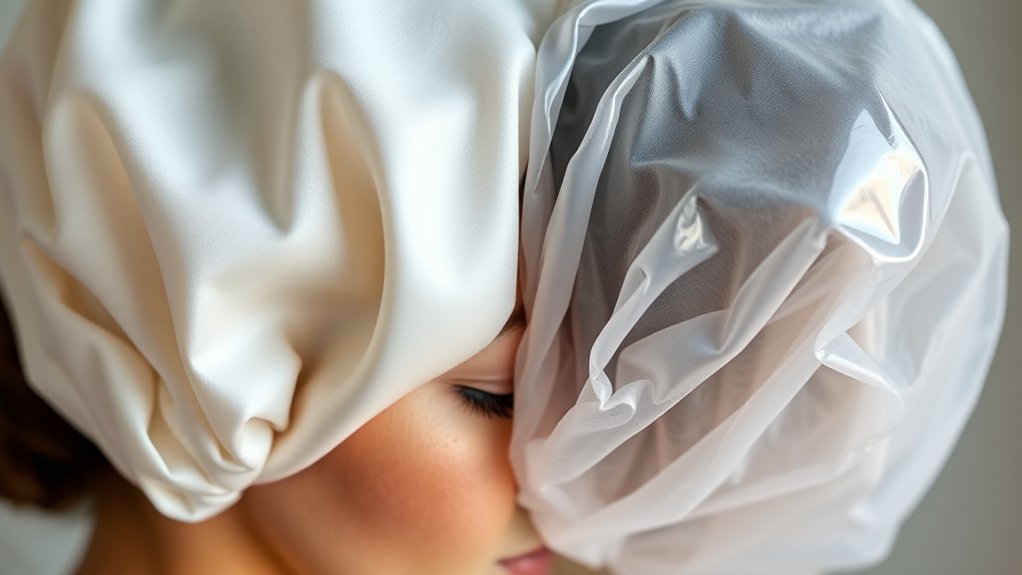
While shower caps excel at keeping your hair dry during showers, bonnets serve a different purpose that focuses on hair care beyond moisture protection. Understanding the bonnet versus shower cap distinction helps clear up common hair protection misconceptions.
You should use a bonnet instead of a shower cap when:
- You want to reduce friction while sleeping, preventing breakage and frizz.
- You need to preserve hairstyles like braids, curls, or blowouts overnight.
- You aim to maintain scalp moisture and avoid drying out your hair.
- You prefer breathable, softer fabrics like satin or silk that protect hair cuticles better than plastic.
In these contexts, bonnets provide essential hair care benefits that shower caps can’t, making them a vital part of your hair protection routine.
Can You Use a Shower Cap as a Bonnet?
How effective is a shower cap when used as a bonnet for hair care? Shower caps primarily serve to keep water off your hair during showers, while bonnets focus on protecting hair overnight, preserving moisture and reducing friction.
You can use a shower cap as a bonnet temporarily, but it may lack breathability and softness, potentially causing scalp discomfort or breakage. When exploring topic ideas or marketing angles, highlight these functional differences to help consumers understand the distinct benefits.
Shower caps often feature waterproof materials but minimal lining, whereas bonnets include satin or silk linings to maintain hair health. So, while a shower cap might substitute as a bonnet in a pinch, it won’t offer the same targeted care or comfort essential for prolonged hair protection.
How to Choose the Right Hair Protection for You
When selecting the right hair protection, what specific needs does your hair have? Consider your hair type and daily routine carefully. Just like newborn hair requires gentle care, your choice should reflect the delicacy or strength of your strands. Kitchen science teaches us that environment affects outcomes; similarly, humidity and heat exposure shape your choice.
Selecting hair protection means understanding your hair’s unique needs and environmental impacts on its health.
- Assess your hair texture. Fine hair benefits from silk bonnets, coarse hair may need breathable shower caps.
- Identify your primary goal: moisture retention or water protection.
- Factor in comfort for all-day wear versus short-term use.
- Evaluate material durability and ease of cleaning to match your lifestyle.
This analytical approach ensures you select hair protection tailored precisely to your routine and hair’s unique demands.
Frequently Asked Questions
Are Bonnets and Shower Caps Reusable or Disposable?
You’ll find bonnets, made from durable materials like satin or silk, are reusable, supporting long-term hair care.
Shower caps, often plastic, can be disposable or reusable, depending on their thickness and your usage preferences.
Can Children Use Bonnets and Shower Caps Safely?
You can let children use bonnets and shower caps safely by discussing ideas like proper fit, avoiding choking hazards, and ensuring materials are non-toxic.
Prioritize safety considerations to prevent discomfort or accidents during use.
How Do You Clean and Maintain Bonnets and Shower Caps?
You clean bonnets by gently hand washing satin or silk. Shower caps need wiping or occasional washing with mild soap due to their plastic materials.
Care tips include air drying and avoiding heat to maintain durability and material comparison.
Do Bonnets and Shower Caps Come in Different Sizes?
Yes, bonnets and shower caps come in different sizes to accommodate size differences in hair volume and length.
You’ll notice material fit varies too, with stretchy fabrics offering a snug, comfortable hold tailored to your hair type.
Are There Eco-Friendly or Sustainable Options for Bonnets and Shower Caps?
You’ll find eco-friendly bonnets and shower caps crafted from bamboo fibers and organic cotton, combining durable construction with gentle care. These sustainable options shield your hair while nurturing the planet, making your routine greener and smarter.