Are Shower Pans a Good Idea
If you’re planning a bathroom renovation, you’ve likely considered shower pans as a good idea for your shower base. Shower pans offer a reliable waterproof barrier that directs water efficiently to the drain, protecting your subfloor from damage.
However, not all shower pans are created equal, and installation quality plays a critical role in their long-term performance. Before you decide, it’s important to understand their benefits, limitations, and when alternatives might better suit your needs.
Key Takeaways
- Shower pans provide a reliable waterproof barrier that prevents leaks and protects the subfloor from water damage and mold growth.
- They simplify maintenance with durable, easy-to-clean surfaces and enable faster installation compared to traditional mortar beds.
- Common materials like acrylic and fiberglass offer lightweight options, while pre-sloped mortar pans provide superior durability and a solid tile base.
- Potential issues include cracking, leaks, and improper slope, requiring careful installation and slope verification to avoid failures.
- Alternatives like liquid membranes or custom mortar beds may be better for barrier-free designs or unique slopes but need expert installation.
What Is a Shower Pan and How Does It Work?
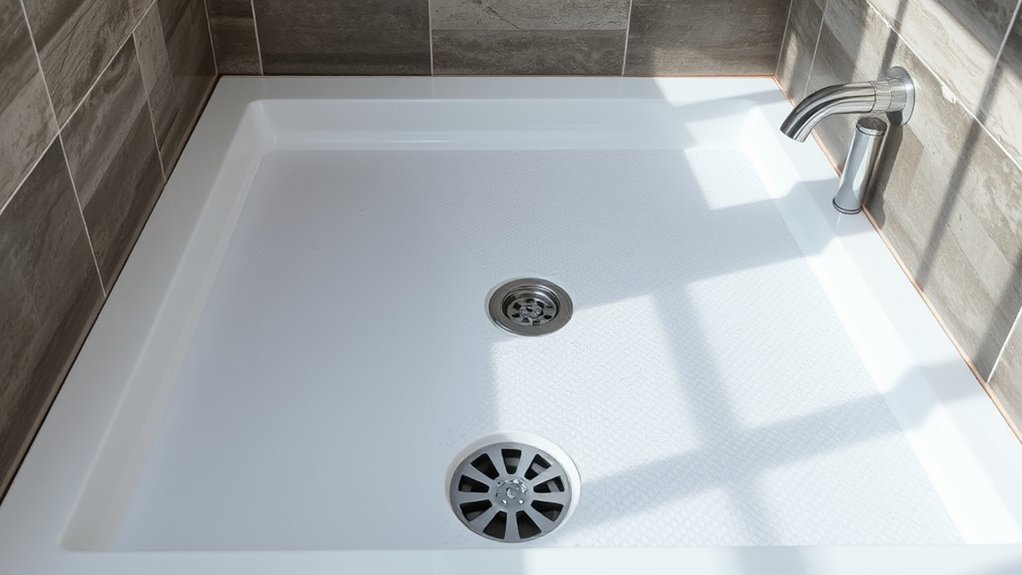
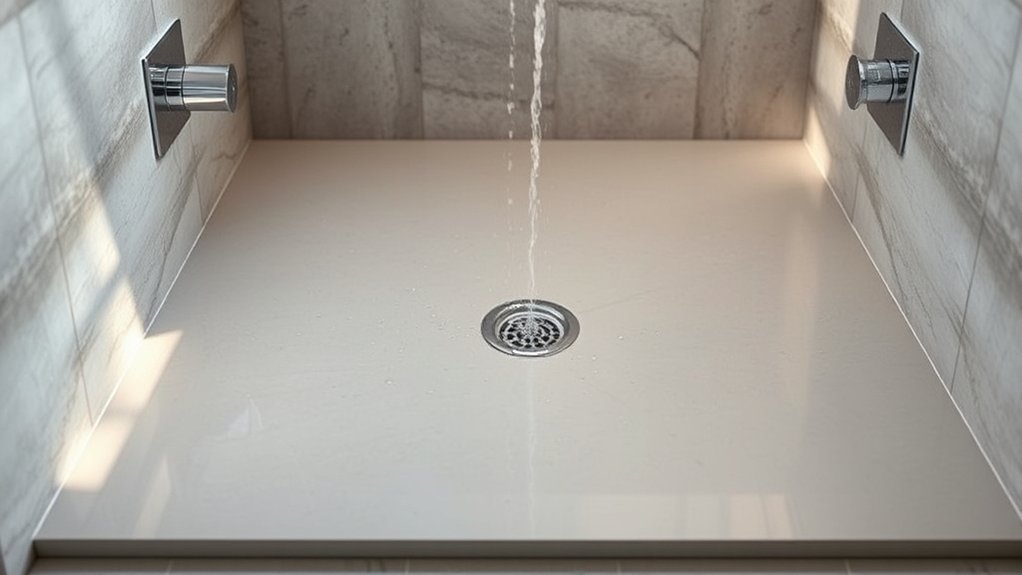
What exactly is a shower pan, and why is it essential in your bathroom setup? A shower pan is the waterproof base installed beneath your shower floor. It channels water toward the drain, preventing leaks that could damage your subfloor or cause mold growth.
Addressing common shower pan misconceptions, it’s not merely a decorative element but a critical waterproof barrier. Many waterproofing myths suggest that tile or grout alone can keep water contained; this is false.
Without a properly installed shower pan, water will seep through, undermining your bathroom’s structural integrity. The pan works by integrating a waterproof liner or membrane, ensuring water flows directly into the drain system.
Understanding this functional role helps you avoid costly repairs and maintain a durable shower environment.
Benefits of Using Shower Pans in Bathroom Renovations
Why should you consider installing a shower pan during your bathroom renovation? A shower pan provides a reliable waterproof barrier, preventing leaks that can damage subflooring and walls. It simplifies shower pan maintenance, reducing long-term repair needs.
Plus, it offers a clean slate for your wall tile design, ensuring a uniform and precise installation.
Key benefits include:
- Enhanced water containment to protect structural elements
- Streamlined shower pan maintenance with durable, easy-to-clean surfaces
- Compatibility with various wall tile designs for cohesive aesthetics
- Faster installation compared to traditional mortar beds, saving time and labor
Common Materials and Types of Shower Pans
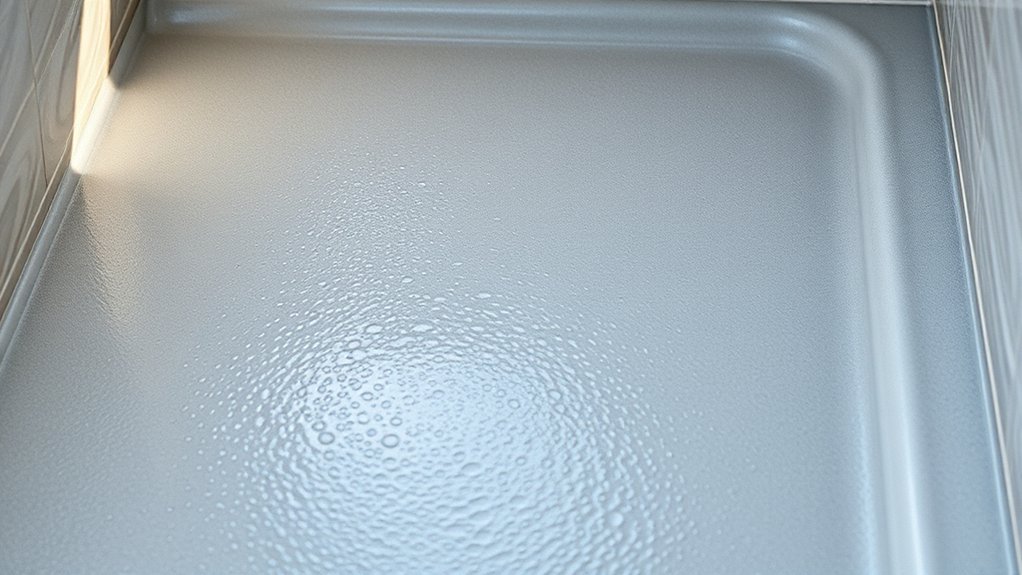
How do you choose the right shower pan material for your renovation project? Consider common options like acrylic, fiberglass, and pre-sloped mortar pans. Acrylic and fiberglass pans offer lightweight installation and moderate shower pan durability but require careful tile substrate prep to prevent movement and leaks.
Pre-sloped mortar pans, built from cementitious materials, provide superior durability and a solid base for tile installation. They demand thorough tile substrate prep, including proper sloping and waterproofing, to ensure longevity. PVC or vinyl liners often complement these pans, enhancing waterproofing.
Selecting the right material depends on your budget, desired finish, and installation complexity. Understanding each type’s technical requirements helps you optimize shower pan durability and ensures a reliable tile substrate prep for a lasting, water-tight shower floor.
Drawbacks and Alternatives to Shower Pans
You’ll want to consider common issues like cracking, leaks, and improper slope when using shower pans. These problems can lead to costly repairs and water damage over time.
Exploring alternative waterproofing solutions, such as liquid membranes or pre-slope assemblies, can offer more reliable protection in some cases.
Common Shower Pan Issues
What challenges might you face when installing or maintaining shower pans? You’ll need careful budget planning to avoid costly repairs later. Also, limited creative design options can restrict your bathroom’s aesthetic.
Common issues include:
- Cracking due to improper installation or shifting substrate
- Leaks caused by faulty waterproofing or damaged seals
- Mold growth in hard-to-reach areas from trapped moisture
- Difficulty in matching custom shapes or sizes with standard pans
These problems often arise from installation errors or material limitations. Addressing them requires precise workmanship and thorough inspection.
Understanding these common pitfalls helps you decide if a shower pan suits your project or if alternative waterproofing fits better with your creative design goals and budget constraints.
Alternative Waterproofing Solutions
Considering the limitations of shower pans, exploring alternative waterproofing solutions can offer greater flexibility and durability for your bathroom project. One common option is a traditional mortar bed combined with a waterproof membrane, allowing for custom slopes and reliable water containment.
This method pairs well with alternative drainage systems, such as linear or point drains, which enhance water flow efficiency and aesthetic appeal. To ensure effectiveness, you’ll need to perform step by step testing of the waterproof barrier before tile installation, checking for leaks and proper adhesion.
While these solutions require more labor and skill than standard shower pans, they reduce long-term risks of cracking or water damage. Ultimately, choosing alternatives demands careful installation and verification but can provide a more robust, customizable waterproofing approach.
How to Choose the Right Shower Pan for Your Bathroom
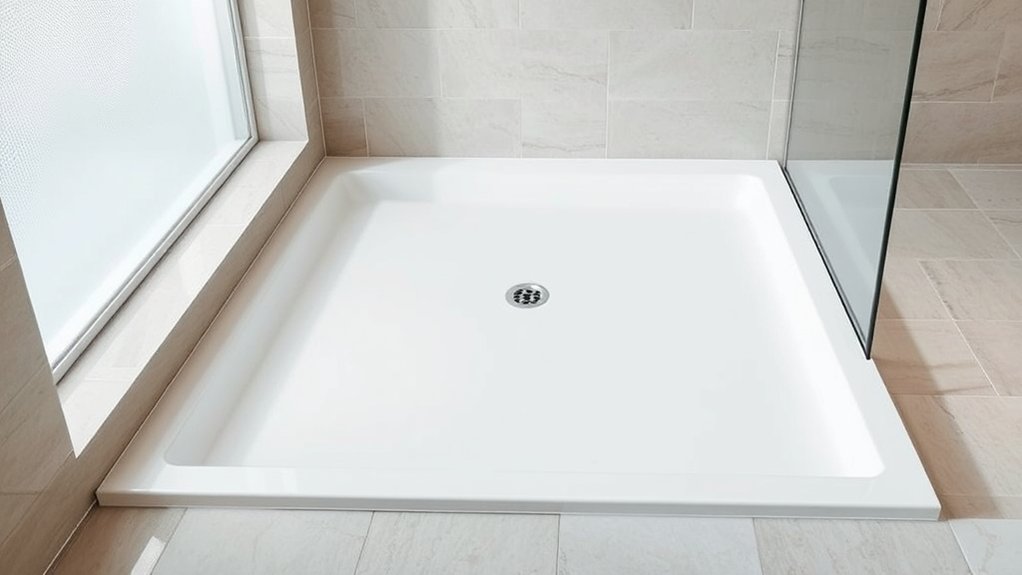
How do you determine the best shower pan for your bathroom’s layout and usage? Start by evaluating your space and daily habits to guarantee functionality and durability. Consider these factors carefully:
- Material choice: Opt for materials that balance durability with ease of shower maintenance, such as acrylic or fiberglass.
- Size and shape: Match the pan dimensions precisely to your bathroom layout to avoid costly modifications.
- Drain placement: Select a pan with a drain location compatible with your plumbing to simplify installation.
- Budget planning: Factor in upfront costs and long-term maintenance expenses to choose a practical, cost-effective option.
Installation Tips to Prevent Leaks and Water Damage
When installing a shower pan, where you focus your attention can make all the difference in preventing leaks and water damage. Idea one is to ensure the subfloor is completely level and structurally sound before placing the pan. Any unevenness can cause stress points leading to cracks or gaps.
Idea two involves properly sealing all joints and corners with high-quality waterproof membrane or sealant to create a continuous barrier. Additionally, carefully align the drain to the plumbing to prevent water from pooling or escaping.
Use a thin-set mortar bed to firmly secure the pan, avoiding voids underneath. Finally, test the pan by flooding it and checking for leaks before installing tile or enclosure. These steps help guarantee a durable, leak-proof installation.
When Should You Consider Alternatives to Shower Pans?
Why might you need to explore alternatives to shower pans? You should consider options when standard pans don’t align with your project’s technical demands or long-term shower maintenance goals. Alternatives may offer improved durability or ease of repair.
Focus on two word discussion ideas like “material compatibility” and “space constraints” to guide your decision. Consider these factors: custom slope requirements that pans can’t accommodate, accessibility needs demanding barrier-free designs, potential for water damage in areas prone to leaks, and preference for seamless waterproofing methods over pre-fabricated pans.
Evaluating these points helps you avoid issues like mold or costly repairs, ensuring your shower system performs reliably. Choosing alternatives often means prioritizing technical precision and practical maintenance over convenience.
Frequently Asked Questions
How Often Should a Shower Pan Be Replaced?
You should replace your shower pan every 15 to 20 years, depending on its material and usage. Monitoring for cracks or leaks helps determine replacement frequency, ensuring your shower pan lifespan remains ideal and prevents water damage.
Can Shower Pans Be Installed Over Existing Floors?
You can install shower pans over existing floors if you ensure floor compatibility by verifying structural integrity and waterproofing.
Proper surface preparation is essential when installing over existing floors to prevent leaks and ensure long-term durability.
Do Shower Pans Require Special Cleaning Products?
You don’t need special cleaning products for shower pans, but using non-abrasive cleaners helps maintain their surface. Incorporate gentle cleaning products into your maintenance routines to prevent damage and ensure long-lasting durability and hygiene.
Are Shower Pans Compatible With All Shower Door Types?
You’ll find shower door compatibility varies with shower pans; frameless doors need precise floor prep considerations to ensure a perfect seal, while framed doors generally adapt better. Always verify dimensions and slope for proper installation.
What Is the Average Cost of a Shower Pan Installation?
You’ll face cost considerations between $500 and $1,200 for shower pan installation, depending on materials and labor.
Installation timelines typically range from one to three days, factoring in prep work and curing times for best results.