Are Shower Handles Universal
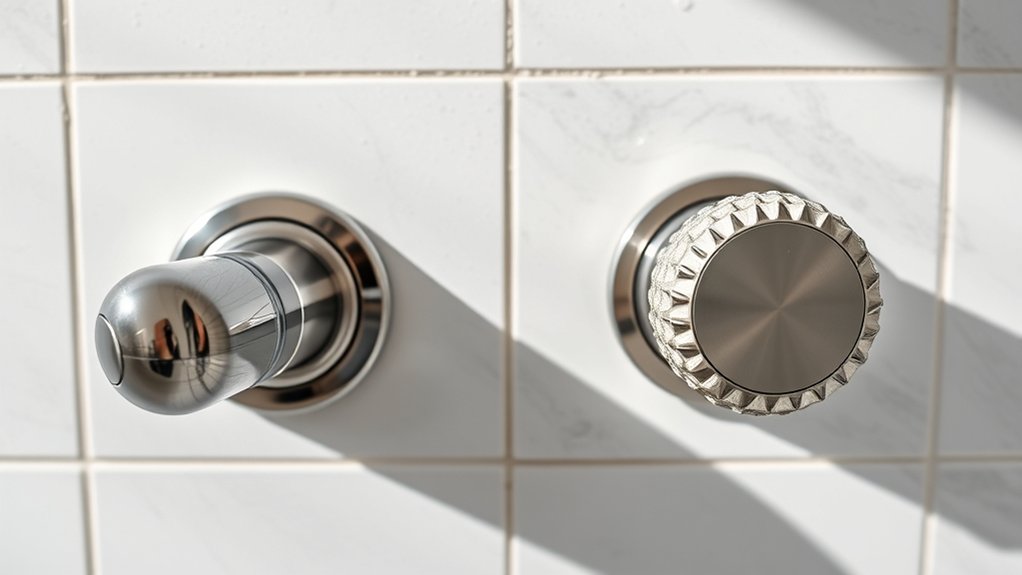
You might assume shower handles are universal, but that’s rarely the case. Shower handles must fit specific valve types, stem shapes, and mounting mechanisms, each varying by brand and model. Without matching these details precisely, your replacement won’t work properly or might cause leaks.
Understanding these differences is essential before buying a new handle. Otherwise, you risk wasted time and money. So, what exactly determines compatibility, and how can you guarantee a perfect fit?
Key Takeaways
- Shower handles are not truly universal due to variations in valve types, stem sizes, and mounting styles across brands.
- Compatibility depends on matching valve stem shape, diameter, length, and handle mounting method precisely.
- Different valve types (cartridge, ball, ceramic disc) require specific handle designs; one handle won’t fit all valve types.
- Brand-specific proprietary designs and functional features often prevent cross-brand handle interchangeability.
- Proper fit requires careful measurement and verification of valve model and handle technical specs, not relying on universal claims.
What Does “Universal” Mean for Shower Handles?
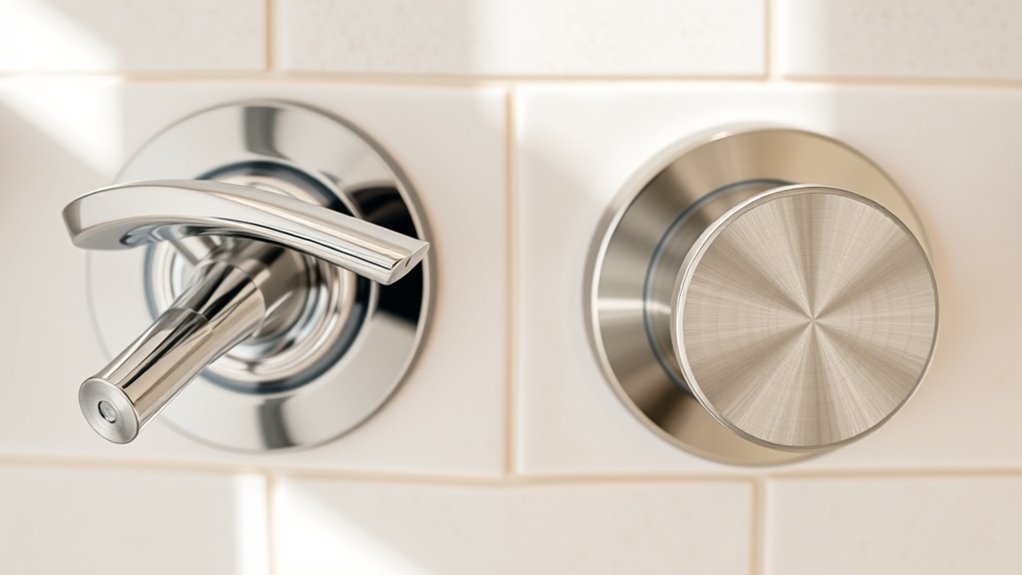
What exactly does “universal” mean when it comes to shower handles? In practical terms, a “universal” shower handle implies compatibility across various valve types and brands.
When you consider discussion ideas around this, it’s important to focus on standardized dimensions, attachment methods, and functional design. However, you should avoid unrelated topics like aesthetic preferences or unrelated plumbing fixtures, as these don’t impact universality.
You’ll find that universal handles often aim to replace multiple models with one design, reducing the need for multiple parts inventories. Still, universality hinges on specific technical criteria such as spline size and handle fit that determine if a handle can truly work interchangeably.
Keep the discussion focused on these precise compatibility factors to evaluate universality effectively.
Why You Can’t Always Swap Shower Handles
Why can’t you always swap shower handles easily? Despite universal claims, compatibility often falls short due to several technical factors. Here’s why:
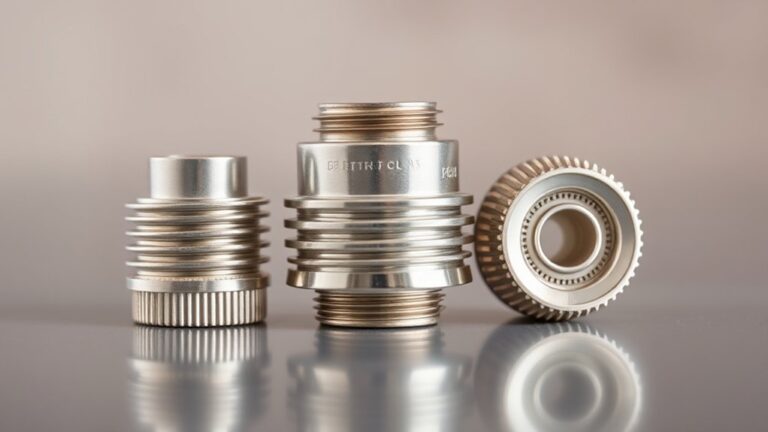
- Different Mounting Styles: Handles attach via varied mechanisms, such as set screws or splines, which aren’t standardized.
- Size and Dimensions: Handle dimensions and spindle sizes vary, so a handle from one brand may not physically fit another valve.
- Brand Jargon: Manufacturers use proprietary terms and designs, complicating cross-brand identification and selection.
- Functional Design Variations: Some handles integrate temperature stops or pressure balancing features, making direct swaps impractical without matching valve types.
You need to consider these aspects carefully before assuming a handle is universally compatible. Understanding brand jargon and technical specifications is essential to avoid costly mistakes.
How Shower Valve Types Affect Handle Compatibility

The compatibility of shower handles hinges heavily on the type of shower valve installed. Different valves, such as compression, cartridge, ball, or ceramic disc, require specific handle designs and mounting methods.
When selecting a replacement handle, you must identify the valve type first, as handles made for one valve often won’t fit others. Ignoring this leads to off topic discussion about aesthetics or unrelated concerns like color or finish, which don’t affect mechanical fit.
For example, a handle designed for a cartridge valve won’t connect properly to a ball valve stem, causing improper function or leaks. Focus strictly on valve compatibility to avoid wasted effort.
Understanding your valve type ensures the handle you choose will operate smoothly and securely.
How to Measure Your Shower Handle for a Perfect Fit
How do you ensure your new shower handle fits perfectly? Precise measurements prevent purchasing the wrong part, avoiding unrelated topic or irrelevant discussion that doesn’t help your specific setup. Follow these steps:
- Remove the existing handle carefully to expose the valve stem.
- Measure the valve stem diameter and length using calipers for accuracy.
- Record the distance from the wall surface to the valve stem’s end to ensure the handle will sit flush.
- Note the handle’s mounting type (screw-on or set-screw) and any specific shapes or splines on the valve stem.
This technical approach guarantees your replacement handle matches the valve, avoiding compatibility issues and ensuring a perfect fit without guesswork or irrelevant considerations.
Popular Shower Handle Brands and Compatibility
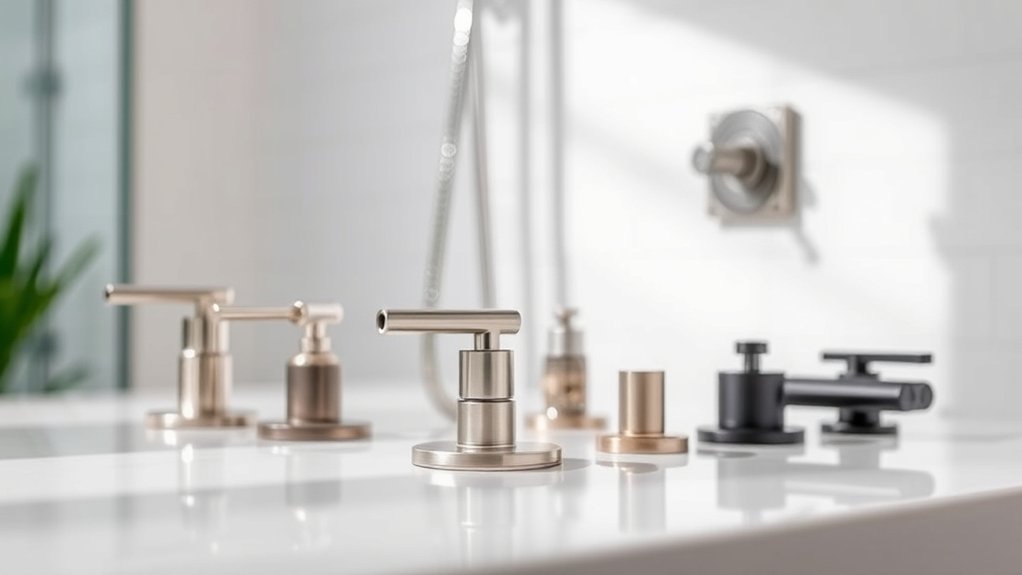
Once you’ve measured your shower handle and understood the specific valve requirements, identifying compatible brands becomes the next step. While some brands adopt a universal design, most maintain unique valve interfaces, limiting cross-brand compatibility.
Considering brand diversity is crucial to ensure you select a handle that fits your valve precisely.
| Brand | Compatibility Notes |
|---|---|
| Moen | Often proprietary, limited universal use |
| Delta | Some models support universal design |
| Kohler | Primarily brand-specific fittings |
Key Compatibility Features to Check Before Buying a Replacement Handle
Before buying a replacement shower handle, you need to verify the handle connection type to ensure it fits your valve stem. Check valve compatibility carefully, as mismatched components can cause leaks or malfunction.
Also, measure the size and dimensions precisely to avoid installation issues.
Handle Connection Types
Why do handle connection types matter when selecting a replacement shower handle? Because the connection type directly affects compatibility and ease of installation. To ensure you pick the right handle that aligns with your shower’s valve and maintains ergonomic aesthetics, consider these key points:
- Connection Style: Identify if your handle uses a set screw, spline, or D-shaft connection.
- Shaft Size and Shape: Measure the diameter and profile precisely to match the replacement.
- Material Compatibility: Match materials to avoid corrosion or wear impacting installation tools.
- Tool Requirements: Confirm the necessary installation tools for your connection type to avoid damage.
Understanding these ensures your new handle fits securely and functions smoothly without compromising your shower’s design or requiring complex modifications.
Valve Compatibility Check
How do you guarantee your replacement shower handle fits perfectly with your existing valve? Start by verifying valve model compatibility rather than relying on universal terminology alone, which often fuels compatibility myths.
Handles labeled “universal” may not align with specific valve types or brands, so check the manufacturer’s valve specifications. Confirm the handle’s connection style matches your valve’s stem design, whether it’s spline, D-shaped, or another form.
Additionally, ensure the handle’s internal mechanism engages properly with the valve cartridge to avoid operational issues. Bypassing these checks can lead to mismatches, despite claims of universality.
A thorough valve compatibility check saves time and prevents costly errors, ensuring your replacement handle functions seamlessly with your current plumbing setup.
Size And Measurement Details
After confirming valve compatibility, turn your attention to the precise size and measurements of the replacement handle. This step is essential, as unrelated topic details or off topic ideas can distract you from key specs. Focus on these four critical measurements:
- Handle length – Verify it fits your shower space without obstruction.
- Diameter of the mounting hole – Must match the valve stem for secure attachment.
- Projection from the wall – Check clearance to avoid hitting walls or tubs.
- Screw size and type – Confirm compatibility with your existing fasteners.
Skipping these details risks purchasing an incompatible handle, leading to functional and aesthetic issues. Keep your measurements precise and relevant, avoiding off topic ideas that don’t impact compatibility. This ensures a smooth, hassle-free replacement process.
Fixing Handles That Don’t Fit Your Shower Valve
If your shower handle doesn’t fit the valve, start by confirming the valve type and its compatibility with available handle designs. Next, select a handle specifically engineered for that valve model to ensure proper operation.
Finally, make precise adjustments to the handle’s fitment, such as tightening set screws or aligning splines, to secure a snug and functional connection.
Identifying Valve Compatibility
Why don’t some shower handles fit your existing valve? It’s usually because valve compatibility isn’t universal. You’ll want to avoid unrelated topic or off topic discussion and focus strictly on your valve’s specifications.
Here’s how to identify compatibility:
- Check Valve Manufacturer and Model: Different brands use proprietary designs; note exact model numbers.
- Inspect Valve Stem Type: Look for splines, D-shape, or round; handles must match stem geometry.
- Measure Valve Stem Diameter and Length: Precise sizing ensures a secure fit without wobble.
- Consider Valve Functionality (Pressure-Balanced, Thermostatic): Handle design must accommodate control type.
Choosing Correct Handle Types
Understanding your valve’s specifications sets the foundation for choosing the right shower handle. Begin by confirming valve type, such as pressure balanced, thermostatic, or diverter, and note its spindle size and shape. These two-word discussion ideas clarify compatibility, helping you avoid mismatched handles.
Next, review installation basics: handle mounting style (screw-on, clip-on) and the presence of adapters or sleeves that may be required. Ensure the handle’s design aligns with the valve’s control mechanism to prevent operational issues.
When selecting replacement handles, focus on exact specifications rather than universal claims. Custom-fit handles ensure smooth operation and durability. By methodically matching valve details with handle features, you’ll fix handles that don’t fit your shower valve efficiently and maintain optimal function without unnecessary adjustments.
Adjusting Handle Fitments
How do you correct a shower handle that feels loose or refuses to fit? Start by confirming the handle matches your valve type. Ignoring this leads to unrelated topic issues like off topic discussion about aesthetics instead of fit. Then, follow these steps precisely:
- Remove the existing handle and inspect the valve stem for damage or debris.
- Use a handle adapter kit if the handle’s splines don’t align with the stem.
- Ensure the set screw tightens firmly without stripping the handle or stem.
- If the handle is too large, consider a universal handle with adjustable fitments designed to accommodate various stems.
Avoid off topic discussion on brand preference; focus strictly on mechanical compatibility for a secure fit.
Knowing When to Replace Your Shower Handle vs. the Whole System
Although shower handles may seem like simple components, knowing when to replace just the handle versus the entire system requires careful assessment of wear, compatibility, and performance. If your handle shows minor wear but aligns with universal concepts and current manufacturing standards, replacing the handle alone is practical.
However, if corrosion, internal valve damage, or outdated design affects functionality, replacing the whole system is necessary to ensure reliable operation and water safety. You should verify compatibility by checking if the handle matches the valve type and mounting specifications, as many handles are not truly universal despite common assumptions.
Prioritize system integrity over cosmetic fixes; a fully functional valve system reduces leaks and extends durability. This approach prevents repeated repairs and maintains efficient water flow.
Frequently Asked Questions
Can I Install a Shower Handle Without Professional Help?
You can install a shower handle without professional help if you understand universal sizing and assess installation difficulty. Use proper tools, follow instructions carefully, and ensure compatibility to avoid leaks or damage during your DIY installation process.
Do Shower Handles Affect Water Pressure?
Shower handles themselves don’t directly affect water pressure, but if you choose one without universal compatibility, it might restrict flow or cause leaks, indirectly impacting water pressure.
Ensure proper installation for optimal performance and pressure consistency.
Are There Eco-Friendly Shower Handle Options Available?
You’ll find eco-friendly shower handles that reduce water flow by up to 30%, promoting sustainability. Many models offer universal compatibility, ensuring easy installation without compromising efficiency or design, making your upgrade both practical and environmentally responsible.
How Often Should I Clean My Shower Handle?
You should clean your shower handle every two weeks to prevent buildup. Keep in mind universal compatibility and installation constraints when selecting cleaning tools.
Avoid damaging the handle or affecting its proper function.
Can Shower Handles Prevent Scalding or Temperature Spikes?
You can prevent scalding and temperature spikes by choosing shower handles with precise temperature control features. While universal compatibility varies, many modern handles integrate thermostatic valves to maintain safe, consistent water temperatures effectively.