Are All Shower Heads Plastic
Imagine picking up a shower head that feels surprisingly heavy, unlike the lightweight plastic ones you’re used to.
Are all shower heads plastic? The answer is no.
Not all shower heads are made from plastic, even though materials like ABS are common for their durability and cost-effectiveness. Many incorporate metal parts or hybrid designs to enhance strength and style.
Understanding these material differences can influence your choice more than you might expect.
Key Takeaways
- Not all shower heads are plastic; many are made from metal or hybrid materials combining metal and plastic components.
- Plastic shower heads offer corrosion resistance and lighter weight but lack the durability and aesthetic appeal of metal.
- Metal shower heads provide superior durability, higher temperature tolerance, and polished finishes like chrome or nickel plating.
- Hybrid designs use metal housings with plastic nozzles to balance strength, weight, cost, and performance.
- Material choice depends on priorities like durability, maintenance, design, environmental impact, and water pressure performance.
Common Materials Used for Shower Heads
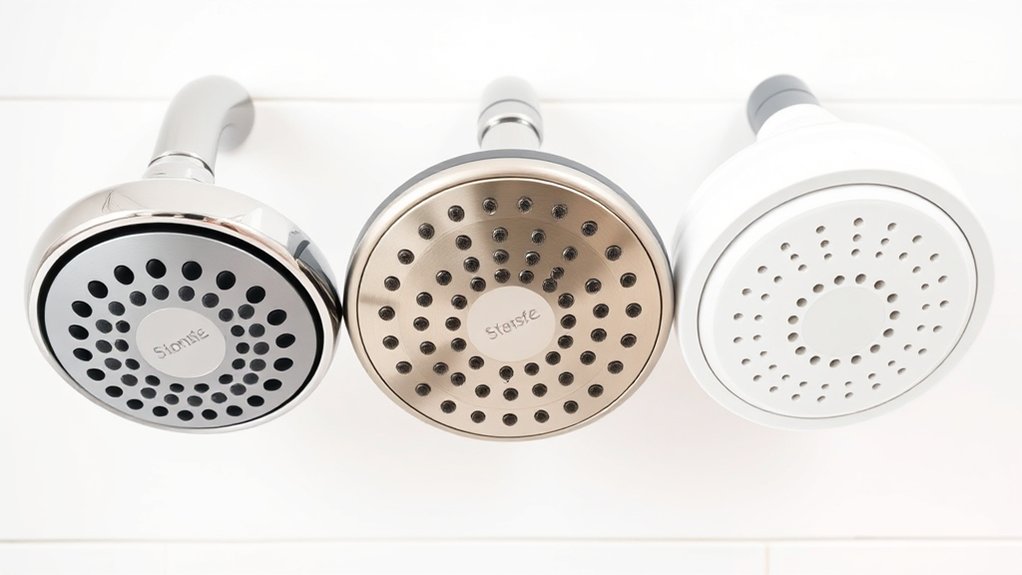
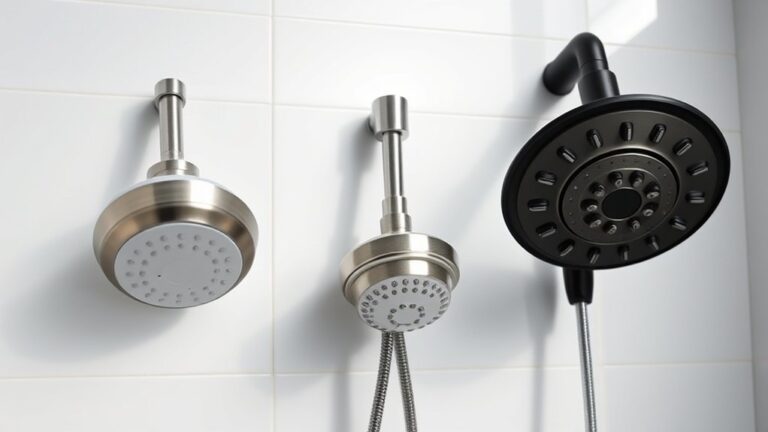
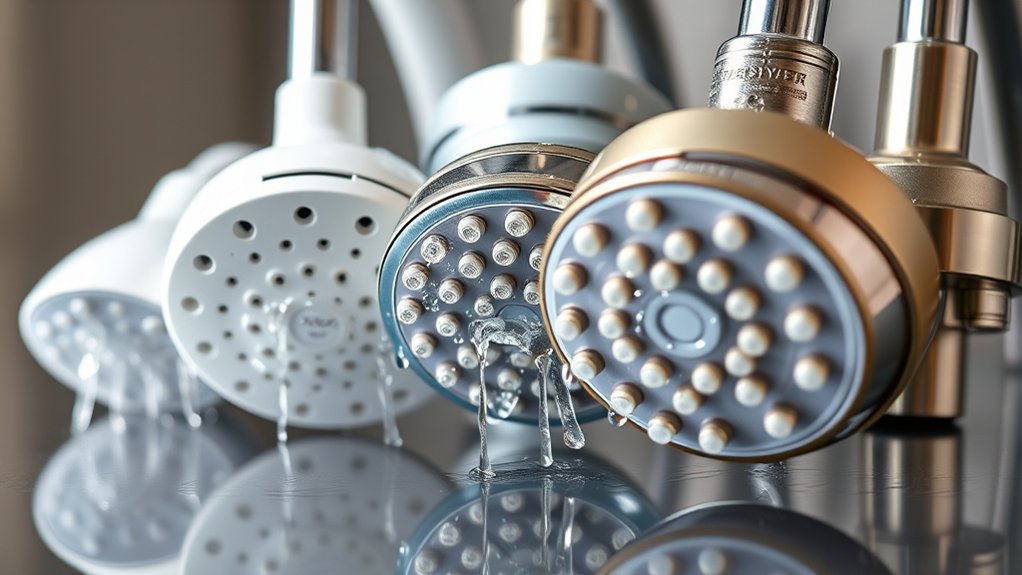
What materials make up your shower head? Typically, shower heads consist of plastics, metals like brass or stainless steel, or a combination.
Plastics often include ABS, valued for its durability and ease of molding, and some manufacturers use recycled plastics to reduce environmental impact. When selecting plastic components, consider recycling plastics to promote sustainability.
ABS plastic offers durability and moldability, with recycled options enhancing environmental sustainability.
Metals provide robustness and resist corrosion but can trigger allergies in sensitive individuals, making allergy considerations crucial. Nickel and chrome plating are common finishes that may cause skin reactions in some users.
Understanding these materials helps you evaluate durability, hygiene, and environmental impact. By knowing the composition, you can make informed decisions tailored to your needs, balancing performance with health and ecological concerns.
Key Factors to Consider When Choosing Shower Head Materials
When selecting a shower head, why does the choice of material matter so much? The material impacts durability, maintenance, and overall performance. You should assess environmental impact by considering materials that are recyclable or sustainably sourced to reduce waste.
Installation considerations also play a critical role; some materials require specialized fittings or tools, affecting ease and cost of installation. Additionally, weight differences influence mounting stability. Lighter materials may need additional support, while heavier ones demand sturdy fixtures.
Corrosion resistance and water quality compatibility are vital to prevent mineral buildup and prolong lifespan. By carefully evaluating these factors, you can choose a shower head material that balances functionality, sustainability, and practicality, ensuring it meets your long-term needs without unexpected complications during installation or use.
How Do Plastic Shower Heads Compare to Metal Ones?

How do plastic shower heads hold up against their metal counterparts in everyday use? Plastic shower heads offer notable plastic durability; they resist corrosion and mineral buildup effectively, maintaining functionality over time. They’re lighter, reducing strain on plumbing fixtures.
However, metal shower heads excel in metal aesthetics, providing a sleek, polished look that many find appealing for modern bathrooms. Metal units typically endure higher temperatures and physical impacts better but may require occasional maintenance to prevent tarnishing or rust, depending on the alloy.
When comparing, consider that plastic components often incorporate metal elements internally for stability, blending durability with design. Ultimately, your choice depends on prioritizing either the robust, low-maintenance nature of plastic or the refined, long-lasting appeal of metal finishes.
Benefits of Plastic Shower Heads
Although metal shower heads have their advantages, plastic shower heads provide several practical benefits that make them a smart choice for many users. You’ll find that plastic options often weigh less, cost less, and offer diverse designs without compromising performance.
Additionally, plastic shower heads typically resist corrosion better, extending their functional lifespan in moist environments.
Here are three key benefits to contemplate:
- Cost-Effectiveness: Plastic units are usually more affordable upfront and easier to replace.
- Corrosion Resistance: They don’t rust, reducing maintenance and prolonging durability.
- Recycling Considerations: Many plastics used are recyclable, which lowers their environmental impact if properly disposed of.
Choosing plastic means balancing performance with practical sustainability measures.
Benefits of Metal Shower Heads
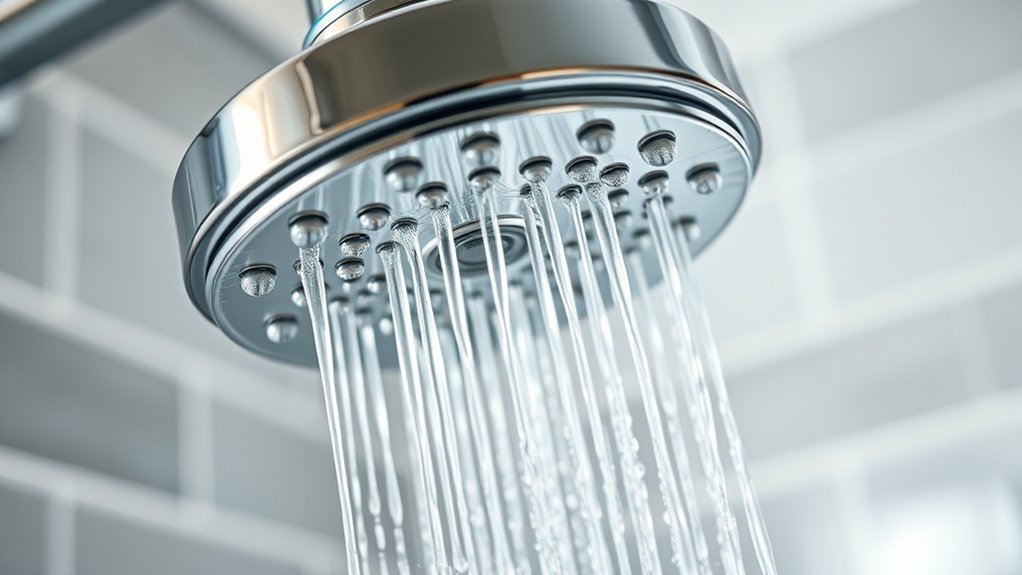
You’ll find metal shower heads offer superior durability and longer lifespan compared to plastic models. Their robust construction resists wear and corrosion, making them a reliable choice.
Plus, metal finishes provide a sleek, high-end look that enhances your bathroom’s design.
Durability and Longevity
Why does the material of your shower head matter for its lifespan? Plastic trends often focus on affordability and ease of production, but they can fall short when it comes to durability. Metal shower heads resist wear better and generally outlast plastic ones, especially in humid environments where metal corrosion is minimal due to protective finishes.
Consider these factors for durability and longevity:
- Resistance to Metal Corrosion: Quality metals like stainless steel or brass resist corrosion, extending your shower head’s life.
- Structural Integrity: Metals maintain shape and function under pressure, avoiding cracks common in plastic.
- Maintenance: Metal units tolerate cleaning agents better, reducing degradation over time.
Choosing metal means investing in a shower head designed for long-term reliability, minimizing replacement frequency.
Aesthetic and Design Appeal
How does the material of your shower head influence your bathroom’s overall look and feel? Metal shower heads align with current material trends, offering a sleek, polished finish that enhances bathroom aesthetics.
Unlike plastic, metal provides a premium appearance that complements modern and traditional designs alike. You’ll notice that metal’s reflective surface adds depth and sophistication, elevating the space without additional décor.
Its sturdiness also ensures the finish remains intact over time, maintaining visual appeal. When selecting a shower head, consider metal options for their ability to integrate seamlessly with faucets and fixtures, creating a cohesive, high-end look.
Do Hybrid Shower Heads Made of Metal and Plastic Exist?
Hybrid shower heads that combine metal and plastic components do exist and offer a balance between durability and cost-efficiency. These hybrid metals and mixed materials are engineered to optimize performance while controlling manufacturing costs.
When you choose a hybrid shower head, you get:
- Metal housings paired with plastic nozzles, reducing weight but maintaining strength.
- Plastic bodies with metal accents to resist corrosion and improve aesthetic appeal.
- Components designed to prevent mineral buildup, extending functional use.
This integration allows manufacturers to capitalize on the strengths of each material, delivering a product that’s both reliable and affordable. You gain the toughness of metal where it matters most, with the flexibility and cost benefits of plastic in non-critical areas.
Hybrid shower heads demonstrate practical innovation in plumbing fixtures.
How Material Affects Shower Head Durability and Lifespan
Choosing the right material directly influences the durability and lifespan of your shower head. Many durability myths suggest plastic heads wear out quickly, but material performance depends on composition, manufacturing quality, and environmental factors.
High-grade plastics resist corrosion and mineral buildup, extending lifespan comparable to some metals. Conversely, low-quality metals may corrode or degrade faster. You should evaluate material resistance to water chemistry and mechanical stress.
Metals like stainless steel offer superior structural integrity but may require protective coatings to prevent oxidation. Understanding these nuances helps you avoid common misconceptions and select a shower head with optimal durability.
Which Shower Head Materials Offer Better Water Pressure?
You’ll notice metal shower heads typically deliver steadier water pressure than plastic ones due to their rigid construction. Nozzle design also plays an essential role in directing flow and enhancing pressure.
Understanding these factors helps you choose a shower head that maximizes water flow efficiency.
Metal Vs Plastic Pressure
How does the material of a shower head impact water pressure? When comparing metal and plastic shower heads, material density and internal flow dynamics play crucial roles, not an irrelevant metric like color or weight. Avoid unrelated comparison factors like brand prestige when assessing pressure performance.
Here’s what matters:
- Metal shower heads typically maintain structural integrity under high pressure, minimizing deformation and preserving flow consistency.
- Plastic models may flex slightly under pressure, potentially reducing effective water velocity.
- Surface smoothness inside metal heads often reduces friction losses compared to plastic, enhancing pressure output.
Understanding these points helps you choose a shower head that delivers optimal pressure based on material properties, not superficial or irrelevant metrics. Focus on material impact rather than unrelated comparisons for practical results.
Impact Of Nozzle Design
While material composition influences water pressure by affecting flow stability and friction, nozzle design directly controls how water exits the shower head, shaping pressure and spray patterns. You’ll find that nozzle size, shape, and arrangement significantly impact the velocity and distribution of water.
Smaller, well-engineered nozzles increase pressure by constricting flow, regardless of whether the shower head is metal or plastic. However, plastic considerations come into play as flexible or softer plastic nozzles may deform over time, reducing pressure consistency.
In contrast, rigid metal nozzles maintain shape, ensuring sustained water pressure. When selecting a shower head, focus on nozzle design quality alongside material choice, since the impact of nozzle geometry often outweighs material effects in delivering optimal water pressure and spray performance.
Water Flow Rate Effects
Which shower head materials deliver the best water pressure depends largely on their impact on flow rate and internal resistance. When choosing a material, you want to balance performance with energy efficiency and water conservation.
Metal shower heads, like stainless steel or brass, typically offer lower internal resistance, boosting flow rate and enhancing water pressure. Plastic heads often have higher resistance, which can reduce pressure but improve energy efficiency by limiting excessive water use.
Consider these factors:
- Metal materials optimize flow rate, providing stronger pressure without sacrificing water conservation.
- Plastic heads reduce flow rate, promoting energy efficiency but potentially lowering pressure.
- Hybrid designs combine metal and plastic to balance pressure and conservation goals.
Understanding these effects helps you select a shower head that meets your pressure preferences and sustainability needs.
How Shower Head Materials Impact Bathroom Style and Design
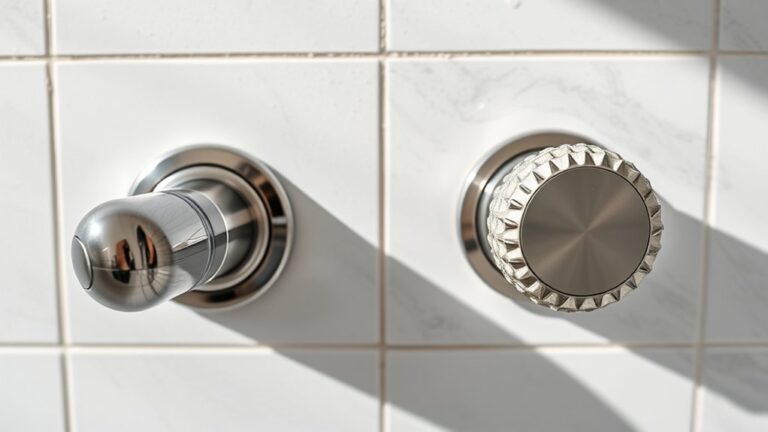
Why does the material of your shower head matter beyond functionality? It directly influences your bathroom’s aesthetic coherence. Materials like brushed nickel or chrome align with modern, minimalist themes, while bronze or brass complement vintage or rustic styles.
Ignoring this can result in themes not relevant to your overall design. You need to consider general design trends when selecting your shower head material to ensure it integrates seamlessly with your fixtures and finishes.
Plastic heads, though practical, often lack the visual weight or texture that metals provide, potentially undermining upscale or sophisticated designs. By choosing the right material, you reinforce your bathroom’s style narrative, making the shower head both a functional and decorative element that enhances the room’s visual harmony.
How to Maintain Different Types of Shower Head Materials
You’ll need specific care methods depending on your shower head’s material to keep it working efficiently. For plastic models, gentle cleaning prevents damage, while metal fixtures require polishing to avoid corrosion.
Additionally, regular removal of mineral buildup is essential across all types to maintain peak water flow.
Cleaning Plastic Shower Heads
How often should you clean a plastic shower head to maintain optimal water flow and hygiene? Ideally, clean it every 1-2 months, especially if your water is hard or contains minerals that clog nozzles. Plastic shower heads, often made from recycled plastics, require gentle cleaning methods to avoid damage.
Follow these steps:
- Soak the shower head in a 50/50 vinegar-water solution for 30 minutes to dissolve mineral buildup without harming the plastic.
- Use a soft brush to clean nozzles carefully, preventing scratches that attract bacteria.
- Rinse thoroughly and dry before reattaching to prevent plastic allergies caused by residual cleaning agents.
Routine maintenance ensures your plastic shower head functions well, lasts longer, and remains safe for sensitive skin.
Caring For Metal Fixtures
While plastic shower heads call for gentle cleaning, metal fixtures demand different care techniques to preserve their finish and functionality. You should avoid abrasive cleaners that can scratch metal surfaces or degrade protective coatings. Use a mild detergent with warm water and a soft cloth to maintain the integrity of brass, stainless steel, or chrome finishes.
Just as a spark plug requires precise handling to ensure optimal performance, metal shower heads need careful attention to avoid corrosion or tarnish. For long-term care, periodically inspect joints and seals, similar to maintaining connections in a solar panel system to prevent leaks.
Regular, careful maintenance will extend the lifespan of your metal shower head and keep its performance consistent without compromising its aesthetic appeal.
Preventing Mineral Buildup
Because mineral buildup can considerably reduce water flow and damage shower heads, it’s essential to adopt material-specific maintenance routines. Different materials respond uniquely to cleaning agents and techniques, affecting your water pressure and longevity of the fixture.
- Plastic Shower Heads: Soak in a vinegar-water solution for 30 minutes to dissolve mineral buildup without damaging the material.
- Metal Shower Heads: Use a mild descaling agent to prevent corrosion while removing mineral deposits that impair water pressure.
- Chrome-Plated Fixtures: Avoid abrasive cleaners; instead, wipe with a soft cloth and vinegar solution to maintain shine and clear buildup.
Frequently Asked Questions
Are Plastic Shower Heads Environmentally Friendly?
You aren’t fully eco friendly using standard plastic shower heads, but choosing those made from recycled plastics or eco friendly plastic materials reduces environmental impact, conserves resources, and supports sustainable manufacturing practices effectively.
Can Plastic Shower Heads Cause Water Contamination?
Think of plastic leaching as invisible guests in your water. Yes, plastic shower heads can cause contamination. Their environmental impact stems from chemicals seeping into your water supply.
Choosing safer materials is a practical, responsible step you should take.
Do Plastic Shower Heads Affect Water Temperature?
Plastic shower heads don’t affect water temperature due to their non thermal impact; they neither cool nor heat water. Focus on material aesthetics instead, as plastic offers flexibility in design without compromising thermal performance.
Are Plastic Shower Heads Easier to Install Than Metal Ones?
Imagine you’re replacing a shower head quickly; plastic ones often reduce install complexity due to lightweight design and simpler fittings.
Plus, they lower corrosion risk, making installation easier and maintenance less demanding compared to metal shower heads.
How Do Plastic Shower Heads Perform in Hard Water Areas?
You’ll notice plastic shower heads struggle with hard water performance since lime buildup clogs nozzles faster than metal. Regular cleaning’s essential to maintain flow and prevent damage, ensuring consistent water pressure and longevity.