Are Shower Gloves Good
Just as a finely tuned instrument enhances a musician’s performance, the right shower gloves can elevate your skincare routine. Are shower gloves good enough to make a difference compared to a simple washcloth or using your hands alone?
While they can improve exfoliation and circulation, their benefits depend heavily on material choice and technique. Understanding when and how to use them can make all the difference to your skin’s health and appearance.
Key Takeaways
- Shower gloves effectively exfoliate by removing dead skin cells, dirt, and oils, promoting smoother and renewed skin texture.
- Regular use can unblock pores, reduce acne risk, and stimulate blood circulation for healthier skin.
- Choosing the right glove material ensures suitable exfoliation for different skin types, including sensitive or tougher skin.
- Overuse or harsh scrubbing with gloves can cause irritation, dryness, or skin barrier damage, so gentle use is essential.
- Avoid shower gloves on broken, eczema-affected, or highly sensitive skin to prevent irritation or allergic reactions.
What Are Shower Gloves And How Do They Help Your Skin?
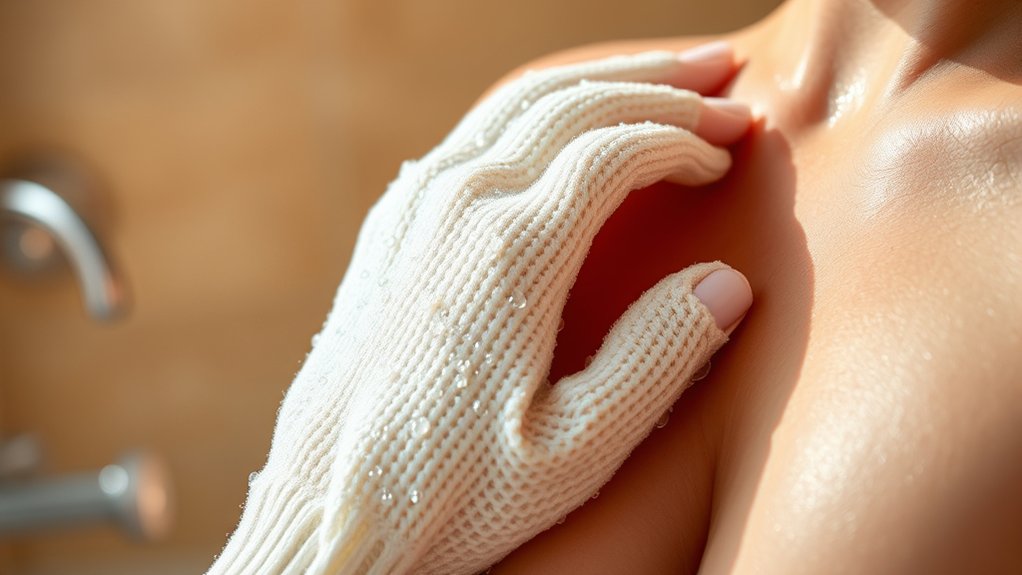
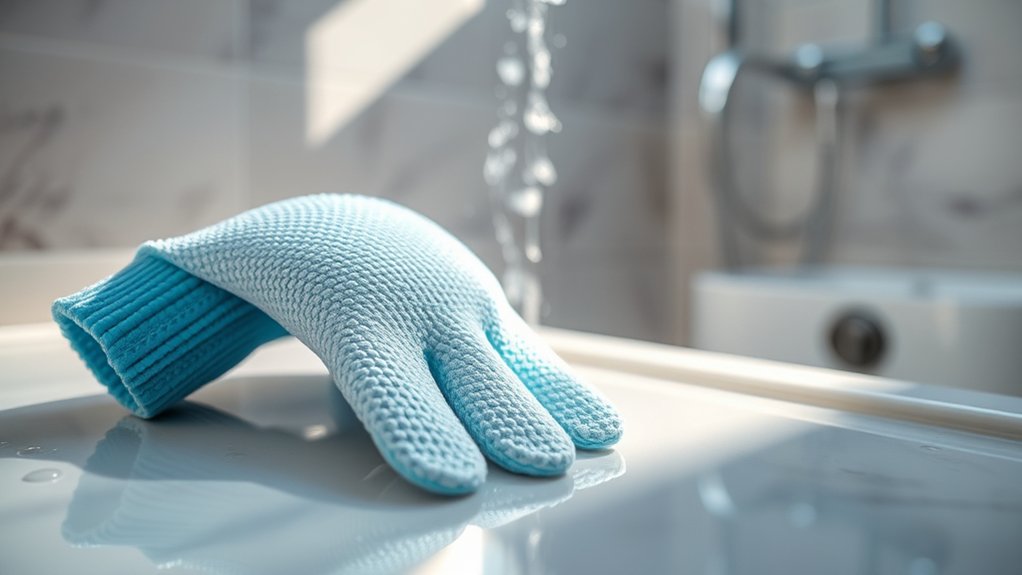
What exactly are shower gloves, and how do they benefit your skin? Shower gloves are specialized cleansing accessories made from various glove materials such as nylon, sisal, or synthetic fibers. These materials directly influence the exfoliation level you experience during use.
By gently scrubbing your skin, shower gloves help remove dead cells, dirt, and excess oils more effectively than manual washing. The glove material determines the degree of abrasiveness, allowing you to select gloves suitable for sensitive or tougher skin types.
Research supports that controlled exfoliation promotes skin renewal and improves texture without causing irritation when appropriate glove material and exfoliation level are chosen. Using shower gloves consistently offers a practical, evidence-based method to maintain skin cleanliness and support its natural regeneration process.
What Skin Benefits Do Shower Gloves Offer?
Shower gloves provide multiple skin benefits by enhancing the exfoliation process, which promotes the removal of dead skin cells and stimulates circulation. When you use shower gloves regularly, you aid in sloughing off dull surface cells, allowing your skin to renew more effectively.
This exfoliation also helps unblock pores, reducing the risk of acne and improving overall skin texture. Additionally, by gently massaging your skin, shower gloves stimulate blood flow, which supports nutrient delivery and cellular repair.
Importantly, they help maintain skin hydration by facilitating the retention of natural oils that protect your skin’s moisture barrier. This balance ensures your skin stays supple without becoming overly dry or stripped.
What Are The Risks Of Using Shower Gloves?

How often you use shower gloves and the technique you employ can substantially impact your skin’s health. Overuse or aggressive scrubbing may lead to skin irritation, micro-tears, or exacerbation of existing conditions like eczema.
The primary risks of misuse include disrupting the skin’s natural barrier, which can increase dryness and sensitivity. Additionally, shower gloves made from synthetic materials or treated with chemicals may trigger allergic reactions in some individuals, manifesting as redness, itching, or rash.
To minimize these risks, it’s essential to use gloves gently, limit frequency, and choose hypoallergenic materials. Proper hygiene, such as regular cleaning and drying of gloves, also reduces microbial growth that could further compromise skin health. Awareness of these risks ensures you gain benefits without unintended harm.
When Should You Avoid Using Shower Gloves?
Understanding the potential risks of using shower gloves highlights situations where you should avoid them altogether. If you have sensitive or broken skin, shower gloves can exacerbate irritation or introduce infection, raising significant safety concerns. Avoid using them on areas with eczema, psoriasis, or open wounds to prevent further damage.
Additionally, if you experience allergic reactions to glove materials like nylon or synthetic fibers, discontinuing use is essential. Incorporate avoidance strategies such as opting for gentler cleansing methods or consulting a dermatologist to tailor your hygiene routine.
Finally, if you notice increased dryness or discomfort after use, it’s prudent to stop using shower gloves to minimize harm. Prioritizing these avoidance strategies ensures you maintain skin integrity and reduce potential complications linked to shower glove use.
How Do You Use Shower Gloves For Best Results?
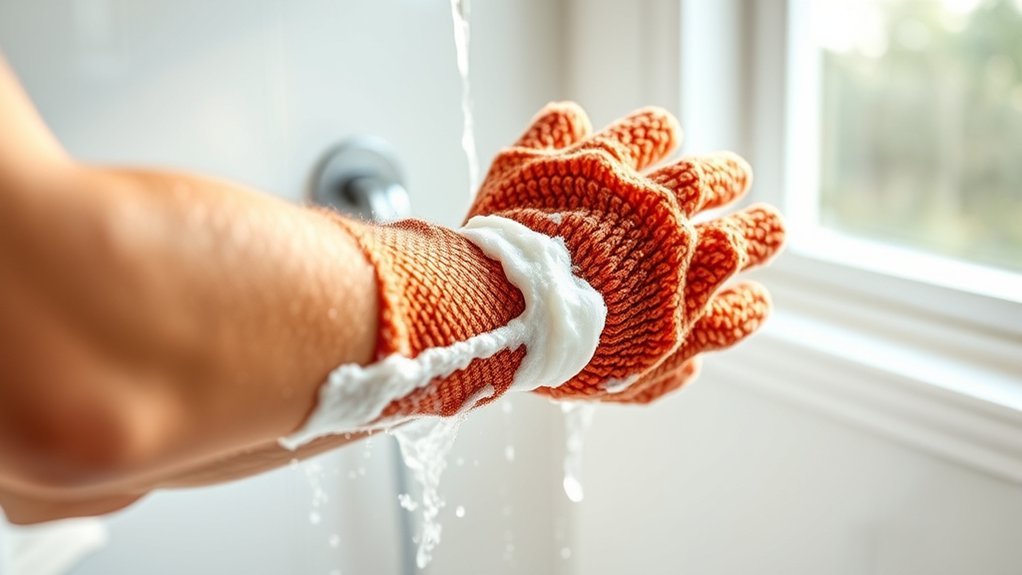
To get the most out of shower gloves, start by thoroughly wetting your skin to soften the outer layer of dead cells. This prepares your skin for an effective exfoliation technique using the gloves. Apply a gentle cleanser to the gloves, then use circular motions to exfoliate, avoiding excessive pressure to maintain shower glove safety.
Begin by wetting your skin, then gently exfoliate with cleanser and circular motions using shower gloves.
Focus on rough areas like elbows and knees, but don’t scrub sensitive skin. After exfoliating, rinse your skin with warm water and pat dry. Follow with a moisturizer to restore hydration.
Key points for optimal use:
- Wet skin thoroughly before exfoliation
- Use gentle, circular motions
- Avoid sensitive or irritated areas
- Rinse gloves and hang to dry after use
- Moisturize skin post-exfoliation
This approach ensures effective exfoliation while prioritizing safety.
How Do You Choose The Best Shower Gloves For Your Skin Type?
You’ll want to start by identifying your skin type to select gloves that won’t cause irritation. Next, choose a material that matches your skin’s sensitivity and durability needs.
Finally, consider the exfoliation level of the gloves to guarantee they provide effective cleansing without damaging your skin.
Identify Your Skin Type
How can you select shower gloves that truly benefit your skin? First, identify your skin type to ensure optimal results and maintain a glowing aura. Recognizing your skin’s characteristics helps you avoid irritation and enhances your shower experience, including considering your scent preferences for added comfort.
To determine your skin type, evaluate:
- Oiliness level (dry, normal, oily, combination)
- Sensitivity to touch or exfoliation
- Presence of conditions like eczema or psoriasis
- Reaction to fragranced or unscented products
- Desired exfoliation intensity for maintaining skin health
This evidence-based approach guides you toward shower gloves that complement your skin’s needs, promoting balanced cleansing without compromising your skin barrier or causing discomfort.
Choose Appropriate Material
Material selection plays an essential role in determining the effectiveness and safety of shower gloves for your skin type. Different glove materials interact uniquely with your skin’s surface, influencing moisture retention and irritation risk.
For sensitive or dry skin, opt for softer materials like cotton or nylon blends, which reduce abrasion while maintaining gentle cleansing. If you have oily or resilient skin, gloves made from natural fibers such as sisal or loofah may offer enhanced cleansing properties without excessive irritation.
Scientific studies emphasize that the glove material’s texture correlates with its exfoliation level, affecting how aggressively dead skin cells are removed. Choosing the appropriate glove material tailored to your skin’s characteristics ensures balanced hygiene, minimizes potential damage, and optimizes the benefits of using shower gloves in your skincare routine.
Consider Exfoliation Level
Why does exfoliation level matter when selecting shower gloves? Your skin’s tolerance to exfoliation directly impacts your skincare routine’s effectiveness and safety. Using gloves with too abrasive a texture can damage sensitive skin, while mild gloves may not sufficiently remove dead cells for oilier types.
To optimize your routine, consider these exfoliation levels:
- Gentle gloves for sensitive or dry skin to prevent irritation
- Moderate exfoliation for normal skin to maintain balance
- Coarse gloves for oily or thick skin to deeply cleanse
- Avoid harsh textured gloves if you have eczema or rosacea
- Adjust exfoliation frequency based on skin response and season
Tailoring your choice based on exfoliation level ensures you enhance skin health without compromising its barrier function.
Frequently Asked Questions
Can Shower Gloves Be Used With Soap Bars or Only Liquid Soap?
Imagine you’re using a cotton glove with a soap bar; the glove material allows effective lathering. You can use both soap bars and liquid soaps, but natural fiber gloves optimize the lathering method for better cleansing.
How Often Should Shower Gloves Be Replaced?
You should replace shower gloves every 3 to 4 weeks to maintain optimal glove longevity and hygiene. Replacement frequency depends on usage and material breakdown, ensuring effective exfoliation and preventing bacterial buildup during showers.
Are Shower Gloves Environmentally Friendly?
Like a double-edged sword, shower gloves’ environmental impact varies; if made from biodegradable materials, they’re eco-friendly. Their soap compatibility ensures efficient cleansing without excess chemical runoff, reducing overall ecological harm when used appropriately.
Can Children Safely Use Shower Gloves?
You can let children use shower gloves, but ensure kid friendliness by choosing soft, non-abrasive materials. Prioritize safety considerations like supervising use to prevent skin irritation or accidental scratching during bathing routines.
Do Shower Gloves Help With Cellulite Reduction?
Cellulite claims confuse consumers; sadly, shower gloves don’t directly diminish dimples. However, their exfoliation benefits boost blood flow and skin texture, helping you maintain healthier skin, though they don’t break cellulite’s stubborn structure scientifically.