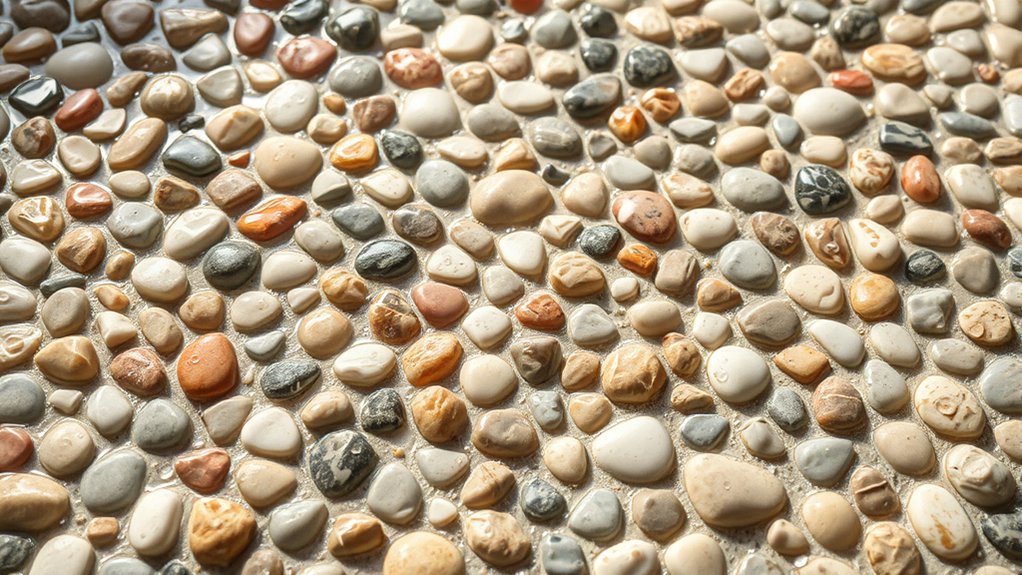
Are Pebble Shower Floors Hard to Clean
Pebble shower floors might seem hard to clean at first, but they aren’t inherently more difficult to maintain than smooth tiles.
Their textured surface, however, does present some unique challenges.
Tiny crevices can trap dirt, soap scum, and moisture, so regular maintenance is essential.
Understanding the role of grout and sealing in cleanliness is key to keeping your floor looking its best.
Before deciding if pebble shower floors are worth the effort, consider what proper care really involves.
With the right routine, they can stay beautiful and hygienic for years.
Key Takeaways
- Pebble shower floors have uneven surfaces and crevices, making dirt and soap scum harder to remove than on smooth floors.
- Cleaning tools must be soft-bristled and designed for textured floors to reach all contours without damaging pebbles or grout.
- Regular maintenance, including weekly brushing and monthly deep cleaning with pH-neutral cleaners, helps keep pebble floors clean and mold-free.
- Proper ventilation and moisture control are essential to prevent mildew growth on pebble floors due to pooled water and humidity.
- Periodic grout sealing every 6 to 12 months protects against stains, water damage, and reduces overall cleaning difficulty.
What Makes Pebble Shower Floors Different From Smooth Tiles
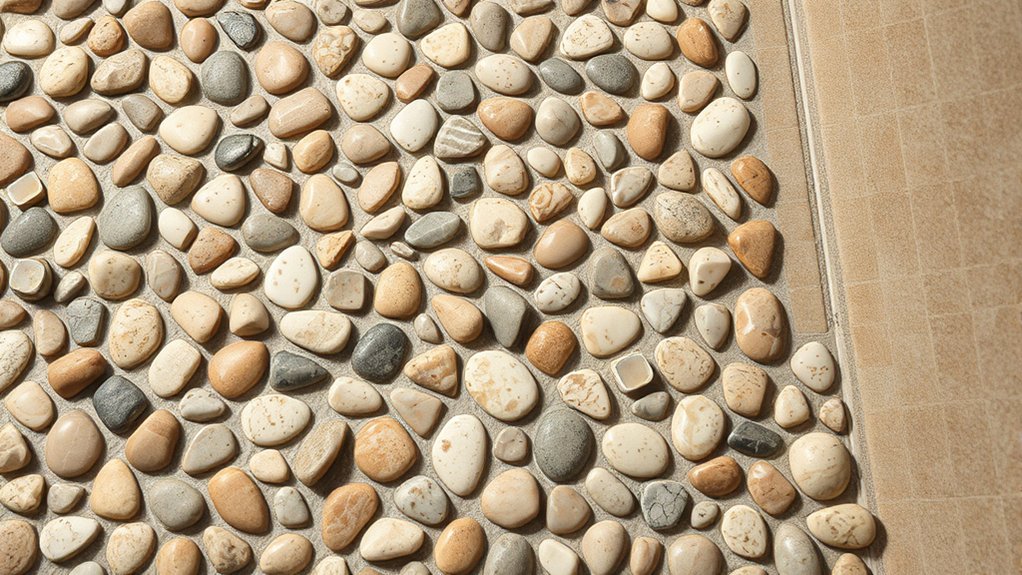
What sets pebble shower floors apart from smooth tiles is their unique texture and structure. Unlike flat tiles, pebble floors consist of small, rounded stones embedded in grout, creating a natural, uneven surface. This texture offers excellent traction, reducing slip risks, but it also means water pools differently.
You might hear cleaning myths suggesting pebble floors are impossible to keep spotless, but that’s not true. Pebble floors require regular maintenance, like any surface, primarily focusing on grout care to prevent mold and mildew.
You can clean them effectively using gentle, pH-neutral cleaners and a soft brush to reach crevices. Understanding these differences helps you appreciate pebble floors’ aesthetic and practical benefits without buying into common cleaning myths.
Why Pebble Shower Floors Can Feel Trickier To Clean
You’ll notice pebble shower floors have an uneven surface that makes scrubbing more challenging than smooth tiles. The grout between the stones needs regular attention to prevent buildup and discoloration.
Plus, soap scum tends to accumulate in the crevices, requiring targeted cleaning to keep the floor looking fresh.
Uneven Surface Challenges
Why does cleaning pebble shower floors feel more challenging than smooth surfaces? The uneven surface creates tiny crevices where dirt and soap scum easily hide, making it tougher to get every nook spotless. Plus, installation concerns, like inconsistent grout application, can worsen these traps for grime.
Here’s what you’ll face with pebble floors:
- Dirt and residue settle in gaps between pebbles, requiring more scrubbing.
- Your cleaning tools might not reach every contour effectively.
- Uneven surfaces can cause water to pool, encouraging mildew growth.
Understanding these challenges helps you adjust your cleaning routine, using brushes designed for textured floors and ensuring thorough rinsing. While pebble floors add natural beauty, their uneven texture demands more attention to keep them truly clean.
Grout Maintenance Needs
How often you maintain grout on pebble shower floors directly impacts their cleanliness and longevity. Grout durability plays a crucial role because the grout sits between uneven pebbles, making it prone to cracking and wear over time.
If you don’t seal the grout regularly, moisture and dirt can seep in, leading to discoloration and potential mold growth. Proper pebble maintenance means cleaning the grout lines gently with a soft brush and using pH-neutral cleaners to avoid degrading the grout.
Additionally, resealing the grout every six months to a year helps preserve its strength and water resistance. By staying consistent with grout upkeep, you’ll keep your pebble shower floor looking fresh while preventing costly repairs down the line.
Soap Scum Accumulation
Maintaining grout is just one part of keeping pebble shower floors clean, but soap scum buildup presents a different challenge. The uneven pebble texture creates nooks where soap residue easily clings, making it harder to wipe away.
You’ll notice soap scum accumulating faster if humidity control isn’t optimal, as moisture encourages buildup. To tackle this effectively:
- Use a squeegee or microfiber cloth after each shower to reduce moisture.
- Choose a pH-balanced cleaner that breaks down soap residues without damaging the pebble surface.
- Increase ventilation or add a dehumidifier to control humidity, preventing persistent dampness.
Common Cleaning Challenges With Pebble Shower Floors
What makes pebble shower floors particularly tricky to clean is their uneven surface and porous texture. While pebble pros include natural beauty and slip resistance, these same features create cleaning cons. Dirt, soap scum, and mildew easily settle between the irregular stones, making thorough scrubbing necessary.
You’ll find that water pools in low spots, slowing drying and encouraging mold growth. The porous pebbles absorb moisture and stains, so you need gentle but effective cleaners to avoid damage.
Unlike smooth tile, you can’t rely on quick wipes; instead, you must regularly use a soft brush to reach crevices. These common cleaning challenges mean you’ll invest more time and effort to keep pebble floors spotless and hygienic compared to traditional shower surfaces.
How Grout Influences Pebble Shower Floor Cleanliness
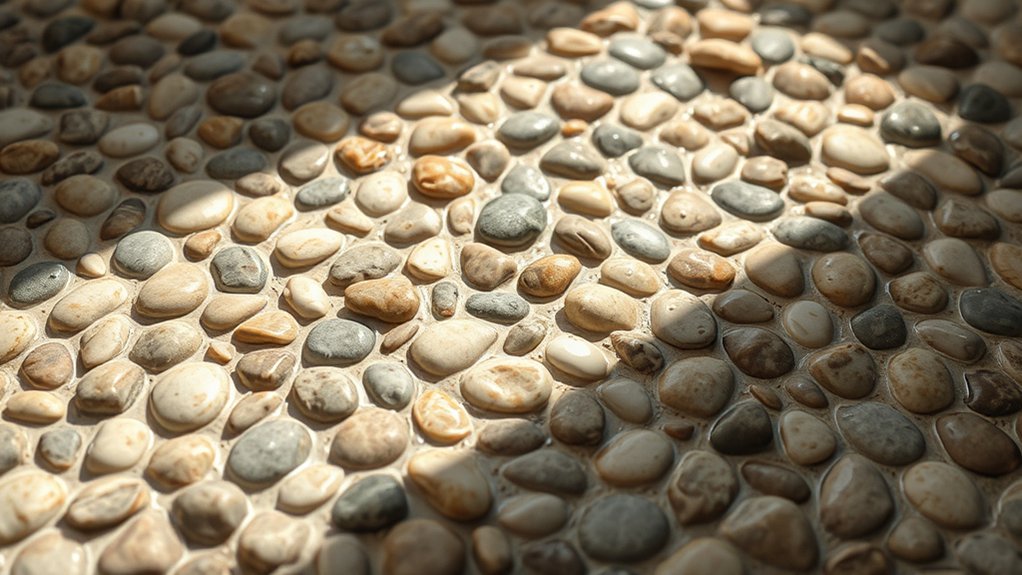
The type of grout you choose plays a big role in how easy your pebble shower floor is to clean. Epoxy grout resists stains and mildew better than cement-based options, reducing maintenance time.
To keep your grout in good shape, regularly seal it and clean with gentle, pH-neutral products to prevent buildup and discoloration.
Grout Material Impact
How does grout material affect the cleanliness of your pebble shower floor? The grout you choose plays a crucial role because it fills gaps between pebbles, influencing water retention and dirt buildup. Grout porosity is a key factor; more porous grout absorbs moisture and stains easily, making your shower floor harder to keep clean.
Additionally, the pebble texture creates natural crevices where dirt can settle, so grout must complement this by resisting moisture and grime.
Consider these grout material impacts:
- Porosity level: Lower porosity means less water absorption and fewer stains.
- Durability: Stronger grout withstands daily wear and cleaning better.
- Color and finish: Lighter colors with a smooth finish highlight less dirt.
Choosing grout wisely helps manage cleanliness despite the pebble texture’s challenges.
Grout Maintenance Tips
Why does maintaining grout properly make such a difference in keeping your pebble shower floor clean? Grout acts as a barrier that prevents dirt and moisture from penetrating beneath your pebbles.
Without regular grout sealing, water seeps in, promoting mold and mildew growth. Proper grout maintenance simplifies pebble maintenance, reducing stains and buildup.
| Maintenance Task | Benefit |
|---|---|
| Regular cleaning | Removes soap scum and grime |
| Grout sealing | Prevents water and dirt ingress |
| Prompt repairs | Stops cracks and water damage |
| Use pH-neutral cleaners | Protects grout integrity |
| Drying after use | Minimizes mold growth |
Sealing And Maintaining Pebble Shower Floors
When should you seal your pebble shower floor to keep it looking fresh and prevent damage? Ideally, seal it right after installation and reapply every 6 to 12 months. Regular sealing protects pebbles from water absorption, staining, and mold growth.
For effective sealing and maintenance, consider these ideas for pebble care:
Use a high-quality penetrating sealer designed for natural stone to keep pebbles looking vibrant and durable.
Allow the sealer to dry fully before using the shower to ensure proper absorption and protection.
Inspect the floor periodically for signs of wear or dullness and reseal promptly to maintain its integrity.
Everyday Cleaning Tips For Pebble Shower Floors
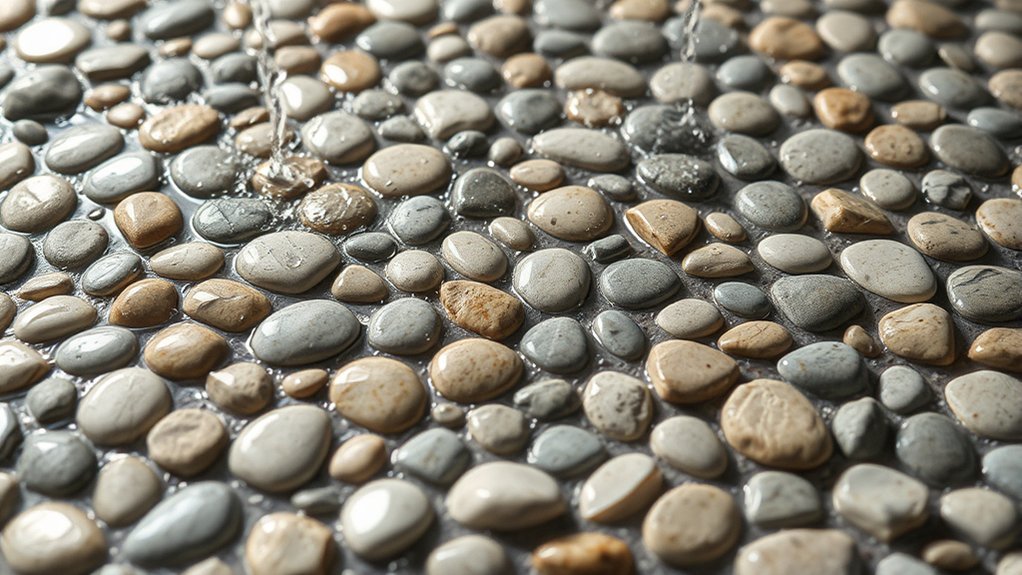
Keeping your pebble shower floor clean every day doesn’t have to be a chore. The natural pebble texture can trap dirt and soap scum, so establishing a consistent cleaning schedule is key.
After each shower, quickly rinse the floor with warm water to prevent buildup. Use a soft-bristled brush or mop to gently scrub the surface once or twice a week, focusing on grout lines where grime collects. Avoid harsh scrubbing, which can damage the pebble texture.
Wiping down the floor with a squeegee or towel helps reduce water spots and mildew growth. Sticking to this routine keeps your pebble shower floor looking fresh and prevents tough stains, making deep cleaning less frequent and more manageable over time.
Best Tools And Products To Clean Pebble Shower Floors
How do you guarantee your pebble shower floor stays spotless without damaging its natural texture? Choosing the right tools and products is key for effective pebble cleaning while protecting the grout and stones. Avoid harsh chemicals that can erode grout and weaken the sealant.
Here are the best essentials for pebble cleaning and grout maintenance:
- A soft-bristle brush: gently scrubs between pebbles without scratching surfaces.
- pH-neutral, non-abrasive cleaners: preserve natural stone and grout integrity.
- A grout sealer: applied periodically to prevent stains and water damage.
Using these tools ensures thorough cleaning without compromising your floor’s durability or appearance. Stick with gentle, effective products to keep your pebble shower floor fresh and long-lasting.
How Often Should You Clean Pebble Shower Floors?
Selecting the right tools and cleaners sets the stage for maintaining your pebble shower floor, but regular cleaning schedules play an equally important role in preserving its appearance and longevity. Because of the pebble texture and varying grout color, dirt and soap scum can hide easily, so you should clean your floor weekly for optimal upkeep.
| Frequency | Task |
|---|---|
| Weekly | Light scrubbing with a soft brush to remove surface grime |
| Monthly | Deep cleaning with a pH-neutral cleaner to protect grout color |
| Quarterly | Inspect and reseal to maintain pebble texture and grout integrity |
Sticking to this schedule keeps your pebble floor looking fresh and prevents buildup that dulls its natural beauty.
Preventing Mold And Mildew On Pebble Shower Floors
Why does mold and mildew tend to thrive on pebble shower floors? The uneven surface and porous grout create perfect spots for moisture to linger, encouraging mold growth. To prevent this, focus on proper ventilation maintenance to reduce humidity. Additionally, monitor tile migration. Shifting pebbles can create cracks where water pools, fostering mildew.
Here’s what you can do:
- Improve airflow by using exhaust fans or opening windows after showers.
- Regularly inspect grout and sealant to stop tile migration and water seepage.
- Wipe down the floor with a squeegee or towel to remove excess moisture.
When Should You Call A Professional To Clean Pebble Floors?
You should call a professional if you notice deep stains that won’t lift with regular cleaning. Persistent mold, mildew, or stubborn odors are also clear signs that expert care is needed.
Professionals have the tools and expertise to restore your pebble floors safely and effectively.
Signs of Deep Stains
How can you tell when your pebble shower floor needs professional cleaning? Deep stains often hide beneath the pebble texture, making them tough to spot but obvious once they worsen. You should consider calling a professional when you notice:
- Persistent discoloration that won’t fade despite regular scrubbing
- A gritty or sticky feeling caused by hardened soap buildup trapped in crevices
- Uneven surface appearance where some pebbles look dull or stained compared to others
These signs indicate that dirt and soap residues have penetrated the porous surface, requiring specialized cleaning methods beyond typical home care. Professionals use targeted treatments to restore the pebble floor’s natural look without damaging the stone or grout. Ignoring these signs can lead to permanent staining and tougher maintenance down the road.
Mold and Mildew Presence
When does mold and mildew on your pebble shower floor signal that it’s time to call a professional? If you notice persistent black or green spots despite regular cleaning, it’s a red flag. Professionals can assess mold prevention strategies and apply effective mildew barriers that DIY methods often miss.
Especially if the mold penetrates grout or sealant, a thorough professional cleaning is essential to avoid health risks.
| Mold Type | Common Location | When to Call a Pro |
|---|---|---|
| Surface Mold | Pebble tops | If recurring after cleaning |
| Grout Mold | Between pebbles | Visible discoloration or damage |
| Hidden Mold | Under sealant layers | Musty smell or stubborn patches |
Don’t wait. Early professional intervention ensures your floor stays safe and clean.
Persistent Odor Issues
Why does a persistent odor linger on your pebble shower floor despite regular cleaning? The pebble texture creates numerous crevices that trap water, soap scum, and bacteria, leading to stubborn odor issues. Even thorough scrubbing might not reach deep into these gaps.
You should consider calling a professional cleaner when:
- Odor persists after several cleaning attempts
- You notice discoloration or buildup within the pebble grout
- DIY methods fail to restore freshness and eliminate musty smells
Professionals use specialized equipment and eco-friendly solutions that penetrate the pebble texture, removing trapped moisture and bacteria effectively. Addressing persistent odor issues promptly not only improves hygiene but also extends your shower floor’s lifespan. Don’t let hidden grime compromise your bathroom’s cleanliness and comfort.
Frequently Asked Questions
Are Pebble Shower Floors Slippery When Wet?
Slipping on a wet pebble floor feels like dancing on ice, but you’re in luck. Pebble traction usually reduces slips.
Still, you’ll need regular maintenance to tackle challenges like soap buildup and guarantee safe footing every shower.
Can Pebble Shower Floors Increase Bathroom Resale Value?
You can increase your bathroom’s resale value potential with pebble shower floors, but keep in mind pebble maintenance is essential. Proper sealing and cleaning guarantee durability, making the unique, natural look appealing to buyers seeking distinctive, stylish features.
Do Pebble Shower Floors Stay Warm or Cold?
You’ll enjoy pebble warmth since these floors retain heat better than standard tiles, increasing comfort.
Plus, their natural texture offers traction benefits, reducing slip risks. This makes pebble floors both cozy and safer for your shower.
Are Pebble Shower Floors Eco-Friendly?
You’ll find pebble shower floors eco-friendly options due to their natural stones and material sustainability. They use minimal processing, reducing environmental impact, making them a practical choice if you want a stylish, green bathroom upgrade.
Can Pets Walk Safely on Pebble Shower Floors?
Yes, your pets can walk safely on pebble shower floors since they offer excellent grip quality, reducing slip risks.
However, ensure the pebbles are smooth and well-sealed to maintain pet safety and prevent discomfort or injury.