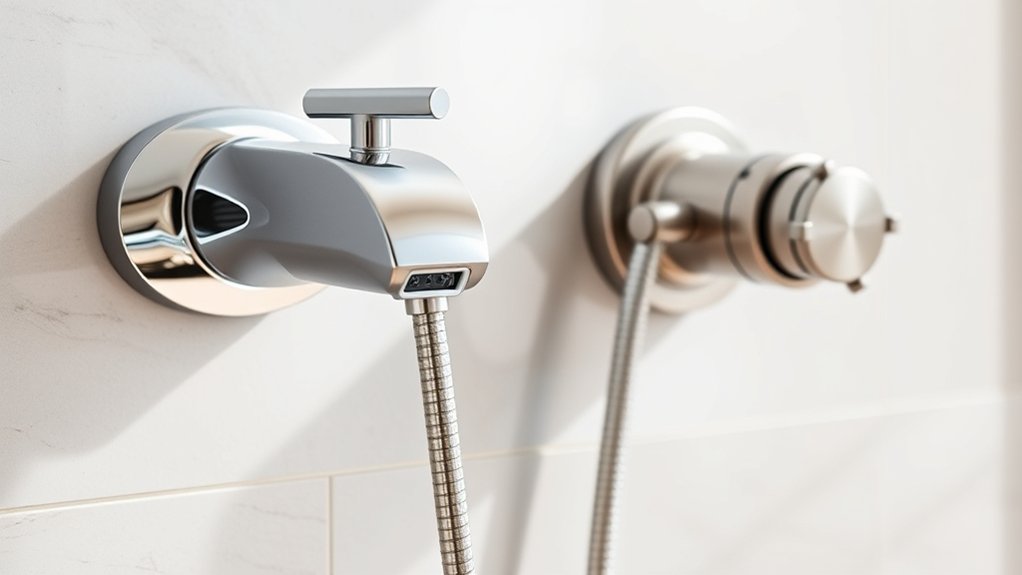
Are Shower Faucets Interchangeable
You might think shower faucets interchangeable means simply matching the finish, but plumbing compatibility is a different story. Valve types, cartridge styles, and rough-in dimensions all play critical roles in ensuring a proper fit and function.
Without verifying these details, you could face leaks, pressure issues, or a faucet that just won’t operate correctly. Understanding these factors is essential before you start any replacement project.
Key Takeaways
- Shower faucets are interchangeable only if valve types, mounting configurations, and plumbing connections match precisely.
- Valve compatibility ensures proper water flow, pressure, and leak-free operation when swapping faucets.
- Center-to-center inlet spacing (commonly 6 to 8 inches) and valve depth must align for proper fit.
- Different brands use varied cartridge or stem types, so faucet cartridges must match existing valve mechanisms.
- Improper fit or mismatched valves increase installation issues, leaks, and poor faucet performance.
Are Shower Faucets Interchangeable? What You Need to Know

When considering whether shower faucets are interchangeable, you need to evaluate the compatibility of valve types, mounting configurations, and plumbing connections. Not all faucets fit all setups; mismatched valves can cause leaks or poor performance.
You’ll want to ensure your new faucet matches the existing valve’s specifications precisely. From an interior design standpoint, selecting a faucet compatible with your valve allows you to update aesthetics without costly plumbing changes.
Additionally, choosing a faucet designed for water conservation can reduce usage significantly while maintaining pressure. This practical approach saves water and aligns with eco-friendly design trends.
To avoid installation issues, verify dimensions and connection standards before purchase. This careful assessment ensures your faucet upgrade is seamless, functional, and supports both design goals and water efficiency.
How to Tell What Kind of Valve Your Shower Faucet Has
Understanding the type of valve your shower faucet uses is key to ensuring compatibility and avoiding installation problems. To identify the valve, start by turning off the water supply and removing the faucet handle using a screwdriver from your common tools checklist.
Once exposed, observe the valve’s design: cartridge valves are cylindrical, ball valves have a round ball inside, and compression valves use rubber washers. Use a flashlight and a wrench for better visibility and access.
How to diagnose valves accurately involves comparing the valve’s shape and mechanism with manufacturer diagrams or online resources. Taking clear photos can help if you need expert advice. This precise approach lets you confidently determine your valve type before any faucet replacement or repair.
Why Valve Compatibility Is Key When Swapping Shower Faucets
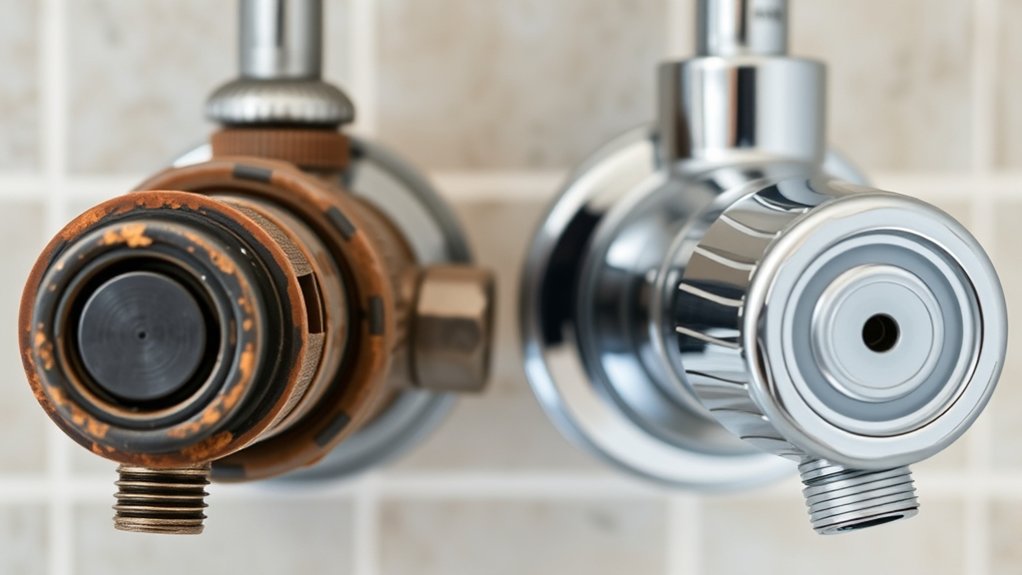
Why does valve compatibility matter so much when you’re swapping shower faucets? Because the valve controls water flow and pressure, ensuring your new faucet works seamlessly. Mismatched valves can cause poor water pressure, leaks, or compromised valve aesthetics.
You need to match both the valve type and specifications precisely.
| Valve Type | Valve Aesthetics Impact | Water Pressure Effect |
|---|---|---|
| Compression | Moderate | Variable, often lower |
| Cartridge | High | Consistent, smooth control |
| Ball | Moderate | Good, but may fluctuate |
| Ceramic Disk | High | Stable, precise |
Ensuring compatibility means your shower faucet not only fits but performs optimally, preserving valve aesthetics and maintaining correct water pressure. Don’t overlook this step; it’s key to a hassle-free installation.
Common Shower Faucet Sizes and What Fits
You need to know the standard shower faucet dimensions before choosing a replacement. Make sure the new faucet matches your valve type to ensure proper compatibility.
Measuring your existing setup accurately will help you find the right fit without issues.
Standard Shower Faucet Dimensions
How do you determine if a replacement shower faucet will fit your existing setup? Start by measuring the standard dimensions: most shower faucets have a center-to-center distance of 6 to 8 inches between the hot and cold water inlets.
The trim plate typically ranges from 6 to 8 inches in diameter, while the valve body fits behind the wall, usually between 3.5 to 4.5 inches deep. These dimensions ensure compatibility with common plumbing configurations without altering the wall structure.
Keep in mind, showerhead design affects water pressure and flow rate, so select a faucet that matches your system’s pressure capabilities. By understanding these standard sizes, you can confidently choose a faucet that fits seamlessly, maintaining optimal water pressure and functional showerhead performance.
Compatibility With Valve Types
Understanding standard shower faucet dimensions lays the groundwork for evaluating compatibility with various valve types. Shower valves come in several standard configurations: single-handle, dual-handle, pressure-balance, and thermostatic, each requiring specific faucet connections.
Faucet compatibility hinges on matching the faucet’s cartridge or stem type to the valve’s internal mechanism. For example, a Moen-compatible faucet won’t fit a Delta valve without adapter parts. Additionally, rough-in valve depth and pipe alignment affect compatibility, as mismatched components can cause leaks or operational issues.
When selecting a replacement faucet, confirm it supports your existing shower valve model and type. This ensures proper fit, functionality, and water control. Ignoring valve compatibility risks installation failure, so always verify valve-faucet pairing before purchase or replacement.
Measuring For Proper Fit
Where do you start when measuring for a proper shower faucet fit? Begin by measuring the distance between the hot and cold water inlets, typically 4 to 8 inches apart. Verify the valve’s diameter. Most are 1/2 inch or 3/4 inch.
Accurate measurements ensure compatibility, eliminating guesswork when selecting replacements. Remember, ideas about price comparison or color choices have no relevance during this technical step. Your focus should be on dimensions and valve type.
Use a caliper or tape measure for precision. Also, confirm the depth from the finished wall to the valve face, as this affects handle installation. Proper fit prevents leaks and costly rework.
Troubleshooting Fit Issues When Changing Shower Faucets
Why won’t your new shower faucet fit properly? The most common cause is incompatible valve types compatibility. Different faucets require specific valve designs, such as pressure balance, thermostatic, or manual valves. If your new faucet doesn’t match the existing valve type, it won’t align or seal correctly.
Next, check shower faucet compatibility regarding the rough-in dimensions; even slight variations can prevent proper installation. Inspect mounting hardware and escutcheon sizes, as mismatches can cause gaps or improper alignment.
Also, ensure the supply lines’ spacing and connection threads correspond to the new faucet’s requirements. Address these fit issues by verifying valve compatibility and measurements before purchase. This approach minimizes installation errors and prevents costly adjustments during the retrofit process.
How to Safely Remove and Replace Your Shower Faucet
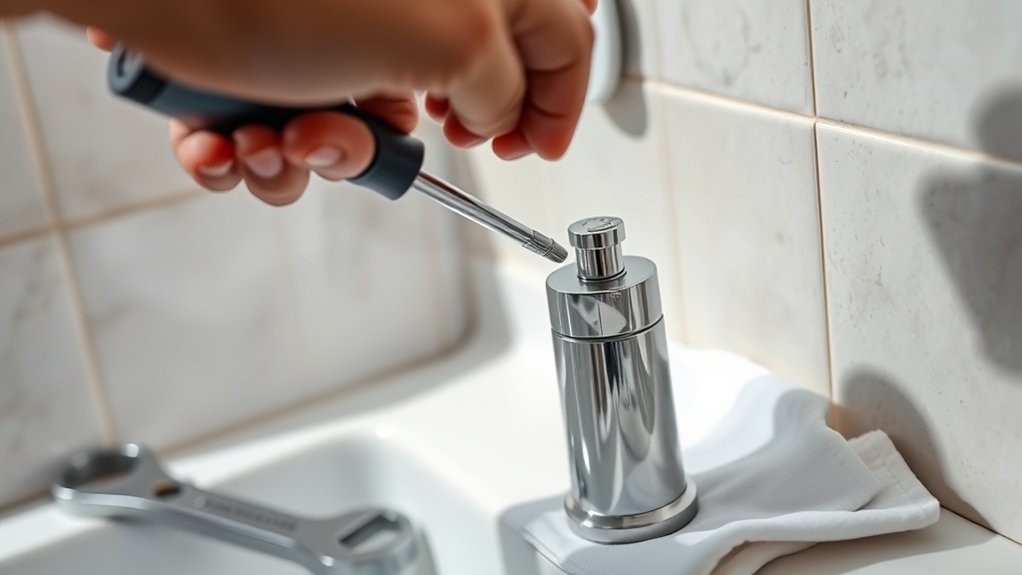
How do you guarantee a safe and efficient removal of your old shower faucet before installing a new one? First, shut off the water supply to prevent leaks and water damage. Then, carefully remove the existing faucet, noting how it integrates with your bathroom’s interior design and bathroom colorways to ensure your replacement complements the space.
Follow these steps:
- Turn off the main water valve and open the faucet to drain residual water.
- Use the correct tools to unscrew the faucet, protecting tiles and finishes from scratches.
- Inspect plumbing connections for wear or corrosion before fitting the new faucet, ensuring compatibility with your bathroom’s aesthetic.
Frequently Asked Questions
How Do I Maintain My Shower Faucet to Prevent Leaks?
You should regularly inspect seals and cartridges during shower maintenance, tighten connections, and clean mineral deposits.
Replacing worn washers promptly helps with leak prevention, ensuring your shower faucet stays efficient and drip-free over time.
What Tools Are Needed for Shower Faucet Installation?
Though shower faucet interchangeability varies, the installation tools needed for shower faucet include an adjustable wrench, screwdriver, plumber’s tape, and a pipe cutter.
You’ll also need a level and sealant for precise, leak-free fitting.
Can I Upgrade My Shower Faucet to a Digital Model?
You can upgrade your shower faucet to a digital model, enhancing interior aesthetics with sleek controls. Just ensure your plumbing supports it, and remember to check battery requirements for seamless operation and maintenance.
How Do Water Pressure Levels Affect Shower Faucet Performance?
Imagine water dancing unevenly. Intermittent pressure disrupts your shower’s rhythm, causing inconsistent flow. You’ll notice reduced flow consistency, which affects temperature control and spray patterns.
Maintaining steady water pressure is key for ideal faucet performance.
Are There Eco-Friendly Shower Faucet Options Available?
Yes, you’ll find eco-friendly options like water-saving fixtures designed to reduce flow without sacrificing pressure. These faucets help conserve water efficiently, meeting technical standards while lowering your environmental impact and utility costs practically and precisely.