Are Shower Arms Universal
Are shower arms universal? The short answer is no—you can’t assume shower arms fit, you can’t assume threads match, and you can’t assume designs align.
While 1/2-inch NPT threads dominate U.S. plumbing, variations in thread types, sizes, and shapes often complicate simple swaps. Before you select or replace a shower arm, you need to understand these technical nuances to avoid leaks, misfits, or costly adjustments.
The details you overlook now will determine how smoothly your installation goes next. Taking the time to verify compatibility ensures a secure and effective shower setup.
Key Takeaways
- Most shower arms in the U.S. use a standard 1/2-inch NPT thread but are not universally compatible worldwide.
- Thread type and size must match existing plumbing to ensure proper fit and avoid leaks.
- BSP threads are common internationally but differ from U.S. standards, affecting interchangeability.
- Design variations, such as curved or custom arms, can impact installation and compatibility.
- Always measure and verify thread type, size, and length before purchasing a shower arm.
What Are the Standard Sizes and Threads for Shower Arms?
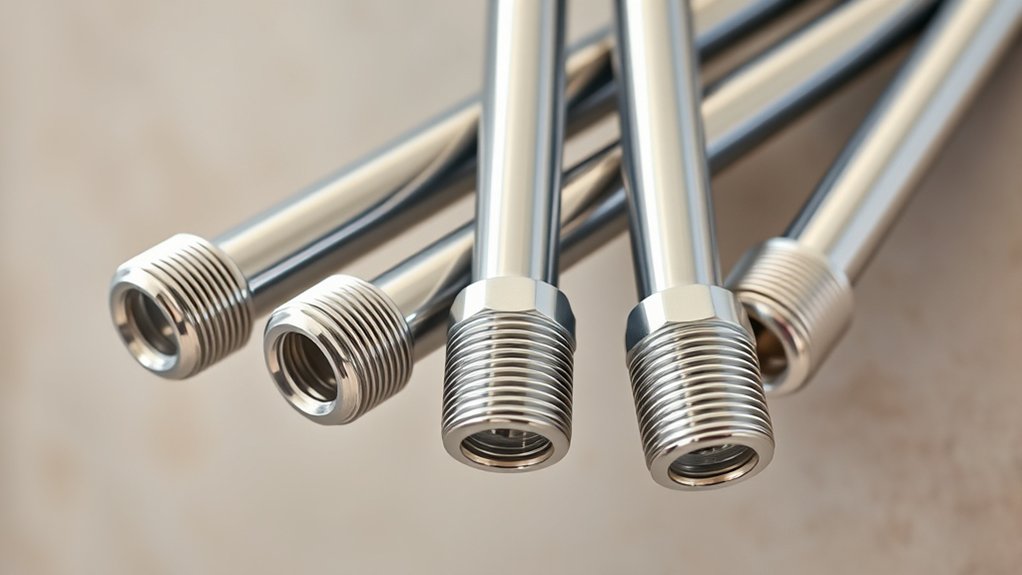
What sizes and thread types should you expect when selecting a shower arm? Typically, shower arms conform to a 1/2-inch NPT (National Pipe Thread) standard in the U.S., ensuring a consistent fit with most showerheads and plumbing fixtures. This two-word discussion idea, “thread compatibility,” is essential to dispel common compatibility myths suggesting varied threading standards.
The 1/2-inch size refers to the pipe’s nominal diameter, not the actual measurement, which is a key detail to understand. Internationally, you might encounter BSP (British Standard Pipe) threads, but these are less common in the U.S. market.
Knowing this enables you to avoid costly mistakes. Always verify thread type and size before purchase, as these factors determine your shower arm’s compatibility with existing plumbing, debunking myths about universal interchangeability.
How Do Different Shower Arm Designs Affect Compatibility?
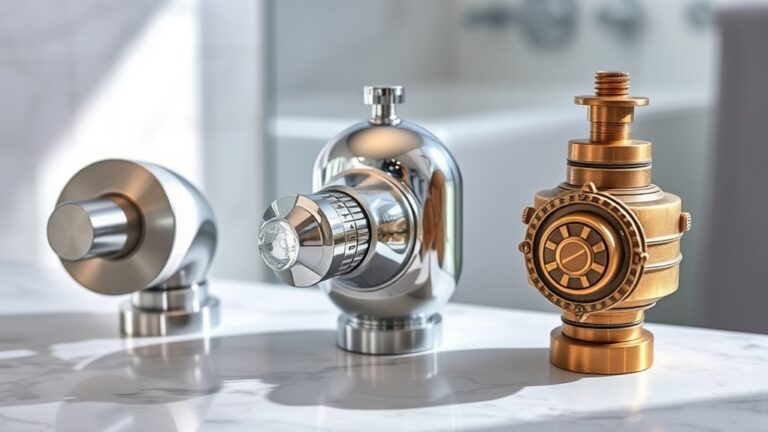
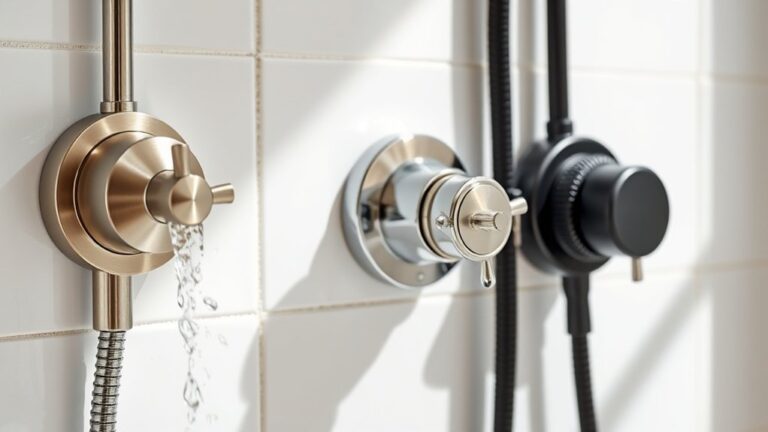
How substantially do different shower arm designs impact compatibility with your existing fixtures? The distinction between universal vs. nonuniversal designs plays a critical role here. Universal shower arms typically adhere to standard thread sizes and angles, ensuring seamless integration with most showerheads and plumbing setups.
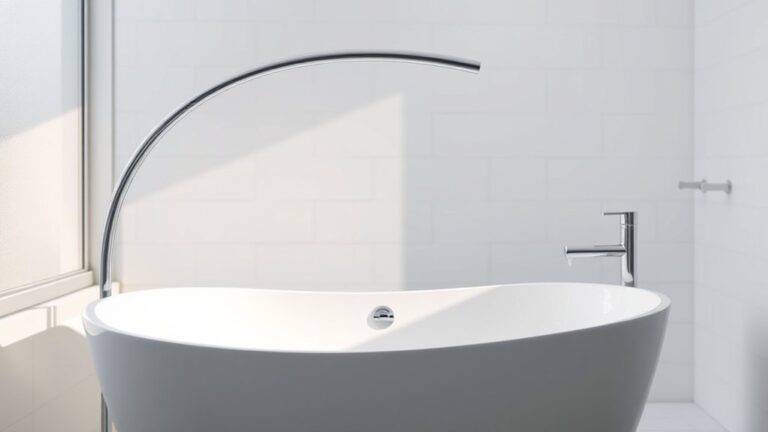
However, nonuniversal designs may feature unique threading, unconventional bends, or proprietary connectors, limiting interchangeability. When evaluating compatibility, you must balance aesthetic vs. functional considerations. While an elaborate, curved shower arm might enhance visual appeal, it could complicate installation or misalign water flow if it doesn’t match your current plumbing.
Conversely, a straightforward, functional design prioritizes ease of fit and reliable performance. Understanding these design differences empowers you to select a shower arm that aligns precisely with your fixture requirements without compromising on style or utility.
When Should You Choose a Specialized or Custom Shower Arm?
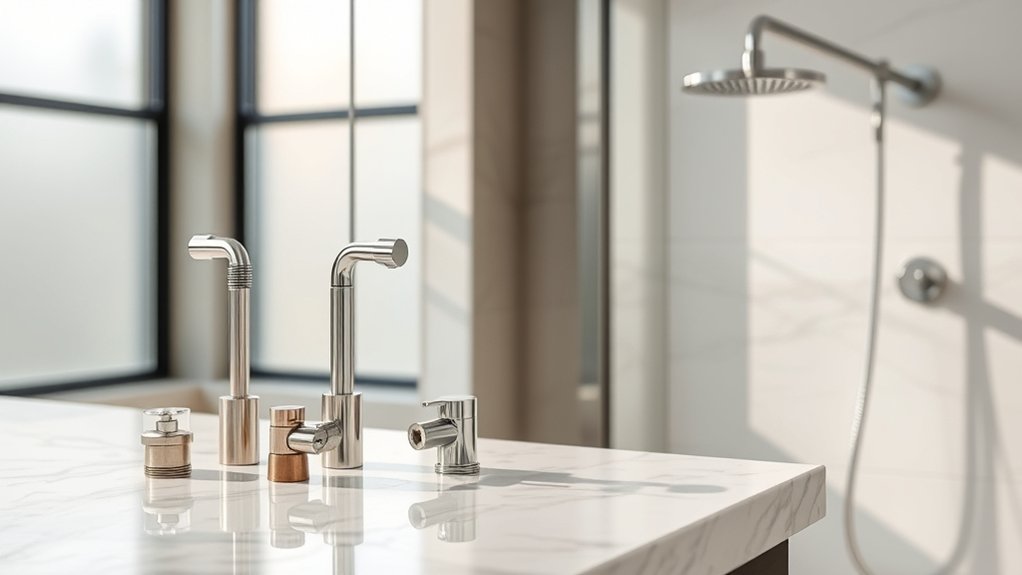
Why opt for a specialized or custom shower arm instead of a standard model? When standard shower arms fail to meet your bathroom’s unique spatial layout or aesthetic demands, custom considerations become essential.
You should choose specialized shower arms if you encounter compatibility limits with existing plumbing or require precise length, angle, or finish adjustments. Additionally, choosing materials tailored to specific environmental conditions, such as corrosion-resistant alloys for humid areas, ensures durability and performance.
Custom shower arms also address installation challenges in non-standard wall constructions or retrofit applications. By selecting a custom solution, you maintain system integrity and optimize water flow.
Ultimately, specialized shower arms provide a technically sound answer when standard models can’t accommodate your project’s precise requirements or design constraints.
How Do You Measure a Shower Arm to Ensure Compatibility?
To guarantee a shower arm fits correctly, you need to take precise measurements of both length and thread size. Measurement accuracy ensures compatibility with your existing plumbing and prevents costly errors.
First, measure the shower arm’s length from the wall flange to the end. Next, identify the thread size, typically 1/2-inch NPT or BSP, by comparing thread pitch and diameter to thread standards.
| Measurement Aspect | Details |
|---|---|
| Length | Wall flange to arm end |
| Thread Diameter | Commonly 1/2 inch |
| Thread Type | NPT (US) or BSP (International) |
| Thread Pitch | Threads per inch (TPI) standard |
| Measurement Tool | Caliper or thread gauge |
Use calibrated tools for precise readings to ensure your shower arm matches plumbing thread standards exactly.
How Can You Prevent Leaks and Installation Problems?
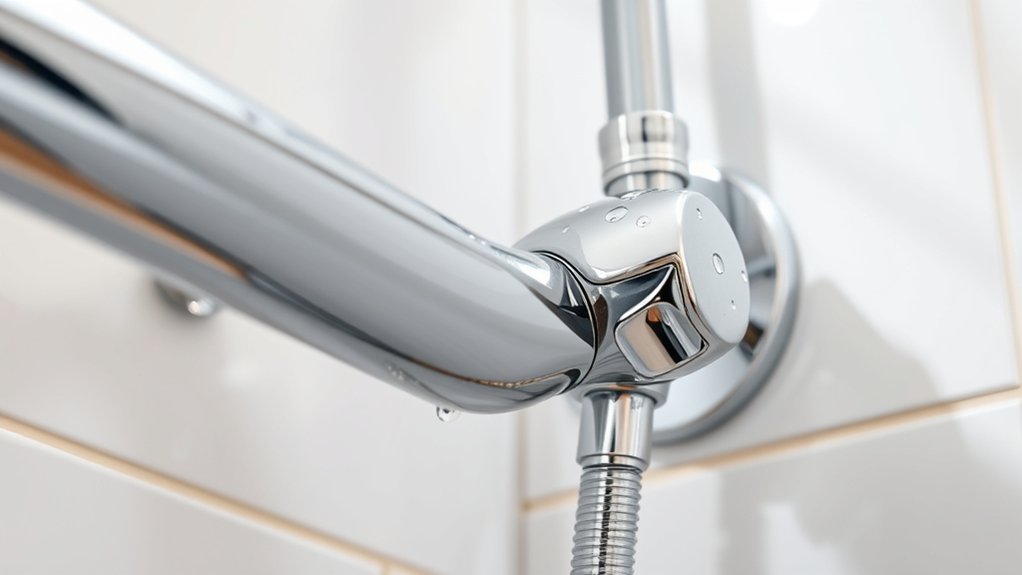
When installing a shower arm, what steps can you take to guarantee a leak-free, secure connection? Begin by thoroughly cleaning the pipe threads to remove debris and old sealant. Wrap the male threads with high-quality plumber’s tape, ensuring even coverage without overlapping edges excessively.
Tighten the shower arm by hand first, then use a wrench with a cloth to avoid surface damage. Do not overtighten, as this can strip threads or crack fittings. For installation troubleshooting, inspect the connection for any visible gaps or cross-threading before final tightening.
After installation, test for leaks by running water at full pressure and observing the joint closely. Address any drips immediately to maintain leak prevention and avoid costly repairs or water damage.
Frequently Asked Questions
Can I Paint or Customize My Shower Arm’s Finish?
You can customize your shower arm’s finish, but ensure the paint or coating maintains universal compatibility with water exposure and metal. Use specialized, waterproof paints designed for metal to achieve durable, professional finish customization without corrosion risks.
Are There Eco-Friendly Shower Arms Available?
Yes, you’ll find eco-friendly shower arms crafted from sustainable materials combined with water-saving designs. These reduce water consumption while maintaining performance, helping you conserve resources efficiently without compromising on durability or functionality in your bathroom setup.
How Do Shower Arms Affect Water Pressure?
Shower arm materials directly influence water pressure impact; metal arms typically maintain stronger pressure due to less internal friction, while plastic may reduce flow.
Choosing high-quality, smooth interior arms ensures optimal water pressure and consistent shower performance.
Can a Shower Arm Be Used Outdoors?
Wondering if shower arms can brave the elements? Yes, they can! Their outdoor suitability depends on material durability, while finish customization is irrelevant.
Just ensure corrosion resistance and proper sealing for long-lasting, efficient outdoor use.
Do Shower Arms Come With Warranties?
Yes, many shower arms come with warranty coverage that guarantees durability and performance. When selecting, confirm universal compatibility to avoid issues.
Always review the manufacturer’s warranty terms to understand coverage specifics and limitations clearly.