Are Pebble Shower Floors Comfortable
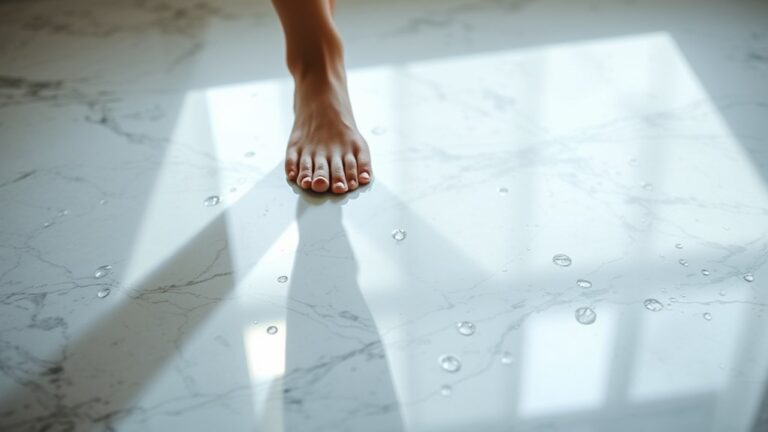
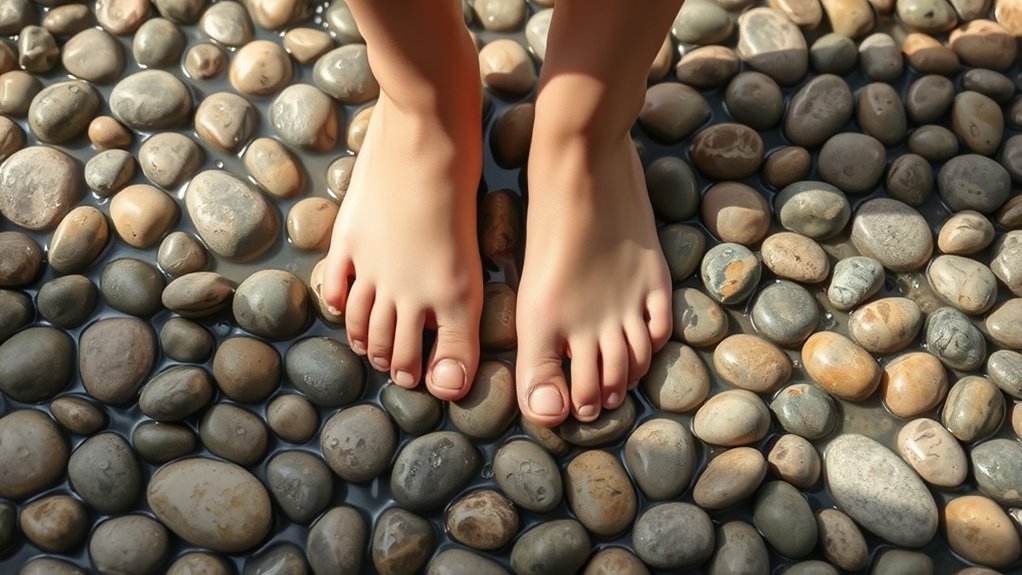
Stepping onto a pebble shower floor can feel like walking on a riverbed sculpted by time, where each stone offers a subtle massage beneath your feet. Pebble shower floors provide a unique blend of natural texture and comfort that many find appealing.
But comfort isn’t just about the stones themselves—it hinges on precise installation, grout depth, and the quality of sealers used. These factors ensure the surface is smooth enough for daily use while maintaining slip resistance.
If you’re wondering how these natural textures balance softness with safety, there’s more to uncover about what makes pebble floors truly comfortable for everyday showers.
Key Takeaways
- Smooth, rounded pebbles embedded flush in grout provide a natural foot massage and an even, comfortable surface.
- Proper installation with consistent depth and sealing prevents raised edges and discomfort from loose stones.
- Pebble floors offer cushioning effects when installed over a soft underlayer, enhancing daily comfort.
- Regular sealing maintains smoothness and prevents grout wear, preserving comfort over time.
- Pebble texture improves slip resistance and drainage, reducing discomfort caused by water pooling.
Are Pebble Shower Floors Comfortable for Daily Use?
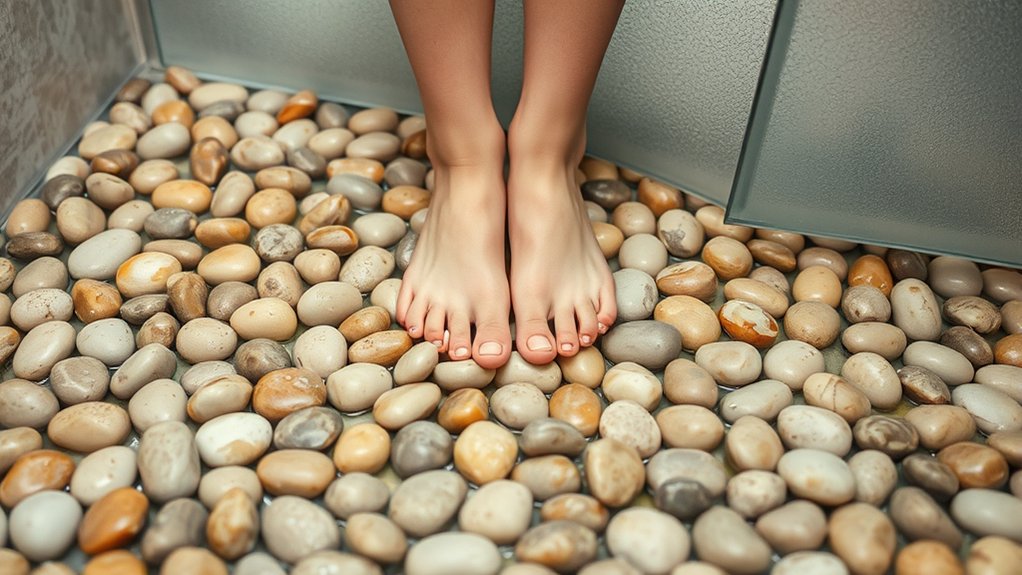
How does it feel to stand on a pebble shower floor every day? You’ll notice the unique texture beneath your feet. Each smooth stone offers a gentle massage, enhancing comfort with natural contour variations.
Experience the gentle massage of smooth stones, turning every shower into a soothing tactile delight.
The pebble aesthetics elevate your shower, blending organic beauty with functionality. Unlike flat tiles, pebbles create subtle gaps that improve water drainage, minimizing puddles and promoting swift drying. This feature reduces slip hazards and keeps the surface fresh.
However, initial sensations might feel unfamiliar as your skin adjusts to the uneven surface. Over time, the tactile experience becomes soothing rather than abrasive.
With proper installation ensuring a level base, pebble floors balance artistic design and practical benefits, making daily use not only comfortable but visually captivating.
What Are Pebble Shower Floors Made Of?
You’ll find pebble shower floors crafted from various materials, ranging from smooth river stones to polished synthetic pebbles. The choice between natural and synthetic affects both the texture underfoot and the floor’s durability.
Pay close attention to pebble size and surface finish, as these details shape the overall comfort and aesthetic of your shower floor.
Types Of Pebble Materials
What makes pebble shower floors so uniquely appealing lies in the variety of materials used to craft them. You’ll find smooth river stones, polished marble chips, and even basalt pebbles, each offering distinct textures and colors that elevate your shower’s aesthetic.
When installing, consider pebble zoning, strategically placing different pebble types to enhance tactile comfort and visual interest. This zoning also influences drainage patterns, allowing water to flow efficiently without pooling, which is crucial for both safety and longevity.
The choice of pebble material affects not just appearance but also slip resistance and maintenance. By selecting the right combination, you ensure your shower floor feels soothing underfoot while supporting effective drainage, blending form with function seamlessly.
Natural Vs. Synthetic Pebbles
Why choose between natural and synthetic pebbles when designing your shower floor? Natural textures offer an authentic, organic feel, showcasing the irregularities and subtle color variations found in river stones or beach pebbles. These materials provide durability and a unique tactile experience underfoot, enhancing your shower’s aesthetic appeal.
On the other hand, synthetic alternatives allow precise control over shape, size, and color, offering consistent texture and improved slip resistance. They’re often lighter and easier to install, with enhanced resistance to staining and wear.
When selecting between natural textures and synthetic alternatives, consider how each affects comfort, maintenance, and longevity. Balancing these factors ensures your pebble shower floor not only looks stunning but feels comfortable and performs reliably over time.
Pebble Size And Texture
How does pebble size and texture influence the feel and function of your shower floor? The pebble texture directly affects comfort and slip resistance. Smaller pebbles create a smoother, gentler surface, while larger ones offer a pronounced massage-like sensation.
Additionally, pebble size impacts installation impact; larger stones require more precise placement and grout work, influencing durability and water drainage.
| Pebble Size | Installation Impact |
|---|---|
| Small (0.5-1 inch) | Easier to install, smoother finish |
| Medium (1-2 inches) | Balanced comfort, moderate effort |
| Large (2+ inches) | Requires skillful placement, textured feel |
Choosing the right pebble size and texture ensures your shower floor feels both comfortable and functional, enhancing your daily routine with aesthetic appeal and practical performance.
How Do Pebble Shower Floors Feel Underfoot?
When you step onto a pebble shower floor, you’ll notice how the varied textures create a unique tactile experience, from smooth river stones to gently rounded edges. The natural materials also respond to temperature changes, offering a soothing coolness or warmth beneath your feet.
This subtle interplay not only enhances comfort but also provides a gentle massage that stimulates circulation with every step.
Texture Variations Explained
What sensations do pebble shower floors offer beneath your feet? The pebbled texture creates a natural, tactile experience, combining smooth, rounded stones with subtle ridges and occasional crevices. This variation enhances grip while stimulating your senses with each step.
Installation considerations greatly influence this texture: pebble size, grout depth, and stone arrangement determine how pronounced or gentle the surface feels. Smaller pebbles yield a softer, more uniform touch, while larger stones offer a varied, massage-like effect.
The grout’s finish, whether flush or slightly recessed, also changes the overall smoothness, affecting comfort and water drainage. Understanding these elements lets you customize your shower floor’s feel, balancing aesthetic appeal with functional comfort for a truly immersive bathing experience.
Temperature Sensation Effects
Beyond texture, the temperature of pebble shower floors shapes your sensory experience with every step. The natural stone composition of the pebble texture retains and conducts heat differently than smooth tile, creating distinct temperature sensations underfoot.
When warm water flows, pebbles gently absorb and radiate heat, delivering a soothing warmth that contrasts with the cooler grout lines. This interplay enhances your awareness of each stone’s form and placement.
Conversely, when the floor is cold, the pebble texture can feel crisp and invigorating, awakening your senses. The varied thermal conductivity of different stones within the pebble mix further enriches this effect, making each step a unique temperature experience.
Understanding these nuances helps you appreciate how pebble floors engage both tactile and thermal senses.
Foot Massage Benefits
How exactly does walking on pebble shower floors feel underfoot? Each step delivers a natural foot massage as the rounded stones gently press against the soles, stimulating pressure points much like reflexology techniques.
This textured surface mimics spa vibes, creating a soothing, therapeutic experience that promotes circulation and relieves tension. The varied pebble sizes and smooth contours engage different areas of your feet, offering subtle yet effective muscle relaxation.
Unlike flat surfaces, pebble floors invite mindful stepping, enhancing your connection to the shower environment. Technically, the slight unevenness cushions impact while encouraging balance and foot strength.
This combination of tactile stimulation and ergonomic support transforms your daily shower into a rejuvenating ritual, blending comfort with wellness seamlessly.
Benefits and Challenges of Pebble Shower Floors for Comfort
Why do pebble shower floors feel uniquely inviting underfoot? Their natural, uneven texture mirrors the calming essence of a stone gardenhouse, offering sensory stimulation that soothes your feet. This tactile surface promotes relaxation, while the varied pebble sizes enhance grip, reducing slip risk.
The acoustic aesthetics also elevate your shower experience. Water’s gentle patter on smooth stones muffles harsh echoes, creating a tranquil ambiance. However, you might notice uneven pressure points, which could challenge those with sensitive feet or foot conditions.
Additionally, pebble grout lines require diligent cleaning to prevent buildup, which can affect comfort and hygiene. Balancing these benefits and challenges, pebble floors offer a distinctive blend of natural beauty and functional comfort that, when maintained, transforms your shower into a serene retreat.
How Installation Impacts Pebble Shower Floor Comfort

Where you place each pebble and how you secure it can dramatically shape the comfort of your shower floor. The installation impact on daily use comfort is profound because unevenly set pebbles can create pressure points that feel harsh underfoot.
By carefully arranging pebbles to form a smooth, cohesive surface and embedding them at a consistent depth, you ensure a balanced texture that massages rather than irritates your feet. Proper grouting and sealing also affect comfort by preventing loose stones and sharp edges.
If installation lacks precision, water can pool unevenly, reducing slip resistance and causing discomfort. So, your attention to detail during installation not only defines the floor’s aesthetic appeal but also directly influences how comfortable it feels every time you step in.
Tips to Make Pebble Shower Floors More Comfortable
What makes a pebble shower floor truly comfortable goes beyond just the materials. It lies in thoughtful preparation and maintenance.
To enhance installation comfort, start by selecting smooth, rounded pebbles with consistent sizing to create an even pebble texture underfoot. During installation, ensure the pebbles are embedded flush within the grout, avoiding raised edges that can cause discomfort.
Choose smooth, rounded pebbles of consistent size and embed them flush in grout for comfort.
Applying multiple grout layers and polishing the surface reduces roughness while maintaining slip resistance. Regularly sealing the floor preserves the smoothness and prevents grout wear, sustaining long-term comfort.
You can also add a cushioned underlayer beneath the pebble base to soften pressure points without compromising drainage. With these technical and aesthetic considerations, you’ll enjoy a pebble shower floor that feels as good as it looks.
Comparing Pebble Floors to Other Shower Flooring Options
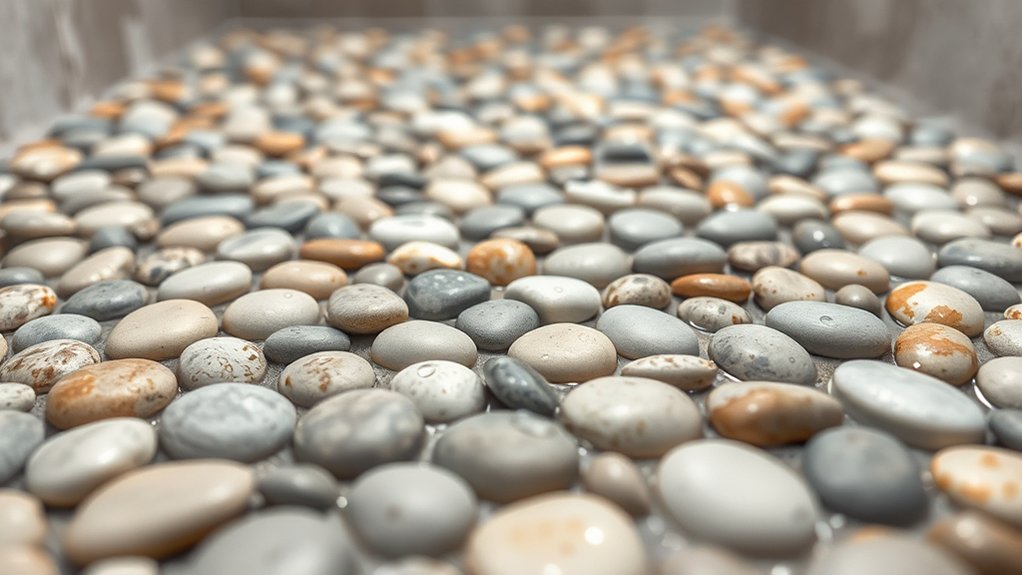
How do pebble shower floors stand up against other popular shower flooring options? When weighing pebble floors against alternatives, consider these key aspects:
- Pebble Traction: Pebbles provide natural slip resistance, often outperforming smooth tiles or vinyl.
- Barefoot Comfort: The gentle contours massage your feet, unlike cold, flat porcelain or ceramic.
- Aesthetic Appeal: Pebble floors create a spa-like, organic vibe that synthetic options rarely match.
- Maintenance: While grout lines need attention, pebbles are more durable than wood or laminate in wet conditions.
Compared to sleek tiles, pebble floors offer superior tactile engagement and traction. Unlike vinyl or laminate, they bring natural texture without sacrificing durability. If barefoot comfort and slip safety are priorities, pebble floors excel with their unique blend of function and form.
Who Should Consider Pebble Shower Floors?
If you value a shower floor that combines natural texture with enhanced safety and comfort, pebble floors might be the ideal choice for you. Their unique pebble textures provide a gentle foot massage and excellent slip resistance.
However, you should weigh the installation impact, as proper sealing and grout are essential for durability and hygiene. Pebble floors suit those seeking a spa-like ambiance and tactile experience without compromising safety.
| Who Should Consider Pebble Floors? | Reason |
|---|---|
| Nature enthusiasts | Appreciate organic aesthetics |
| Safety-conscious users | Benefit from non-slip pebble textures |
| Spa and wellness lovers | Enjoy soothing, tactile underfoot feel |
| Home renovators | Value unique design with installation impact |
| Allergy-sensitive individuals | Prefer natural materials with proper sealing |
Frequently Asked Questions
How Do Pebble Shower Floors Affect Bathroom Cleaning Routines?
Pebble shower floors increase your cleaning frequency since dirt collects in grout lines. You’ll need regular grout maintenance to prevent mold and mildew, using specialized brushes and sealants to keep the textured surface pristine and visually stunning.
Are Pebble Shower Floors Slippery When Wet?
You won’t slip like you’re ice skating on a frozen lake. Pebble traction actually excels, reducing wet slipperiness dramatically. Their textured surface grips your feet securely, blending natural beauty with technical safety for a confident, stylish shower experience.
Can Pebble Shower Floors Cause Allergies or Skin Irritation?
You might experience pebble texture sensitivity if your skin is delicate, and shower grout reactions can cause irritation or allergies. Proper sealing and maintenance minimize risks, ensuring your pebble shower floor stays both beautiful and safe.
What Is the Average Cost of Installing a Pebble Shower Floor?
You’ll find pebble installation costs typically range from $800 to $1,500, depending on size and stone quality. Proper maintenance routines, like sealing every six months, keep your shower floor both stunning and durable.
How Long Do Pebble Shower Floors Typically Last?
You can expect pebble shower floors to last 10-15 years, thanks to pebble texture durability. However, you’ll need to stay on top of grout maintenance challenges to preserve their aesthetic appeal and structural integrity over time.