Are Hand Held Shower Hoses Universal
You might assume handheld shower hoses are universal, but that’s not always the case.
Thread sizes, types, and pitches vary by region and manufacturer, which can lead to leaks or poor connections if you don’t verify compatibility.
Understanding these technical details is crucial before purchasing or installing a new hose.
To ensure a secure and durable setup, you’ll need to consider more than just the basic dimensions—there’s a lot more that can impact your choice.
Key Takeaways
- Handheld shower hoses are not universally compatible due to variations in thread sizes and connection types across regions and brands.
- Most hoses use standardized 1/2-inch BSP threads, but some markets and brands employ different thread pitches or diameters.
- Accurate measurement of hose length and thread type is essential for ensuring proper fit and leak-free connections.
- Mixing brands is possible only if thread size and connector type exactly match; proprietary designs may cause incompatibility.
- Verify technical specifications and connection styles (threaded or slip-on) before purchase to avoid installation issues and leaks.
Are All Handheld Shower Hoses Really Universal?
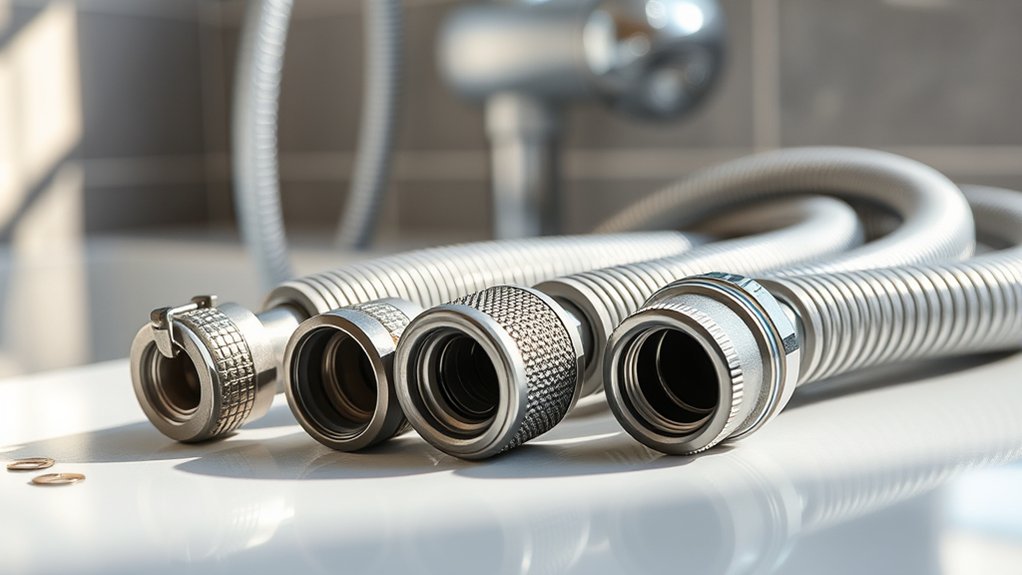
How universal are handheld shower hoses, really? While many manufacturers claim universal compatibility, the reality hinges on strict adherence to thread standards. You can’t assume every hose will fit every showerhead or wall outlet without verifying thread sizes and types.
Universal compatibility depends on standardized thread dimensions, commonly 1/2-inch BSP or NPT threads, but deviations exist, especially in international markets. If you want a truly universal hose, you must check the thread standards carefully to ensure seamless installation and leak-free connections.
Don’t rely solely on marketing terms; technical specifications are crucial. By understanding thread standards and matching them precisely, you’ll avoid compatibility issues and ensure your handheld shower hose performs reliably across various plumbing setups.
Common Sizes and Thread Types for Handheld Shower Hoses
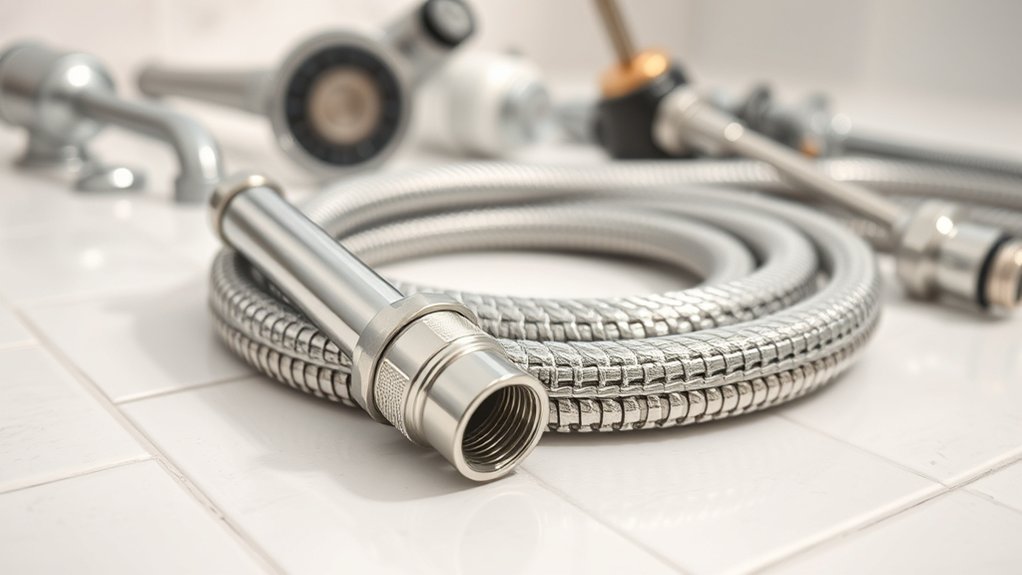
Which sizes and thread types should you focus on when selecting a handheld shower hose? Achieving universal compatibility largely hinges on understanding standard thread variations and hose dimensions. Most handheld shower hoses use 1/2-inch BSP (British Standard Pipe) threads, the dominant size in plumbing fixtures worldwide. However, some regions and brands may employ slightly different thread pitches or diameters, affecting fit.
Here’s a quick reference for common sizes and threads:
| Size (Diameter) | Thread Type |
|---|---|
| 1/2 inch | BSP (British Standard) |
| 3/8 inch | NPT (National Pipe Taper) |
| 1/2 inch | Metric Thread |
| 1/2 inch | G-thread (parallel) |
Knowing these thread variations lets you confidently select hoses that ensure reliable, leak-free connections.
How Different Connection Styles Affect Hose Compatibility

You need to recognize that different connection styles directly impact hose compatibility. Common connection types, such as threaded or quick-connect fittings, vary in design and function.
Additionally, thread size variations can prevent a hose from fitting properly unless matched precisely.
Common Connection Types
Why do some hand held shower hoses fit seamlessly while others don’t? The key lies in common connection types. You’ll encounter primarily two styles: slip-on and threaded connections.
Slip-on connections rely on a simple push-fit design, often sealed with rubber washers, offering quick installation but limited compatibility. Threaded connections, however, use standardized screw threads to ensure a secure, leak-free fit.
Understanding these types is essential because mixing different connection styles leads to an unrelated topic scenario—random pairing of incompatible fittings. This mismatch causes leaks or inability to connect.
When selecting or replacing a hose, you must identify the connection style your shower requires. Ignoring this detail disrupts compatibility, so always verify the connection type before purchase to guarantee a proper, reliable fit.
Thread Size Variations
How do variations in thread size impact the compatibility of hand held shower hoses? Thread size differences are crucial and often misunderstood, feeding compatibility myths and universal misconceptions.
You must know that hose fittings vary primarily between 1/2 inch BSP and 3/8 inch BSP threads. Using the wrong size leads to leaks or incompatibility. Here’s a clear comparison:
| Thread Size | Common Use |
|---|---|
| 1/2 inch BSP | Most shower hoses, taps |
| 3/8 inch BSP | Some European fixtures |
| M22 | Certain handheld showers |
| 7/8 inch BSP | Older plumbing setups |
| 1/4 inch BSP | Specialist or rare fittings |
Knowing these variations helps you avoid costly mistakes. Don’t assume universal compatibility; always verify thread size before purchasing or installing to ensure a secure, leak-free connection.
Can You Mix and Match Handheld Shower Hose Brands?
You can mix and match handheld shower hose brands, but you need to ensure thread size compatibility and connector type alignment. Many brands use standard sizes, yet some incorporate proprietary designs that affect fit.
Understanding these variations prevents leaks and ensures a secure connection.
Hose Thread Size Compatibility
When dealing with handheld shower hoses, understanding thread size compatibility is essential for ensuring a proper fit. Most handheld shower hoses use standardized thread sizing, typically 1/2-inch BSP (British Standard Pipe) or NPT (National Pipe Thread), which facilitates hose compatibility across various brands.
However, subtle differences in thread pitch or diameter can lead to leaks or improper connections if mismatched. To mix and match handheld shower hose brands successfully, you need to verify that both ends share identical thread sizing specifications. Using a thread gauge or consulting manufacturer documentation ensures you select hoses and fittings with compatible threads.
Adhering strictly to correct thread sizing guarantees secure, watertight connections, allowing you to interchange hoses without compromising performance or durability.
Connector Type Differences
Why do connector types matter when mixing handheld shower hose brands? Because even with universal compatibility claims, subtle differences in connector design and thread standards can cause leaks or poor fit. You need to understand these nuances to avoid frustration and ensure a secure, watertight connection.
- Connector shape varies; some use straight, others angled fittings.
- Thread standards differ globally. BSP and NPT are common but incompatible.
- Internal vs. external threading affects how hoses screw onto fittings.
- Connector material and finish impact durability and sealing performance.
Brand-Specific Design Variations
How compatible are handheld shower hoses across different brands? While many hoses advertise universal compatibility, brand-specific design variations often complicate mixing and matching. Manufacturers may use distinct thread standards, connector dimensions, and hose material differences that affect fit and durability.
For instance, some brands utilize reinforced nylon, while others prefer stainless steel or PVC, influencing flexibility and wear resistance. These material choices can affect not only performance but also compatibility with specific fittings. Consequently, even if thread sizes align, subtle deviations in length, gasket type, or connection angle can hinder seamless installation.
To guarantee optimal function and avoid leaks, you should verify exact specifications rather than assuming interchangeability. In summary, universal compatibility claims should be approached cautiously when mixing handheld shower hose brands.
Key Standards to Look For When Buying a Handheld Shower Hose
What guarantees a handheld shower hose performs reliably and fits correctly? You need to prioritize key standards that ensure compatibility and durability under daily use, even when exposed to hand soap residues or bathroom paint fumes.
- Material Quality: Choose hoses made from corrosion-resistant metals or reinforced polymers to withstand chemical exposure.
- Standardized Fittings: Look for 1/2-inch BSP or ISO-compliant connectors, ensuring universal compatibility.
- Pressure Ratings: Verify the hose supports your home’s water pressure, typically between 1.5 to 5 bar.
- Flexibility and Length: Ensure the hose is flexible enough to prevent kinks and long enough to reach comfortably.
How to Measure Your Shower Hose for the Perfect Fit
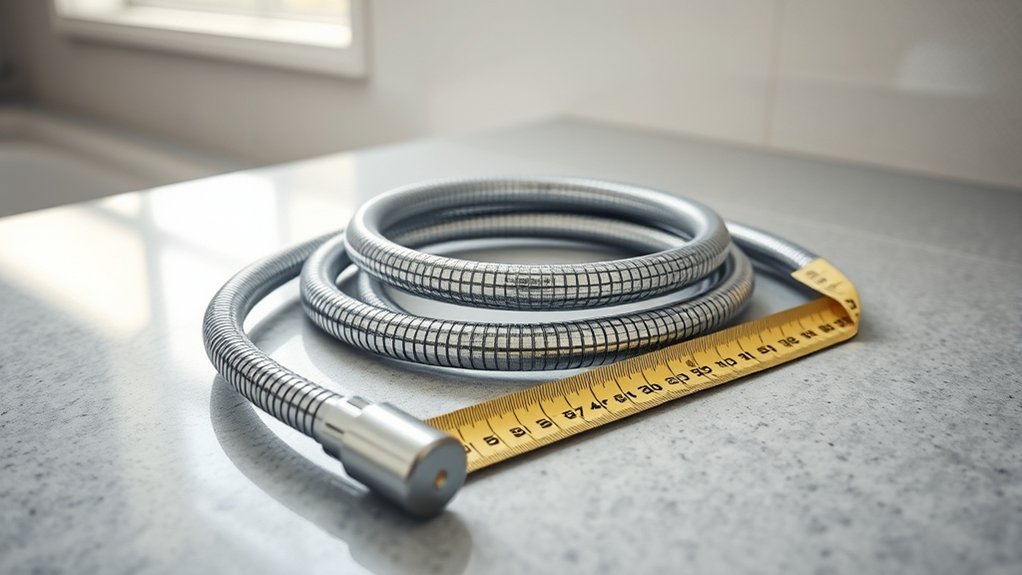
Where do you start when ensuring your handheld shower hose fits perfectly? First, measure the existing hose length or the distance between your showerhead’s connection points accurately, using a flexible tape measure. Record from the center of one fitting to the other, accounting for movement and reach.
This precise measurement counters common compatibility myths suggesting all hoses fit universally. Next, identify the thread size and type, typically 1/2 inch BSP or NPT, since mismatches cause leaks or installation failure. When discussing hose replacements, focus on these technical details rather than assumptions.
Incorporate these discussion ideas when selecting a hose to guarantee optimal compatibility. By following these steps, you avoid guesswork and ensure your handheld shower hose offers a reliable, perfect fit every time.
Tips to Avoid Installation Problems With Handheld Shower Hoses
Preventing installation issues with handheld shower hoses starts by ensuring you have the correct fittings and tools before beginning. Even with universal compatibility, variations in connection standards can cause leaks or poor fit.
Follow these tips to avoid common problems:
- Verify that your hose matches the connection standards of your showerhead and water outlet.
- Use plumber’s tape on threaded connections to ensure a watertight seal.
- Avoid overtightening fittings, which can damage threads and compromise the connection.
- Inspect washers and replace any that appear worn to prevent leaks.
When to Replace Shower Fixtures Alongside Your Hose
How do you know when it’s time to replace your shower fixtures along with the handheld hose? Generally, replacing fixtures simultaneously is absolutely unnecessary unless you notice visible damage, corrosion, or leaks.
If your fixtures function properly and show no wear, swapping only the hose suffices. Prioritize functionality over aesthetics. Upgrading fixtures for style alone is a price-only decision, not a technical requirement.
However, if your fixtures are outdated or incompatible with new hose fittings, replacement ensures a secure, leak-free setup. Assess fixture condition critically: cracks, mineral buildup, or compromised seals signal replacement need.
Frequently Asked Questions
How Do I Clean and Maintain a Handheld Shower Hose?
You’ll want to conquer grime like a pro: soak your handheld shower hose in vinegar weekly, scrub with a soft brush, and follow strict maintenance routines.
These cleaning tips ensure peak performance and long-lasting durability.
Can Handheld Shower Hoses Help Save Water?
Yes, handheld showers can help you achieve water savings by allowing precise control over water flow and direction, reducing wastage during rinsing. Their design enables targeted use, minimizing overall consumption compared to fixed showerheads.
Are There Eco-Friendly Handheld Shower Hose Options?
You’ll find eco-friendly handheld shower hoses made from sustainable materials like recycled stainless steel, featuring water-saving designs that reduce flow by up to 30%. These innovations help conserve water while maintaining durability and performance.
What Materials Are Handheld Shower Hoses Typically Made From?
You’ll find handheld shower hoses made from stainless steel, reinforced plastic, or rubber. Materials overview shows stainless steel offers superior durability, while plastic and rubber balance flexibility and cost.
Consider durability to suit your usage needs.
How Do Temperature Changes Affect Handheld Shower Hoses?
Temperature changes can make your handheld shower hose as stiff as a frozen tree branch or as limp as a wet noodle, directly affecting hose flexibility and durability. You’ll want materials that resist extreme heat and cold.