Are Acrylic Shower Bases Durable
If you’re considering an acrylic shower base, durability is likely top of mind. You want a surface that withstands daily use without cracking, staining, or losing its finish. Acrylic’s non-porous nature and flexibility make it stand out.
But how does it really hold up against impacts or compared to other materials? Understanding these factors can help you decide if acrylic meets your long-term needs.
Key Takeaways
- Acrylic shower bases resist chipping, cracking, and staining due to their flexible, non-porous surface.
- They absorb impacts effectively, reducing damage from falls and bumps.
- The material resists mold, mildew, and discoloration with regular mild cleaning.
- Acrylic is easier to maintain and more durable than many other shower base materials.
- Minor damages like cracks are repairable, supporting long-term durability and cost-effective upkeep.
Why Are Acrylic Shower Bases So Durable?
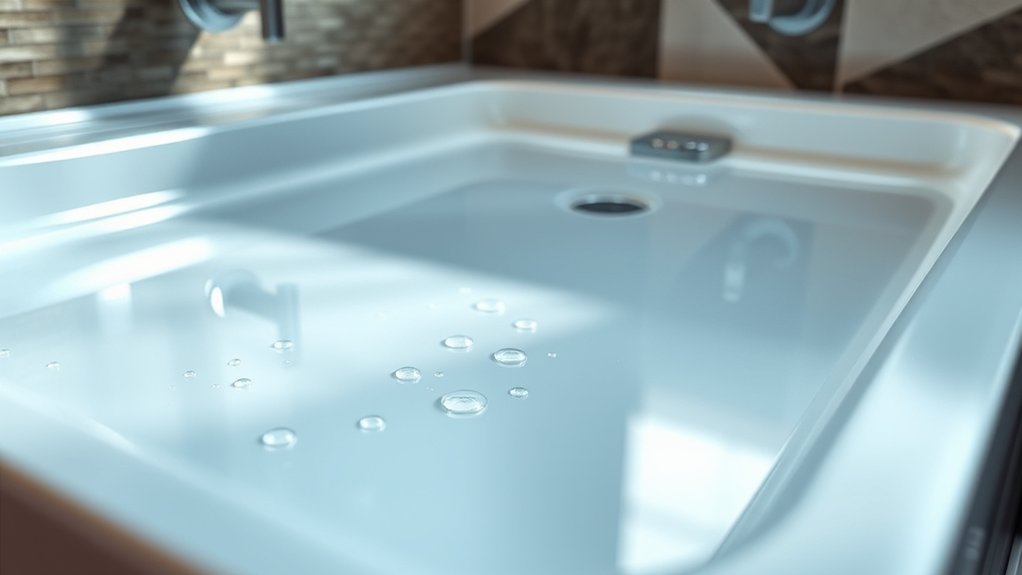
What makes acrylic shower bases stand out in terms of durability? Several durability factors come into play, including the material’s inherent resistance to chipping, cracking, and staining. Acrylic is non-porous, which means it resists mold and mildew better than other materials, keeping your shower base looking new longer.
Its flexibility also helps it absorb impacts without damage. To maintain this durability, you should follow simple maintenance tips: clean regularly with mild, non-abrasive cleaners and avoid harsh chemicals that can dull the surface. Wiping down after use prevents soap scum buildup, preserving the finish.
How Do Acrylic Shower Bases Handle Cracks and Impact?
How well do acrylic shower bases stand up to cracks and impact? They offer impressive crack resistance and impact tolerance, making them a reliable choice for your bathroom. Acrylic’s flexibility helps absorb shocks, preventing cracks even under frequent use or minor accidents.
Here’s what you can expect from acrylic shower bases regarding durability:
Expect durable acrylic shower bases with excellent crack resistance and high impact tolerance.
- Excellent crack resistance reduces the chance of damage
- High impact tolerance absorbs falls and bumps effectively
- Durable surface maintains integrity over time
- Repairs for minor cracks are straightforward and cost-effective
Do Acrylic Shower Bases Resist Stains and Discoloration?

When it comes to maintaining a clean and fresh shower, acrylic bases stand out for their resistance to stains and discoloration. Thanks to their non-porous surface, they naturally offer excellent stain resistance, preventing most common bathroom products like soap, shampoo, and hard water minerals from penetrating or leaving marks.
This means you won’t have to worry about stubborn stains setting in over time. Additionally, the discoloration risk with acrylic shower bases is quite low, especially if you avoid harsh chemicals and clean regularly with mild, non-abrasive cleaners.
However, prolonged exposure to UV light can yellow the surface slightly, so it’s best to keep direct sunlight minimal. Overall, acrylic bases make it easier for you to maintain a bright, clean shower without constant scrubbing or special treatments.
How Does Acrylic Durability Compare to Other Shower Base Materials?
Compared to other shower base materials, acrylic offers a balanced combination of durability and ease of maintenance that suits most homeowners. When you compare durability, acrylic stands out for resisting cracks better than ceramic or fiberglass, yet it’s less prone to chipping than cast iron. Its smooth surface simplifies your maintenance routines, making cleaning easier without harsh chemicals.
Here’s a quick durability comparison:
- Acrylic resists impact well but can scratch more easily than stone.
- Fiberglass is lightweight but less durable over time.
- Porcelain can chip and stain, requiring more upkeep.
- Stone bases are highly durable but demand intensive maintenance.
Choosing acrylic means you get solid durability paired with straightforward upkeep, ideal if you want a practical, long-lasting shower base.
How Can You Extend the Life of Your Acrylic Shower Base?
To keep your acrylic shower base looking and functioning well for years, you’ll need to adopt a few simple care habits. Start with regular sticky shower maintenance by cleaning soap scum and residue promptly to prevent buildup that can damage the surface.
Use non-abrasive cleaners and soft sponges to avoid scratches, which contribute to early crack prevention. Avoid dropping heavy objects on the base and promptly fix any chips or cracks to stop them from worsening.
Ensure proper drainage to prevent standing water, which weakens the acrylic over time. Additionally, avoid using harsh chemicals or bleach that can degrade the material.
Frequently Asked Questions
What Is the Average Cost of an Acrylic Shower Base?
You’ll find acrylic shower bases cost ranges between $150 and $500, depending on size and style.
Keep installation considerations in mind, as professional help can add $200 to $500, affecting your total budget.
Are Acrylic Shower Bases Easy to Install?
You’ll find acrylic shower bases easy to install compared to other materials, with fewer installation challenges. Their durability comparisons favor them, making them a practical choice if you want a straightforward, long-lasting shower base setup.
Can Acrylic Shower Bases Be Customized in Size and Shape?
Like a tailor crafting a perfect suit, you can get acrylic shower bases in custom sizing and varied shapes. This flexibility lets you fit your unique bathroom space seamlessly, ensuring both style and practicality.
Do Acrylic Shower Bases Require Special Cleaning Products?
You don’t need special acrylic care products for cleaning. Mild soap and water work well, but avoid abrasive cleaners.
For easy cleaning alternatives, try vinegar and water or baking soda paste to keep your acrylic shower base spotless.
Are Acrylic Shower Bases Environmentally Friendly?
Acrylic shower bases show some sustainability struggles since their environmental impact isn’t minimal. While you can’t easily recycle them, choosing bases with recycled content can reduce waste and support better recycling options overall.