How to Clean Ceramic Bathtub
It’s no coincidence that your ceramic bathtub’s appearance can change drastically with the right cleaning approach. Knowing how to clean a ceramic bathtub properly will help you maintain its shine and prevent damage.
You’ll want to start by selecting gentle, effective supplies and preparing the surface properly to avoid damage. Knowing how to tackle soap scum, mineral deposits, and stubborn stains will make a big difference.
Before you begin, consider a few essential steps that can help maintain your tub’s finish longer and keep it looking its best.
Key Takeaways
- Rinse the ceramic tub with warm water to remove loose dirt before applying any cleaner.
- Use a gentle, non-abrasive cleaner and scrub with a soft sponge or cloth in circular motions.
- Spray a vinegar and warm water solution on soap scum or mineral buildup, let sit 10–15 minutes, then scrub gently.
- Rinse thoroughly after cleaning and dry with a microfiber cloth to prevent water spots and mineral deposits.
- Apply a ceramic-safe sealant every few months to protect the surface and resist stains and grime buildup.
Quick Steps To Clean Your Ceramic Bathtub
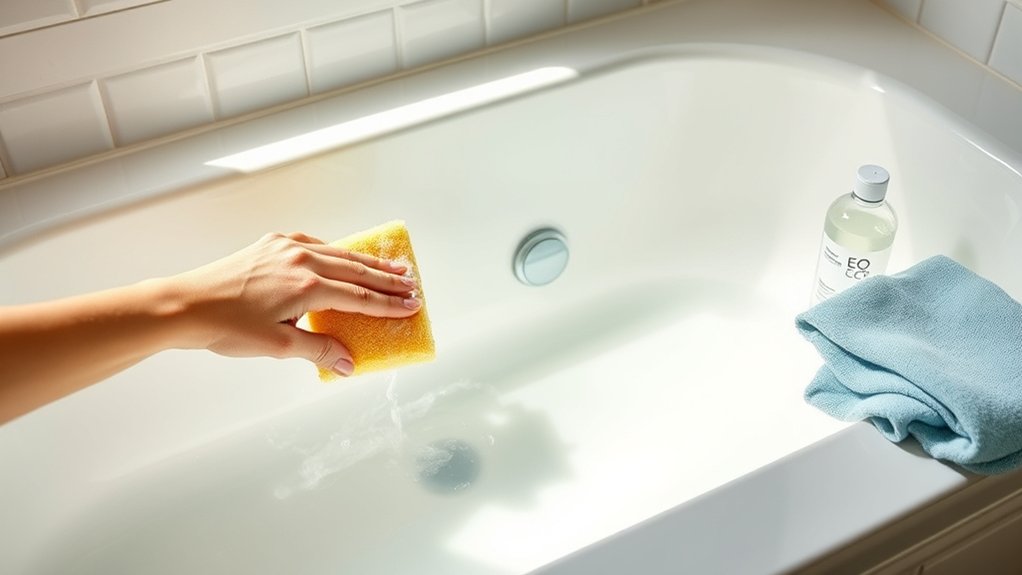
How do you quickly restore the shine of your ceramic bathtub? Start by following a cleaning checklist to ensure no step is missed. First, rinse the tub with warm water to remove loose dirt.
Next, apply a gentle, non-abrasive cleaner evenly across the surface. Use a soft sponge or cloth to scrub in circular motions, focusing on stains and soap scum.
Rinse thoroughly with warm water to remove all residue. Dry the tub with a microfiber cloth to prevent water spots and restore shine.
For quick tips, remember to ventilate the bathroom during cleaning and avoid harsh scrubbers that can damage the glaze. Following these quick steps regularly keeps your ceramic bathtub looking pristine and extends its life.
Choose The Right Cleaning Supplies For Ceramic Bathtubs
Why does choosing the right cleaning supplies matter for your ceramic bathtub? Using suitable products preserves your tub’s finish and maintains bathroom aesthetics. Avoid abrasive cleaners that can scratch the surface; instead, opt for mild, non-abrasive detergents or specially formulated ceramic cleaners.
A soft sponge or microfiber cloth works best, preventing damage while effectively removing grime. Include a gentle brush for grout lines if needed. To keep your supplies organized and accessible, invest in smart storage solutions like wall-mounted holders or compact caddies that blend with your bathroom’s style.
This prevents clutter and ensures you use the right products every time. Selecting proper cleaning supplies not only extends your bathtub’s lifespan but also reinforces your bathroom’s clean, polished look.
Prepare Your Ceramic Bathtub For Cleaning
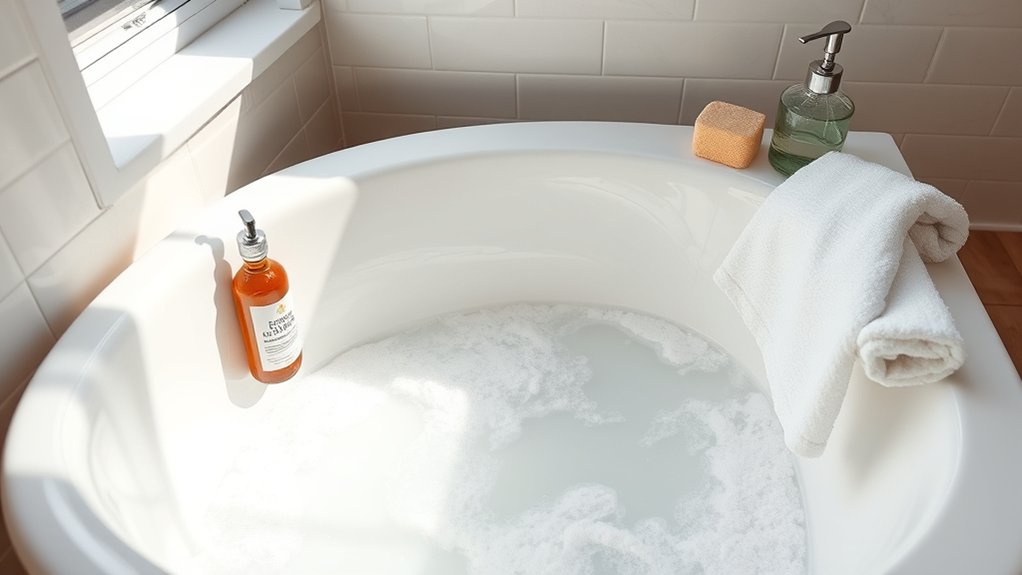
When should you start preparing your ceramic bathtub for cleaning? Begin by reviewing your pre cleaning checklist to ensure you have everything ready. Proper preparation will make the cleaning process efficient and effective.
First, clear the tub of all personal items, including soap dishes and bath toys. Next, check the tub area ventilation by opening windows or turning on exhaust fans to reduce humidity and fumes. Finally, rinse the tub with warm water to loosen surface debris.
Your pre cleaning checklist should include:
- Removing all objects from the tub and surrounding area
- Ensuring tub area ventilation is active
- Running warm water to wet the surface
Following these steps sets the stage for thorough cleaning without damage or unnecessary effort.
Clean Soap Scum, Grime, And Hard Water Stains
Where do you start when tackling soap scum, grime, and hard water stains on your ceramic bathtub? Begin by mixing equal parts white vinegar and warm water in a spray bottle. Spray the solution generously over affected areas, focusing on soap scum and hard water deposits.
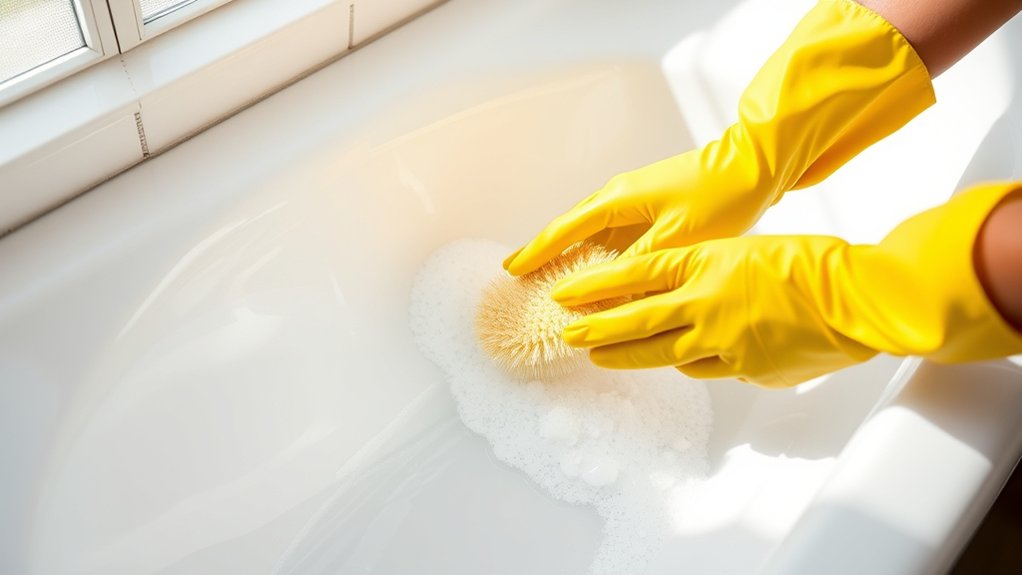
Let it sit for 10-15 minutes to break down buildup. Next, scrub gently with a non-abrasive sponge or soft brush to avoid scratching the ceramic surface. For stubborn grime, sprinkle baking soda over the stains before spraying the vinegar solution again; the fizzing action helps lift residues.
Rinse thoroughly with warm water to remove all cleaning agents and loosened deposits. Finally, dry the tub with a microfiber cloth to prevent new hard water spots from forming. Repeat as needed for heavily stained areas.
Natural Alternatives For Cleaning Ceramic Bathtubs
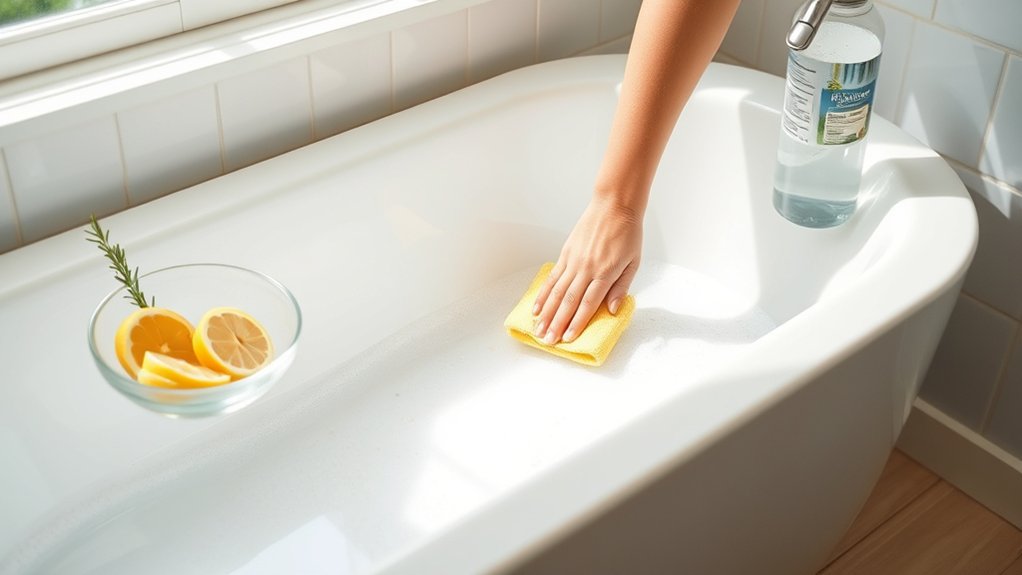
How can you maintain a sparkling ceramic bathtub without harsh chemicals? Using natural alternatives with eco friendly ingredients ensures effective cleaning while protecting your tub’s surface and the environment. Start by mixing equal parts white vinegar and water in a spray bottle. Spray generously, let it sit for 10 minutes, then rinse.
For tougher grime, sprinkle baking soda over the tub, spray with vinegar, and scrub gently with a soft sponge. Lemon juice also works well to break down soap scum and adds a fresh scent.
- White vinegar: disinfects and dissolves mineral deposits
- Baking soda: mild abrasive to lift dirt without scratching
- Lemon juice: natural degreaser and deodorizer
These natural alternatives keep your ceramic bathtub clean and safe.
Safely Remove Tough Stains And Repair Scratches
Wondering how to tackle stubborn stains and unsightly scratches on your ceramic bathtub without causing damage? For tough stains, create a paste using baking soda and water, then gently scrub with a soft sponge in circular motions. Rinse thoroughly with warm water.
If stains persist, apply a diluted vinegar solution, but avoid prolonged contact to protect the glaze. For scratch repair, start by cleaning the area and drying it completely.
Use a porcelain repair kit or a fine automotive touch-up pen matching your tub’s color. Apply the product carefully to the scratch, following the manufacturer’s instructions. Allow it to dry fully before using the tub again.
These precise steps help you safely remove tough stains and perform scratch repair, maintaining your bathtub’s smooth, clean surface.
Prevent Soap Scum And Mineral Build-Up On Ceramic Bathtubs
Why does soap scum and mineral build-up keep accumulating on your ceramic bathtub despite regular cleaning? It’s often due to residual soap, hard water minerals, and improper cleaning agents. To prevent this, you need to act proactively and carefully. Here’s how:
Rinse your bathtub thoroughly after each use to wash away soap residues and minerals. Use mild, non-abrasive cleaners and avoid bleach or ammonia, as these can damage the ceramic surface and worsen build-up. Wipe down the tub with a soft cloth or squeegee to remove water droplets that facilitate mineral deposits.
Maintain The Shine Of Your Ceramic Bathtub
To maintain the shine of your ceramic bathtub, stick to a regular cleaning routine using gentle, non-abrasive cleaners. Avoid harsh chemicals that can dull the surface and focus on wiping down the tub after each use to prevent stain buildup.
Consistency in these steps will keep your bathtub looking bright and polished.
Regular Cleaning Routine
A consistent cleaning routine is essential for maintaining the shine of your ceramic bathtub. Establishing a maintenance routine helps prevent grime buildup and preserves the tub’s smooth surface.
To keep your bathtub spotless, focus on these two word discussion ideas: frequency and method.
- Daily wipe down: Use a soft cloth to remove soap scum and water spots after each use.
- Weekly scrub: Gently clean with a non-abrasive sponge and lukewarm water to eliminate dirt.
- Monthly inspection: Check for stains or damage and address them promptly to avoid long-term issues.
Use Gentle Cleaners
Maintaining your ceramic bathtub’s shine depends heavily on the cleaners you choose. Opt for gentle cleansers specifically designed for ceramic surfaces to avoid dulling the finish. Avoid harsh chemicals and abrasive powders that can scratch or damage the glaze.
Apply the cleanser with non abrasive tools such as soft sponges or microfiber cloths to protect the surface. Gently scrub in circular motions, focusing on spots and grime without applying excessive pressure. Rinse thoroughly with warm water to remove all residue, preventing streaks or buildup.
Using gentle cleansers regularly preserves the bathtub’s smooth, glossy appearance and extends its lifespan. Always check product labels for compatibility with ceramic, and test new cleaners on a small, inconspicuous area first to ensure no adverse effects.
Prevent Stain Buildup
How often do you clean your ceramic bathtub to prevent stains from setting in? Consistent stain prevention is key to maintaining the shine of your ceramic surface. To assure effective surface protection, follow these steps regularly:
- Rinse the tub thoroughly after each use to remove soap residue and minerals that cause staining.
- Wipe down the surface with a microfiber cloth to prevent water spots and buildup.
- Apply a ceramic-safe sealant every few months to create a protective barrier against stains and grime.
Frequently Asked Questions
Can Ceramic Bathtubs Crack in Cold Weather?
Yes, your ceramic bathtub can crack in cold weather due to temperature shock. To reduce crack risk, avoid sudden temperature changes, like pouring hot water into a cold tub.
Maintain consistent indoor temperatures during winter.
Are Ceramic Bathtubs Environmentally Friendly?
Think of ceramic bathtubs as nature’s quiet allies; you’ll appreciate their low environmental impact and use of sustainable materials. They demand less energy to produce and last long, making your choice both eco-friendly and practical.
How Long Does a Ceramic Bathtub Typically Last?
A ceramic bathtub typically lasts 20 to 30 years with proper maintenance. You’ll boost its longevity by regularly cleaning and avoiding harsh chemicals.
Consistent care guarantees durability and keeps your tub looking pristine for decades.
Can I Use Bleach on a Ceramic Bathtub?
You can use bleach on a ceramic bathtub but with caution. Ensure proper ventilation and dilute it before use. For bleach safety, consider gentler cleaning alternatives like baking soda and vinegar. These options help avoid damaging the surface or causing discoloration.
What Causes Discoloration in Ceramic Bathtubs Over Time?
Discoloration causes in ceramic bathtubs include hard water stains, soap scum buildup, and mineral deposits. You’ll want to use targeted cleaning remedies like vinegar or baking soda to remove stains and restore your tub’s brightness effectively.
Conclusion
Think of cleaning your ceramic bathtub like polishing a treasured gem—consistent care reveals its true shine. Just as a jeweler gently removes grime without scratching, you’ll protect your tub by using the right supplies and techniques.
Remember, skipping routine maintenance lets soap scum and mineral buildup dull the surface. But with simple, regular cleaning, your bathtub will stay sparkling and inviting.
By following these easy steps, your ceramic bathtub will remain a soothing retreat for years to come. Regular cleaning is key to maintaining a beautiful ceramic bathtub.