Are Shower Mats Sanitary
Think of your shower mat as a hidden ecosystem, quietly harboring moisture, soap scum, and skin cells. Shower mats, while essential for safety against slips, can also become breeding grounds for mold and bacteria if not properly maintained.
You might be surprised how quickly these unseen microbes multiply and affect your bathroom’s hygiene. Understanding the factors that influence cleanliness will help you decide when and how to care for or replace your shower mat.
Key Takeaways
- Shower mats often remain damp, promoting microbial growth like bacteria and mold, which compromises their sanitation.
- Porous or rubbery mats trap moisture and soap residue, creating ideal conditions for germs and unpleasant odors.
- Visible mold, persistent odors, or prolonged dampness indicate unsanitary mats needing prompt cleaning or replacement.
- Regular cleaning with antimicrobial detergents and proper drying significantly reduces microbial buildup and health risks.
- Choosing antimicrobial, quick-drying materials with simple designs improves mat hygiene and prevents microbial contamination.
Why Shower Mats Harbor Germs and Mold
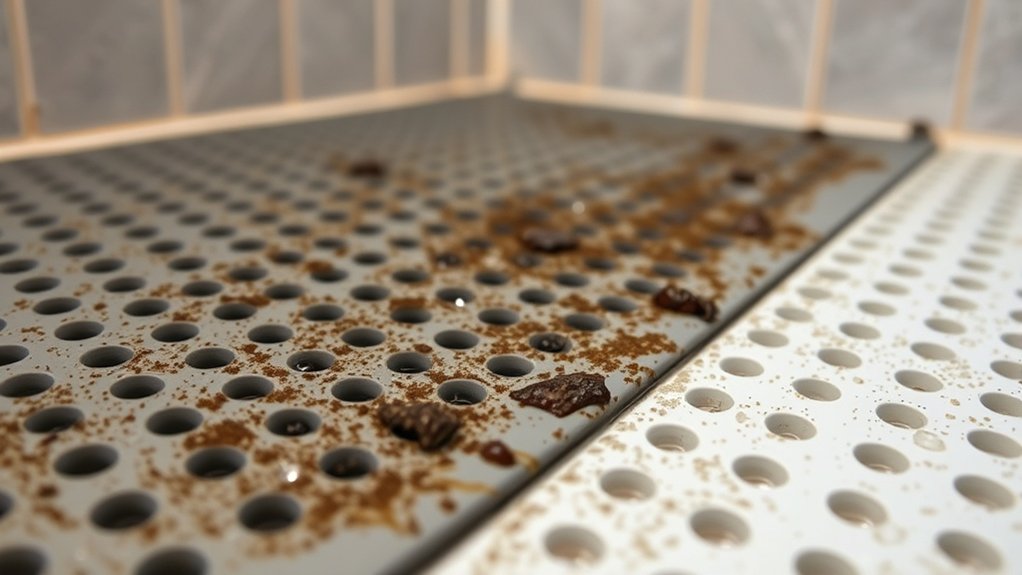
Why do shower mats frequently become breeding grounds for germs and mold? Shower mats remain damp for extended periods, creating an ideal environment for microbial growth. You’ll notice mold indicators such as dark spots or a musty odor developing on their surfaces.
Since mats are often made from porous or rubbery materials, they trap moisture and soap residues, further promoting bacterial proliferation. If you don’t maintain an appropriate cleaning frequency, these microorganisms can multiply rapidly.
You should clean your shower mat at least once a week using antimicrobial detergents or disinfectants to minimize mold and bacterial presence. Regular drying and ventilation also help inhibit germ growth.
How a Dirty Shower Mat Affects Your Bathroom’s Health
When shower mats remain unclean, they don’t just harbor germs and mold. They actively compromise your bathroom’s overall hygiene. A dirty mat serves as a persistent reservoir for bacteria and fungal spores, which can spread to other surfaces, increasing the risk of infections.
This microbial buildup also undermines mold prevention efforts, as moisture trapped in the mat’s crevices creates an ideal environment for mold growth. Over time, accumulated grime deteriorates the material durability of your shower mat, causing it to break down and retain even more contaminants.
How Often Should You Clean Your Shower Mat?

How frequently you clean your shower mat directly impacts the prevention of bacterial and mold buildup. To maintain both hygiene and bathroom aesthetics, you should adhere to a cleaning schedule based on usage and conditions influenced by mat placement. Consider these guidelines:
Cleaning frequency of your shower mat is key to preventing bacteria and mold while preserving hygiene and bathroom appearance.
- Clean your mat at least once a week if it’s frequently exposed to moisture and placed directly inside the shower.
- For mats outside the shower or in low-moisture areas, biweekly cleaning is sufficient to prevent microbial accumulation.
- If you notice visible dirt, odor, or discoloration, increase cleaning frequency regardless of the schedule.
Regular cleaning counteracts biofilm formation and prevents unpleasant odors, maintaining a sanitary environment. Neglecting this can compromise both your bathroom’s health and its visual appeal.
Best Ways to Clean Your Shower Mat for Maximum Hygiene
Maintaining your shower mat’s hygiene requires targeted cleaning methods that effectively eliminate bacteria, mold, and soap scum. Start by selecting the appropriate cleaning agent: for rubber mats, mild detergent with warm water suffices, while fabric mats often demand machine washing with bleach for thorough disinfection.
Consider material comparisons carefully. Plastic mats resist mold but can retain soap scum, requiring more frequent scrubbing. Incorporate hygiene budgeting by setting a cleaning schedule aligned with your mat’s material to optimize effort and resources.
Avoid harsh chemicals on delicate materials to prevent degradation. Regularly soaking your mat in a vinegar solution can also inhibit microbial growth. By combining these evidence-based practices, you ensure your shower mat remains sanitary, extending its lifespan and maintaining a healthier bathroom environment.
How to Properly Dry Shower Mats to Stop Mold Growth
You need to dry your shower mat thoroughly to prevent mold growth, focusing on effective air drying techniques like hanging it in a well-ventilated area. Proper ventilation reduces moisture accumulation, creating an environment unfavorable for mold spores.
Effective Air Drying Techniques
Where should you place your shower mat to guarantee thorough drying and prevent mold growth? Proper placement ensures optimal airflow maintenance and moisture control, critical factors to inhibit mold development. Follow these effective air drying techniques:
- Hang your mat vertically on a drying rack or hook in a well-ventilated area. This maximizes surface exposure to air, accelerating evaporation.
- Avoid folding or piling mats, as trapped moisture fosters microbial growth. Spread the mat flat or drape it to expose all areas.
- Position the mat away from humid environments or damp surfaces. Select locations near windows or fans, excluding direct sunlight, which can degrade materials.
Preventing Mold With Ventilation
How does proper ventilation prevent mold growth on your shower mat? Ventilation reduces humidity and promotes moisture control, which inhibits mold spores from thriving.
Contrary to common ventilation myths, simply opening a window isn’t always sufficient; you need consistent airflow to effectively dry your mat. Use exhaust fans or dehumidifiers to maintain low moisture levels in your bathroom environment.
After showering, hang your mat in a well-ventilated area where air circulates freely, accelerating evaporation. Avoid folding or placing the mat on damp surfaces, as trapped moisture encourages mold development.
Common Mistakes That Make Shower Mats Less Sanitary
Frequently, people overlook simple habits that compromise the cleanliness of shower mats. To maintain hygiene and support effective mold prevention, avoid these common mistakes:
- Neglecting Regular Cleaning: Failing to perform consistent DIY bathroom cleaning allows soap scum and bacteria to accumulate, creating an ideal environment for mold growth.
- Leaving Mats Wet: Not drying your shower mat after use retains moisture, which encourages microbial proliferation and undermines mold prevention efforts.
- Improper Storage: Folding or stacking mats in damp spaces limits airflow, promoting mold and bacteria development on the mat’s surface.
Which Shower Mat Materials Resist Mold and Bacteria Best?
Which shower mat materials offer the best resistance to mold and bacteria? Choosing mats made from materials with inherent mold resistance markedly reduces bacterial growth.
Synthetic materials like PVC and EVA foam perform better than natural fibers due to their non-porous surfaces, which inhibit moisture retention. Rubber mats also resist mold but require frequent drying to minimize bacterial colonies.
| Material | Mold Resistance | Bacterial Growth | Durability | Maintenance |
|---|---|---|---|---|
| PVC | High | Low | High | Easy to clean |
| EVA Foam | High | Low | Medium | Rinse and air dry |
| Natural Fiber | Low | High | Low | Frequent washing |
| Rubber | Medium | Medium | High | Dry after use |
| Microfiber | Low | High | Low | Wash regularly |
Selecting mats with superior mold resistance curtails bacterial growth effectively.
Are Antimicrobial Shower Mats Worth It for Germ Prevention?
While choosing shower mats made from materials that resist mold and bacteria substantially limits microbial growth, you might wonder if antimicrobial shower mats provide an added layer of protection against germs. Antimicrobial mats are treated with agents designed to inhibit microbial growth on the surface, but their effectiveness depends on several factors:
- The type and durability of the antimicrobial treatment embedded into the mat materials.
- The frequency of cleaning, as buildup can reduce antimicrobial efficacy.
- The specific microbial strains targeted and their resistance patterns.
For germ prevention, antimicrobial mats can offer a modest benefit, but they don’t replace regular cleaning or selecting mat materials inherently resistant to microbes. You should view them as a supplementary measure rather than a standalone solution for maintaining shower mat hygiene.
Signs Your Shower Mat Needs Replacing to Stay Safe
You should replace your shower mat if you notice visible mold and mildew, as these indicate fungal growth that can pose health risks. Persistent unpleasant odors also signal bacterial accumulation that standard cleaning cannot eliminate.
Addressing these signs promptly helps maintain a safe and hygienic shower environment.
Visible Mold And Mildew
How can you tell when your shower mat has become a health hazard? Visible mold and mildew are clear indicators that it’s time to replace your mat. These fungi thrive in moist environments, especially with frequent shower use and improper mat placement that prevents thorough drying.
Here are three signs to watch for:
- Discoloration: Black, green, or white spots appear on the mat’s surface, signaling mold or mildew growth.
- Texture Changes: A slimy or fuzzy texture develops, which can harbor harmful bacteria.
- Persistent Dampness: The mat remains wet long after showering, promoting fungal proliferation.
Given your shower frequency and mat placement, replace the mat promptly to maintain hygiene and prevent potential skin infections.
Persistent Unpleasant Odors
Why does your shower mat emit persistent unpleasant odors despite regular cleaning? This usually occurs because porous materials and textured surfaces trap moisture and organic debris, creating ideal conditions for bacterial and fungal growth.
Over time, these microorganisms produce volatile compounds responsible for foul smells. Even with thorough washing, the mat’s fresh coating wears off, reducing its ability to resist odor trapping.
When the protective layer degrades, bacteria infiltrate microscopic crevices, making odors difficult to eliminate. Regular cleaning can’t fully restore mats compromised like this.
To maintain hygiene, replace your shower mat once persistent odors return despite proper care. Doing so ensures you avoid potential health risks linked to microbial buildup, keeping your shower environment safer and more sanitary.
Tips for Choosing a Shower Mat That Stays Cleaner Longer
Where does grime tend to accumulate most on a shower mat? It often builds up in the crevices and suction cups where moisture lingers, creating ideal conditions for bacteria and mold growth. To maintain better shower hygiene and extend cleanliness, consider these tips:
- Material selection: Choose mats made from antimicrobial or quick-drying materials such as rubber with antimicrobial agents or bamboo.
- Design simplicity: Opt for mats with fewer grooves and suction cups, reducing areas where grime can embed.
- Ease of cleaning: Select mats that are machine washable or can be easily rinsed and dried thoroughly.
These two word discussion ideas, material choice and design, are essential for preventing microbial buildup and promoting a healthier shower environment.
Frequently Asked Questions
Can Shower Mats Cause Allergic Reactions?
Yes, shower mats can cause a dmat allergy if mold growth occurs on them. You should regularly clean and dry your mat to prevent allergens and reduce your risk of allergic reactions caused by mold and irritants.
Are Natural Rubber Mats Safer Than Plastic Ones?
Like choosing organic food, natural rubber mats often provide safer materials than plastic ones due to lower chemical additives and better biodegradability.
You’ll reduce exposure to toxins, making natural rubber a scientifically preferable shower mat option.
How Do Shower Mats Impact Water Drainage?
Shower mats can impact water drainage by partially obstructing flow, but well-designed mats with drainage holes maintain efficient water drainage.
They enhance slip resistance by providing a stable surface, reducing your risk of slipping in wet conditions.
Can Children Use Shower Mats Safely?
Think of a shower mat as a safety net; with proper mat placement and supervision, it enhances child safety by preventing slips.
Ensure it’s non-slip and clean to maintain a secure, hygienic bathing environment for children.
Do Shower Mats Affect Slip Resistance in Tubs?
Yes, shower mats can reduce slip risk in tubs, but their effectiveness depends on material choice. Non-slip, textured materials enhance grip, while smooth or worn mats may increase slip risk.
Select mats designed for safety.