Are Microfiber Shower Curtains Waterproof
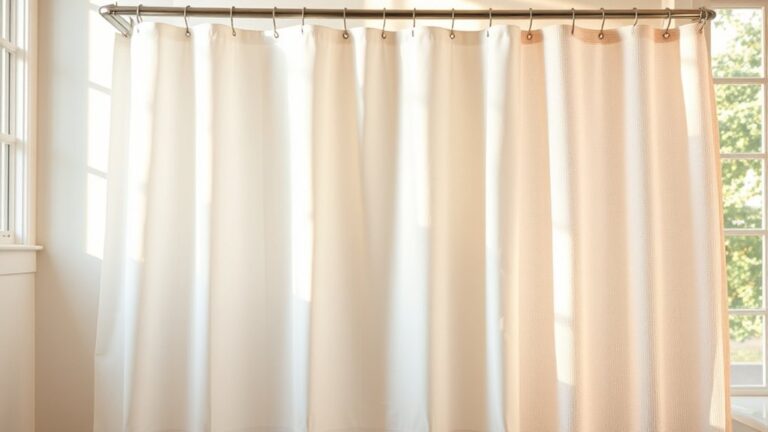
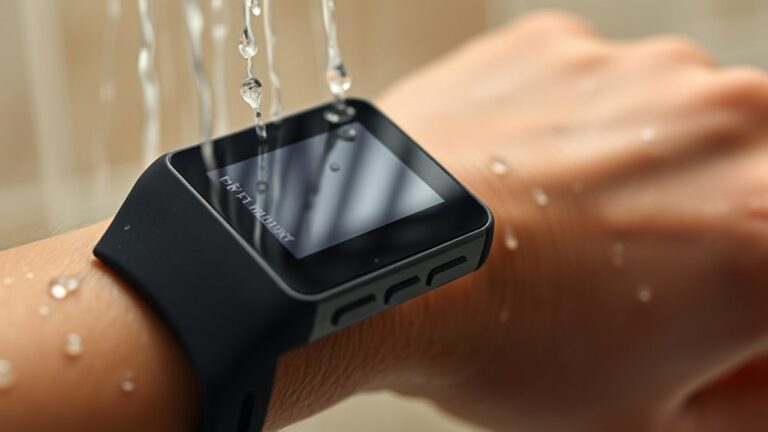
You might assume microfiber shower curtains are fully waterproof, but that’s not entirely the case. While their dense weave helps repel water and speeds up drying, they can still absorb moisture over time, especially with constant exposure.
Understanding how microfiber shower curtains handle water and whether you need extra protection is key before making a choice for your bathroom. Let’s explore what sets microfiber apart and what you should consider for lasting performance.
Key Takeaways
- Microfiber shower curtains are water resistant but not fully waterproof, as they can absorb some moisture if exposed to prolonged droplets.
- Water droplets tend to bead and roll off microfiber fabric, reducing but not eliminating water penetration.
- Extended exposure to steam or direct water spray may saturate microfiber curtains without a waterproof liner.
- Using a waterproof liner with microfiber curtains provides a reliable barrier against water reaching walls or floors.
- Microfiber’s water resistance allows faster drying and mildew reduction but requires proper ventilation and maintenance for best performance.
Are Microfiber Shower Curtains Waterproof?
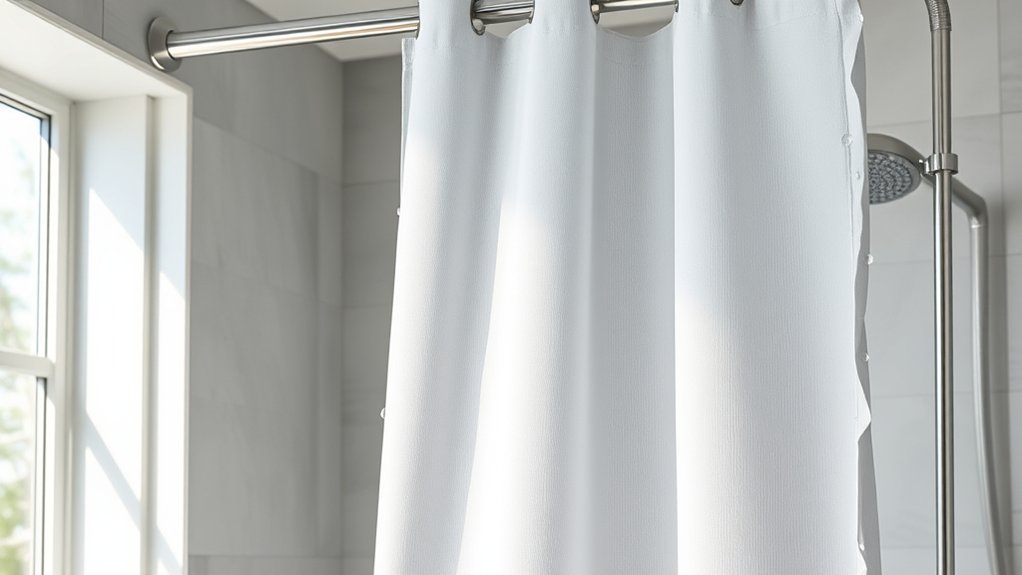
How waterproof are microfiber shower curtains, really? While you might expect them to repel all water, it’s not that simple. Microfiber fabrics are tightly woven, which helps resist water penetration better than traditional cloth curtains.
However, they aren’t inherently waterproof; they can absorb stray moisture if water droplets linger. This means you’ll still need to let the curtain dry properly to avoid mildew.
Discussing whether they’re waterproof or not isn’t an irrelevant topic; it’s essential to understand their limits. Unlike plastic curtains, microfiber offers some water resistance but doesn’t block water entirely.
Key Features That Set Microfiber Shower Curtains Apart
What makes microfiber shower curtains stand out from other options? First, their microfiber durability is impressive. You’ll find these curtains resist wear, tearing, and fading much better than traditional fabric or vinyl. This means they maintain their look and function longer, saving you replacement costs.
The fabric texture is another key feature; it’s soft yet tightly woven, offering a smooth, elegant appearance that’s gentle to the touch. Unlike some rougher materials, microfiber provides a refined finish that resists wrinkles and clings less, making it easier to clean and maintain.
When you choose a microfiber shower curtain, you get a blend of resilience and comfort that enhances both the style and practicality of your bathroom space.
How Do Microfiber Shower Curtains Handle Moisture and Drying?
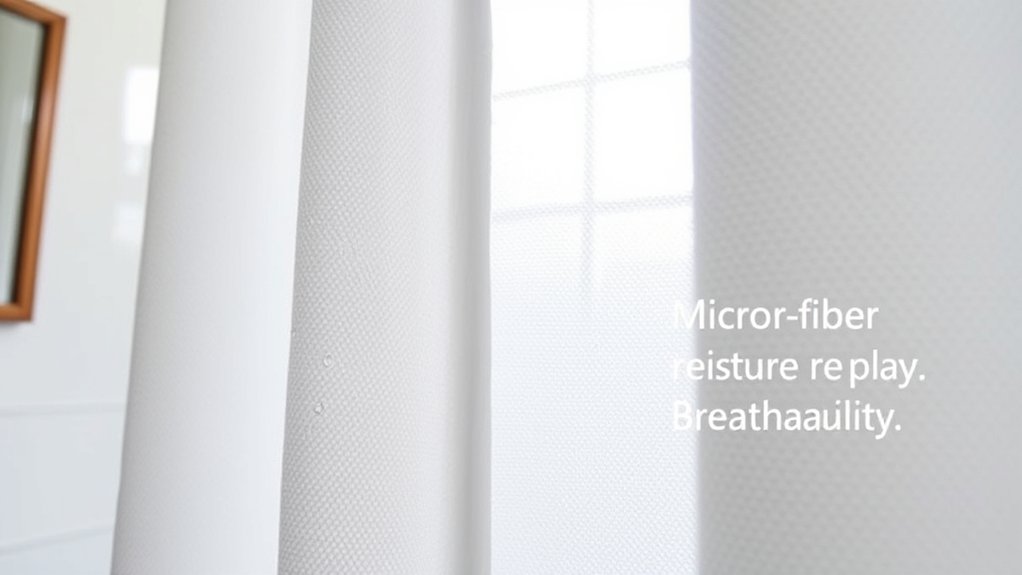
When you step out of the shower, moisture clinging to your curtain can feel like a nuisance, but microfiber shower curtains handle this challenge exceptionally well. Unlike waterproof materials that repel water entirely, microfiber absorbs moisture and dries quickly, preventing mold and mildew. You might encounter irrelevant topic discussions claiming microfiber acts like plastic liners; that’s an unrelated concept.
Here’s a quick look at microfiber’s moisture and drying traits:
| Feature | Microfiber Shower Curtain | Plastic Shower Curtain |
|---|---|---|
| Moisture Absorption | Moderate, wicks moisture | Low, water beads on surface |
| Drying Speed | Fast, breathable fabric | Slow, traps water |
| Mildew Resistance | High due to quick drying | Low, moisture stays longer |
| Maintenance | Easy, machine washable | Requires wiping or replacement |
This balance makes microfiber practical and efficient in everyday use.
Do You Need a Waterproof Liner With a Microfiber Shower Curtain?
While microfiber shower curtains offer some water resistance, they aren’t fully waterproof on their own. You’ll benefit from using a waterproof liner to keep water from escaping and protect your bathroom floor from damage.
Adding a liner helps maintain both the curtain’s durability and your bathroom’s cleanliness.
Microfiber Curtain Water Resistance
Although microfiber shower curtains repel water better than many fabric alternatives, they aren’t completely waterproof on their own. You’ll find that microfiber durability and colorfast performance make these curtains a smart choice for moisture resistance, but some water still seeps through.
To understand their water resistance, consider:
- Microfiber’s tight weave slows water penetration but doesn’t block it entirely.
- Water droplets tend to bead and roll off, reducing moisture absorption.
- Extended exposure to steam or direct spray may saturate the fabric.
- Without a waterproof liner, water can reach your shower walls or floor.
Benefits of Waterproof Liners
Why should you consider adding a waterproof liner to your microfiber shower curtain? Even though microfiber offers some water resistance, it’s not fully waterproof. A liner acts as a reliable barrier, preventing water from escaping the shower area and soaking your bathroom floor.
This added layer helps keep your curtain dry longer, reducing mildew and extending its lifespan. Some might make the irrelevant comparison to plastic curtains, but waterproof liners provide durability without sacrificing style or feel.
Skipping a liner might seem like an easy choice, but it’s an unused topic in many discussions about shower curtains, one that’s crucial for practical bathroom maintenance. In short, a waterproof liner complements microfiber curtains by enhancing protection and cleanliness.
Preventing Bathroom Water Damage
Adding a waterproof liner to your microfiber shower curtain directly impacts how well you prevent water damage in your bathroom. While microfiber durability offers some water resistance, it’s not fully waterproof. To protect your bathroom effectively, consider these points:
- Enhance water resistance: A liner blocks water that microfiber alone might let seep through.
- Protect walls and floor: Prevents moisture buildup that leads to mold and damage.
- Extend curtain life: Keeps your microfiber curtain dry, maintaining its durability.
- Simplify cleaning: Liners are easier to wash and replace, reducing mold risk.
In short, pairing your microfiber shower curtain with a waterproof liner is a practical step to safeguard your bathroom from water damage.
Microfiber vs. Vinyl and Polyester: Which Is Best for Your Bathroom?
How do microfiber, vinyl, and polyester shower curtains compare when it comes to functionality and maintenance? Microfiber curtains offer a soft, fabric-like feel and dry quickly, resisting mold and mildew, which makes upkeep straightforward.
Vinyl curtains are fully waterproof and budget-friendly but can develop cracks or discolor over time, requiring replacement. Polyester strikes a balance with water resistance and durability but may need a liner for full waterproofing.
When choosing, avoid letting neutral topics or unrelated concerns like color trends distract you; focus on how each material suits your bathroom’s moisture levels and cleaning routine. Understanding these practical differences helps you pick a curtain that lasts, functions well, and fits your lifestyle without unnecessary hassle or compromise.
Why Microfiber Shower Curtains Are a Smart Bathroom Choice
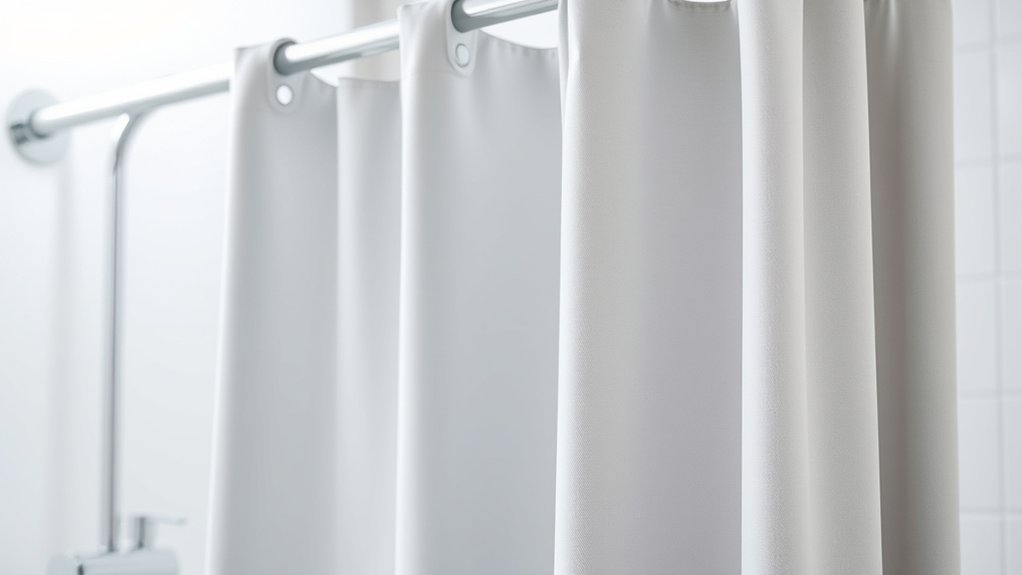
What makes microfiber shower curtains stand out in a crowded market? You’ll appreciate their blend of microfiber durability and enhanced bathroom aesthetics. Here’s why choosing microfiber is smart:
- Long-lasting strength: Microfiber weaves resist tears and wear, ensuring your curtain stays intact longer.
- Easy maintenance: They dry quickly and resist mold, cutting down cleaning time.
- Stylish options: Available in various colors and patterns, they elevate your bathroom’s look effortlessly.
- Soft texture: Unlike vinyl, microfiber feels more like fabric, adding comfort and luxury.
Water Resistance Problems With Microfiber Shower Curtains
Why do microfiber shower curtains sometimes struggle with water resistance despite their many benefits? The key lies in microfiber limitations related to water absorption. Microfiber is a synthetic material designed for softness and quick drying, but it isn’t fully waterproof.
Instead, it repels water to a degree but can absorb moisture over time, especially if exposed to continuous splashing. This absorption can cause the curtain to remain damp, increasing the risk of mold and mildew growth.
Additionally, water can seep through seams or thinner areas, reducing overall effectiveness. So, while microfiber shower curtains offer excellent breathability and comfort, you should be aware they don’t provide complete waterproof protection like vinyl or plastic alternatives.
Understanding these limitations helps set realistic expectations for your bathroom setup.
How to Care for and Maintain Microfiber Shower Curtains
When should you clean your microfiber shower curtain to keep it in top condition? Ideally, you should wash it every month or whenever you notice mildew or stains. Follow these care tips for stain prevention and maintenance:
- Remove the curtain and machine wash it on a gentle cycle with mild detergent. Avoid bleach to protect fibers.
- Air dry the curtain to prevent damage from heat and maintain fabric integrity.
- Wipe down the curtain regularly with a damp cloth to prevent soap scum buildup and stains.
- Use a fabric protectant spray designed for microfiber to enhance water resistance and reduce staining.
When Is a Microfiber Shower Curtain the Right Choice?
You’ll find microfiber shower curtains are a smart choice when you want a lightweight, quick-drying option that resists mold and mildew. They work best in bathrooms with good ventilation and moderate humidity to keep them fresh longer.
If you need a durable, easy-to-clean curtain that balances water resistance and breathability, microfiber fits the bill.
Benefits Of Microfiber Curtains
A microfiber shower curtain offers several advantages that make it a practical choice for many bathrooms. When considering two word discussion idea one and two word discussion idea two, these curtains stand out for their versatility and functionality. Here’s why you might choose microfiber:
- Water Resistance: While not fully waterproof, microfiber repels water better than many fabrics, keeping your bathroom floor dry.
- Quick Drying: The fine fibers dry rapidly, reducing mildew risk and maintaining freshness.
- Durability: Microfiber resists wear from frequent washing and daily use, lasting longer than traditional fabric curtains.
- Easy Maintenance: You can machine wash microfiber curtains, simplifying cleaning without losing effectiveness.
Ideal Bathroom Conditions
Considering the benefits microfiber shower curtains offer, they work best in bathrooms where humidity levels are moderate and regular maintenance is feasible. If your bathroom tends to stay damp without proper ventilation, microfiber might not be the right fit.
You’ll want to ensure you can wash or air the curtain frequently to prevent mildew buildup. Here are some two word discussion ideas to help you decide:
| Condition | Suitability |
|---|---|
| Moderate Humidity | Ideal |
| Poor Ventilation | Not Recommended |
| Regular Cleaning | Essential |
Avoid unrelated topics like fabric softness or color trends when choosing your curtain. Focus on moisture control and upkeep to maximize your curtain’s lifespan and functionality in your specific bathroom environment.
Where to Buy Quality Microfiber Shower Curtains
Where can you find high-quality microfiber shower curtains that combine durability with style? To avoid the irrelevant topic of lesser materials that allow stray moisture, focus on trusted sources. Here’s where you should look:
- Specialty Home Goods Stores They offer curated selections with detailed fabric info, ensuring you pick a reliable curtain.
- Online Marketplaces Sites like Amazon or Wayfair provide customer reviews that highlight waterproof effectiveness and durability.
- Brand Websites Buying directly from reputable microfiber manufacturers guarantees authenticity and quality.
- Department Stores They often stock premium bathroom accessories, giving you a chance to see and feel the fabric before buying.
Frequently Asked Questions
Are Microfiber Shower Curtains Eco-Friendly?
You’d think microfiber shower curtains are eco-friendly miracles, but they have eco-friendly drawbacks, like synthetic fiber sourcing that impacts the environment.
Still, they last long and resist mold, making them a practical, if imperfect, green choice.
Can Microfiber Curtains Reduce Bathroom Mold?
Yes, microfiber curtains help reduce bathroom mold by efficiently absorbing moisture. Their quick-drying microfiber moisture wicking supports mold prevention, keeping your bathroom environment drier and healthier when you maintain proper ventilation and regular cleaning.
How Long Do Microfiber Shower Curtains Typically Last?
Microfiber shower curtains typically last 2-3 years with proper maintenance. You’ll want to follow cleaning tips to preserve fade durability, consider size options and material differences, and maintain a routine to minimize eco impact and extend life.
Are Microfiber Shower Curtains Safe for Sensitive Skin?
Like walking on clouds, microfiber shower curtains use soft fabrics that’re gentle on skin sensitivity. You’ll find they typically won’t irritate or cause reactions, making them a practical choice if you’ve got delicate skin.
Do Microfiber Shower Curtains Come in Custom Sizes?
Yes, you can find microfiber shower curtains with custom sizing to fit your space perfectly. Their material durability ensures they maintain shape and resist wear, making custom-sized curtains a practical, long-lasting choice for your bathroom.