Can You Put Humidifier on Floor
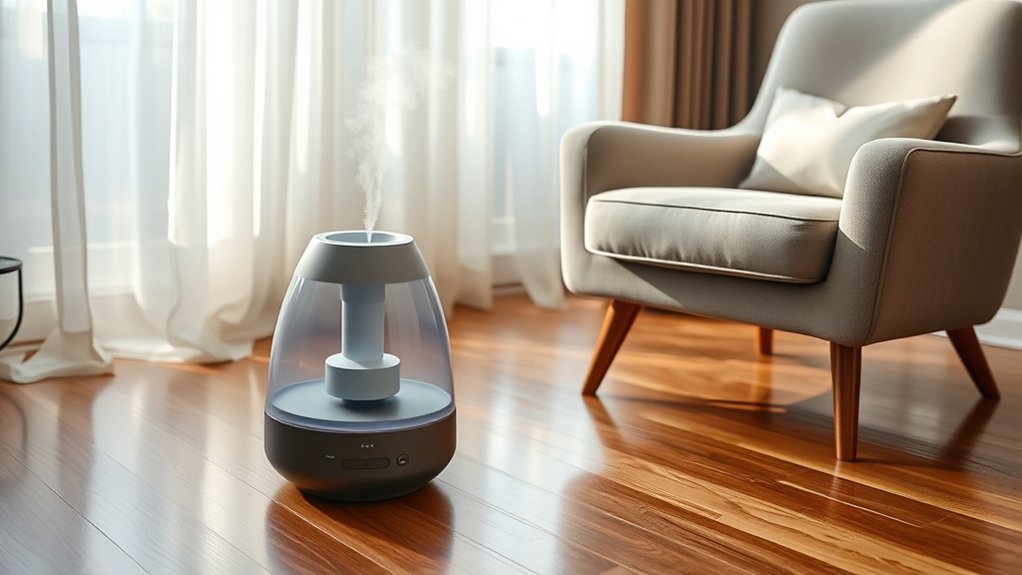
You might not realize that placing a humidifier directly on the floor can impact both its efficiency and your home’s safety. Can you put a humidifier on the floor? While it’s possible to put the device there, factors like the floor type, humidity distribution, and potential water damage come into play.
Understanding these elements will help you optimize performance and avoid common issues that many overlook when positioning their humidifier. Considering the right placement is key to ensuring your humidifier works effectively and safely in your home.
Is It Safe to Put a Humidifier on the Floor?
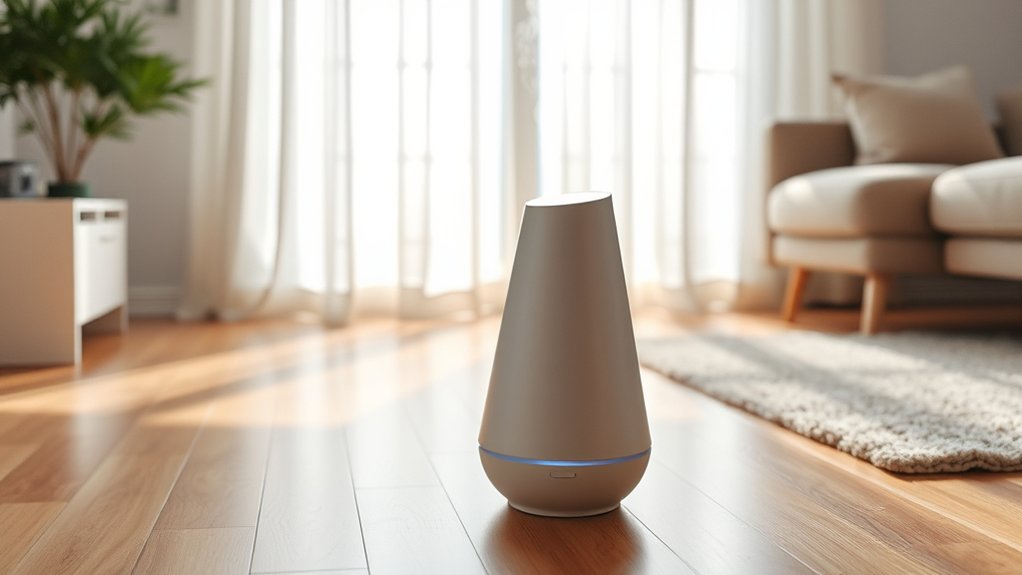
When considering where to place your humidifier, you might wonder if putting it on the floor is safe. Floor placement is generally acceptable, but you must consider factors influencing safety and device functionality.
Ensure the humidifier sits on a flat, waterproof surface to prevent water damage from spills or leaks. Pay attention to moisture sensors, as some modern humidifiers use these to regulate output based on ambient humidity.
Place your humidifier on a flat, waterproof surface and monitor moisture sensors for optimal performance.
Placing the unit too close to walls or furniture can interfere with sensor readings, potentially causing over-humidification and resulting in mold or mildew growth. Additionally, avoid high-traffic areas where the humidifier could be knocked over, posing electrical hazards.
If you have pets or children, floor placement increases the risk of accidental contact, so consider elevating the device to minimize this. In summary, with proper precautions around floor placement and awareness of moisture sensor function, putting your humidifier on the floor can be safe and effective.
How Putting a Humidifier on the Floor Affects Its Performance
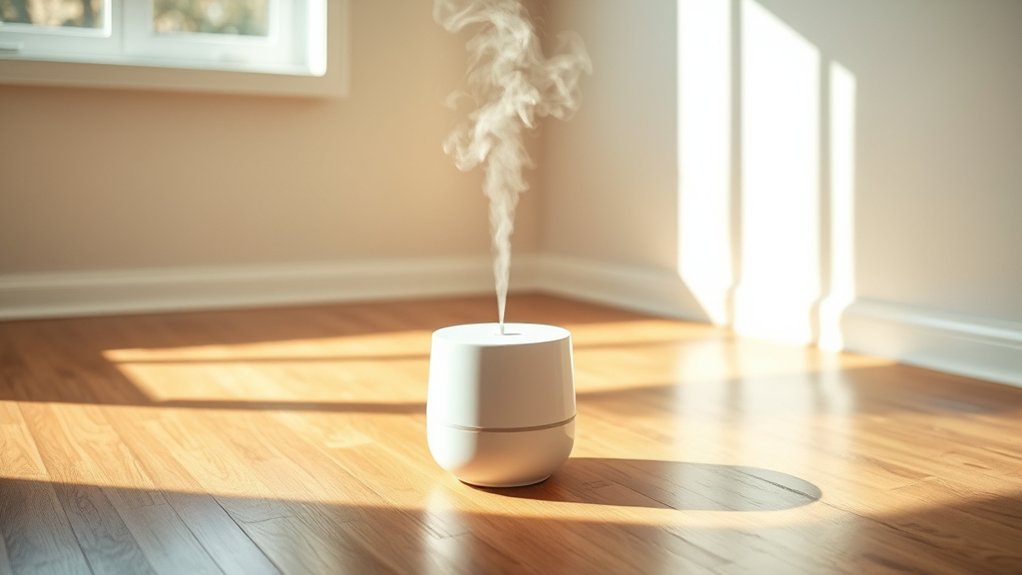
When you place a humidifier on the floor, it changes how humidity spreads throughout the room, often concentrating moisture closer to the ground. This position can limit airflow and circulation, reducing overall efficiency in distributing humidity evenly.
Additionally, placing it on the floor increases the risk of water damage to surrounding surfaces if leaks or spills occur.
Humidity Distribution Patterns
How does placing a humidifier on the floor influence the way moisture spreads throughout a room? When positioned at floor level, the humidifier releases moisture closer to the coldest air layer, which can cause condensation near the base of walls or furniture.
This positioning affects humidity distribution patterns by creating uneven moisture levels—higher near the floor, lower at head height. Understanding this is crucial for topic relevance, as improper placement can lead to localized dampness rather than uniform humidity.
You should avoid unrelated concerns like general room aesthetics here and focus strictly on moisture dispersal mechanics. In summary, floor placement impacts humidity gradients, potentially limiting overall effectiveness unless combined with strategies that promote even vapor diffusion throughout the space.
Airflow and Circulation
Why does the placement of a humidifier on the floor matter for airflow and circulation? When you position a humidifier low, it can limit the dispersion of moisture because airflow near the floor is often slower and more obstructed by furniture. This affects the device’s efficiency in evenly circulating humidity throughout the room.
From a risk assessment standpoint, poor airflow can cause localized dampness, potentially impacting comfort and air quality. Additionally, noise considerations come into play; floor placement might amplify operational sounds due to proximity to hard surfaces, which reflect sound waves.
To optimize performance, you should evaluate the room’s air circulation patterns and balance the humidifier’s location with noise tolerance and humidity distribution needs. Proper placement ensures effective moisture diffusion without increasing noise or creating stagnant air pockets.
Risk of Water Damage
Alongside airflow considerations, placing a humidifier on the floor introduces a heightened risk of water damage that can compromise its performance. Unlike inconsequential moisture that evaporates quickly, floor placement exposes the unit to spills, leaks, and condensation buildup that may cause corrosion or electrical faults.
Irrelevant placement on carpet or wood flooring increases these risks significantly. To minimize damage, you should:
- Use a waterproof mat to catch spills and condensation.
- Avoid placing the humidifier near walls or furniture prone to water absorption.
- Regularly inspect the unit and surrounding area for moisture accumulation.
- Elevate the humidifier on a stable, water-resistant surface to reduce direct contact with the floor.
Why Elevating Your Humidifier Helps Moisture Spread Better
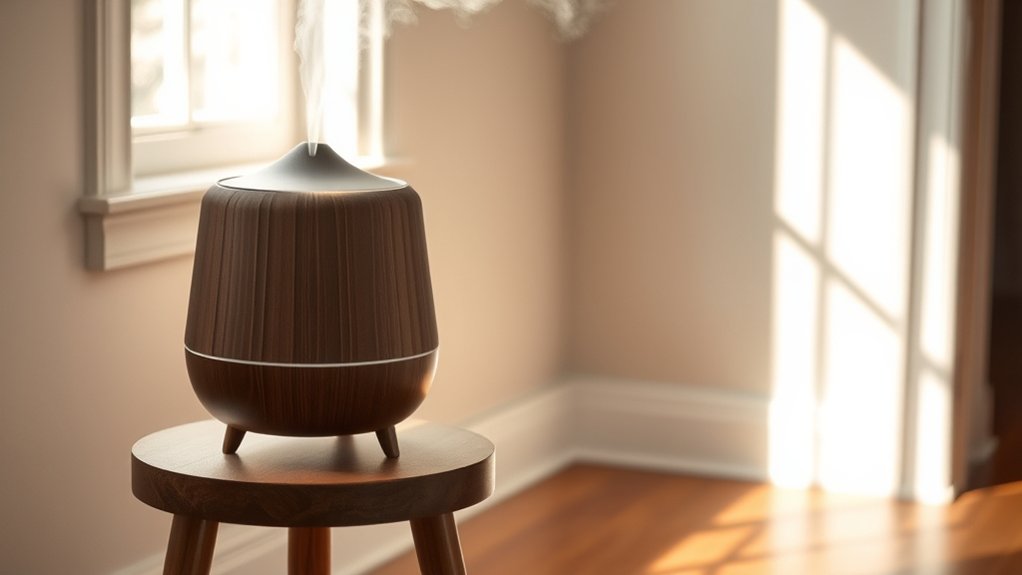
When you elevate your humidifier, it benefits from improved airflow circulation, allowing moisture to disperse more evenly throughout the room. This positioning enhances moisture distribution, preventing damp spots on the floor and ensuring optimal humidity levels.
Improved Airflow Circulation
How does elevating your humidifier enhance the distribution of moisture in a room? When you raise your humidifier off the floor, you improve airflow circulation, allowing moisture to disperse more effectively throughout the space. This method also reduces floor safety concerns by preventing water accumulation and potential electrical hazards.
Additionally, it minimizes mold risk associated with excess moisture pooling near ground level.
Here’s why elevating your humidifier helps airflow circulation:
- Promotes even air mixing at mid-levels, not just near the floor.
- Reduces moisture stagnation zones that encourage mold growth.
- Enhances fan or natural convection efficiency in spreading humidity.
- Prevents water damage and slipping hazards linked to floor placement.
Elevating your humidifier optimizes performance while safeguarding your environment.
Enhanced Moisture Distribution
Why does placing your humidifier off the floor notably improve moisture distribution? When you elevate your humidifier, you optimize its ability to disperse moisture evenly throughout the room.
Floor placement limits the range of moisture spread because humidified air tends to linger low, reducing overall efficiency.
| Factor | Impact on Moisture Distribution |
|---|---|
| Elevation | Enhances moisture reach and uniformity |
| Airflow Interaction | Better interaction with circulating air |
| Obstruction Avoidance | Prevents moisture blockage by furniture |
| Evaporation Rate | Increases due to better air circulation |
| Room Coverage | Expands due to elevated mist release |
Reduced Floor Dampness
Elevating your humidifier not only improves moisture distribution but also substantially reduces floor dampness. Proper humidifier placement minimizes direct contact with the floor, preventing excessive floor moisture accumulation that can lead to damage or mold growth.
When you position your humidifier above floor level, it allows moisture to disperse evenly in the air rather than settling immediately on surfaces below.
Here’s why elevating your humidifier matters:
- Prevents localized moisture buildup on flooring materials
- Reduces risk of slippery or warped floor surfaces
- Enhances airflow, promoting uniform humidity levels
- Limits potential for microbial growth due to damp conditions
Risks of Humidifiers on Carpets or Rugs
Where you place your humidifier can considerably impact both its performance and your flooring. When considering floor placement, positioning a humidifier directly on carpets or rugs poses specific risks. The emitted moisture can saturate the fibers, fostering mold growth and mildew, which compromises rug safety and air quality.
Prolonged dampness also weakens carpet backing, leading to premature wear and potential structural damage. Additionally, water spills or leaks may seep into the subfloor, causing hidden damage and unpleasant odors.
To mitigate these issues, avoid placing your humidifier on absorbent surfaces without a protective barrier. Using a waterproof mat or tray beneath the unit helps contain moisture, preserving both the rug’s integrity and indoor air quality.
Being mindful of these risks ensures your humidifier functions effectively without damaging your flooring or creating unhealthy environments. Proper floor placement is essential to balance humidifier benefits with rug safety and longevity.
Best Floor Surfaces for Placing a Humidifier
Which floor surfaces optimize your humidifier’s efficiency and safety? Selecting the right floor material directly impacts your humidifier maintenance and operational longevity. Here are the top four floor surfaces to consider:
1. Tile Floors
Their water-resistant nature prevents damage from condensation or minor spills, making maintenance easier.
2. Laminate Flooring
Offers a smooth, hard surface that supports stable humidifier placement, though you should promptly wipe any moisture to avoid swelling.
3. Vinyl Flooring
Similar to tile, vinyl resists moisture and simplifies cleaning, reducing risks related to humidity buildup.
4. Hardwood Floors (with precautions)
While stable and flat, hardwood requires a protective mat to shield against potential water damage and warping.
Avoid porous or uneven floor materials that trap moisture or destabilize the unit. Prioritize surfaces that facilitate easy cleaning and prevent moisture absorption, ensuring your humidifier functions optimally while minimizing maintenance demands.
How Room Size Changes Where You Should Put Your Humidifier
How does room size influence the placement of your humidifier? In smaller rooms, floor placement often works well because the confined space allows moisture diffusion to occur efficiently without needing elevation. The humidifier can evenly distribute humidity at a low level, ensuring the entire room benefits.
However, in larger rooms, floor placement may limit moisture diffusion, as humid air can remain localized near the device. In these cases, placing the humidifier on a raised surface improves air circulation, promoting wider moisture distribution. Additionally, positioning it closer to the center of the room, regardless of height, enhances coverage.
When deciding placement, consider your room’s volume and air flow patterns. For optimal humidity control, smaller rooms tolerate floor placement, while larger spaces require elevation and strategic positioning to maximize moisture diffusion and maintain consistent humidity levels throughout the area. Adjusting placement based on room size ensures your humidifier performs effectively.
Safety Hazards to Watch for When Your Humidifier’s on the Floor
Why should you be cautious when placing your humidifier on the floor? Positioning it low increases risks related to humidifier safety and water spillage. Here are key hazards to watch for:
- Water Spillage and Damage: Floors, especially wood or carpet, can absorb leaked water, causing warping, mold, or mildew.
- Electrical Risks: Moisture near power outlets or cords on the floor can create short circuits or shock hazards.
- Trip and Fall Hazards: A floor-level humidifier and its cord can be a stumbling block, increasing injury risk.
- Dust and Dirt Intake: Being close to the floor exposes the humidifier to dust and particles, which may impair its function and air quality.
Tips to Protect Your Floors From Humidifier Water Damage
Where you place your humidifier can substantially impact your floors’ condition. To protect your flooring from water damage, start by using a waterproof mat or tray beneath the unit. This creates a barrier that catches condensation and accidental spills.
Next, maintain regular cleaning schedules to prevent mold or mildew buildup from retained moisture. Position the humidifier away from walls and furniture to allow proper airflow and avoid water pooling.
Consider humidity control settings to prevent excess moisture output, which can saturate floors over time. Inspect seals and water tanks routinely for leaks to catch issues early.
Finally, elevate the humidifier slightly on a stable platform if floor placement is necessary, reducing direct contact with flooring materials. These two word discussion ideas, “waterproof barrier,” “moisture control,” and “platform elevation,” are practical steps unrelated to other H2s, focusing solely on floor protection.
Following these precise measures helps you preserve your floors while benefiting from your humidifier.
When Is Floor Placement Best for Your Humidifier?
Protecting your floors from humidity-related damage involves careful placement, but there are situations where placing a humidifier on the floor makes the most sense. Proper humidifier placement guarantees optimal mist distribution while maintaining floor safety.
You should consider floor placement when:
- You have a large-capacity humidifier designed for low-level mist dispersion, maximizing room humidity efficiently.
- The floor surface is water-resistant or protected by a waterproof mat, preventing moisture damage.
- You need to avoid electrical hazards by keeping the unit away from outlets or cords at higher levels.
- The room layout restricts furniture or shelf space, making floor placement the most practical option.
Frequently Asked Questions
How Often Should I Clean My Humidifier to Prevent Mold?
Think of your humidifier as a delicate garden; to prevent mold, perform humidifier maintenance weekly.
Clean and disinfect thoroughly to ensure optimal air quality and avoid harmful microbial growth, safeguarding your environment and health effectively.
Can Using a Humidifier Help With Allergies?
Yes, using a humidifier can reduce allergens by maintaining optimal humidity levels. Placing it on the floor helps evenly distribute moisture, minimizing airborne allergens and enhancing air quality. This benefits allergy symptom management effectively.
What Type of Water Is Best for Humidifiers?
Prioritize pure, pristine water to prevent pesky problems. You should use distilled or demineralized water to ensure optimal water quality, minimizing mineral buildup that can damage your humidifier and reduce its efficiency over time.
How Do I Know When to Refill My Humidifier?
You’ll know it’s time to refill your humidifier when output decreases or the water level indicator shows low. Proper humidifier placement ensures accurate readings and optimal performance, so monitor both to maintain precise refill timing.
Are There Energy-Efficient Humidifier Models Available?
Yes, you’ll find a wide model variety featuring advanced energy efficiency technologies. Look for ultrasonic or evaporative humidifiers with Energy Star ratings to minimize power use while maintaining optimal humidity levels efficiently in your space.