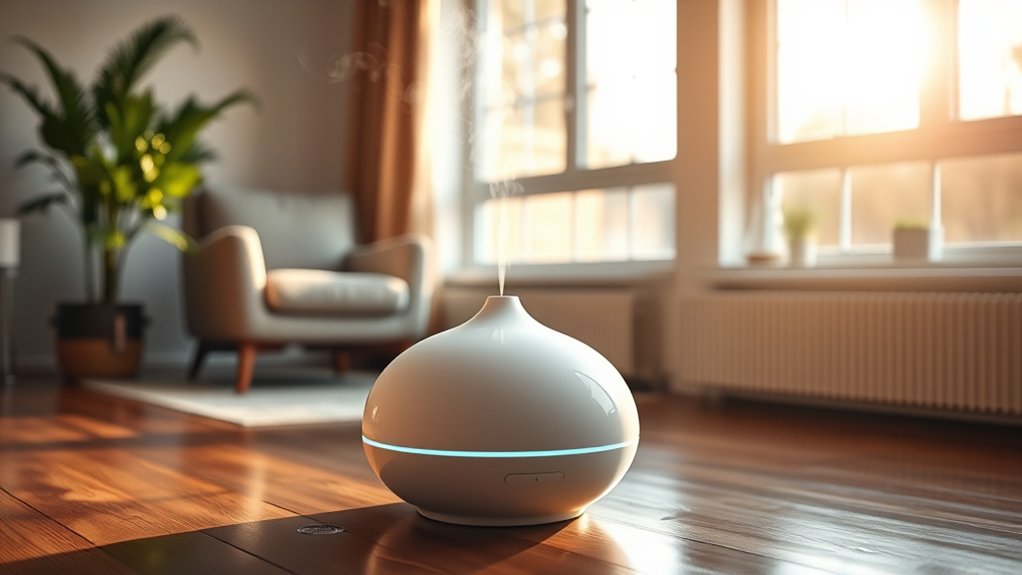
Can I Put Humidifier on Floor
Did you know that over 70% of humidifier users place their units on the floor, often unaware of the impact on performance? Can you put a humidifier on the floor? While it might seem convenient, this placement can cause uneven moisture distribution and potential damage to floors and furniture.
Before deciding where to place your humidifier, it’s important to understand the effects of floor placement. Knowing the best practices can help you avoid common issues and ensure your humidifier works efficiently.
Key Takeaways
- Placing a humidifier on the floor causes uneven humidity due to rising moist air and poor moisture distribution.
- Floor placement may reduce efficiency and increase energy use as the unit works harder to maintain humidity.
- Floor-level placement risks moisture damage to flooring, mold growth, and potential electrical hazards.
- Obstacles, dust, and vibrations at floor level can impair humidifier performance and lifespan.
- If floor placement is necessary, elevate the unit at least 6 inches on a dry, stable surface away from vents and electronics.
Is It Okay to Put a Humidifier on the Floor?
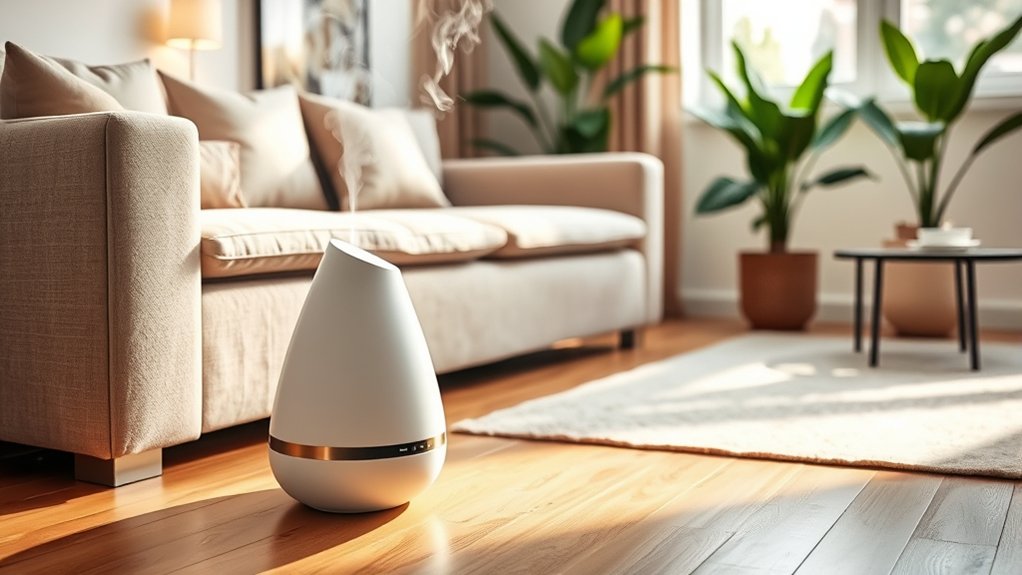
Why should you consider where to place your humidifier? Proper placement directly impacts humidity levels and energy efficiency.
Placing your humidifier on the floor can result in uneven moisture distribution because humid air tends to rise, potentially causing localized high humidity near the device but insufficient humidity elsewhere. This uneven distribution can lead to inefficient operation, as the unit works harder to maintain desired humidity levels.
Placing a humidifier on the floor causes uneven humidity, forcing the unit to work harder.
Additionally, floor placement may expose the humidifier to dust and debris, affecting its performance and lifespan. For optimal energy efficiency, position the humidifier where airflow can carry moisture evenly throughout the room.
Avoid corners or enclosed spaces that restrict vapor dispersion. By carefully considering placement, you ensure consistent humidity levels and reduce energy consumption.
How Does Floor Placement Affect Humidifier Performance?
How does placing a humidifier on the floor influence its performance? Floor placement can impact humidity distribution and raise floor vibration concerns. Since humidifiers release moisture at a low level, the humidity may not disperse evenly, reducing overall efficiency.
Additionally, vibrations from some models may transfer to the floor, potentially causing noise or damage over time.
| Factor | Impact |
|---|---|
| Humidity Distribution | Lower air circulation leads to uneven moisture spread |
| Floor Vibration | Can cause noise and potential surface damage |
| Airflow Interaction | Obstacles near the floor may obstruct mist flow |
Understanding these effects helps you optimize your humidifier’s operation and maintain comfort without compromising your living space.
Which Rooms and Surfaces Are Best for Humidifier Placement?
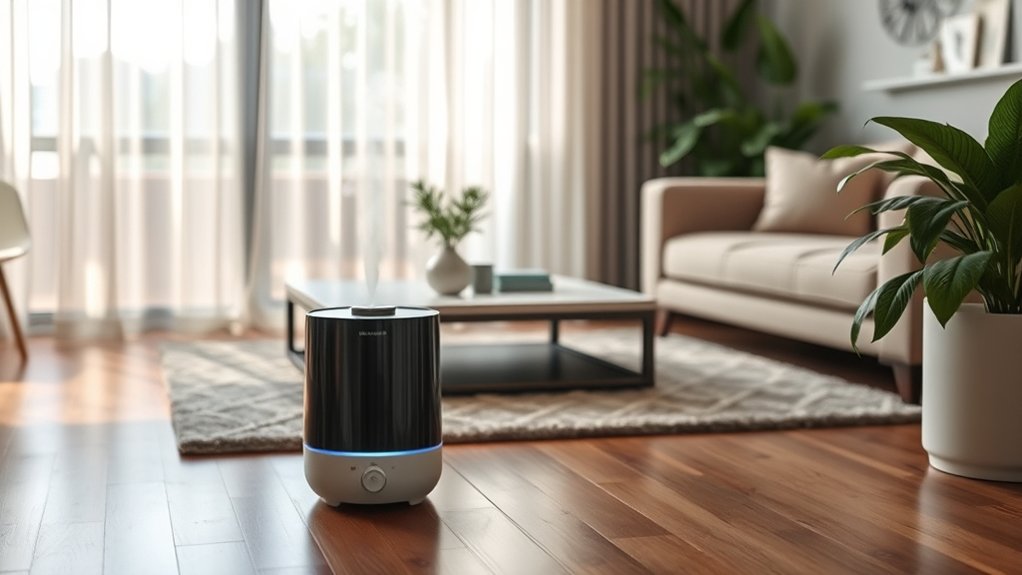
Placing a humidifier on the floor can limit its effectiveness due to uneven moisture distribution and potential vibration issues. To optimize performance and address safety considerations, you should consider the following when choosing rooms and surfaces for your humidifier:
- Elevated, Stable Surfaces: Place the humidifier on a flat, sturdy table or shelf about 2-4 feet above the floor. This height ensures even moisture dispersion and reduces exposure to pets or children.
- Rooms with Controlled Ventilation: Use in bedrooms or living rooms where airflow is moderate, avoiding overly drafty spaces that disrupt humidity levels.
- Non-Absorbent Surfaces: Choose surfaces resistant to moisture damage, such as sealed wood or plastic, to prevent warping or mold growth.
While floor placement is sometimes unavoidable, prioritizing these factors enhances both function and safety.
What Safety and Moisture Damage Risks Come From Floor Placement?
What risks arise when you put a humidifier directly on the floor? Floor hazards increase as devices release moisture at low levels, causing condensation that can damage flooring materials. Moisture damage includes warping, mold growth, and deterioration, especially on wood or carpeted surfaces.
Additionally, placing a humidifier on the floor raises risks of electrical hazards due to water exposure and tripping.
| Risk Type | Description | Impact on Environment |
|---|---|---|
| Moisture Damage | Water absorption by flooring | Warping, mold, structural harm |
| Electrical Hazard | Water near electrical components | Short circuits, fire risk |
| Physical Hazard | Device on walking path | Tripping, injury |
Avoid floor placement to minimize these floor hazards and preserve safety and structural integrity.
How Can You Safely Use a Humidifier on the Floor?
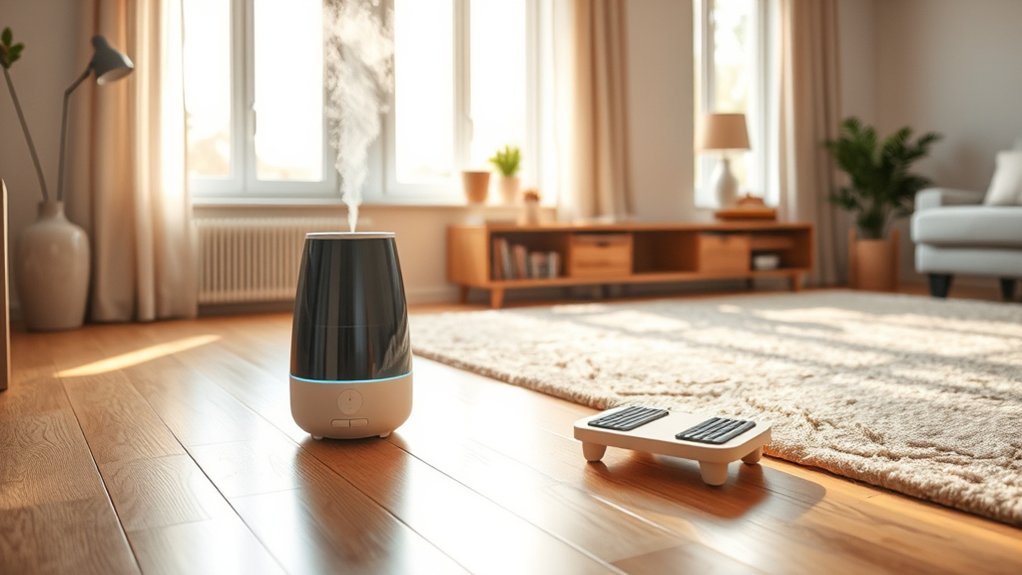
Where you position a humidifier on the floor greatly influences its safety and effectiveness. To ensure safe placement and optimal performance, follow these steps:
- Maintain adequate floor clearance: Place the humidifier on a raised, stable surface like a low table or stand at least 6 inches above the floor. This prevents moisture accumulation and reduces the risk of water damage.
- Choose a dry, flat area away from vents and electronics: Avoid placing the unit near heat sources or electrical devices that could be affected by humidity or accidental spills.
- Keep the surrounding floor area clear: Ensure no rugs, wires, or clutter obstruct airflow or absorb excess moisture, which creates mold risks and electrical hazards.
Frequently Asked Questions
How Often Should I Clean My Humidifier to Prevent Mold?
You should clean your humidifier at least once a week to prevent mold, adjusting cleaning frequency based on humidifier placement and usage.
Proper maintenance ensures optimal performance and reduces health risks from mold buildup in your device.
Can a Humidifier Help With Allergies or Asthma?
Imagine your lungs throwing a party. Humidifiers crash it with moisture, calming chaos.
You’ll enjoy humidifier benefits like allergy relief as they reduce irritants, easing asthma symptoms by maintaining ideal air humidity and improving respiratory comfort precisely and effectively.
What Type of Water Is Best for Humidifiers?
You should use distilled or demineralized water in your humidifier to ensure humidifier safety. This minimizes water mineral content, preventing white dust buildup and reducing risks of mold or bacteria growth, keeping your air clean and healthy.
How Do I Know When to Refill the Humidifier?
You’ll know the refill timing by monitoring the water level indicator regularly. Using high water quality reduces mineral buildup, ensuring accurate readings and optimal performance.
Refill immediately once levels drop near the minimum mark.
Can Humidifiers Reduce Static Electricity in the Home?
Yes, proper humidifier placement helps optimize static electricity reduction by maintaining ideal indoor humidity levels. Placing it elevated ensures even moisture distribution, effectively minimizing static buildup on surfaces and electronics throughout your home.
Conclusion
You can put a humidifier on the floor, but it’s not ideal. Studies show that humid air rises, causing uneven moisture levels that may damage floors or furniture.
To avoid this, elevate your humidifier at least 6 inches and keep it away from vents and electronics. Monitoring moisture buildup and ensuring proper ventilation helps maintain efficiency and safety.
Following these steps prevents damage and maximizes your humidifier’s performance in any room. For the best results, avoid placing your humidifier on the floor.