A Search of the Fire Floor Generally
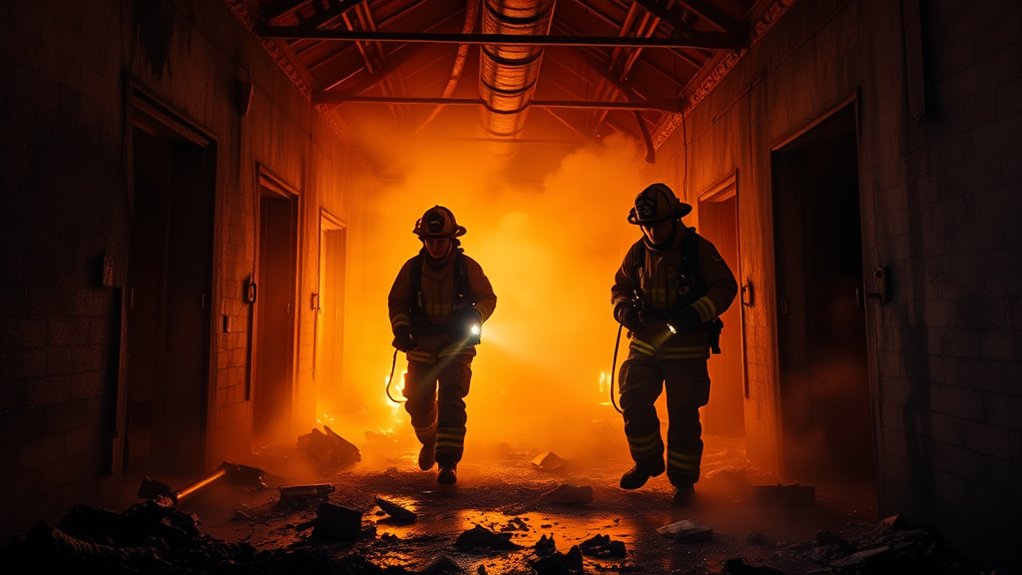
When you enter the fire floor, a search of the fire floor generally requires every step to demand careful assessment and precise coordination. You’ll need to evaluate structural stability, monitor smoke and heat levels, and move deliberately to avoid disorientation.
Your awareness of changing conditions can mean the difference between life and death—for both occupants and your team. Understanding how to navigate this dangerous environment methodically sets the foundation for effective search and rescue operations.
Key Takeaways
- Assess fire floor hazards such as thermal layering, smoke, and heat before starting the search to ensure safety and preparedness.
- Conduct systematic, room-by-room searches while maintaining orientation and continuous communication with the team.
- Use protective gear, maintain contact with hose lines or partners, and rely on tactile navigation in low visibility conditions.
- Prioritize high-risk areas with limited exits or heavy smoke to increase chances of occupant rescue.
- Coordinate with team members through clear signals and radio check-ins to share progress and manage risks effectively.
What Makes the Fire Floor So Dangerous?
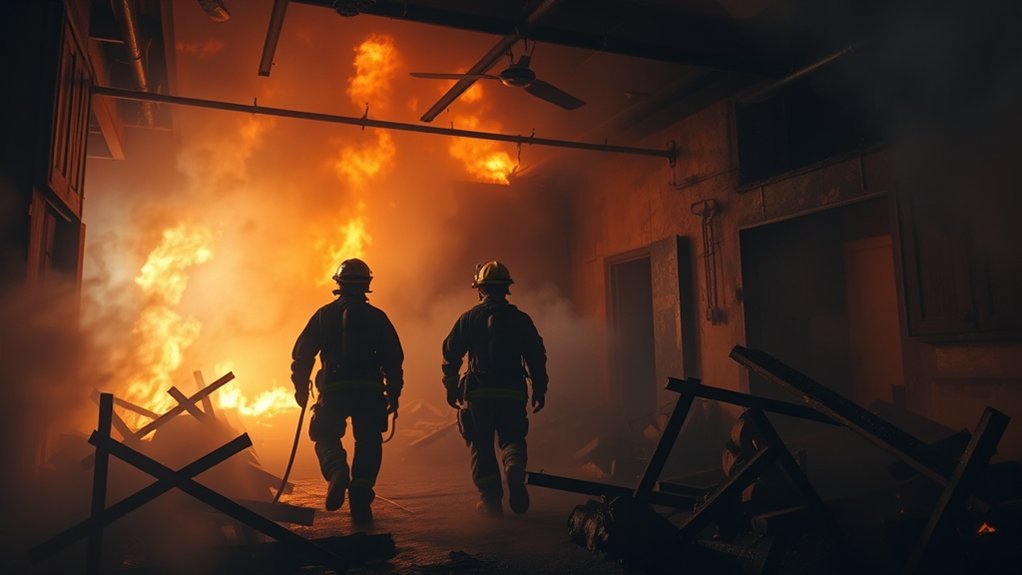
Why does the fire floor pose such a high risk to firefighters? You face rapidly changing fire behavior that demands sharp attention.
On the fire floor, thermal layering creates distinct temperature zones. Hot gases accumulate near the ceiling while cooler air stays below. This layering can shift suddenly, exposing you to intense heat or toxic smoke without warning.
Thermal layering on the fire floor creates sudden shifts in heat and smoke, posing hidden dangers.
Understanding these layers helps you anticipate dangerous conditions, but they can collapse quickly, causing flashover or backdraft. The confined space limits your movement, and the fire’s unpredictable spread complicates navigation.
You must constantly monitor temperature changes and smoke patterns to adapt your approach. Recognizing how fire behavior interacts with thermal layering is critical to maintaining safety and effectively managing the risks present on the fire floor.
Fire Floor Search Preparation and Key Hazards
How do you effectively prepare for a search on the fire floor while managing its key hazards? Start by reviewing the building layout and identifying potential obstacles. Your search strategies should include systematic room-by-room checks, maintaining orientation, and prioritizing high-risk areas.
Before entry, assess visible signs of structural damage, smoke conditions, and heat levels. These are critical elements of hazard recognition. Equip yourself with the necessary protective gear and ensure communication tools are functional.
Stay alert for hidden dangers like weakened floors or toxic gases. Maintain situational awareness by continuously scanning your environment and adapting your approach as conditions change.
Preparation hinges on combining thorough pre-entry assessments with disciplined search methods, enabling you to navigate hazards safely and increase the chances of a successful rescue.
Coordinating With Team Members During the Fire Floor Search
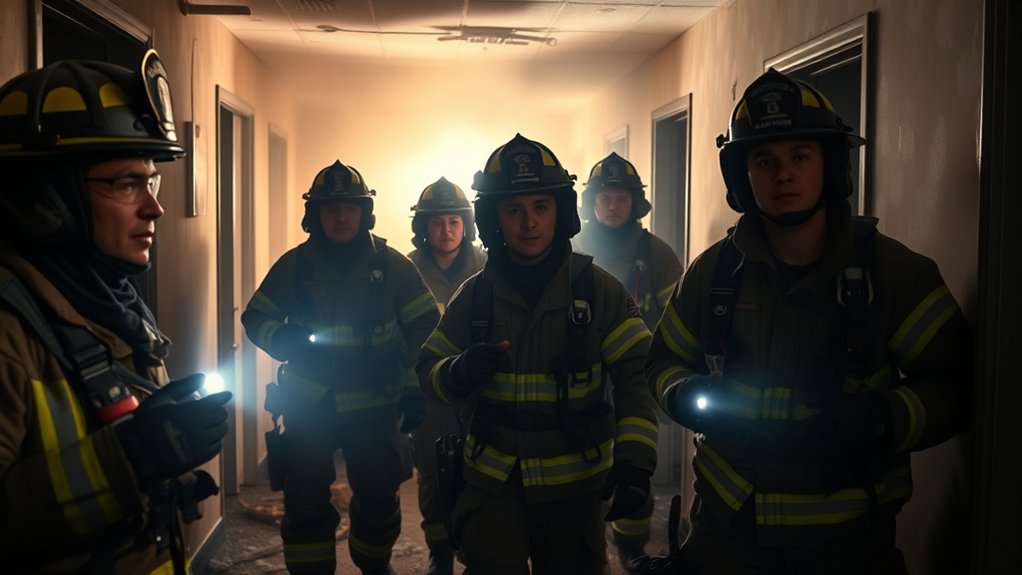
After preparing thoroughly for the fire floor search and identifying key hazards, you’ll need to coordinate closely with your team to maintain safety and efficiency. Understanding search team dynamics is crucial; each member must know their role and position to avoid overlap or missed areas.
Establish clear communication protocols before entry. Agree on signals, radio check-ins, and emergency procedures. Maintain constant situational awareness by updating teammates on your progress and any changes in conditions.
Listen carefully and respond promptly to ensure seamless coordination. By methodically sharing information and respecting the team’s structure, you’ll enhance both safety and effectiveness during the search. Remember, a well-synchronized team reduces risk and accelerates victim location, making coordination not just helpful but essential.
Fire Floor Search Techniques for Navigating Smoke and Heat
When you move through thick smoke, keep low and use walls or tools to maintain orientation. Monitor heat levels closely, rotating out or adjusting your path to avoid dangerous exposure.
These strategies help you stay safe while thoroughly searching the fire floor.
Smoke Navigation Strategies
A critical skill in fire floor search operations involves mastering smoke navigation strategies to maintain orientation and safety. As you move through the environment, observe smoke layering carefully; cooler, cleaner air usually collects near the floor, so keep low to reduce exposure and improve visibility.
The thick smoke overhead causes rapid visibility reduction, so constantly monitor your surroundings using touch and sound to supplement sight. Use systematic search patterns, feeling walls and doorways to confirm your position.
When visibility drops, rely on tactile cues and maintain contact with your hose line or a partner. Recognize that smoke density varies with heat and ventilation, so adjust your path accordingly to avoid disorientation. Staying methodical and observant will help you navigate safely despite challenging smoke conditions.
Heat Exposure Management
How do you effectively manage heat exposure while searching a fire floor? First, constantly monitor your physical response to rising temperatures and adjust your pace accordingly. Keep track of time spent in intense heat zones and retreat to areas with cooler conditions or access to breathable air when needed.
Use your thermal protective gear properly, ensuring it forms a tight seal to minimize heat transfer. Maintain situational awareness by feeling surfaces and gauging heat intensity ahead of your path.
Move deliberately, avoiding unnecessary exertion that increases body heat. Prioritize routes that offer intermittent access to breathable air pockets, allowing you to recover and prevent heat stress.
Document your observations methodically, so you can inform your team about heat conditions, ensuring everyone’s safety and efficient search progress.
Strategies to Find and Rescue Occupants Quickly
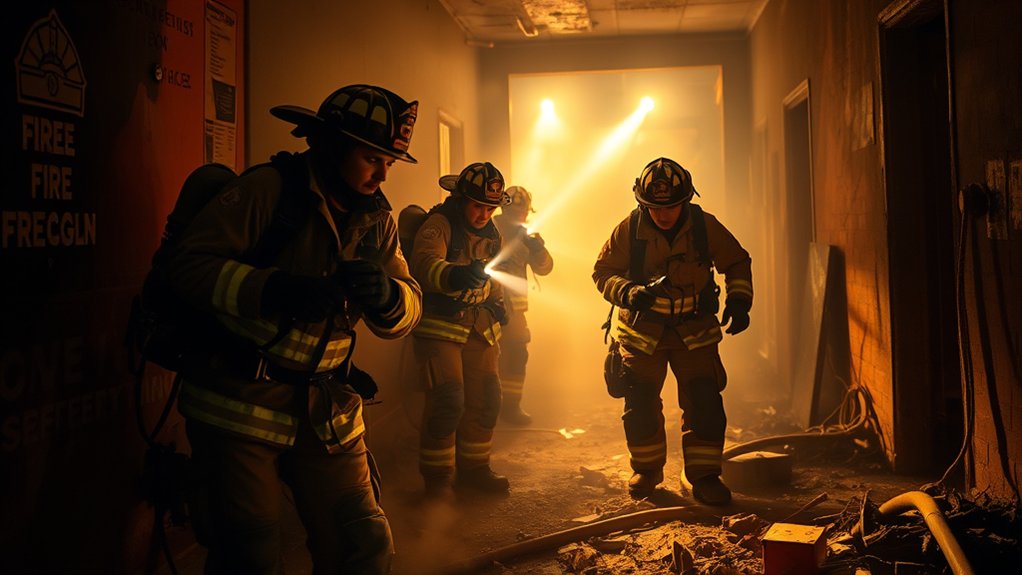
Where do you start your search to find and rescue occupants quickly in a fire? Begin by conducting a rapid risk assessment to identify the most likely locations where people may be trapped. Prioritize areas with limited exits or heavier smoke concentration.
Maintain your equipment rigorously. Functioning radios, thermal imaging cameras, and breathing apparatuses are essential for efficient search operations. Move methodically, checking rooms and corridors in a systematic pattern to avoid missing anyone.
Stay observant for signs of life such as sounds, movement, or personal belongings. Communicate clearly with your team to coordinate efforts and report findings promptly.
Staying Safe: Managing Risks During Fire Floor Searches
Why must you constantly assess and manage risks during fire floor searches? Because conditions change rapidly, and staying safe depends on your ability to recognize hazards early. You need to maintain situational awareness, noting structural instability, smoke conditions, and potential victim locations.
Aware leadership plays a crucial role; it guides your decisions and ensures communication remains clear and timely. Don’t overlook tool maintenance. Using well-maintained equipment prevents failures that could jeopardize your safety.
Methodically check your gear before entry and monitor it throughout the operation. Stay observant of your environment, continually reassessing dangers as you move. By combining aware leadership with disciplined tool maintenance and constant vigilance, you minimize risks effectively, allowing you to perform searches safely and efficiently under pressure.
Frequently Asked Questions
What Equipment Is Essential for a Fire Floor Search?
You’ll need thermal imaging to spot victims through smoke and airway management tools to assist those struggling to breathe.
Carry a flashlight, a radio, and personal protective equipment to stay safe and communicate effectively during the search.
How Do Building Layouts Affect Fire Floor Search Strategies?
You’ll adjust your fire floor search strategies based on building geometry, navigating complex layouts carefully. Limited occupant visibility demands methodical, thorough checks to ensure no one’s missed, maximizing safety and efficiency during your search.
What Training Is Required for Effective Fire Floor Searches?
You’ll practice training drills, master ventilation tactics, and refine search patterns. You’ll learn to assess hazards, communicate clearly, and navigate smoke-filled spaces efficiently.
This methodical training ensures you perform effective, safe fire floor searches every time.
How Do Firefighters Communicate During Multi-Floor Fires?
You’ll rely on established communication protocols, using radios with clear, concise updates despite visibility challenges. Constantly confirming positions and conditions guarantees coordination, helping you navigate smoke-filled floors while maintaining safety and efficiency during multi-floor fires.
What Post-Search Procedures Ensure All Occupants Are Safe?
You’ll follow post search procedures by confirming fire floor search completion, conducting a secondary sweep, and communicating findings.
These safety procedures ensure occupant safety, verifying no one’s missed before declaring the area secure and safe.
Conclusion
When you enter the fire floor, think of yourself as a miner digging through layers of smoke and heat—each step requires caution and precision. Just as miners rely on their tools and teammates to avoid collapse, you must trust your equipment, maintain contact, and read the environment carefully.
Remember, every second counts; a well-coordinated search can mean the difference between life and death for trapped occupants. Stay methodical, stay alert, and keep moving with purpose.
A thorough and deliberate approach is essential. Always conduct a Search of the Fire Floor generally to ensure no one is left behind.