Can a Clogged Shower Drain Cause a Leak
It’s no coincidence that a clogged shower drain often shows up just before you notice water damage. When your drain is blocked, pressure builds up and can push water into places it shouldn’t be, weakening seals and membranes over time.
This hidden risk can escalate quickly, turning a minor inconvenience into a costly repair. Understanding how these clogs lead to leaks is essential to avoid bigger problems down the line.
Key Takeaways
- Clogged drains increase pressure, forcing water into joints not designed for prolonged moisture, causing leaks.
- Water buildup behind blockages can damage the waterproof membrane beneath the shower base.
- Persistent slow drainage and water pooling are signs that clogs may have caused leaks.
- Accumulated water from clogs accelerates deterioration of pipes and drainage components, leading to leaks.
- Preventing clogs reduces pressure buildup, minimizing the risk of leaks and water damage.
Common Causes of Shower Drain Clogs
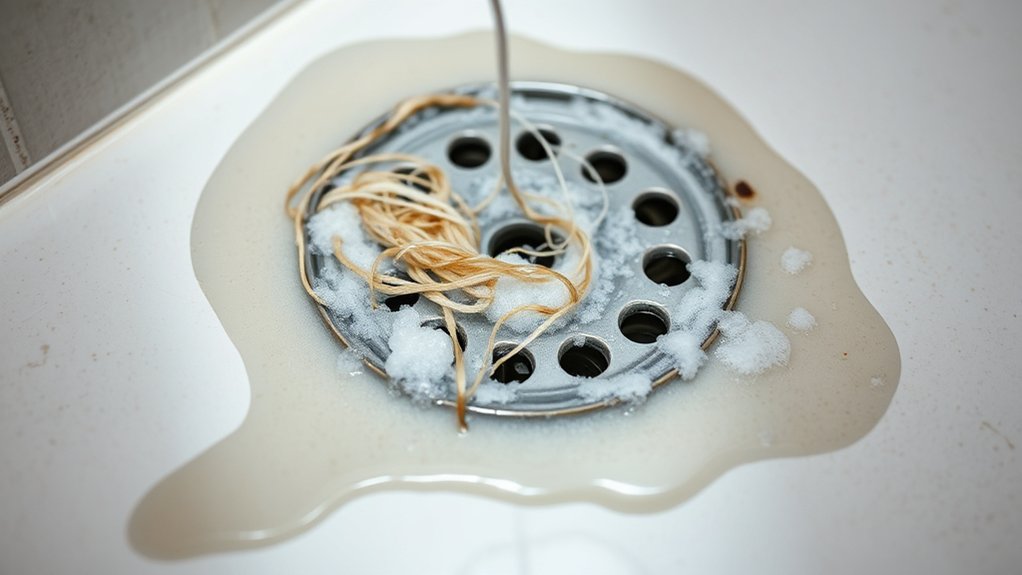
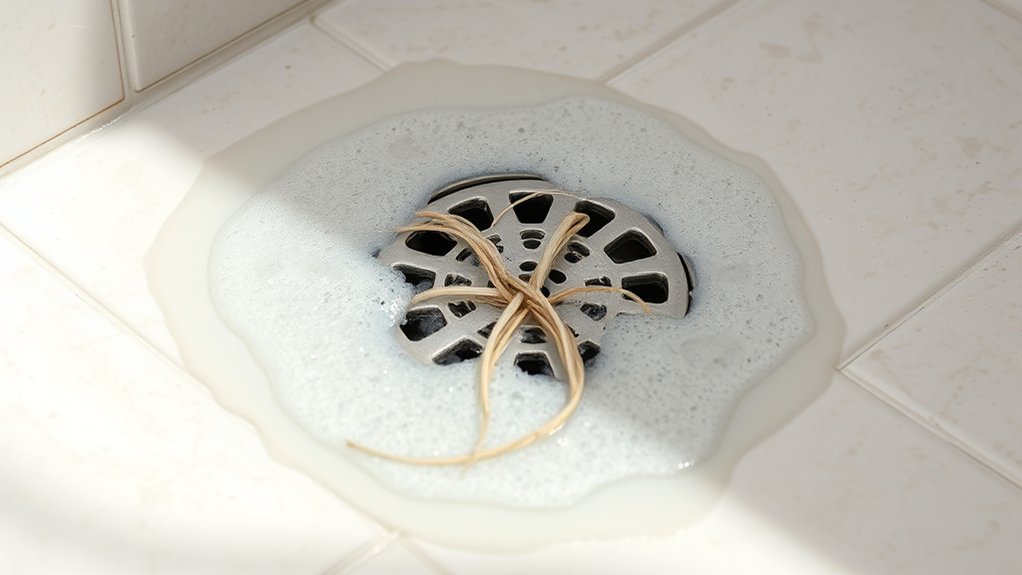
Why does your shower drain clog so often? The primary clog causes include hair accumulation, soap scum buildup, and mineral deposits. Hair strands intertwine, trapping soap residue and dirt, creating dense blockages.
Over time, hard water minerals crystallize on pipe surfaces, narrowing the drain passage. Residual shampoo and conditioner can also contribute to film formation that impedes water flow.
To prevent these issues, implement effective maintenance tips: regularly remove visible hair from the drain cover, use a drain strainer, and flush the drain with hot water weekly to dissolve soap and mineral buildup. Avoid pouring grease or oily substances down the drain, as they solidify and exacerbate clogs.
Early Signs Your Shower Drain Is Causing Water Damage
Even with proper maintenance, shower drains can develop hidden issues that lead to water damage. Recognizing early signs helps you address problems before they worsen. Watch for these indicators of blocked wastewater and slow drainage:
1. Persistent Slow Drainage
Water pools longer than usual, signaling partial blockages restricting flow.
2. Unusual Odors Near the Drain
Stagnant wastewater trapped in pipes creates foul smells, hinting at improper drainage.
3. Water Stains or Soft Spots Adjacent to the Shower
Moisture escaping from blocked wastewater can cause discoloration or weaken flooring and walls.
If you notice any of these signs, act promptly to inspect and clear the drain. Early intervention prevents costly repairs and protects your home’s structural integrity.
Why Clogged Shower Drains Cause Leaks
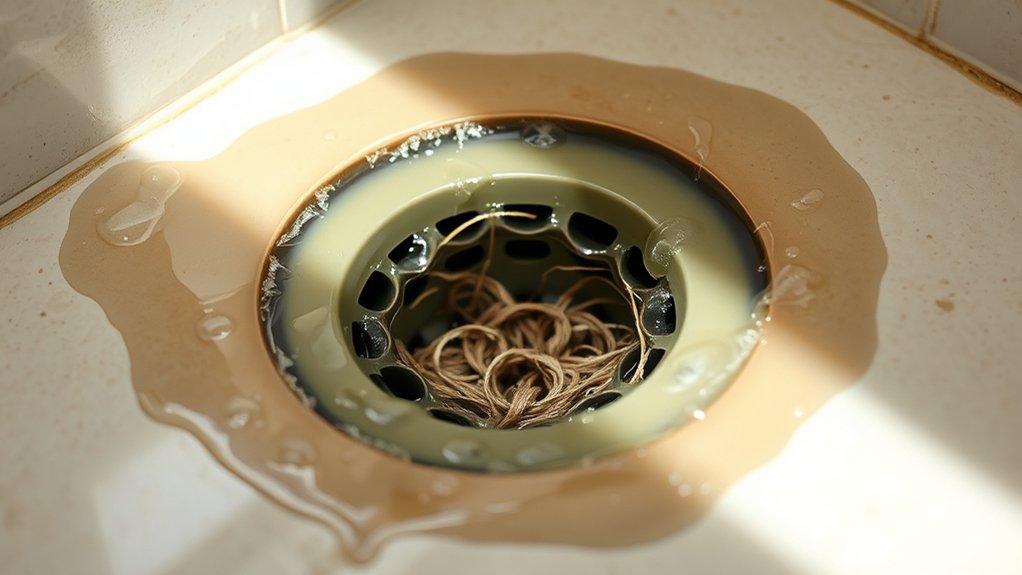
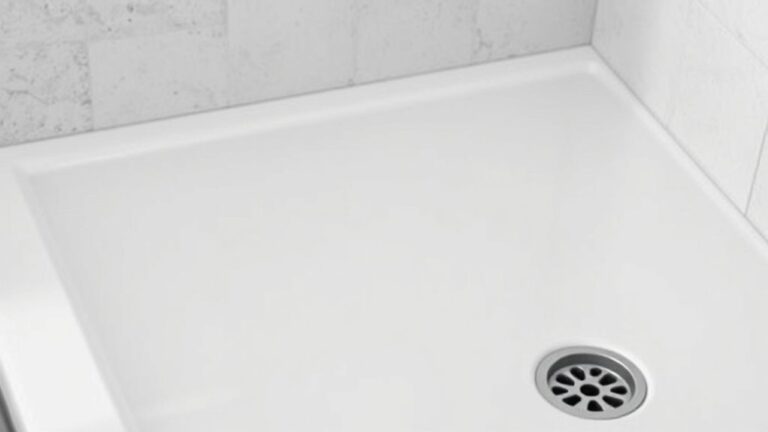
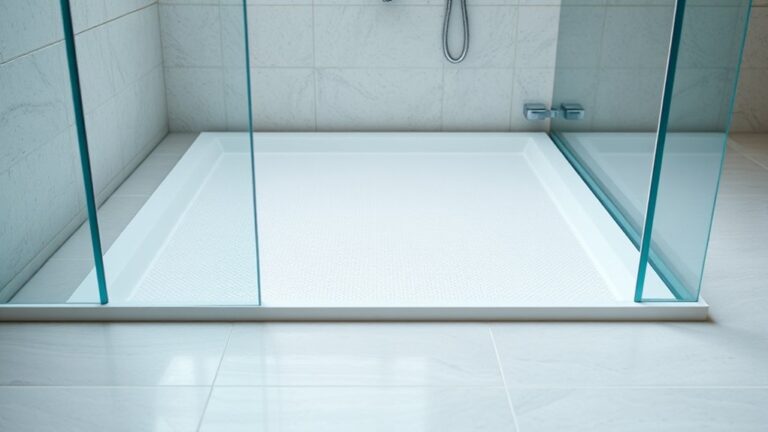
When your shower drain clogs, it creates pressure that forces water to escape through seals and joints not designed to handle prolonged moisture exposure. This increased hydrostatic pressure compromises the integrity of pipe connections and the waterproof membrane beneath the shower base, leading to leaks.
As water accumulates behind the clog, it exploits any weak points in the drainage system, accelerating deterioration and causing water damage to adjacent structures. Effective clog prevention reduces this pressure buildup, minimizing the risk of leaks.
Without addressing blockages promptly, you increase the likelihood of costly repairs due to persistent moisture infiltration. Understanding how blockages translate into leaks empowers you to prioritize clog prevention and implement leak mitigation strategies that protect your plumbing system’s longevity and your home’s structural health.
Simple Ways to Prevent Shower Drain Leaks at Home
How can you effectively reduce the risk of shower drain leaks before they start? Preventing blocked drains and leaks hinges on consistent, proactive care. Follow these practical steps:
- Schedule regular maintenance reminders to inspect and clean your shower drain, preventing buildup that leads to blockages and leaks.
- Use proper waste disposal methods; avoid flushing hair, soap residue, and other debris down the drain, as these contribute to clogs and compromised seals.
- Ensure proper ventilation to reduce moisture accumulation, which can cause air quality hazards and damage to drain components, increasing leak risk.
When to Call a Plumber for Shower Drain Leaks
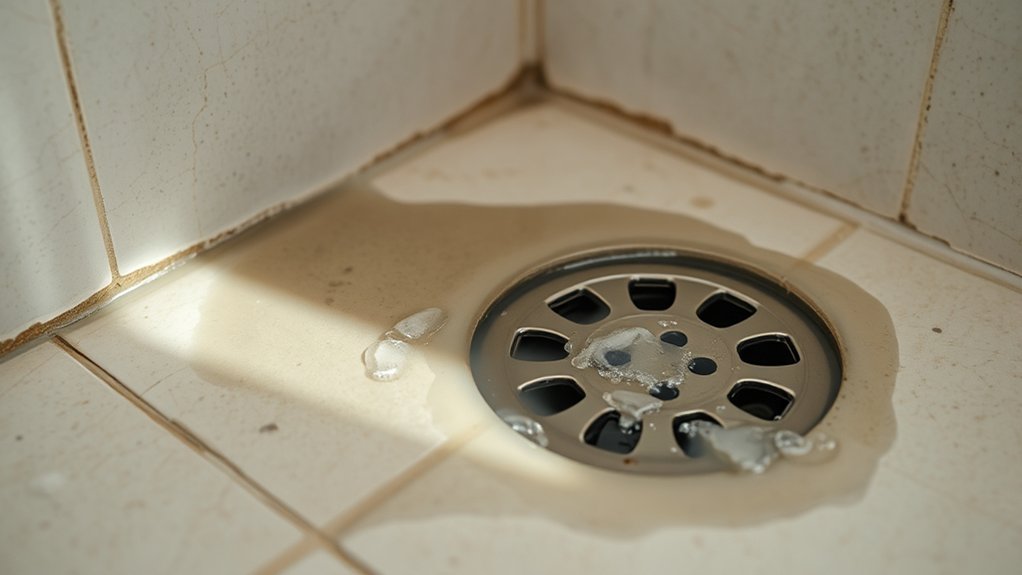
Why should you call a plumber for shower drain leaks instead of attempting a DIY fix? Shower drain repairs often involve hidden pipe damage or complex blockages that require specialized tools and expertise.
Shower drain leaks often hide complex damage needing expert tools and skills beyond DIY repairs.
If you notice persistent slow drainage, water pooling outside the shower base, or dampness in adjacent walls or floors, it’s time to schedule a plumber visit. Ignoring these signs can worsen leaks and cause structural damage.
Proper plumber visit timing ensures early detection and prevents costly repairs. DIY methods might temporarily clear clogs but fail to address underlying issues like pipe corrosion or faulty seals.
Trusting a professional guarantees accurate diagnosis and effective, lasting solutions, protecting your home’s plumbing integrity and avoiding potential water damage.
Frequently Asked Questions
Can a Clogged Shower Drain Affect Other Plumbing Fixtures?
Yes, a clogged shower drain can affect other plumbing fixtures by causing backups or slow drainage.
You should prioritize clog prevention and regular drain maintenance to ensure all your fixtures function efficiently and avoid costly repairs.
Are Chemical Drain Cleaners Safe for Shower Drains?
You shouldn’t rely on chemical cleaners for a blocked drain in your shower. They can damage pipes, especially older ones, and might not fully clear blockages.
Mechanical methods or professional help are safer and more effective.
How Long Does It Take for a Clog to Cause a Leak?
You’ll find clog timing varies, but typically, within weeks to months, leak progression begins as water backs up. Acting promptly prevents damage, so monitor your drain regularly to catch blockages before they cause serious leaks.
Can Tree Roots Cause Shower Drain Clogs?
Yes, tree roots can invade your shower drain pipes, causing blockages combined with hair buildup. You’ll need professional root removal and regular maintenance to prevent severe clogs and potential water damage from backups or leaks.
Does Water Temperature Impact Shower Drain Clogs?
Yes, water temperature impacts clog prevention by affecting soap and grease solidification. Hot water helps dissolve residues, reducing buildup, while cold water may cause fats to harden, increasing the risk of shower drain clogs over time.