Can a Clogged Shower Drain Affect the Toilet
Think of your bathroom plumbing as a shared highway where a clogged shower drain can affect the toilet and cause traffic jams across multiple routes. When your shower drain clogs, it doesn’t just slow water flow there—it can create pressure that disrupts the toilet’s function too.
You might notice slow draining or strange noises, but understanding why this happens can help you act before minor issues become costly repairs.
Let’s explore how these connections work and what you can do about them.
Key Takeaways
- A clogged shower drain can restrict flow in the shared drainage line with the toilet, causing wastewater buildup.
- Increased pressure from a shower clog may force wastewater to back up through the toilet.
- Shower drain blockages compromise the entire drainage system, increasing risk of toilet backups and sewage overflow.
- Slow drainage and gurgling sounds in the toilet often indicate a clog originating in the shower drain.
- Promptly clearing shower clogs helps prevent toilet backups and associated water damage.
How a Clogged Shower Drain Affects Bathroom Plumbing
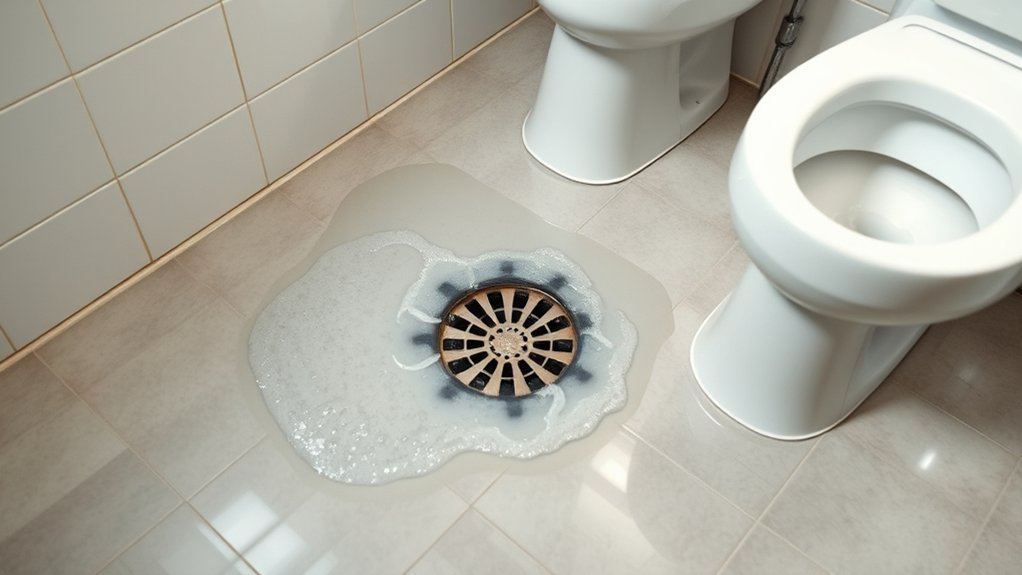
How exactly does a clogged shower drain impact your bathroom plumbing? When shower water can’t flow freely, it pools and slows drainage, creating pressure in the pipes. This pressure promotes clog propagation as debris accumulates, worsening blockages downstream.
The trapped water increases the risk of leaks or pipe corrosion over time, compromising your plumbing system’s integrity. Additionally, stagnant shower water fosters bacteria growth, affecting hygiene and potentially causing unpleasant odors.
You’ll notice slower drainage and occasional backups, signaling that the clog’s severity is escalating. Addressing the clog promptly prevents damage and maintains efficient water flow throughout your bathroom plumbing, ensuring your entire system functions properly without strain or risk of failure.
Why a Shower Drain Clog Can Back Up Your Toilet
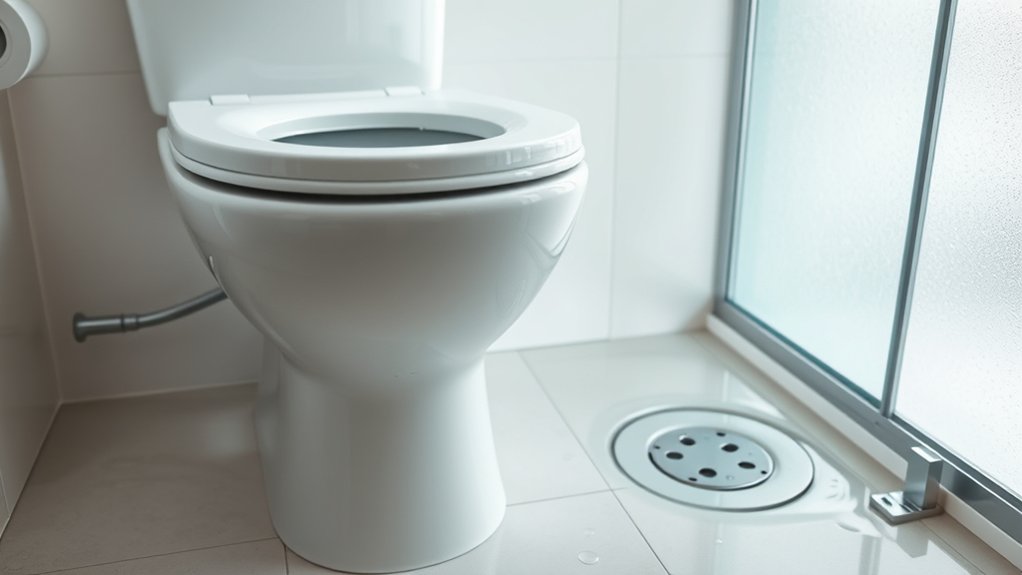
Why does a clog in your shower drain cause your toilet to back up? Both fixtures share the same drainage line within your bathroom’s plumbing system. When a shower clog forms, it restricts water flow, causing waste and water to accumulate.
This blockage increases pressure in the drain line, forcing wastewater to seek alternative exit points, often the toilet. The restricted flow from the shower creates a bottleneck effect, preventing normal drainage from the toilet and resulting in a bathroom backup.
You might not realize it, but a stubborn shower clog can compromise the entire drainage system. Addressing the clog promptly is essential to prevent sewage overflow, foul odors, and potential water damage.
Understanding this connection helps you take timely action and maintain your bathroom’s plumbing efficiency.
Signs Your Toilet Is Backing Up Because of a Shower Drain
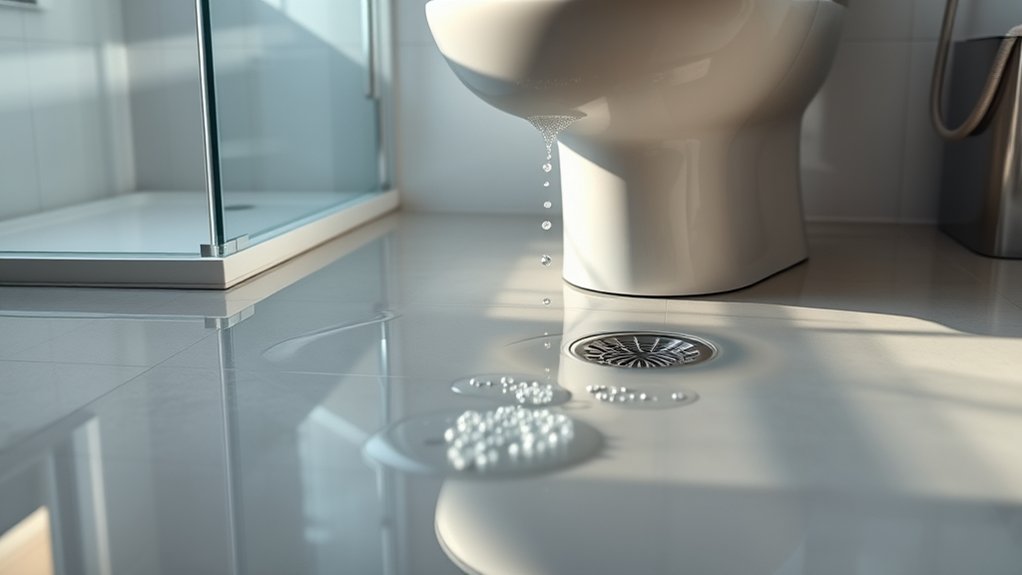
When your toilet starts to back up, you might wonder if the shower drain is the culprit. One clear sign is slow drainage in both fixtures; if water in your shower pools and the toilet bowl rises unusually after flushing, the clog likely links them.
You may also notice foul odors affecting shower aesthetics, especially if the usual drain fragrance fades or worsens. Gurgling sounds from the toilet when water drains in the shower can indicate trapped air due to a shared blockage.
Additionally, water may backflow into the shower base during toilet flushes, signaling a compromised pipe connection. Monitoring these symptoms helps you identify when a shower drain clog is impacting your toilet’s function, allowing you to address the issue before it escalates.
How to Clear a Shower Drain Before It Causes Toilet Problems
Wondering how to prevent a clogged shower drain from impacting your toilet? Start by regularly clearing debris before buildup grows. Use a shower timer to limit water exposure and reduce soap scum accumulation, which contributes to clogs.
Remove the drain cover and clear hair and gunk manually or with a drain snake. For stubborn blockages, apply a safe enzymatic cleaner following product instructions.
Engage in drain chat by consulting reliable online forums or manufacturer guidelines for your specific drain type to select effective cleaning methods. Regular maintenance, combined with timely interventions, ensures smooth flow and prevents backups that stress your toilet.
When to Call a Plumber for Shower Drain and Toilet Issues
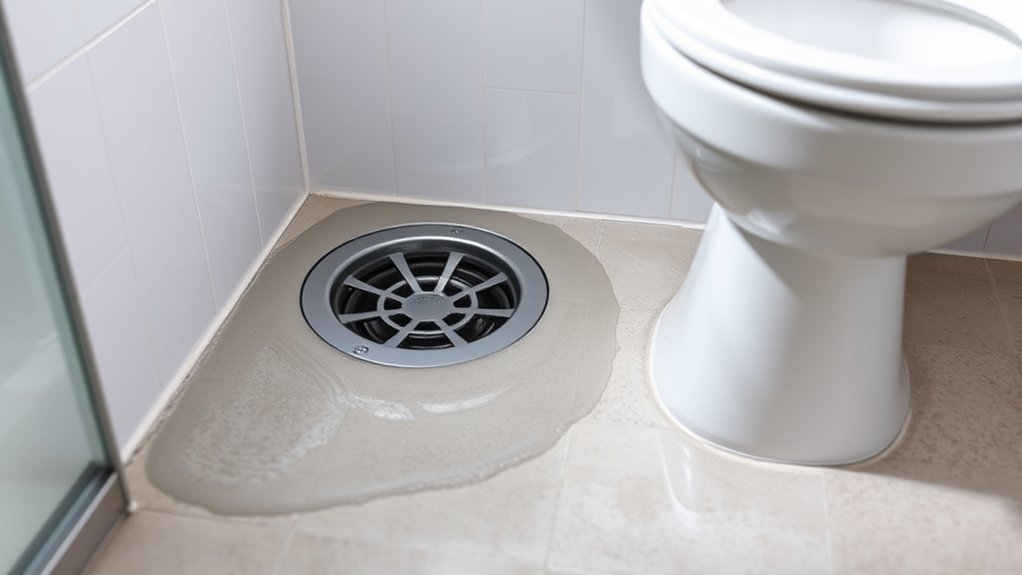
Regular maintenance can keep your shower drain and toilet functioning smoothly, but some problems demand professional expertise. If you notice persistent backups or slow drainage despite your drain maintenance efforts, it’s time to call a plumber.
Plumbing safety is also a critical reason to seek help. Chemical cleaners or improper tools can worsen blockages or damage pipes. Watch for these signs:
- Repeated clogs in both shower and toilet, indicating a shared blockage or venting problem.
- Foul odors or gurgling sounds from drains, signaling trapped debris or vent issues.
- Water backups rising above drain levels, risking leaks or water damage.
Addressing these issues promptly with a professional can prevent costly repairs and ensure your plumbing system operates safely and efficiently.
Frequently Asked Questions
Can a Clogged Shower Drain Cause Bad Odors in the Bathroom?
Yes, a clogged shower drain can cause bad odors by trapping water and debris, becoming one of the primary odor sources.
You should focus on clog prevention to maintain proper drainage and eliminate unpleasant bathroom smells efficiently.
Does Using Chemical Drain Cleaners Harm Pipes Long-Term?
Think of chemical drain cleaners as slow poison for your pipes; yes, chemical corrosion can cause long term damage, weakening metal and eroding plastic.
You’ll want to avoid them for lasting plumbing health.
How Often Should I Clean My Shower Drain to Prevent Clogs?
You should clean your shower drain every 1-2 months for optimal flow. Prevention tips include using a drain cover to catch hair and regularly flushing with hot water to minimize buildup and avoid stubborn clogs.
Can Hair Traps Really Prevent Shower Drain Clogs Effectively?
Yes, hair traps effectively reduce shower clogs by capturing hair before it enters the drain. You’ll prevent buildup, minimize backups, and save on costly plumbing.
Regular cleaning of traps keeps them performing optimally.
Are There Eco-Friendly Alternatives to Traditional Drain Cleaning Methods?
Like watering a garden, you can nurture your pipes using eco-friendly alternatives like enzymatic cleaners and baking soda with vinegar. These methods support effective drain maintenance without harsh chemicals, keeping your plumbing system healthy and sustainable.