Are You Supposed to Shower After a Bath Bomb
You might wonder if you are supposed to shower after a bath bomb.
The answer isn’t universal and depends on factors like your skin type and the bomb’s ingredients.
Some formulas leave residues that can irritate sensitive skin, while others are designed to be skin-friendly without requiring a rinse.
Understanding these nuances can help you make an informed choice about your post-bath routine.
Key Takeaways
- Showering after a bath bomb depends on your skin type and the product’s ingredients.
- Sensitive or fragrance-sensitive skin benefits from rinsing with lukewarm water to remove residue.
- Avoid hot water and harsh soaps during rinsing to protect the skin’s moisture barrier.
- If the bath bomb contains gentle, skin-friendly ingredients, showering is not strictly necessary.
- Always moisturize immediately after bathing to lock in hydration, regardless of rinsing choice.
Should You Shower After Using a Bath Bomb?
When considering whether you should shower after using a bath bomb, it depends on your skin type and the ingredients in the bomb. If you have sensitive skin or fragrance sensitivity, rinsing off after the bath can help minimize irritation by removing residual oils and fragrances.
Bath bomb safety guidelines suggest that those prone to allergic reactions or dermatitis take extra precautions, such as showering immediately after use. However, if your skin tolerates the ingredients well and you use a bath bomb formulated without harsh chemicals or allergens, showering afterward is not strictly necessary.
Ultimately, evaluating your skin’s response and the product’s composition will guide your decision, ensuring you maintain optimal skin health while enjoying the bath bomb experience.
How Bath Bombs Affect Your Skin
When you use a bath bomb, its ingredients can provide moisturizing benefits by adding oils and humectants to your skin. However, some components may act as irritants, potentially causing redness or dryness.
Additionally, bath bombs can alter your skin’s pH balance, which may affect its natural barrier function.
Moisturizing Effects Explained
How exactly do bath bombs influence your skin’s moisture levels? Bath bombs typically contain moisturizing agents like oils and butters that help improve moisture retention by forming a protective barrier on your skin. This barrier reduces water loss, leaving your skin feeling hydrated post-bath.
Additionally, ingredients such as sodium bicarbonate and citric acid create effervescence but do not significantly affect moisture. Fragrance safety is crucial; synthetic fragrances can impact skin differently, but high-quality bath bombs use safe, skin-compatible scents to minimize disruption to your skin’s natural hydration.
While bath bombs can enhance your skin’s softness, relying solely on them for hydration isn’t advisable. For optimal moisture retention, applying a moisturizer after bathing remains essential. Thus, bath bombs support skin hydration but don’t replace standard moisturizing routines.
Potential Irritants Overview
Why might bath bombs cause irritation for some users? Bath bombs often contain fragrances, dyes, and preservatives that can act as potential irritants. When these substances interact with your skin, they may trigger redness, itching, or dryness, especially if you have sensitive skin.
This irritants overview highlights that some ingredients can disrupt your skin’s natural barrier, leading to increased vulnerability. While the formulation aims to be safe, your skin’s reaction varies based on individual sensitivity and exposure duration.
Understanding these irritants is crucial, as they can influence your skin pH balance, potentially exacerbating irritation. Being aware of these factors helps you make informed choices about using bath bombs and deciding whether to shower afterward to mitigate adverse effects on your skin.
Skin pH Balance Impact
What effect do bath bombs have on your skin’s pH balance? Bath bombs often contain ingredients like citric acid and baking soda, which can temporarily alter your skin pH. Your skin’s natural pH typically ranges from 4.5 to 5.5, maintaining a slightly acidic environment essential for barrier function and microbial defense.
When you use a bath bomb, this balance may shift toward alkalinity, potentially disrupting the acid mantle. Additionally, added fragrances in bath bombs raise concerns about fragrance safety, as certain synthetic compounds can irritate sensitive skin or cause allergic reactions.
To minimize impact on skin pH and ensure fragrance safety, choose bath bombs with pH-balanced formulas and hypoallergenic scents. Rinsing off after bathing can further help restore your skin’s natural pH and reduce residue buildup.
Pros and Cons of Showering After a Bath Bomb
When deciding whether to shower after using a bath bomb, you should weigh the benefits and drawbacks carefully. Incorporating a shower into your care routine can influence the longevity of scent layering and skin health. Showering may remove residue, preventing potential irritation but also diminishing the fragrance’s staying power.
Balancing post-bath showers can impact both fragrance longevity and skin health, so choose what suits you best.
Consider these points:
- Removes bath bomb oils and additives, reducing clogged pores
- May strip away beneficial moisturizing ingredients
- Extends scent layering by leaving fragrance on skin
- Helps maintain hygiene by rinsing off impurities
- Could disrupt skin pH balance altered by bath bomb ingredients
Ultimately, understanding these pros and cons allows you to tailor your post-bath process to your skin’s needs and desired scent retention.
How to Decide Whether to Rinse Off After a Bath Bomb
How should you decide whether to rinse off after a bath bomb? Consider your skin sensitivity and bath bomb safety first. If you have sensitive skin or notice irritation, rinsing off can help remove residual ingredients.
For others, leaving the residue may enhance moisturizing effects. Evaluate the bath bomb’s ingredients and your skin’s reaction to make an informed choice.
| Skin Sensitivity | Bath Bomb Ingredients | Rinse Recommendation |
|---|---|---|
| High (e.g., eczema) | Fragranced, dyes | Rinse immediately |
| Moderate | Mild, natural | Optional rinse |
| Low | Unscented | No rinse needed |
| Unknown | Check label | Rinse if irritation occurs |
| Allergic reactions | Any | Rinse and avoid use |
This approach ensures bath bomb safety tailored to your skin’s needs.
Best Practices for Showering After Using a Bath Bomb
After deciding whether to rinse off based on your skin sensitivity and the bath bomb’s ingredients, knowing the best way to shower afterward helps maintain skin health and maximize benefits. Incorporate showering into your care routine by following specific steps to avoid irritation and preserve skin hydration.
Use lukewarm water to prevent drying out your skin. Opt for a gentle, fragrance-free cleanser to remove residue without stripping natural oils. Limit shower time to 5–10 minutes to minimize moisture loss.
Pat your skin dry with a soft towel instead of rubbing vigorously. Store bath bombs in a cool, dry place to maintain their potency and prevent contamination.
This approach ensures you benefit fully from your bath bomb while supporting skin integrity and optimal product storage.
Tips to Maximize Bath Bomb Benefits Without Irritation
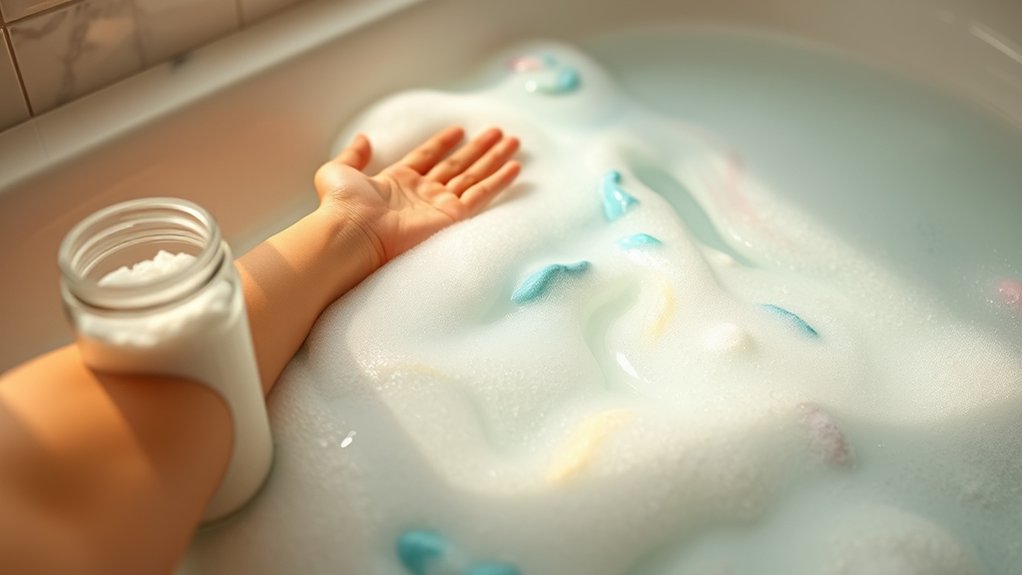
To maximize your bath bomb benefits without irritation, moisturize your skin immediately after bathing to lock in hydration. Gently rinse off any residue to prevent potential skin reactions.
Always select bath bombs with skin-friendly ingredients to reduce the risk of irritation.
Moisturize Immediately After Bath
Why should you moisturize immediately after using a bath bomb? Proper moisturizing timing is essential to lock in hydration while your skin is still damp, enhancing the sensory appeal and prolonging the bath bomb’s benefits. Applying moisturizer promptly prevents dryness and irritation caused by the bath’s ingredients.
To maximize results, consider these points:
- Apply moisturizer within five minutes post-bath
- Use fragrance-free, hypoallergenic products to avoid irritation
- Focus on areas prone to dryness, like elbows and knees
- Choose moisturizers with ceramides or hyaluronic acid for skin barrier repair
- Avoid harsh rubbing; gently pat skin before application
This precise approach optimizes moisture retention and maintains skin health, ensuring you fully benefit from your bath bomb experience.
Rinse Off Residue Gently
How should you handle the residue left by bath bombs to protect your skin? To ensure bath bomb safety while preserving skin hydration, gently rinse your body with lukewarm water after bathing. This step helps remove any lingering ingredients, such as oils, fragrances, or dyes, that may cause irritation or clog pores.
Avoid using hot water or harsh soaps, as they can strip natural oils and disrupt your skin’s moisture barrier. Instead, opt for a mild, hydrating cleanser if necessary. Pat your skin dry with a soft towel rather than rubbing vigorously to maintain hydration.
Choose Skin-Friendly Ingredients
Which ingredients should you look for when selecting a bath bomb to minimize skin irritation? Prioritizing skin-friendly ingredient selection is essential to maximize benefits while avoiding adverse reactions. Choose products formulated with gentle, non-irritating components that support skin health.
Focus on these skin-friendly ingredients:
- Oatmeal: Soothes and calms sensitive skin
- Shea Butter: Provides deep hydration without clogging pores
- Essential Oils (Lavender, Chamomile): Offer aromatherapy with minimal irritation risk
- Natural Colorants: Avoid synthetic dyes that may cause allergic reactions
- Baking Soda and Citric Acid: Ensure balanced fizzing action without harshness
Frequently Asked Questions
Can Bath Bombs Be Used in Hot Tubs?
Using bath bombs in hot tubs is generally discouraged due to tub compatibility issues and bath bomb safety concerns. Ingredients can damage jets and filters, so you should avoid them to keep your hot tub functioning properly and safely.
Are Bath Bombs Safe for Children?
You can use bath bombs for children if you ensure bath safety by selecting products with gentle, non-toxic child ingredients.
Avoid harsh chemicals and fragrances to prevent skin irritation and allergic reactions during bath time.
Do Bath Bombs Expire?
Yes, bath bombs do expire. Over time, bath bomb ingredients can degrade, reducing effectiveness.
To extend shelf life, follow proper storage guidelines: keep them dry, cool, and airtight, preventing moisture exposure and ingredient breakdown.
Can Bath Bombs Stain Your Bathtub?
Yes, bath bombs can cause bath stains if left untreated. You’ll want to rinse your tub promptly to remove bath residue, preventing stubborn discoloration.
This helps ensure your bathtub stays clean and stain-free after each use.
Are All Bath Bombs Vegan-Friendly?
Not all bath bombs use vegan ingredients; you should check labels carefully. If ethical sourcing matters to you, prioritize brands that transparently disclose their ingredient origins and manufacturing practices to ensure both vegan and ethical standards are met.