
Are You in the Shower
You might not realize it, but being in the shower is more than just a routine for cleanliness. It acts as a cognitive tool where focused sensory input and relaxed mental states converge to enhance creativity and problem-solving.
By understanding the neurological and psychological effects of showering, you can leverage this time to improve clarity and mood. But what specific mechanisms transform a simple shower into a strategic mental advantage?
Key Takeaways
- Showers create mental shifts by interrupting usual environments, fostering relaxed yet alert states for creative and cognitive benefits.
- Warm water and sensory isolation reduce distractions, activating the brain’s default mode network to enhance insight and associative thinking.
- Mindful showering with focused breathing and water awareness anchors attention, promoting clarity and reducing mental clutter.
- Cold showers increase alertness through norepinephrine release, while warm showers promote muscle relaxation and endorphin-driven calm.
- Aromatherapy with scents like eucalyptus or lavender during showers can further improve mood, focus, and cognitive performance.
How Showers Boost Creativity and Clear Thinking

How exactly do showers enhance creativity and clear thinking? Showers interrupt your usual environment, facilitating mental shifts that support creative routines. The warm water and sensory isolation reduce external distractions, enabling your mind to enter a relaxed yet alert state.
This state promotes divergent thinking crucial for innovation. Additionally, incorporating aromatherapy focus during showers can optimize this effect. Scents like eucalyptus or lavender stimulate neural pathways linked to mood and cognition, sharpening your mental clarity.
What Happens in Your Brain When You Shower
What changes occur in your brain during a shower? As warm water cascades over you, multiple brain networks engage simultaneously. The default mode network, responsible for self-referential thought, activates, allowing your mind to wander and process internal reflections.
Simultaneously, sensory brain networks process the tactile and thermal stimuli from water, creating a focused yet relaxed state. This interaction promotes neural relaxation, reducing activity in stress-related regions like the amygdala.
Sensory brain networks transform warm water stimuli into focused relaxation, calming stress centers like the amygdala.
The interplay between these networks fosters a balance between alertness and calm, enhancing cognitive flexibility. In essence, your brain shifts into a unique state where sensory input and introspective processes coexist, facilitating both mental clarity and emotional regulation.
This neural environment primes you for creative insights without the distractions of external stressors.
The Science of Relaxation in the Shower

You’ll find that water temperature directly influences your nervous system, with warm water promoting muscle relaxation and reducing cortisol levels. This physiological response triggers mental health benefits like lowered anxiety and enhanced mood.
Understanding these effects can help you optimize your shower for maximum relaxation.
Water Temperature Effects
Why does water temperature play such a critical role in your shower experience? The answer lies in temperature psychology, which examines how thermal sensations influence your physiological and emotional states.
When you adjust the water temperature, you directly modify the water stimuli impacting your skin’s thermoreceptors. Warm water dilates blood vessels, promotes muscle relaxation, and triggers the release of endorphins, enhancing your sense of comfort and calm.
Conversely, cooler water activates your sympathetic nervous system, increasing alertness and invigorating circulation. Your brain processes these temperature-induced signals, shaping your perception of relaxation or stimulation.
Mental Health Benefits
How does a simple shower influence your mental health? Showers serve as an effective tool for stress reduction by encouraging mindful routines. The warm water and solitude help lower cortisol levels, promoting relaxation.
Moreover, showers stimulate creative bursts by activating your brain’s default mode network, which is responsible for spontaneous thinking. This mental state can improve problem-solving and innovation.
| Benefit | Mechanism |
|---|---|
| Stress Reduction | Lowers cortisol via warmth |
| Mindful Routines | Focus on sensations, present moment |
| Creativity Boost | Activates default mode network |
| Mood Improvement | Releases endorphins |
| Enhanced Relaxation | Parasympathetic nervous system activation |
Integrating showers into your daily routine can optimize your mental well-being by leveraging these scientifically proven effects.
Shower Habits That Improve Mental Clarity
You can enhance mental clarity by adopting specific shower habits like cold water exposure, which stimulates alertness through increased circulation.
Practicing mindful techniques helps focus your attention and reduce mental clutter during your routine. Additionally, incorporating aromatherapy with essential oils can further improve concentration and cognitive function.
Benefits of Cold Showers
When did you last experience a sudden boost in alertness during your morning routine? Cold showers provide that immediate spike in brain energy through cold exposure, which triggers your nervous system.
The cold water causes vasoconstriction, increasing blood flow and oxygen delivery to your brain, enhancing mental clarity. This shock activates the release of norepinephrine, a neurotransmitter that sharpens focus and elevates mood.
Additionally, cold exposure improves mitochondrial efficiency, promoting sustained cognitive performance. By integrating cold showers into your routine, you stimulate your central nervous system, increasing alertness and reducing fatigue.
This physiological response helps you tackle complex tasks with improved concentration. Embracing cold showers targets key neural pathways, making your mental state more resilient and energized throughout the day.
Mindful Shower Techniques
Why does focusing on your sensory experience during a shower enhance mental clarity? When you engage in mindful listening, you direct your attention to the sound of water hitting the surfaces around you, grounding your awareness in the present moment.
Simultaneously, practicing breath awareness, tracking the rhythm and depth of your inhalations and exhalations, calms your nervous system, reducing cognitive clutter. These techniques activate your parasympathetic nervous system, improving focus and mental clarity.
To apply mindful shower techniques, eliminate distractions, and consciously observe the temperature, texture, and sound of water. Coordinate your breath with these sensory inputs to foster a meditative state.
This precise engagement with your senses enhances cognitive function, making your shower a purposeful practice that sharpens mental clarity rather than a routine task.
Aromatherapy for Focus
How can aromatherapy amplify your focus during a shower? By harnessing aroma diffusion, you can introduce targeted essential oils into your shower environment, stimulating neural pathways that enhance mental clarity. Use a shower-safe diffuser or place a few drops of oils on a washcloth away from direct water to ensure controlled scent dispersion.
Employ scent layering by combining complementary aromas, such as peppermint and rosemary, to create a synergistic effect that sharpens concentration. This technique modulates olfactory receptors more effectively than single scents, optimizing cognitive alertness.
To maximize results, maintain consistent aroma diffusion throughout your shower, avoiding overpowering intensity that could cause distraction. Integrating aromatherapy with your shower routine offers a precise, science-backed method to boost focus and productivity naturally.
How Shower Routines Enhance Mood and Focus
What impact does a consistent shower routine have on your mental state? Establishing ritual consistency in your shower routine creates a predictable environment that supports mindful productivity.
When you repeat specific actions daily, your brain anticipates the transition from stress to relaxation, enhancing mood regulation. The warm water stimulates circulation and releases muscle tension, which physiologically prepares you to focus better afterward.
Additionally, the sensory input, such as water temperature, sound, and scent, anchors your attention, promoting present-moment awareness. This shift reduces cognitive clutter, allowing you to approach tasks with clarity.
Using Shower Time for Problem-Solving
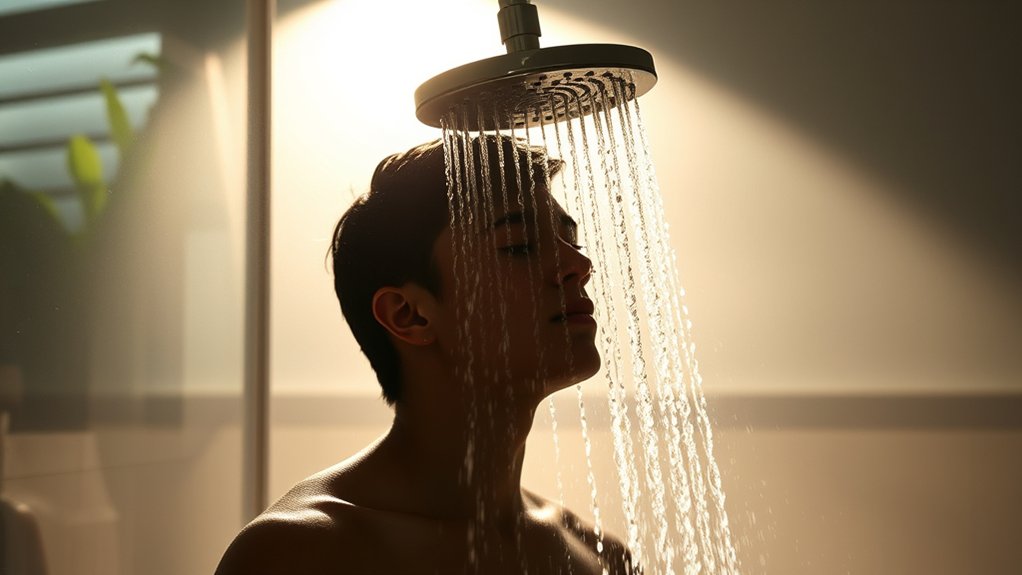
When do your best ideas often emerge? Many experience heightened creativity during unstructured moments, such as showering. This phenomenon relates to your brain’s default mode network activating, fostering insight and associative thinking.
To leverage shower productivity, integrate problem solving routines that encourage mental exploration without pressure. You can focus on a specific challenge or allow free-form ideation, using the shower as a distraction-free environment.
The consistent sensory input, the sound and warmth of water, helps maintain a relaxed yet alert state, ideal for complex cognitive tasks. By systematically applying problem solving routines during shower time, you enhance cognitive flow and increase the likelihood of breakthrough solutions.
This approach transforms routine hygiene into a strategic cognitive tool, optimizing your mental output efficiently.
Tips for Mindful Showering
Why not transform your daily shower into a deliberate practice of mindfulness? Begin by focusing on your mindful breathing. Inhale deeply and exhale slowly to anchor your attention.
Next, engage in water mindfulness by consciously noticing the temperature, texture, and rhythm of the water as it flows over your skin. Avoid letting your mind wander; instead, observe sensory details like the sound of water droplets and the scent of soap.
Maintain a steady breath cycle to enhance relaxation and presence. If distractions arise, gently redirect your focus back to your breath and the sensation of water.
Frequently Asked Questions
What Is the Ideal Water Temperature for a Refreshing Shower?
The ideal temperature for a reviving shower is around 98-105°F (37-40°C). Studies show 5-10 minutes at this range maximizes health benefits, balancing comfort and skin hydration without risking dryness or irritation during shower duration.
How Long Should a Shower Typically Last for Health Benefits?
You should limit shower duration to 5–10 minutes to maximize health benefits, balancing temperature preferences for a refreshing sensation while minimizing skin sensitivity.
Adjust your morning vs night bathing routine and consider gentle product recommendations accordingly.
Can Showering Too Often Negatively Affect Your Skin?
Think of your skin as a delicate sponge; if you increase showering frequency too much, you’ll strip away essential oils, reducing skin hydration.
This imbalance can cause dryness, irritation, and weaken your skin’s natural barrier function.
What Are the Best Shower Products for Sensitive Skin?
You should use gentle cleansers formulated without harsh chemicals to protect your skin barrier.
Follow with fragrance-free moisturizers containing ceramides or hyaluronic acid to hydrate and soothe sensitive skin effectively during your shower routine.
Is It Better to Shower in the Morning or at Night?
Wondering whether a morning shower or night shower suits you better? Morning showers boost alertness and circulation, while night showers promote relaxation and cleanse daily grime.
Choose based on your routine and skin’s needs for optimal results.