Are Toilet and Shower Drains the Same
You wouldn’t use a garden hose to drain a swimming pool, so why treat toilet and shower drains the same?
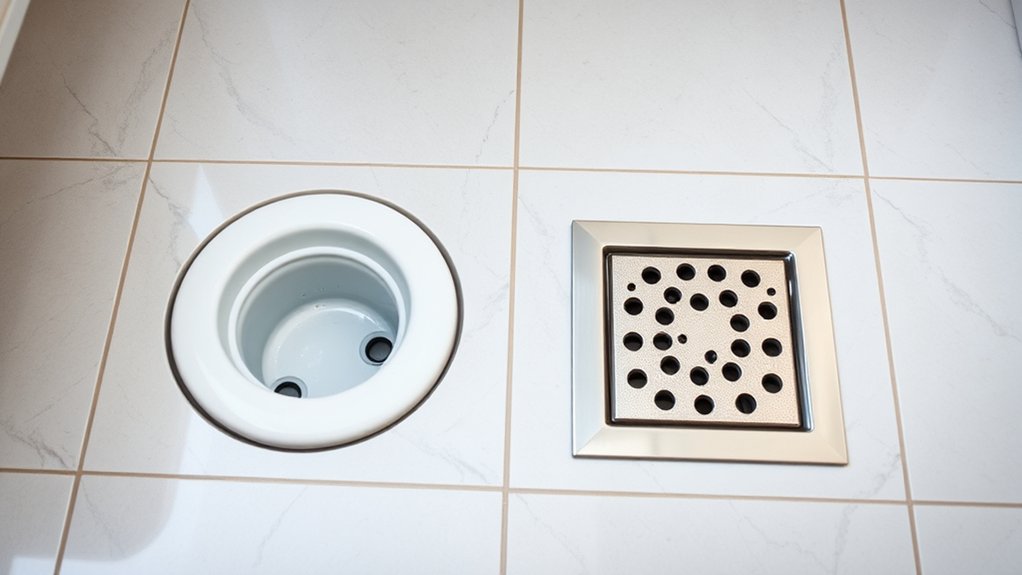
Toilet and shower drains serve distinct purposes, handling different waste types and volumes with specific pipe sizes, traps, and venting requirements.
Overlooking these differences can lead to serious clogs and odors.
Understanding what sets them apart is essential before you tackle any installation or repair.
Key Takeaways
- Toilet drains are larger (3-4 inches) to handle solid waste, while shower drains are smaller (2-3 inches) for water and minor debris.
- Toilet traps are larger and S-shaped to prevent sewer gas and handle solids; shower traps are smaller P-traps suited for wastewater without solids.
- Toilet venting supports strong airflow to maintain trap seals; shower venting manages steam and moisture to reduce mold risk.
- Using the wrong drain type causes frequent clogs, slow drainage, and potential sewer gas leaks.
- Toilet drains prioritize durability and solid waste flow, while shower drains focus on managing hair, soap scum, and water flow.
Toilet Drain Design for Solid Waste
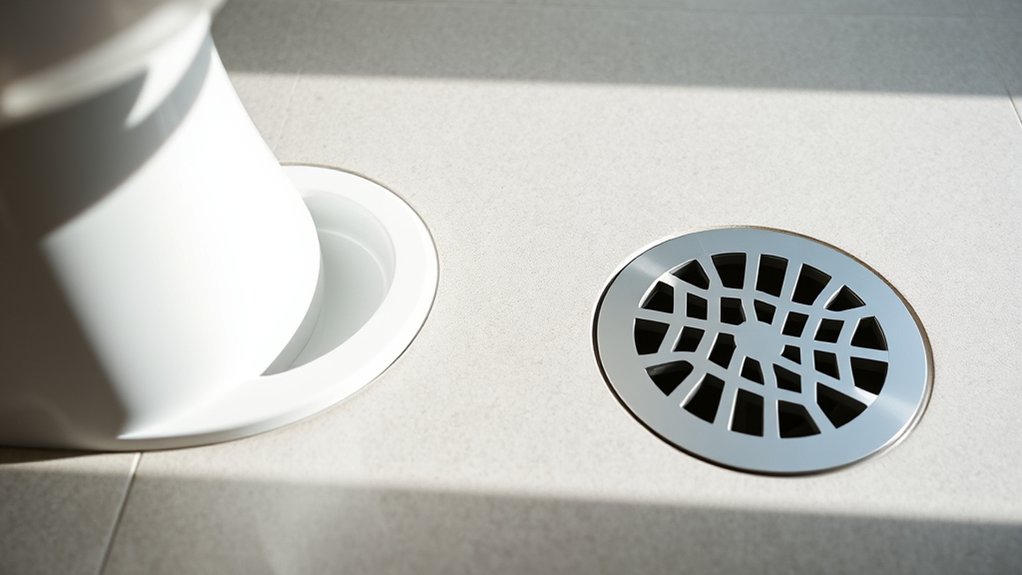
How does a toilet drain handle solid waste differently from other drains? Unlike typical drains, toilet drains must accommodate bulky solids and significant water volumes to prevent clogging.
When you review and sizing toilet drains, you’ll find they’re larger, commonly 3 to 4 inches in diameter, ensuring efficient waste passage. The materials versus aesthetics debate leans heavily toward durability here; toilets use strong, corrosion-resistant materials like PVC or cast iron to withstand chemical breakdown and physical stress.
You won’t see decorative finishes on these parts since functionality is paramount. The drain’s design incorporates a trapway optimized for solid waste flow, unlike shower drains that only manage liquids and minor debris.
Proper sizing and material choice are crucial to maintain performance and prevent costly blockages in toilet drain systems.
Shower Drain Function and Debris Types
While toilet drains focus on moving solid waste efficiently, shower drains handle a very different type of flow and debris. Shower drainage systems rely on proper shower ventilation to prevent odors and ensure smooth water flow.
Unlike toilet venting, shower ventilation manages steam and moisture, reducing the risk of mold. You’ll find that shower drains deal with finer debris, which can accumulate and cause clogs over time.
| Debris Type | Source | Impact on Drain |
|---|---|---|
| Hair | Human shedding | Causes buildup, slow drainage |
| Soap Scum | Body wash residue | Leads to pipe lining and blockages |
| Dirt and Sand | External debris | Abrasive buildup, pipe wear |
| Shampoo | Cleaning agents | Chemical residue, minor clogs |
Understanding these differences helps you maintain shower drains effectively without confusing them with toilet venting systems.
Pipe Size Differences Between Toilet and Shower Drains
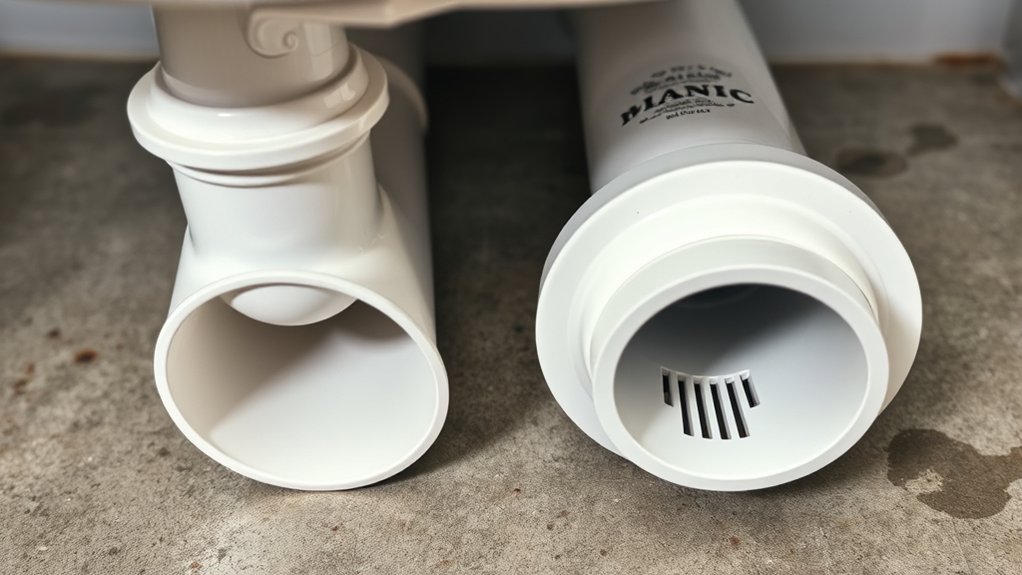
A key distinction between toilet and shower drains lies in their pipe sizes, which directly affect flow capacity and clog potential. Toilets require larger pipes due to higher waste volume and solids, while showers handle mostly water and small debris. Understanding toilet sizing and shower diameter is essential for proper drainage design.
Toilet drains typically use a 3 to 4-inch pipe diameter to accommodate solid waste efficiently.
Toilet drains use 3 to 4-inch pipes to efficiently handle solid waste.
Shower drains usually have a smaller diameter, commonly 2 to 3 inches, since they only carry water and minor particles.
Incorrect sizing can lead to slow drainage or frequent clogs, impacting overall plumbing performance.
Seal and Trap Differences for Toilets and Showers
Why do toilets and showers require different seals and traps? Toilets demand a robust seal and trap system to handle solid waste and prevent sewer gas from escaping. Their trap is typically a larger, S-shaped water seal designed to maintain a strong barrier, essential for effective toilet venting and odor control.
In contrast, shower trap differences lie in their smaller size and shape, tailored to manage only wastewater without solids. Shower traps often use a P-trap configuration that efficiently retains water to block sewer gases but doesn’t need the heavy-duty seal toilets require.
Understanding these distinctions helps you install the correct trap and seal, ensuring proper function and compliance with plumbing codes. Proper toilet venting supports the trap’s seal, preventing siphoning that could compromise the system’s integrity.
Why Toilet Drains Require Stronger Venting Than Shower Drains
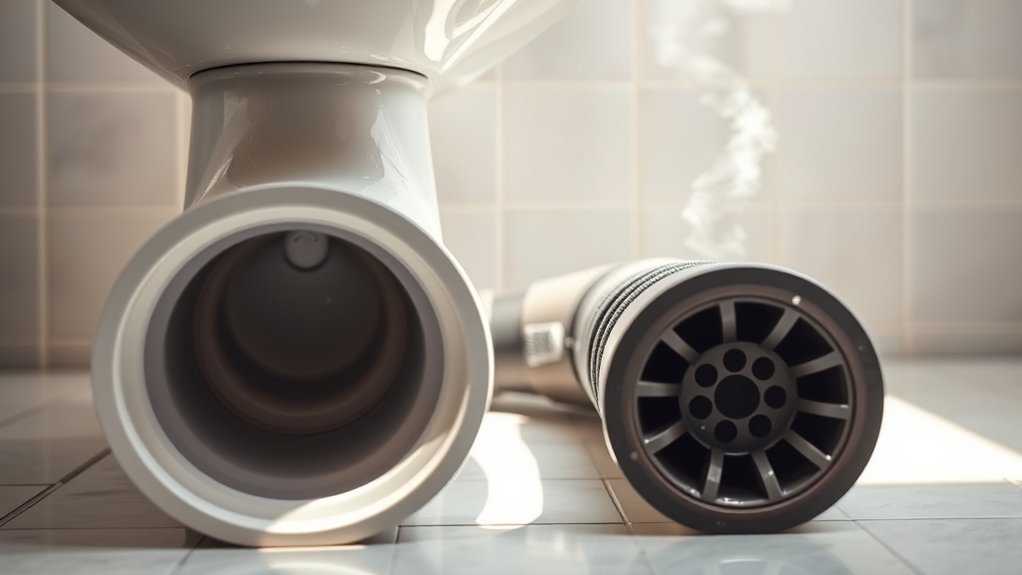
You need stronger venting for toilet drains because they handle solid waste, which creates greater airflow demands to prevent blockages.
Shower drains only remove water and small debris, so their venting requirements are less intense. Understanding these differences helps you design an effective plumbing system that avoids pressure imbalances and odors.
Airflow Needs Differences
How does venting differ between toilet and shower drains? The airflow differences primarily stem from their distinct venting needs. Toilet drains demand stronger venting because they handle larger volumes of waste and produce more gas.
This requires a vent system that can maintain consistent air pressure, preventing siphoning and allowing waste to flow smoothly.
In contrast, shower drains deal mostly with water and minimal gas, so their venting needs are less stringent. You’ll notice:
- Toilet vents are typically larger in diameter to accommodate rapid air exchange.
- Shower vents are smaller since the volume and pressure changes are lower.
- Toilet venting systems often include additional branch vents to stabilize airflow.
Understanding these airflow differences helps you design more efficient drainage systems tailored to each fixture.
Waste Removal Challenges
Although both toilet and shower drains serve to remove waste, toilet drains face greater challenges due to the nature and volume of the material they handle. You deal with solid waste and toilet paper, both of which require stronger venting to prevent clogging and maintain proper flow.
Unlike shower drains, which primarily handle water and small debris, toilet drains must rapidly evacuate bulkier waste without causing pressure imbalances that could disrupt the flow or allow sewer gases to enter your space. Proper venting in toilet drains ensures air can enter the system freely, preventing vacuum conditions that slow waste removal or cause siphoning of water seals in floor drains.
This is why toilet drains need more robust venting systems than shower drains for reliable, hygienic operation.
Common Clogs in Toilet vs. Shower Drains
What causes clogs in toilet and shower drains differs considerably due to their distinct functions and waste types. Understanding the toilet vs. shower anatomy helps you pinpoint clog sources. Toilets handle solid waste and paper, while showers drain water mixed with soap, hair, and debris.
You’ll notice different clog patterns:
- Toilet clogs often result from excessive toilet paper or non-flushable objects blocking the trap or drain pipe.
- Shower clogs frequently form from hair entangling with soap scum, creating dense blockages in the drain or P-trap.
- Mineral buildup from hard water can affect both, but it’s more common in shower drains due to constant water flow.
Knowing these differences helps you address clogs effectively without confusing toilet vs. shower anatomy or waste characteristics.
Maintenance Needs for Toilet and Shower Drains
You’ll need to address different clogging causes for toilet and shower drains to keep them functioning properly. Toilets often clog from excess paper or waste, while showers get blocked by hair and soap buildup.
Regular cleaning schedules tailored to each type will help prevent costly backups and maintain optimal flow.
Common Clogging Causes
Why do toilet and shower drains clog so frequently? Both face specific challenges tied to their use and design. Toilets often contend with materials affecting toilet acoustics, where improper flushing or non-flushable items create blockages.
Shower drains, influenced by shower tiling considerations, accumulate hair, soap scum, and debris trapped by grout lines or uneven tiling.
Common clogging causes include:
- Hair and soap buildup forming dense mats impeding water flow
- Foreign objects or excessive toilet paper disrupting toilet acoustics and drainage
- Mineral deposits accumulating around shower tiling edges, restricting water movement
Understanding these causes helps you pinpoint issues quickly and maintain optimal flow. Each drain requires tailored attention to prevent blockages resulting from their distinct use patterns and environmental factors.
Cleaning Frequency Tips
Recognizing the specific clogging factors for toilets and showers guides how often you should clean each drain. Toilets primarily face blockages from waste and paper, impacting toilet aesthetics if neglected.
Showers accumulate hair and soap scum, which can dull shower accents and cause slow drainage. To maintain both efficiently, adhere to a cleaning schedule based on usage and clogging risk.
| Drain Type | Recommended Cleaning Frequency |
|---|---|
| Toilet | Every 3 months or as needed |
| Shower | Monthly to bi-monthly |
| Heavy Use | Adjust frequency accordingly |
Key Factors When Installing Toilet and Shower Drains
How do you guarantee proper function and compliance when installing toilet and shower drains? Focus on these key factors to ensure efficient drainage and adherence to plumbing codes.
First, maintain the correct drain slope, typically 1/4 inch per foot, to promote effective water flow and prevent clogs. Next, ensure proper toilet venting to allow air into the drainage system, avoiding suction that can disrupt water seals.
Maintain a 1/4 inch per foot slope and proper venting to ensure smooth drainage and prevent seal disruption.
Finally, use compatible materials and fittings designed for each drain type to withstand varying waste types and flow volumes.
- Verify the drain slope visually with a level during installation
- Connect toilet vents according to local plumbing codes
- Choose drain components rated for either solid waste or gray water
Following these steps helps you install reliable, code-compliant toilet and shower drains.
Why Choosing the Right Drain Prevents Plumbing Problems
What happens when you install the wrong type of drain for your toilet or shower? You risk frequent clogs, slow drainage, and potential sewer gas leaks. Each fixture requires specific trap differences to maintain proper water seals and prevent odors.
Toilets depend heavily on correct toilet venting to balance air pressure and ensure waste flows smoothly. Shower drains lack the same venting demands but need traps designed to handle hair and soap residue.
Using a toilet drain on a shower, or vice versa, disrupts these engineered functions. You’ll end up with backups or foul smells because the trap can’t maintain its seal or venting fails to equalize pressure.
Choosing the right drain avoids costly repairs and keeps your plumbing system functioning efficiently and hygienically.
Frequently Asked Questions
Can I Use the Same Drain Cleaner for Both Toilet and Shower Drains?
You shouldn’t use the same cleaner for toilet vs drain due to cleaner compatibility. Toilet-specific cleaners handle waste better, while shower drain cleaners target hair and soap buildup.
Using the wrong one risks damage or inefficiency.
How Do Bathroom Remodels Affect Toilet and Shower Drain Placement?
Bathroom remodels directly affect your drainage layout by requiring adjustments to pipe routes and venting. Remodeling impact includes repositioning toilet and shower drains for optimal flow, ensuring compliance with plumbing codes and preventing future blockages or leaks.
Are There Eco-Friendly Options for Toilet and Shower Drain Systems?
Yes, you can choose eco friendly plumbing with sustainable drain options like water-saving toilets and greywater recycling shower drains. These systems reduce water waste and improve efficiency, making your bathroom remodel both practical and environmentally responsible.
What Signs Indicate a Failing Toilet or Shower Drain?
If you love surprises, drain clogging is your friend. Slow draining water or gurgling sounds signal trouble.
Don’t trust DIY repairs blindly; persistent backups or foul odors mean it’s time for professional inspection and precise fixes.
Can Tree Roots Impact Toilet and Shower Drain Pipes Differently?
Yes, tree roots impact toilet vs shower drains differently due to pipe size and flow. Toilet drains, being larger, resist roots better, while smaller shower drains clog easier. This demands more frequent inspection and maintenance to prevent damage.