Are Shower Heads a Standard Size
Just as puzzle pieces must fit perfectly, your shower head needs the right connection to work smoothly.
Are shower heads a standard size? In the U.S., most shower heads use a 1/2-inch NPT thread, but variations can throw off compatibility.
Understanding the specifics of thread size, pitch, and arm condition is essential before upgrading.
If you’re considering a new fixture, it’s worth knowing why not every shower head will simply screw on without issues.
Key Takeaways
- Most shower heads in the US use a standard 1/2-inch NPT threaded connection for compatibility.
- Typical shower head diameters range from 4 to 6 inches, with some common sizes up to 8 inches.
- Standard thread size simplifies installation without needing adapters or custom fittings.
- Non-standard or older fixtures may require adapters due to thread or size variations.
- Verifying thread type and size before purchase prevents leaks and ensures proper fit.
What Is the Standard Shower Head Size in the US?
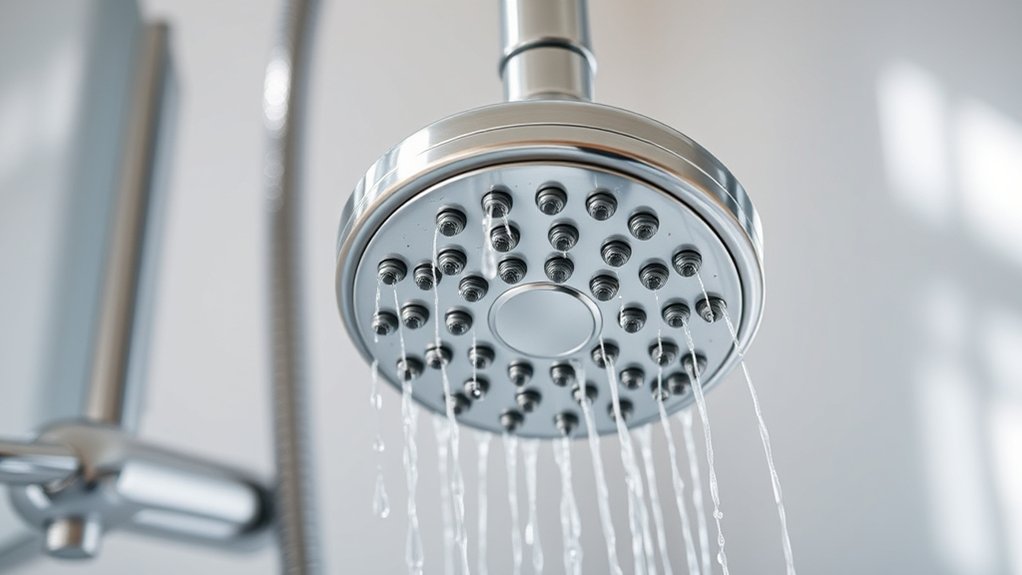
When you’re replacing or installing a shower head, knowing the standard size in the US is essential. Most shower heads use a 1/2-inch NPT (National Pipe Thread) connection, which is the industry norm. This standard size simplifies compatibility across different brands and models, reducing the need for adapters or custom fittings.
While discussing two word discussion ideas like “irregular maintenance,” remember that consistent upkeep can prevent leaks and ensure a secure fit. If you stick to the 1/2-inch standard, you’ll avoid common installation issues caused by mismatched sizes.
This standardization helps you focus on performance and design rather than worrying about thread compatibility or size variations during your project.
How Shower Arm Threads Affect Compatibility
You need to understand that shower arm threads follow specific size standards, typically 1/2-inch NPT in the US. Knowing the common thread types ensures you select a shower head that fits securely without leaks.
Always verify thread compatibility before installation to ensure a proper fit.
Thread Size Standards
Thread size standards play a pivotal role in ensuring your shower head fits securely and functions properly. Shower arms and heads use standardized thread sizes, typically ½-inch NPT, to maintain compatibility across different brands and models.
If thread sizes don’t match, you’ll face leaks or the need for adapters. When you consider two word discussion ideas like “thread pitch” or “thread diameter,” you’ll recognize these specifications directly impact your installation’s success.
Avoid mixing unrelated topics such as water pressure or spray patterns here—they belong elsewhere. By focusing strictly on thread size standards, you ensure your shower head connects seamlessly to the shower arm, preventing common issues like cross-threading or poor sealing.
Understanding these standards simplifies your replacement or upgrade process.
Common Thread Types
How do different thread types impact the compatibility between your shower arm and shower head? Thread type directly influences how well your water fittings connect. Mismatched threads can cause leaks or prevent installation. Understanding common thread standards helps you choose the right shower dimension and ensure compatibility.
| Thread Type | Description |
|---|---|
| NPT (National Pipe Thread) | Tapered, commonly used in the US for water fittings |
| BSP (British Standard Pipe) | Parallel threads, standard in Europe and Asia |
| IPS (Iron Pipe Size) | Refers to nominal pipe diameter, related to thread size |
| MIP (Male Iron Pipe) | Male threaded end, must match female counterpart |
Knowing these ensures your shower arm and head fit seamlessly without issues.
Ensuring Proper Fit
Compatibility between your shower arm and shower head hinges on matching their threads accurately. Shower arms typically use a 1/2-inch NPT (National Pipe Thread) standard, but variations can occur.
To ensure proper fit, verify that both components share the same thread type and size before installation. Using mismatched threads can cause leaks or damage, so this subtopic offshoot is critical.
When selecting a shower head, focus on two word ideas: “thread compatibility.” Confirming these details simplifies the process and prevents costly errors.
If you encounter non-standard threads, adapters are available but may affect water pressure or stability. Ultimately, precise thread matching guarantees a secure, leak-free connection, maintaining your shower’s functionality and longevity.
Common Shower Head Size and Style Variations
You’ll find most shower heads fall within standard dimensions, typically around 6 to 8 inches in diameter. Popular styles include fixed, handheld, and rain shower heads, each designed for specific water flow and coverage.
Understanding these size and style variations helps you choose the right fit and functionality for your setup.
Standard Shower Head Dimensions
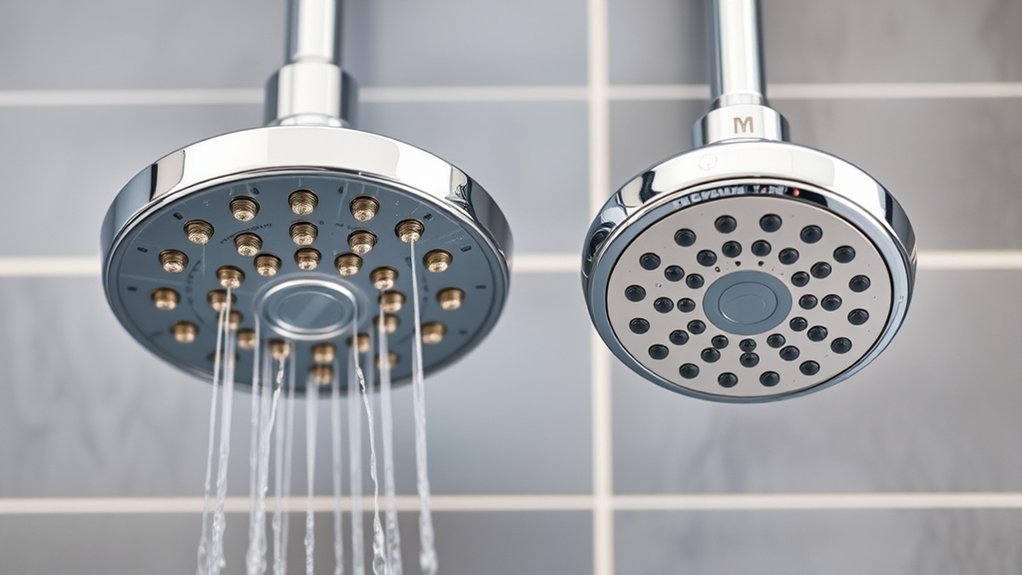
What dimensions should you expect when selecting a shower head? Most standard shower heads feature a diameter between 4 and 6 inches, fitting typical ½-inch NPT threaded pipes. This sizing ensures compatibility for straightforward installation and replacement.
Keep in mind, larger shower heads may require additional support hardware due to weight. Depth usually ranges from 2 to 4 inches, affecting water spray reach. When considering dimensions, factor in seasonal maintenance access to prevent mineral buildup and ensure longevity.
Additionally, you might choose a size that promotes water conservation without compromising coverage. Selecting the right dimensions balances efficient water flow with practical installation needs, helping you maintain optimal performance while supporting sustainable water use.
Always verify measurements against your plumbing setup for seamless integration.
Popular Shower Head Styles
How do you choose the right shower head style to match your space and preferences? Understanding popular styles helps you balance aesthetics and functionality without veering into unrelated topics like plumbing layouts or water pressure issues.
Here are three common shower head styles to consider:
- Fixed Wall-Mounted: Traditional and space-efficient, these heads attach directly to the wall, offering consistent spray patterns.
- Handheld: These provide flexibility and ease of use, ideal for targeted rinsing or cleaning.
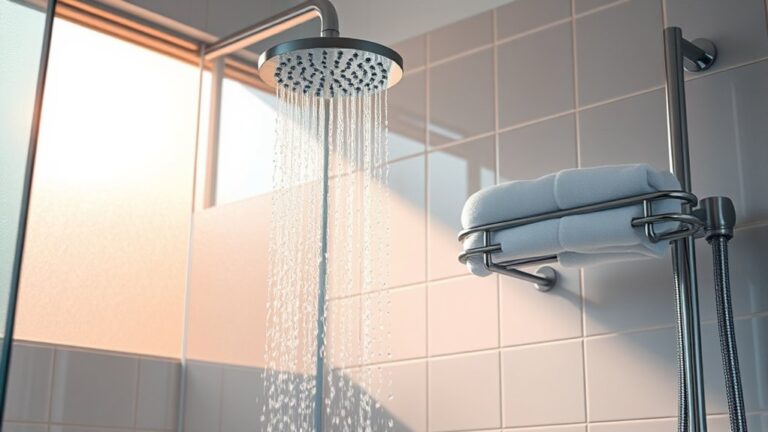
- Rainfall: Mounted overhead, they simulate natural rain, requiring sufficient ceiling clearance.
These discussion ideas keep your focus on style choices while preparing you for size variations, which we’ll cover next. Choosing the right style ensures compatibility with standard fittings and enhances your shower experience effectively.
Size Variations Explained
When considering shower heads, why do size variations matter? Shower heads come in different diameters, typically ranging from 4 to 12 inches. These size differences affect water coverage and pressure, so choosing the right size ensures optimal performance with your existing basic plumbing.
Larger shower heads provide a broader spray but require sufficient water flow and pressure; smaller heads concentrate water, which might suit low-pressure systems better. Additionally, water quality plays a role. If you have hard water, a smaller head with replaceable nozzles may be easier to maintain.
Understanding these variations helps you select a shower head that matches your plumbing setup and water conditions, ensuring efficient water use and a satisfying shower experience without compromising system integrity or water conservation goals.
How to Measure Your Existing Shower Head and Arm
Why is taking exact measurements of your current shower head and arm essential before making any replacements? Accurate measurement basics ensure you select a compatible replacement, preventing leaks or installation issues. Begin by measuring the diameter of the shower arm’s threaded end using a caliper or ruler to confirm thread compatibility, typically ½ inch NPT in the U.S.
Taking precise measurements ensures you choose a compatible shower head, avoiding leaks and installation problems.
Next, measure the length of the shower arm from wall connection to threaded end. Finally, note the thread pitch, which affects how the new shower head screws on.
- Measure the external diameter of the shower arm threads precisely
- Confirm thread type and pitch for compatibility
- Record shower arm length for spatial fit
Following these steps guarantees a proper fit and efficient installation.
Why Your New Shower Head Might Not Fit
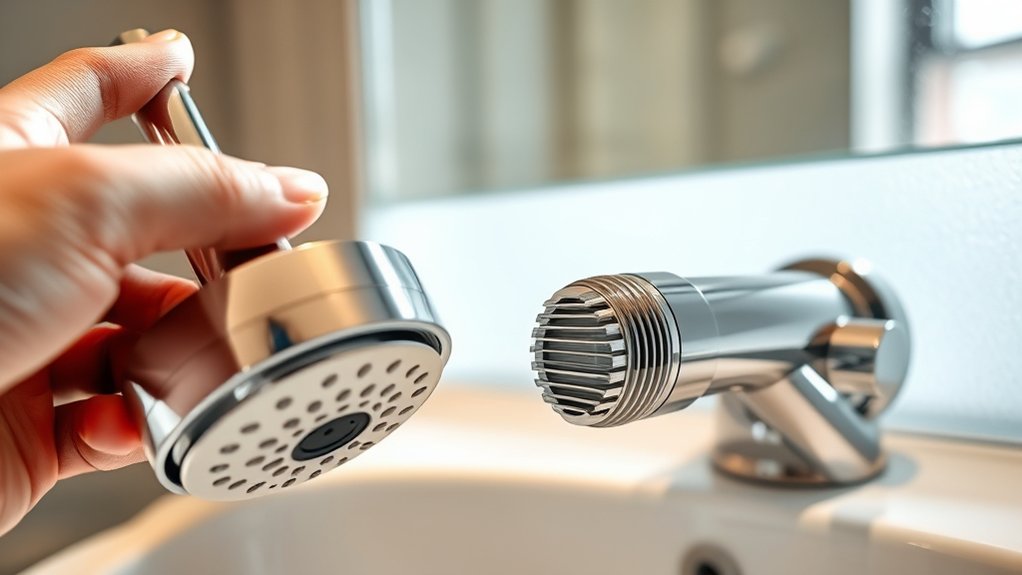
You might find your new shower head doesn’t fit because pipe thread sizes can vary slightly, affecting compatibility. Additionally, the shower arm’s shape and length must align with the new fixture’s connection type.
Checking these specifications before purchase guarantees a proper fit and prevents installation issues.
Pipe Thread Size Variations
How do pipe thread size variations impact your ability to install a new shower head? If the threads on your shower arm and the new shower head don’t match precisely, you’ll face leaks or an inability to connect them.
Most residential shower heads use 1/2-inch NPT (National Pipe Thread) standards, but variations exist, especially in older homes or specialty fixtures. This mismatch can prevent you from upgrading to models with advanced water conservation or smart features designed for standard fittings.
Consider these points before installation:
- Thread pitch differences can cause poor sealing or cross-threading
- Non-standard threads may require adapters or rethreading tools
- Incorrect fittings might compromise smart feature connectivity and water flow control
Understanding these variations ensures a proper fit and optimizes your shower’s efficiency.
Shower Arm Compatibility
When dealing with shower arm compatibility, the connection between your existing shower arm and a new shower head plays a critical role in installation success. You need to ensure the shower arm’s pipe thread size matches the shower head’s inlet to avoid leaks or improper fit.
Beyond thread sizes, consider the shower arm’s angle and length since these affect shower aesthetics and positioning. If your shower head includes water filtration, compatibility becomes even more crucial because improper fitting can disrupt filtration effectiveness or cause water flow issues.
Before purchasing, measure your current shower arm and check manufacturer specifications for the new head, focusing on thread type, diameter, and any integrated filtration system requirements. Proper compatibility ensures a secure fit, optimal water flow, and maintains the intended look of your shower setup.
Do You Need an Adapter or New Plumbing?
Why consider an adapter or new plumbing when installing a shower head? Even though most shower heads fit a standard ½-inch pipe, variations in shower arm design or older plumbing systems might require adjustments. You’ll need an adapter if the threading doesn’t match or if your shower arm is an unusual size.
New plumbing may be necessary when corrosion or damage exists or if you upgrade to a shower system needing different water flow specifications.
Key points to evaluate:
- Thread compatibility: Confirm if your shower arm and head threads align.
- Pipe condition: Inspect for wear or corrosion affecting installation.
- Water pressure requirements: Ensure plumbing supports your new shower head’s flow needs.
Avoid unrelated topic or off topic placeholder issues by focusing strictly on plumbing fit and compatibility.
Fixed, Handheld, or Dual: Which Shower Head Is Right?
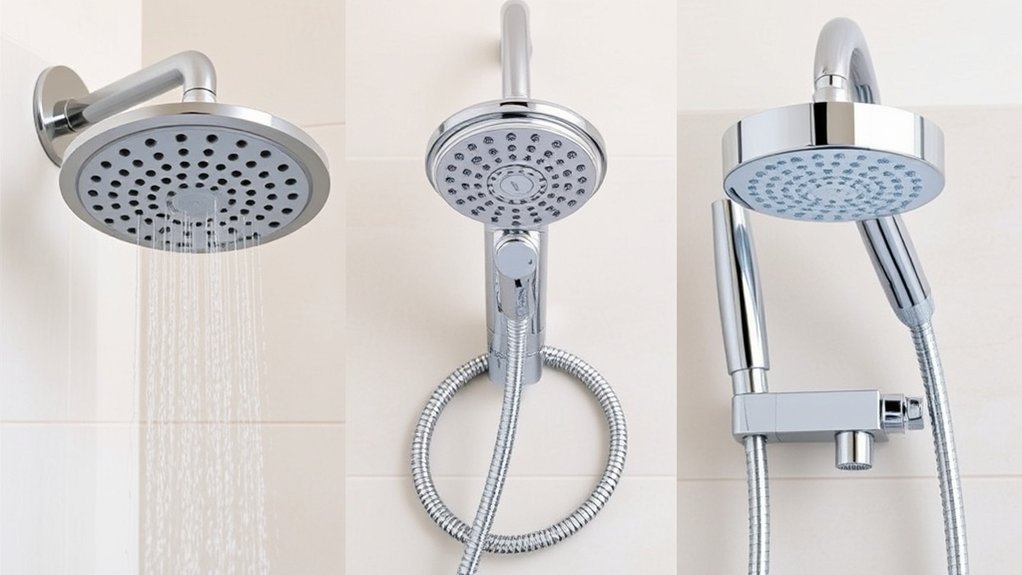
Which shower head design best suits your needs depends on your daily routine and bathroom setup. Fixed shower heads offer simplicity and consistent water flow, ideal if you want a straightforward, maintenance-free option.
Choosing the right shower head depends on your routine and bathroom layout for simplicity and steady flow.
Handheld models provide flexibility for targeted rinsing and cleaning, perfect if you value versatility or have specific accessibility needs. Dual shower heads combine both features, giving you control to switch between or use simultaneously.
This fits well in smart homes where you can integrate water usage with low energy lighting and other connected systems. When selecting, consider your bathroom’s plumbing compatibility and whether you want to optimize efficiency alongside smart features.
Each design influences water pressure and energy consumption, so choose one that balances performance with your home’s technology and sustainability goals.
Installing a New Shower Head Without Extra Tools
Choosing the right shower head design sets the stage for a straightforward installation process. When installing a new shower head without extra tools, you rely on standard fittings and hand-tightening.
Most shower heads feature a 1/2-inch threaded connection, which fits the vast majority of shower arms, making the use of additional tools often irrelevant. Avoid topics not applicable here, like plumbing modifications or water pressure adjustments.
To install effectively without tools, focus on:
- Hand-tightening the shower head to prevent damage
- Using plumber’s tape for a secure, leak-free seal
- Ensuring the shower arm threads are clean and free of debris
How Water Pressure and Flow Rate Affect Shower Head Performance
How does water pressure influence your shower experience? Water pressure directly affects the force with which water exits your shower head, impacting spray intensity and coverage. Low water pressure can result in weak, unsatisfying streams, while excessively high pressure may cause splashing or discomfort.
Flow rate, measured in gallons per minute (GPM), determines how much water your shower head delivers. A higher flow rate often means more water consumption but can improve rinsing efficiency. Modern shower heads balance water pressure and flow rate to optimize performance and conserve water.
When selecting a shower head, consider your home’s typical water pressure and the device’s flow rate rating to ensure efficient operation. Understanding these factors helps you achieve a comfortable, effective shower without wasting water or energy.
When to Upgrade Your Shower Arm Along With the Shower Head
When should you consider upgrading your shower arm along with your shower head? If you’re replacing your shower head, it’s not always necessary to change the arm, but certain conditions make it essential. Ignoring these can lead to irrelevant topic discussions or unclear scope in your project, resulting in poor functionality.
Consider upgrading your shower arm if:
- The existing arm is corroded, bent, or leaking, compromising water flow.
- You want to adjust the height or angle for better shower coverage.
- Your new shower head is larger or heavier, requiring a sturdier or extended arm.
Upgrading ensures optimal performance and prevents mismatched components, enhancing water pressure and flow rate without unnecessary confusion or irrelevant topic diversions.
Frequently Asked Questions
How Often Should I Clean My Shower Head to Prevent Buildup?
You should clean your shower head every 3-4 months to prevent buildup. Regular cleaning maintains water-saving benefits, low pressure designs, durable materials, and temperature stability. This ensures optimal performance and longevity in your shower system.
Can Shower Heads Help Save Water and Reduce Utility Bills?
You’d save oceans by switching to efficient shower heads! With water-saving tech and flow control, you’ll cut utility bills drastically.
Focus on pressure optimization and smart design to maximize savings without sacrificing your shower experience.
Are There Shower Heads Designed Specifically for Low Water Pressure?
Yes, you’ll find low flow shower heads designed specifically to optimize water pressure even in low-pressure systems. They use advanced nozzles and flow restrictors, ensuring efficient water delivery without sacrificing shower performance or comfort.
What Materials Are Best for Durable and Rust-Resistant Shower Heads?
You should choose shower heads made from durable materials like stainless steel or brass, as they offer excellent corrosion resistance.
Look for rust resistant finishes such as chrome or nickel plating to guarantee long-lasting performance and minimal maintenance.
Can a Shower Head Affect the Temperature Consistency During Showers?
Yes, your shower head can affect temperature consistency. Two-word discussion ideas like “flow rate” and “pressure balance” directly impact how stable your water temperature stays, ensuring a steady, comfortable shower without sudden hot or cold bursts.