Are Led Shower Heads Safe
You might wonder if LED shower heads are safe to use given their electrical components in a wet environment.
When designed with proper insulation, waterproof seals, and low-voltage power sources, these devices minimize shock risks effectively.
However, safety can vary considerably depending on manufacturing standards and certifications.
Understanding how these factors interplay will help you assess whether an LED shower head can deliver both illumination and safety without compromise.
Key Takeaways
- LED shower heads operate on low-voltage power and use sealed electronics to ensure electrical safety and water resistance.
- Water-powered LED shower heads generate electricity via a turbine, eliminating batteries and reducing electrical risks.
- Properly manufactured units have waterproof seals and insulated components to prevent leaks and electrical hazards.
- Safety certifications like UL, CE, and IP ratings confirm compliance with electrical and water resistance standards.
- Magnets securely hold components without affecting water flow or safety, and LED glow intensity is regulated to avoid heat issues.
Are LED Shower Heads Safe to Use?
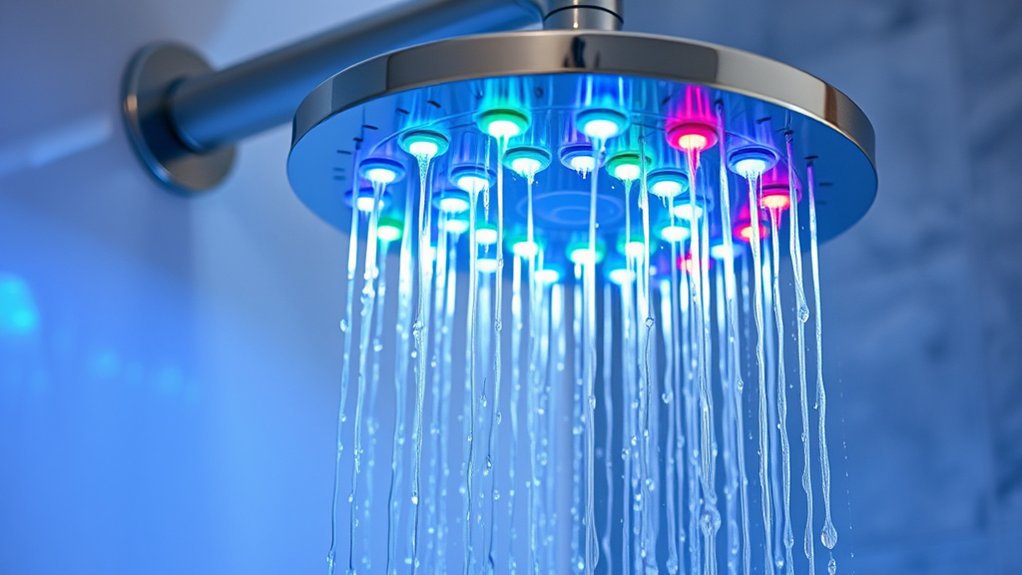
How safe are LED shower heads for everyday use? You’ll find that modern LED shower heads incorporate reversible magnets to securely hold internal components, minimizing risks of dislodgement or malfunction. These magnets enhance the device’s durability without compromising water flow or structural integrity.
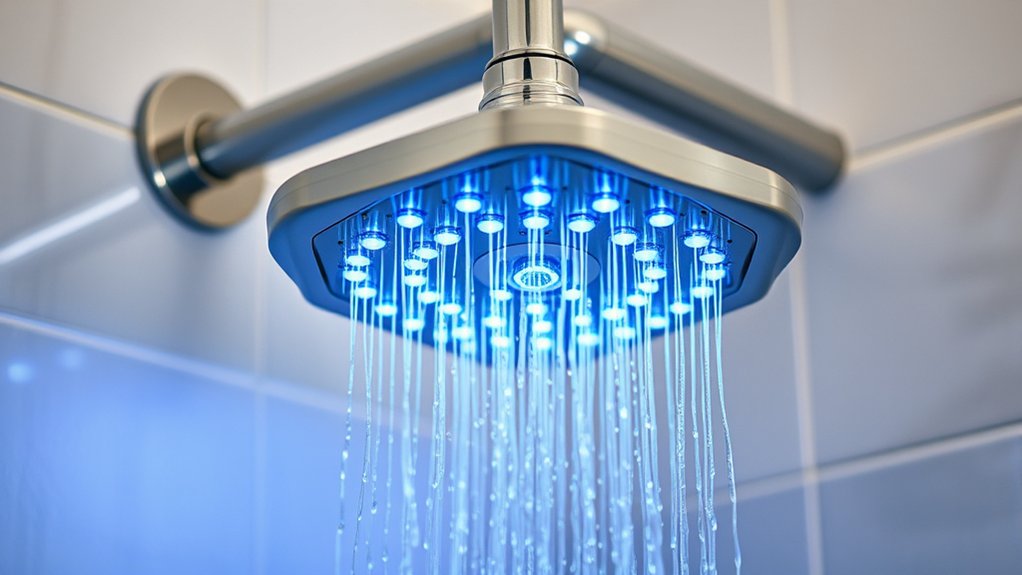
Furthermore, the glow intensity of the LEDs is carefully regulated to avoid excessive heat generation, which could otherwise pose safety concerns. Because LED shower heads operate on low-voltage power sources, the risk of electrical hazards remains minimal.
When properly manufactured with quality materials and sealed electronics, they maintain water resistance and electrical isolation effectively. You can generally trust these devices to be safe, provided they meet industry standards and have undergone rigorous safety testing prior to market release.
How Do LED Shower Heads Work: And Are They Safe?
Why do LED shower heads light up without external wiring? They use a small turbine inside the shower head, powered by water flow. As water moves, it spins the turbine, generating electricity that powers the LEDs.
This eliminates the need for batteries or direct electrical connections, enhancing LED safety by reducing electrical risks. The design ensures water retention is optimized to prevent leaks and protect internal electronics.
High-quality seals and materials maintain water tightness, preventing moisture from compromising LED components. You can trust that, when properly manufactured, these systems provide safe illumination without exposing you to electrical hazards.
However, understanding their operation helps ensure you choose a model with effective water retention and proven LED safety features for reliable, risk-free performance.
What Safety Standards and Certifications Should You Look For?
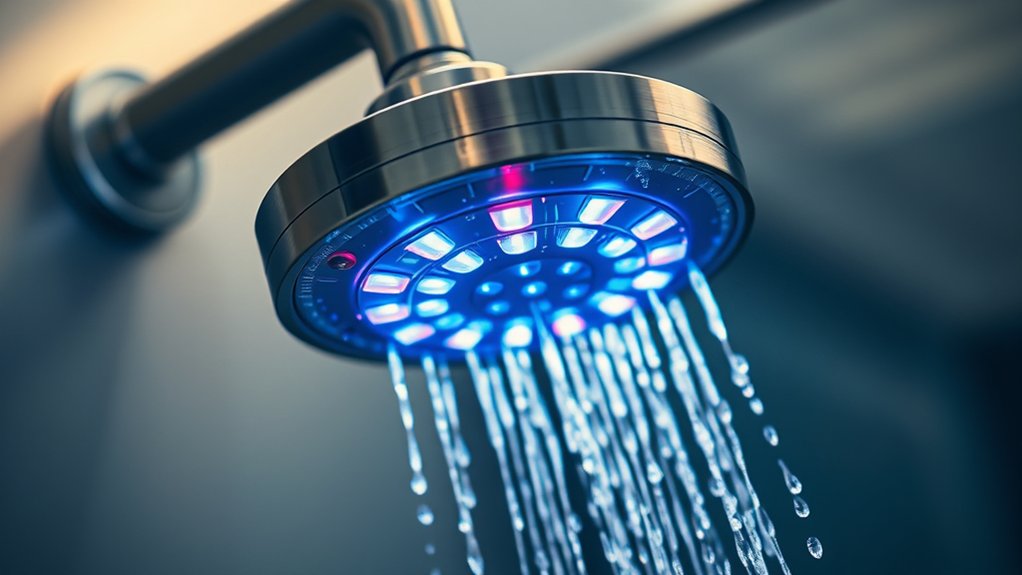
Which safety standards and certifications should you prioritize when selecting an LED shower head? Focus on those ensuring adequate insulation and leakage prevention to avoid electrical hazards. Look for certifications from recognized organizations that validate the product’s compliance with safety protocols.
| Certification | Focus Area | Importance |
|---|---|---|
| UL (Underwriters Laboratories) | Electrical safety | Ensures adequate insulation and safe electrical design |
| IP (Ingress Protection) Rating | Water resistance | Confirms leakage prevention and durability in wet environments |
| CE (Conformité Européenne) | Safety and performance | Verifies compliance with EU safety directives |
Prioritizing these certifications guarantees that the LED shower head meets rigorous safety requirements, protecting you from electric shocks and water damage.
Are Battery-Powered or Water-Powered LED Shower Heads Safer?
Ensuring that your LED shower head carries proper safety certifications is only part of the equation; understanding the power source’s impact on safety is equally important. When comparing battery-powered safety to water-powered design, water-powered LED shower heads generally offer enhanced risk mitigation.
Their water-powered design harnesses the water flow to generate electricity, eliminating the need for batteries and minimizing electrical hazards. Battery-powered models, while convenient, require secure battery compartments and proper insulation to prevent leakage or short circuits, which can compromise safety.
You should also consider maintenance: water-powered units tend to be more durable and less prone to electrical failures, while battery replacements introduce potential risks if mishandled. Ultimately, the water-powered design’s self-sufficiency and reduced electrical components typically provide a safer option for your bathroom environment.
Common Electrical and Water Safety Concerns With LED Shower Heads
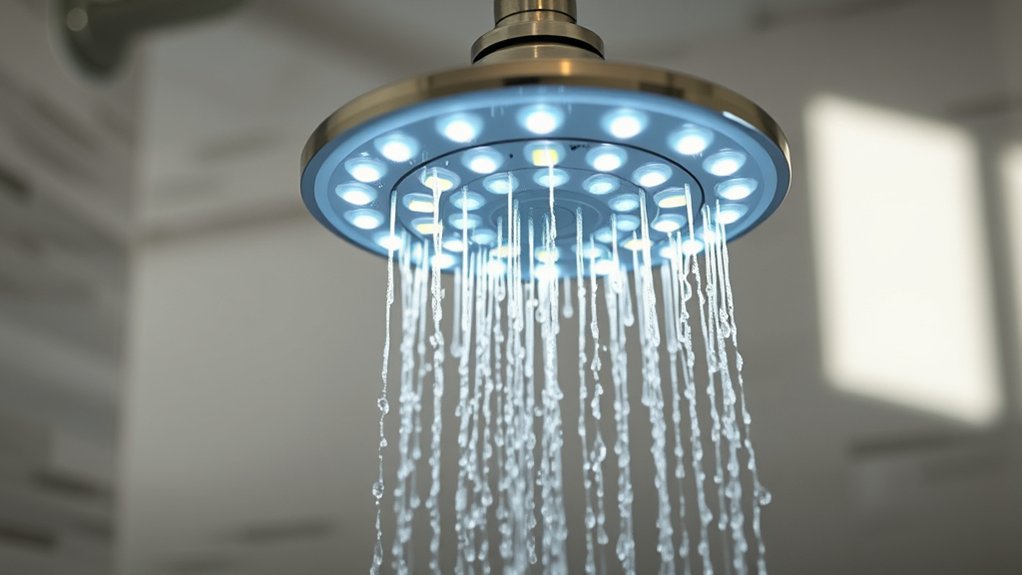
How do LED shower heads balance illumination with safety in a wet environment? You need to understand key electrical and water safety concerns to minimize the risk of electric shock. Here are four critical considerations:
- Waterproof Sealing: Ensure all electrical components are enclosed in waterproof casings to prevent water ingress.
- Metal Housing Safety: Verify that the metal housing is properly insulated and grounded to avoid electrical conduction.
- Low Voltage Operation: Choose LED shower heads operating at low voltage (typically 12V) to reduce shock hazards.
- Certified Components: Look for units with recognized safety certifications (e.g., UL, CE) that guarantee compliance with electrical safety standards.
Frequently Asked Questions
Can LED Shower Heads Change Colors Based on Water Temperature?
Yes, LED shower heads use temperature reactive lighting to change colors based on water temperature, offering clear visual cues. Their energy efficiency appeal comes from using low-power LEDs, ensuring minimal energy consumption during operation.
Do LED Shower Heads Increase Water Pressure or Flow Rate?
LED shower heads don’t increase water pressure or flow rate; their LED durability focuses on long-lasting lighting without impacting water flow.
You’ll experience consistent water flow, as LEDs operate independently from pressure or volume adjustments.
How Long Do the LED Lights Typically Last in Shower Heads?
You won’t need a replacement anytime soon; LED longevity in shower heads typically lasts 50,000 hours. The color temperature indicators maintain consistent performance, ensuring you enjoy precise, reliable lighting without frequent bulb changes or maintenance.
Are LED Shower Heads Compatible With All Types of Shower Systems?
You’ll find LED shower heads compatible with most shower systems, but installation considerations like water pressure, plumbing type, and power source matter. Review topic ideas carefully to ensure your setup supports the LED functionality without issues.
Can LED Shower Heads Be Installed Without Professional Help?
Think you need a pro for LED shower head installation? With proper LED safety guidelines, you’ll find installation ease straightforward.
Just follow manufacturer instructions carefully, and you can confidently install it yourself without risking damage or injury.