Are Iphone 14 Waterproof in Shower
You might think your iPhone 14 is waterproof in the shower, but its water resistance has clear limits. While it’s rated IP68 for submersion up to 6 meters for 30 minutes, showers expose your device to heat, steam, pressure, and soap—conditions it wasn’t tested for.
Understanding these factors is essential before you risk potential damage or void your warranty. The iPhone 14 is designed to handle accidental splashes and brief water exposure, but prolonged exposure in a shower environment can be harmful. Always exercise caution when using your device around water.
Key Takeaways
- iPhone 14 is water-resistant with an IP68 rating, not fully waterproof, and not designed for shower water exposure.
- Shower conditions involve heat, steam, and pressure that exceed the iPhone 14’s tested water-resistance limits.
- Steam and hot moisture in showers can penetrate seals, causing internal corrosion and battery swelling risks.
- Prolonged exposure to shower moisture and soap can degrade water resistance and damage internal components.
- Avoid using iPhone 14 in showers to preserve seals and prevent costly water-related damage.
What Is the iPhone 14’s Water Resistance Rating?
How water-resistant is the iPhone 14 exactly? It carries an IP68 rating under IEC standard 60529, meaning it can withstand submersion in water up to 6 meters deep for 30 minutes. This rating ensures a high level of protection against dust and water ingress, contributing to overall water safety.
However, keep in mind that water resistance can degrade over time due to wear and tear or accidental damage, so device maintenance is essential to preserve this capability. Avoid exposing your iPhone 14 to high-velocity water or chemicals, as these conditions exceed the tested parameters.
Regularly inspect seals and ports for damage and avoid unauthorized repairs to maintain optimal water resistance and ensure your device remains protected in everyday scenarios.
Water Resistance vs. Waterproofing: What the iPhone 14 Offers
Why does the distinction between water resistance and waterproofing matter for the iPhone 14? Understanding this difference is key to ensuring your device’s water safety and managing expectations, especially when fashion considerations like sleek cases come into play.
The iPhone 14 is water-resistant, not waterproof, meaning it can handle splashes but isn’t impervious to water damage.
Here’s what that means for you:
- Water Resistance: The iPhone 14 has an IP68 rating, allowing submersion up to 6 meters for 30 minutes, but exposure to high-pressure water or prolonged moisture can still cause harm.
- Waterproofing: No iPhone is fully waterproof; they lack a permanent seal that prevents all water ingress.
- Practical Use: You should avoid intentional water exposure despite the resistance, balancing water safety with preserving your phone’s appearance and function.
Can You Use iPhone 14 in the Shower Safely?
You should understand that the iPhone 14 has an IP68 water resistance rating, which means it can withstand water up to 6 meters for 30 minutes under controlled conditions.
However, the high temperature, pressure, and soap in a shower can compromise its seals and increase the risk of damage. Consequently, using your iPhone 14 in the shower may expose it to conditions beyond its tested limits.
Water Resistance Rating
Where does the iPhone 14 stand in terms of water resistance when exposed to shower conditions? The iPhone 14 has an IP68 rating under IEC standard 60529, meaning it can resist dust and water up to 6 meters for 30 minutes. However, this rating doesn’t guarantee protection against all forms of water damage or humidity exposure found in showers.
Consider these factors:
- The IP68 rating tests immersion in fresh water, not continuous steam or hot water spray.
- High humidity and temperature fluctuations in showers can affect seals, increasing water damage risk.
- Extended exposure to moisture and heat may degrade internal components despite the rating.
Potential Shower Risks
How safe is it to use the iPhone 14 in the shower environment? Despite its IP68 rating, several potential shower risks exist. High water temperature, prolonged exposure, and soap residues can degrade water resistance seals.
Also, steam can condense internally, causing damage over time. Discussing unrelated angle issues like irrelevant topic features such as dust resistance diverts from these critical risks.
| Risk Factor | Description | Impact Level |
|---|---|---|
| Water Temperature | Hot water can weaken seals | High |
| Soap & Shampoo | Chemicals may corrode components | Medium |
| Steam | Causes internal condensation | Medium |
| Pressure | High water pressure penetration | High |
| Duration | Extended exposure reduces efficacy | High |
You should avoid using the iPhone 14 in the shower to prevent these technical vulnerabilities.
What Risks Does Shower Steam Present to Your iPhone 14?
You might not realize that shower steam carries fine moisture particles that can penetrate your iPhone 14’s seals over time, potentially causing internal damage. The heat from the steam can also affect the device’s battery performance and internal components by accelerating wear and reducing efficiency.
Understanding these risks helps you make informed decisions about using your iPhone in steamy environments.
Impact Of Moisture
Why does shower steam pose a risk to your iPhone 14? Although the device features water resistance, excessive moisture from steam can challenge its protective seals. Here’s what to consider:
- Condensation buildup: Steam condenses inside tiny crevices, potentially triggering moisture indicators and signaling liquid intrusion beyond splash risks.
- Internal corrosion: Prolonged exposure to moisture can corrode internal circuits, degrading performance or causing permanent damage.
- Component swelling: Moisture absorption may cause battery or seal swelling, compromising device integrity and voiding warranties.
While the iPhone 14 resists water splashes, steam’s microscopic moisture particles can penetrate seals designed for liquid drops, not vapor. Monitoring moisture indicators after shower exposure helps assess if moisture has breached internal defenses, so you can take timely action to prevent damage.
Effects Of Heat
Beyond moisture concerns, the elevated temperatures generated by shower steam also pose significant risks to your iPhone 14. Heat transfer from the hot steam can cause internal components to expand or degrade, potentially compromising the device’s structural integrity.
Additionally, rapid temperature changes promote condensation effects inside the phone, as moisture vapor condenses on cooler internal surfaces. This internal condensation can lead to corrosion of electronic circuits and connectors, impairing functionality over time.
Although the iPhone 14 has an IP68 rating, which offers water resistance, it does not guarantee protection from heat-induced damage or condensation-related malfunctions. To preserve your device’s longevity, avoid exposing it to prolonged steam environments where heat transfer and condensation effects combine to increase the risk of hardware failure.
How Does the iPhone 14 Handle Everyday Water Splashes?
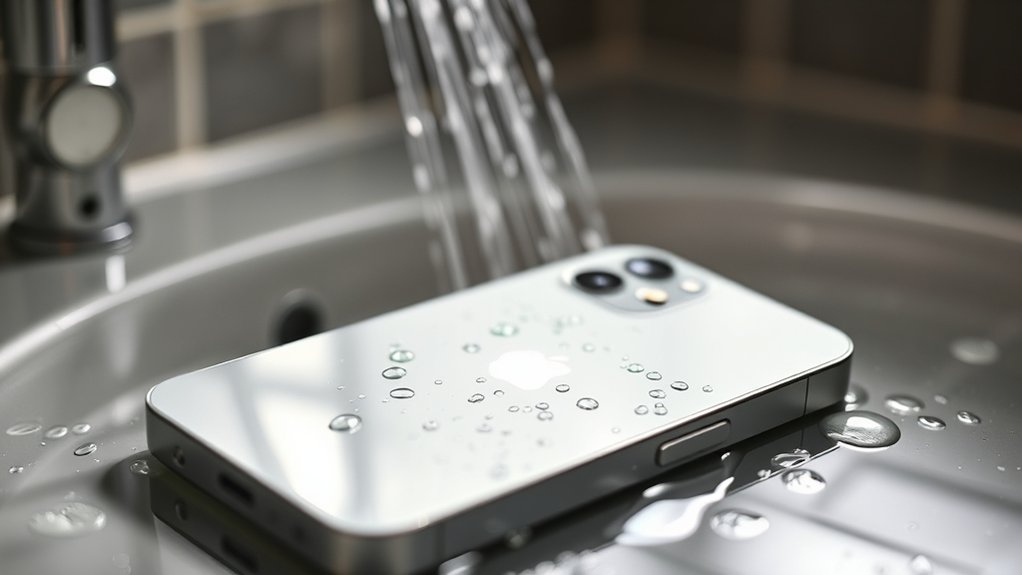
How well does the iPhone 14 withstand everyday water splashes encountered during routine use? Understanding splash safety is essential, especially amid waterproof myths that often exaggerate device capabilities.
The iPhone 14 features an IP68 rating, meaning it can resist water ingress up to 6 meters deep for 30 minutes under controlled conditions. However, everyday splashes differ greatly from immersion.
The iPhone 14’s IP68 rating ensures protection up to 6 meters deep for 30 minutes, but splashes are a different challenge.
Consider these points:
- The device effectively handles minor splashes from rain or accidental spills without damage.
- Water-resistant seals protect internal components but degrade over time, so repeated exposure reduces splash safety.
- High-pressure water or prolonged exposure, like in a shower, stresses the seals beyond design parameters.
You can rely on the iPhone 14 for typical splash scenarios but should avoid deliberate water contact to maintain long-term integrity.
How Can You Protect Your iPhone 14 From Water Damage?
What steps can you take to minimize the risk of water damage to your iPhone 14? First, rely on its official IP68 rating rather than non technical myths or unrelated features like screen brightness or case color, which don’t influence water resistance.
Use a high-quality waterproof case when exposing the phone to water environments, especially showers, to reinforce protection beyond factory seals. Avoid prolonged submersion and rapid temperature changes, as these can compromise internal seals.
Keep ports dry by using port covers or drying them promptly if exposed. Regularly inspect the device for any physical damage that might reduce its water resistance. By focusing on these technical precautions instead of unverified claims, you ensure your iPhone 14 remains protected against water damage effectively.
What Should You Do If Your iPhone 14 Gets Wet?
When your iPhone 14 gets wet, acting quickly and methodically is essential to prevent lasting damage. Follow these steps for effective gadget maintenance:
- Power Off Immediately: Shut down your iPhone to prevent electrical shorts. Avoid charging or turning it on until fully dry.
- Remove Excess Moisture: Use a soft, lint-free cloth to gently wipe the exterior. Avoid using heat sources or compressed air, which can push water deeper.
- Air Dry in a Controlled Environment: Place your iPhone in a well-ventilated area with moderate humidity. Do not use rice or silica packets as they offer limited effectiveness and may void warranty limits.
When Should You Avoid Using iPhone 14 Near Water?
Why should you steer clear of using your iPhone 14 near water in certain situations? Despite its IP68 rating, the iPhone 14 requires careful handling to avoid damage.
Avoid using it in hot showers or steam rooms, as high temperatures and humidity can compromise internal seals. Also, steer clear of saltwater or chlorinated pools since these can corrode components over time.
Don’t assume water resistance means waterproof; moisture myths often lead users to overestimate protection. Using your iPhone under running water or submerging it repeatedly increases risk.
If you must use it near water, ensure ports are sealed and dry hands before handling. Recognizing these limits helps prevent costly repairs and maintains your device’s longevity.
Frequently Asked Questions
Does the iPhone 14’s Water Resistance Degrade Over Time?
Imagine you drop your iPhone 14 multiple times; its water resistance can degrade over time. You’ll notice this degradation as tiny cracks allow moisture in, reducing the device’s ability to keep water out effectively.
Can iPhone 14 Survive Accidental Drops in a Swimming Pool?
Your iPhone 14 can survive accidental pool drops due to its IP68 rating, but repeated shower risks and water exposure may degrade seals over time. This increases vulnerability to water damage during swimming pool incidents.
Is Wireless Charging Affected by Moisture on the iPhone 14?
Coincidentally, when you wonder if wireless charging is affected by moisture impact, you’ll find the iPhone 14’s sensors detect moisture and disable wireless charging to prevent damage. This ensures safe, efficient power transfer each time you charge.
How Does Water Resistance Compare Between iPhone 14 and Older Models?
You’ll find the iPhone 14’s water resistance slightly improved over older models, rated IP68 for 6 meters up to 30 minutes. This helps protect battery life better during exposure to water compared to prior versions.
Are There Any Special Cases to Enhance iPhone 14 Water Protection?
You can use specialized protective accessories, like waterproof cases, to prevent water ingress and enhance your iPhone 14’s durability. These cases provide sealed barriers, improving resistance beyond its standard IP68 rating for added security in wet conditions.