How High Is Standard Kitchen Counter
You measure for comfort, you plan for style, and you consider every detail—yet the height of your kitchen counter often goes overlooked. How high is standard kitchen counter? It stands at 36 inches, a carefully chosen balance that fits most tasks and users.
But what if that number isn’t quite right for your space or needs? Understanding the reasons behind this standard and its variations can transform how you experience your kitchen every day.
What Is the Standard Height for Kitchen Counters?
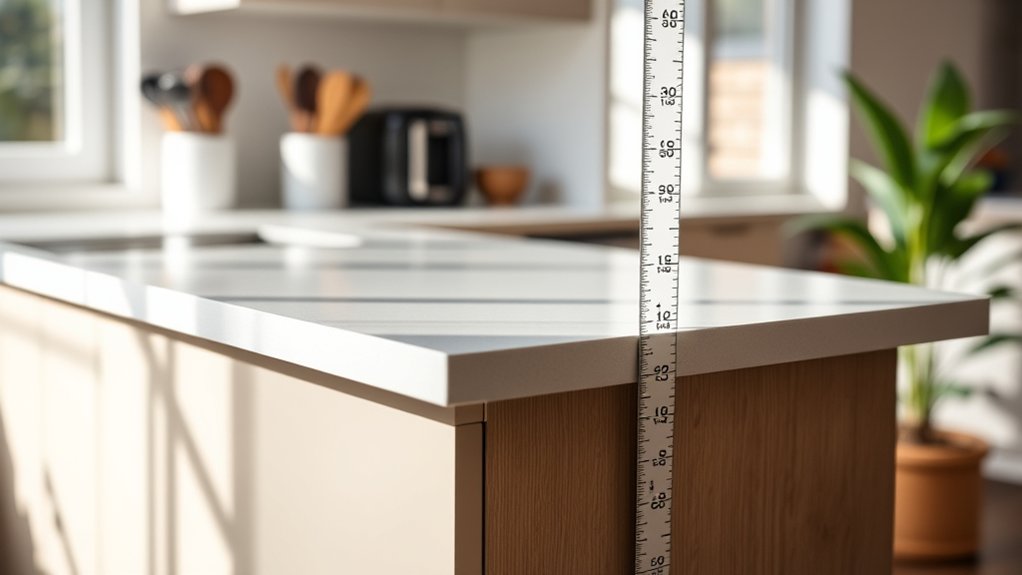
How high should your kitchen counters be to blend comfort with functionality? The standard height for kitchen counters is typically around 36 inches from the floor to the countertop surface. This height strikes a balance, accommodating most users comfortably while allowing for efficient food preparation and other tasks.
When you choose this height, you achieve balanced aesthetics that harmonize well with standard kitchen appliances and cabinetry, offering a cohesive look. However, if you face budget constraints, sticking to this standard height can also simplify construction and reduce customization costs.
Deviating from the standard might require bespoke cabinetry or adjustments to appliances, which can quickly inflate expenses. By adhering to the typical 36-inch height, you ensure ergonomic ease without sacrificing style or inflating your budget.
This height functions as a practical, aesthetic foundation for your kitchen design, providing both comfort and cost efficiency.
Why Kitchen Counters Are Usually 36 Inches Tall
Choosing a 36-inch height for kitchen counters isn’t arbitrary; it’s a carefully considered dimension shaped by ergonomics and practicality. When you work at this height, it aligns comfortably with the average person’s waist, reducing strain during food preparation. This standard balances functionality and comfort, allowing you to chop, mix, and cook efficiently without hunching or stretching.
From a design perspective, this height complements the use of high quality materials such as granite or marble, which add durability and style without compromising usability. Additionally, manufacturers optimize cost considerations by standardizing the height, streamlining production and installation. This consistency means you can select countertops knowing they’ll fit seamlessly with cabinets, appliances, and fixtures designed for this dimension.
Ultimately, the 36-inch standard reflects a blend of human factors and practical economics, ensuring your kitchen is both inviting and functional.
Common Kitchen Counter Height Variations and Uses
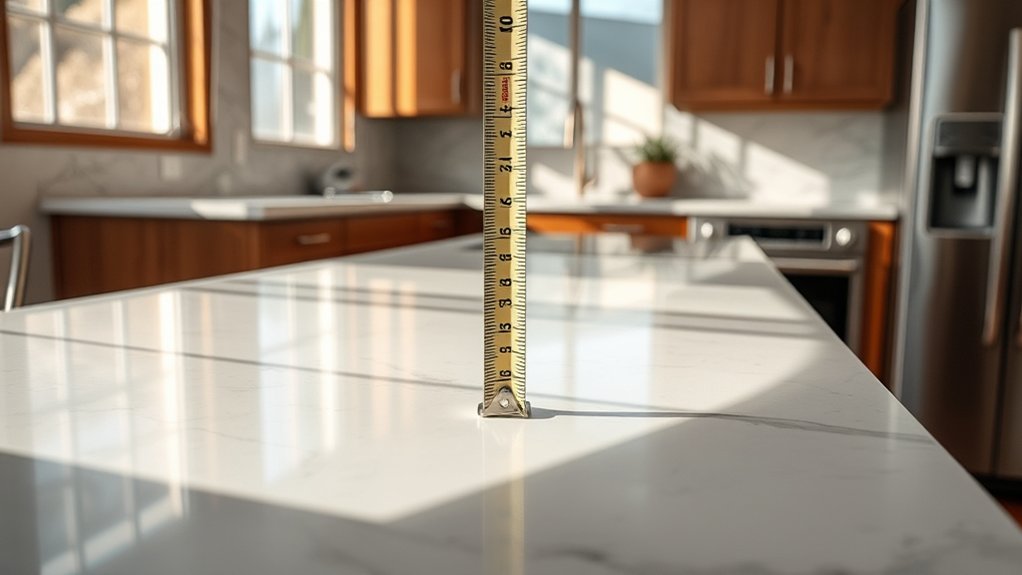
Why might you encounter kitchen counters that deviate from the standard 36-inch height? Variations often arise from ergonomic needs, specific uses, or design preferences. For example, lower counters suit children or seated tasks, while taller ones accommodate standing activities like baking.
Material science also influences height choices, as certain materials enable thinner profiles without compromising durability. Additionally, color palettes and overall aesthetics may guide adjustments to harmonize with cabinetry and appliances.
Here’s a quick reference:
| Height (inches) | Typical Use | Design Consideration |
|---|---|---|
| 30 | Child-friendly counters | Soft color palettes |
| 36 | Standard prep/work height | Versatile material science |
| 42 | Bar or serving counters | Bold color palettes |
| 48 | Specialized standing work | Advanced material science |
Understanding these variations helps you create a kitchen that’s both functional and visually cohesive.
How Counter Height Affects Your Comfort in the Kitchen
What impact does the height of your kitchen counter have on your daily comfort and efficiency? When your counter aligns with your natural elbow height, you reduce strain on your shoulders and back, making food prep more enjoyable and less tiring. Ergonomic trends emphasize this alignment, encouraging designs that support your posture and minimize repetitive stress.
If the counter is too low or too high, you might find yourself bending awkwardly or reaching uncomfortably, which hampers your workflow.
Material feasibility also plays a role in achieving the ideal height. Some materials, like thick stone slabs, limit how low you can go without compromising durability or aesthetics.
Conversely, materials like wood or engineered surfaces might offer more flexibility, allowing adjustments that suit your specific needs. Choosing the right height, balanced with material properties, ensures your kitchen becomes a space where comfort meets functionality seamlessly.
When and Why to Choose Custom Kitchen Counter Heights
If standard kitchen counters don’t quite match your height or cooking style, custom heights offer a tailored solution that enhances both comfort and efficiency. Choosing custom kitchen counter heights aligns your workspace with your body, reducing strain and improving workflow. This approach reflects evolving kitchen trends that prioritize personalization and ergonomic design.
Consider these key points when exploring custom heights:
- Ergonomic fit: Tailor your counters to your stature, so chopping, mixing, and prepping feel natural and strain-free.
- Task specificity: Different tasks like baking, cooking, or prepping may benefit from varied counter heights, optimizing each activity’s ease.
- Aesthetic harmony: Customize heights to complement your kitchen’s overall design, creating a seamless blend of style and function.
These two word discussion ideas, “comfort optimization” and “design flexibility,” highlight why custom kitchen counters are an essential consideration for modern kitchens.
Measuring Your Ideal Kitchen Counter Height
To find your ideal kitchen counter height, start by measuring the standard 36-inch dimension and adjust based on your height and cooking habits.
Keep in mind that if multiple people use the kitchen, varying heights may call for a compromise or even adjustable counters. This ensures comfort and efficiency while you prepare meals.
Standard Counter Height Dimensions
How tall should your kitchen counter be to blend functionality with comfort? Standard counter height dimensions focus on balancing kitchen ergonomics with everyday usability.
Typically, the ideal counter height measures 36 inches (91.4 cm) from the floor, offering a comfortable workspace for most tasks. To ensure you hit the mark, consider these key points:
- Standard counters are usually 24 inches (61 cm) deep, providing ample surface area without overcrowding your workspace.
- The 36-inch height suits most users, reducing strain on your back and wrists during meal prep.
- This height integrates seamlessly with standard appliances and cabinetry, maintaining both form and function.
Consider User Height Differences
Why does your height matter when choosing the ideal kitchen counter height? Your user height directly influences how comfortably you can work at your counter. A counter that’s too high or too low forces you into awkward postures, causing strain over time.
Measuring your ideal kitchen counter height means aiming for an ergonomic fit where your elbows bend at roughly a 90-degree angle when you stand close to the surface. This precise alignment reduces fatigue and enhances efficiency while prepping meals.
To find your perfect height, measure from the floor to your bent elbow and subtract a few inches for comfort. Remember, considering user height differences ensures a kitchen that feels custom-made, not just standard, fostering both style and functionality in your daily routine.
Adjustable Counter Options
Wondering how to tailor your kitchen counters perfectly to your height? Adjustable height counters offer a sleek, practical solution, ensuring comfort and efficiency. Measuring your ideal kitchen counter height involves a few precise steps:
- Measure your elbow height while standing naturally, keeping your arms bent at 90 degrees.
- Subtract 4 inches from this measurement to find your optimal counter height for food prep.
- Consider multi use scenarios. Counters that adjust between sitting and standing positions enhance versatility.
Adjustable height counters adapt effortlessly, accommodating varied tasks and users. They create a harmonious blend of function and form, elevating your kitchen’s ergonomic appeal. By focusing on these details, you ensure your space is both beautiful and perfectly suited to your needs.
Practical Tips for Picking the Perfect Kitchen Counter Height
You’ll want to focus on ergonomic considerations to ensure your kitchen counter height feels natural and reduces strain during daily tasks. Custom height options let you tailor the surface to your specific needs, whether you’re chopping, mixing, or prepping.
Ergonomic Considerations
How do you guarantee your kitchen counter height supports both comfort and efficiency during daily tasks? Prioritize ergonomic design to reduce strain and boost productivity. Address accessibility concerns to ensure every user feels comfortable and safe. Consider these key factors:
- Measure your elbow height when standing naturally; counters should align closely to this for optimal posture.
- Factor in tasks. Lower heights suit baking and chopping, while slightly higher work better for plating and serving.
- Ensure enough legroom under counters if you or others use wheelchairs or stools, maintaining ease of movement.
Custom Height Options
Balancing ergonomic needs with personal preferences means customizing your kitchen counter height to fit your daily routines perfectly. Opting for a custom height gives you the flexibility to choose from a height variety that complements your posture and cooking habits, ensuring comfort and efficiency.
When selecting your ideal height, consider tasks like chopping, mixing, and baking, which may require different surface elevations.
| Task | Recommended Height (inches) |
|---|---|
| Food Prep | 36–38 |
| Baking | 38–40 |
| Sitting Tasks | 28–30 |
| Bar Seating | 40–42 |
| Multi-User | Adjustable/Varied |
This table guides you in picking a custom height that enhances your kitchen’s functionality and aesthetic appeal.
Frequently Asked Questions
What Materials Are Best for Kitchen Countertops?
You’ll find granite vs quartz offers durability and low maintenance, while marble vs quartzite brings elegance with unique veining.
Choose quartz for consistency, granite for ruggedness, marble for luxury, and quartzite for toughness and beauty combined.
How Do I Maintain and Clean Kitchen Counters?
You maintain counters by wiping spills promptly and using gentle cleaning methods like mild soap and warm water. Avoid harsh chemicals to preserve finishes.
Regularly seal surfaces like granite to keep them looking pristine and durable.
What Is the Average Cost of Installing Kitchen Counters?
Imagine sleek surfaces transforming your kitchen; the average cost for installing kitchen counters ranges from $2,000 to $5,000.
Focus on installation tips like precise measurements and quality adhesives to ensure flawless, lasting beauty in your space.
Are There Eco-Friendly Options for Kitchen Countertops?
Yes, you can choose eco friendly materials like bamboo, recycled glass, or reclaimed wood for your kitchen countertops. These options offer sustainable durability, combining beauty and environmental responsibility to elevate your space thoughtfully and elegantly.
How Durable Are Different Countertop Surfaces?
You’ll find durability comparisons reveal quartz offers excellent material longevity, resisting scratches and stains. Granite’s also tough but needs sealing.
Laminate’s less durable but budget-friendly, while solid wood requires maintenance to maintain its lasting beauty.