Are Shower Doors Adjustable
You want your shower door to slide smoothly, seal tightly, and fit perfectly—so are shower doors adjustable? Many modern shower doors offer some level of adjustability, allowing you to fine-tune their fit and function.
Knowing which parts to tweak and how can make all the difference in achieving the perfect door alignment. Before you start turning screws or shifting tracks, it’s important to understand the common adjustments available.
Being aware of potential pitfalls will help you avoid frustration and costly mistakes. Taking the time to learn about your specific shower door model can save you time and effort in the long run.
Key Takeaways
- Most modern shower doors have adjustable parts like rollers, hinges, and tracks for smooth operation and alignment.
- Sliding doors adjust via roller height and track alignment to ensure easy sliding and proper sealing.
- Hinged doors use hinge screw tweaks to correct door alignment and prevent sticking or gaps.
- Pivot doors adjust by balancing pivot points to maintain smooth swinging and secure closure.
- Proper adjustments prevent damage, improve door lifespan, and often don’t require professional help for minor fixes.
Can You Easily Adjust Modern Shower Doors?
How easily can you adjust modern shower doors? Contrary to common adjustment myths, many modern shower doors are designed for straightforward tweaks. You don’t need to be a professional to make small adjustments that improve door alignment and functionality.
However, success depends on using the right tools and ensuring proper tool maintenance. Dull or inappropriate tools can complicate the process and risk damaging the door. Before starting, check that your tools are clean, sharp, and well-maintained. This preparation helps you work efficiently and avoid unnecessary frustration.
While some adjustments are simple, understanding the door’s design and how it operates is key. With the right approach, you can quickly resolve minor issues without calling in a specialist.
Parts of Shower Doors You Can Adjust
You can adjust key parts of your shower door to improve its function, like the door rollers and tracks. Tweaking the rollers helps the door glide smoothly, while aligning the tracks ensures it closes properly.
These adjustments keep your shower door operating efficiently and prevent damage over time.
Adjusting Door Rollers
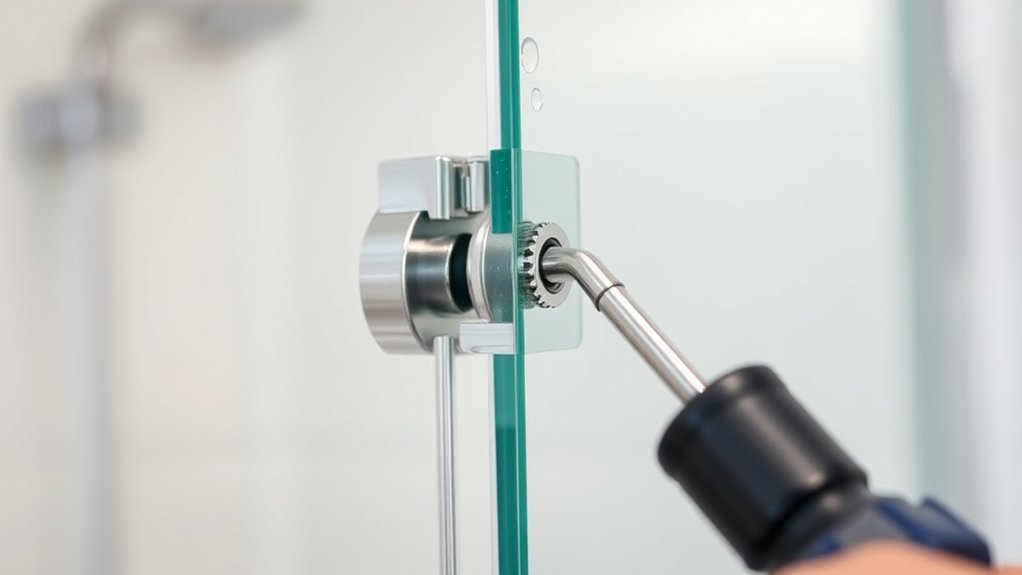
Where exactly do you start when your shower door isn’t sliding smoothly? Begin by inspecting the door rollers, which often cause sticking or uneven movement. These rollers are adjustable, allowing you to fine-tune the door’s height and ensure smooth operation.
Use a screwdriver to turn the adjustment screws on the rollers, raising or lowering the door as needed. While adjusting door rollers, keep in mind that proper frame alignment plays a critical role in door function.
If the frame is off, adjusting hinges may be necessary to correct the door’s position before roller adjustments. Focus on getting the door level and straight within the frame. Taking care with these adjustments will restore smooth sliding and prevent damage to both the door and track.
Aligning Door Tracks
When should you consider adjusting the door tracks of your shower? Adjustment timing is essential when your door doesn’t slide smoothly or misaligns, causing leaks or jams. The door material also affects track alignment; heavier materials like tempered glass may need sturdier tracks and more frequent adjustments.
Here’s a quick guide to track alignment based on door material and common issues:
| Door Material | Common Issue | Adjustment Timing |
|---|---|---|
| Tempered Glass | Door drags on track | Every 6 months |
| Acrylic | Door misalignment | Quarterly |
| Aluminum Frame | Track looseness | Annually |
| Frameless Glass | Door sticking | Biannually |
| PVC | Track corrosion | Inspect every 3 months |
Properly aligning door tracks enhances performance and extends your shower door’s lifespan.
Tools for Adjusting Shower Doors at Home
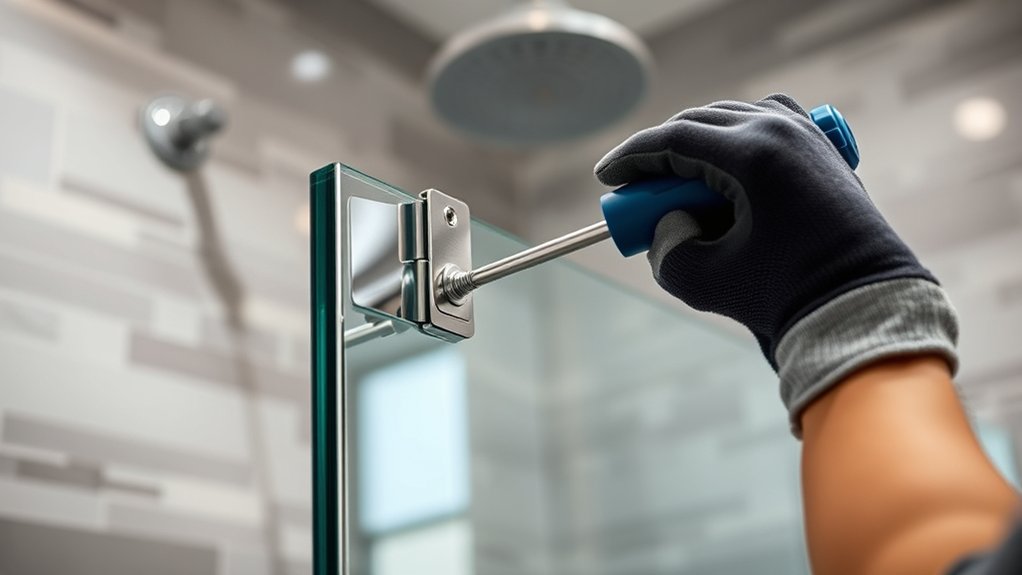
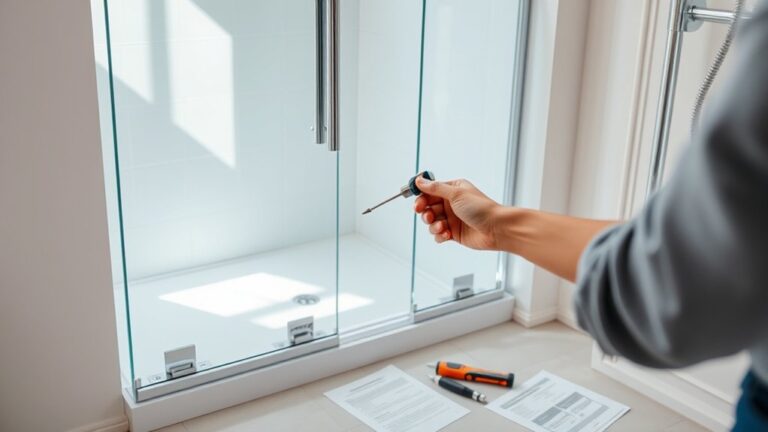
To adjust your shower door at home, you’ll need a few essential tools like a screwdriver, adjustable wrench, and a level.
Don’t forget safety gear such as gloves and safety glasses to protect yourself during the process. Having the right equipment makes the adjustment smoother and safer.
Essential Adjustment Tools
How do you guarantee your shower doors operate smoothly and fit perfectly? It starts with having the right tools at hand, dispelling adjustment misconceptions that lead to frustration. Avoid tool improvisation; precise instruments make all the difference.
Here are the essential adjustment tools you’ll need:
- Screwdriver Set – A variety of Phillips and flathead screwdrivers help you loosen or tighten hinges and brackets accurately.
- Allen Wrenches – Often required for adjusting rollers and hinges in frameless doors.
- Level and Measuring Tape – Ensures your door aligns correctly and seals properly, preventing leaks.
Using these tools correctly allows you to fine-tune your shower doors for optimal performance, avoiding common pitfalls caused by inadequate equipment or guessing adjustments.
Safety Equipment Needed
Why should you never skip safety equipment while adjusting your shower doors? Because adjustment safety is crucial to prevent injuries and protect your property.
Before starting, make sure you have safety goggles to shield your eyes from glass shards or dust. Wear sturdy gloves to protect your hands from sharp edges and ensure a better grip on tools.
Non-slip footwear helps maintain balance on wet surfaces, reducing fall risks. Also, check tool compatibility. Using the correct screwdriver or wrench that fits your door’s screws prevents stripping and damage.
A dust mask is helpful if you’re sanding or drilling. By prioritizing these safety measures and choosing compatible tools, you’ll make the adjustment process safer and more efficient, avoiding accidents and ensuring your shower door functions properly.
How to Fix Shower Door Alignment Issues
Wondering what causes your shower door to misalign and how you can fix it? Misalignment often results from loose screws, worn rollers, or improper installation. You can address these issues with quick fixes before considering replacements. Avoid common mistakes like overtightening screws or forcing the door, which can worsen the problem.
Here’s how to fix alignment issues:
- Tighten all screws and hinges gently to secure the door.
- Inspect and replace damaged rollers or hinges if they’re worn.
- Adjust the door’s position using the adjustment screws typically found on the hinges.
Adjusting Shower Doors to Fit Uneven Walls
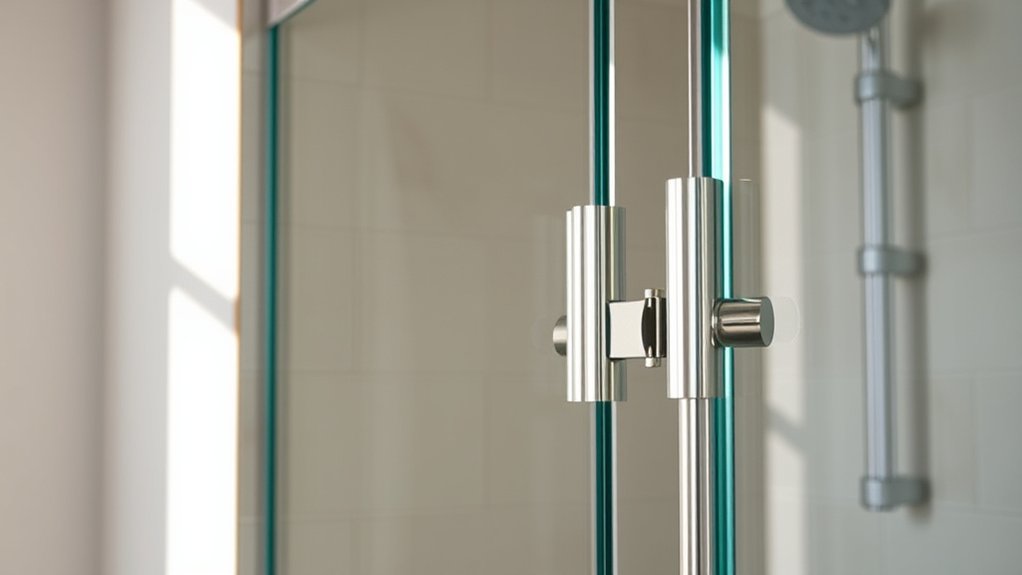
Uneven walls can create challenges when installing or adjusting shower doors, but you can often compensate for irregularities without replacing the entire frame. Start by measuring the widest gaps between the wall and door frame to understand the extent of installation variances.
Most shower doors offer some adjustability, such as trim pieces or adjustable hinges, allowing you to fine-tune the fit. However, adjustability limitations mean you might not achieve a perfect seal or alignment if the wall is markedly uneven.
In such cases, using shims or flexible sealant can help bridge gaps and improve stability. By carefully evaluating the wall’s irregularities and leveraging the door’s built-in adjustments, you can ensure a secure and functional fit despite minor installation variances.
Common Mistakes When Adjusting Shower Doors
While adjusting shower doors to fit uneven walls can improve installation, it’s easy to make mistakes that compromise both function and appearance. You need to be mindful of:
- Ignoring adjustment timing: Waiting too long to adjust can cause misalignment and damage, so address issues promptly.
- Over-tightening screws: This can warp the frame or strip the hardware, leading to costly repairs.
- Skipping maintenance routines: Regular cleaning and lubrication prevent buildup that hampers smooth door movement and adjustment.
When to Adjust Shower Doors for Smoother Movement
How do you know when it’s time to adjust your shower doors for smoother movement? Pay attention to resistance, gaps, or sticking points during use. Changes in water pressure might cause seals to shift, and worn glass coatings can increase friction.
Adjusting your doors can restore smooth operation and prevent damage.
| Sign | Cause | Action |
|---|---|---|
| Door sticks or jerks | Worn glass coatings | Tighten or realign hinges |
| Water leaks under door | Seal misalignment | Adjust door height or seals |
| Uneven door gaps | Frame shifting | Level frame and door |
| Increased resistance | Water pressure change | Check for pressure impact |
Regular checks help you keep doors functioning efficiently without compromising water tightness or glass integrity.
Do All Shower Doors Adjust the Same Way?
Do all shower doors adjust the same way? Not exactly. The adjustment process varies depending on the door type, hardware, and installation. Here’s what you’ll typically encounter:
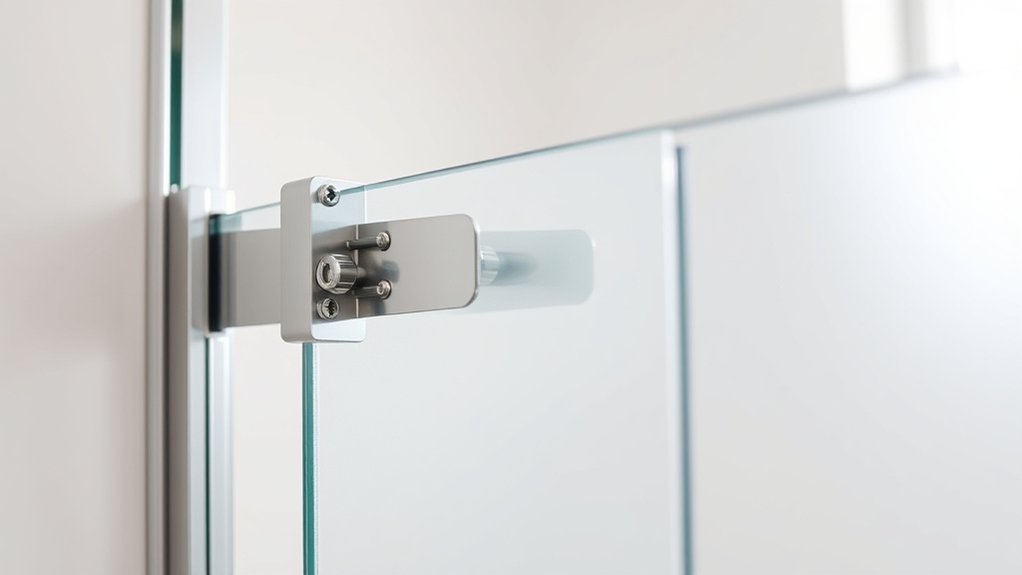
- Sliding Doors: You’ll adjust rollers or tracks for smooth movement while preserving shower door aesthetics by keeping hardware aligned and flush.
- Hinged Doors: You’ll tweak hinge screws to correct alignment, ensuring glass safety by preventing stress points that might cause cracks.
- Pivot Doors: Adjust pivot points to balance door swing, maintaining both function and the door’s sleek appearance.
Understanding these differences helps you maintain your shower door’s look and durability without compromising glass safety. Always approach adjustments with care to preserve both function and style.
When to Call a Professional for Shower Door Adjustments
When should you call a professional for shower door adjustments? If you notice persistent leaks, misaligned doors, or difficulty in opening and closing despite regular adjustment frequency and maintenance scheduling, it’s time to get expert help. Professionals ensure precise alignment and secure fittings, preventing damage and extending your door’s lifespan.
| Issue | Signs to Watch For | Professional Action Needed |
|---|---|---|
| Misalignment | Door sticks or gaps | Realignment and hardware check |
| Frequent Leaks | Water pooling outside | Seal replacement or adjustment |
| Adjustment Frequency | Requires constant tweaking | Comprehensive inspection |
Calling a professional saves time and prevents costly repairs, especially when problems recur despite your maintenance scheduling efforts.
Frequently Asked Questions
What Materials Are Shower Doors Typically Made From?
Shower door materials typically include tempered glass with varying glass thickness, aluminum, and sometimes plastic or acrylic.
You’ll find 3/8 to 1/2 inch thick glass commonly used for durability and safety in shower doors.
How Do Frameless and Framed Shower Doors Differ?
You’ll feel like a wizard adjusting door hinges on frameless vs framed doors! Frameless doors offer sleek style with minimal hardware, but framed doors provide sturdier support and easier hinge adjustments for a perfect fit every time.
Can Shower Doors Prevent Water Leakage Completely?
No, shower doors can’t prevent water leakage completely, but properly installed adjustable doors minimize it effectively.
You’ll find small gaps remain, so adding seals or splash guards helps control water escaping your shower area.
Are There Eco-Friendly Shower Door Options Available?
It’s no coincidence you’re asking. Eco-friendly alternatives like recycled glass doors and water-saving hardware exist to reduce waste and water use. You can choose these practical, sustainable options to make your shower greener and more efficient.
How Often Should Shower Door Hardware Be Replaced?
You should check and adjust your shower door hardware every 6 to 12 months to maintain adjustment schedules.
Replace hardware every 3 to 5 years depending on wear, ensuring peak hardware longevity and smooth operation.