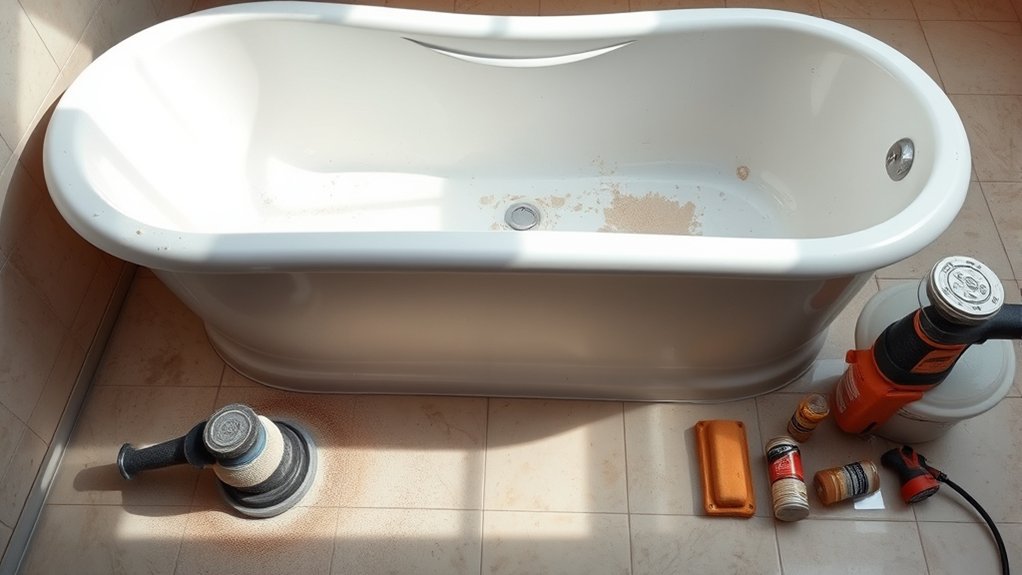
You might wonder if you can resurface a fiberglass bathtub instead of replacing it entirely. Resurfacing a fiberglass bathtub is a viable option that can save time and money compared to installing a new one.
The process involves more than just applying a fresh coat; it requires proper surface preparation, selecting the right materials, and following specific application steps to ensure durability.
Understanding when resurfacing makes sense and how to approach it can help you avoid costly mistakes. This knowledge will also help you extend your tub’s lifespan effectively.
Key Takeaways
- Yes, fiberglass bathtubs can be resurfaced to restore finish and fix scratches, stains, and dullness without full replacement.
- Resurfacing involves cleaning, sanding, applying bonding agents, and specialized epoxy or acrylic coatings designed for fiberglass.
- DIY kits are available but require skill and proper ventilation; professional resurfacing offers expertise, tools, and warranties.
- Using incorrect materials not formulated for fiberglass causes peeling, cracking, and premature failure of the surface.
- Proper safety gear and ventilation are essential during resurfacing to avoid toxic fumes and skin or eye irritation.
What Is Fiberglass Bathtub Resurfacing?
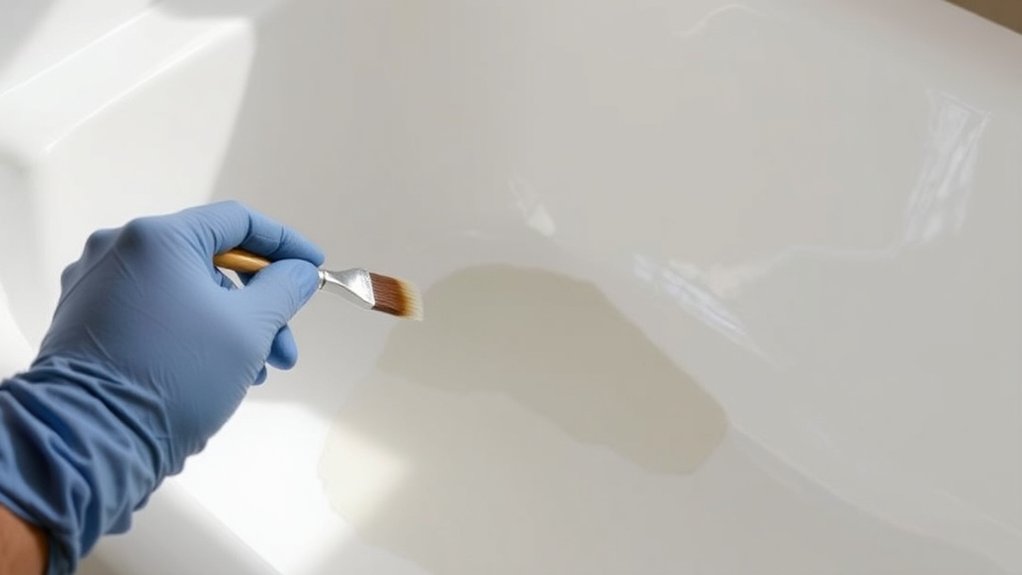
What exactly does fiberglass bathtub resurfacing involve? You start by thoroughly cleaning and sanding the tub to create a smooth, adhesive-friendly surface. Next, you apply a bonding agent followed by a specialized epoxy or acrylic coating that restores the tub’s finish.
This process addresses scratches, stains, and dullness without full replacement. When planning resurfacing, consider color trends. Modern palettes often favor crisp whites or soft neutrals to update your bathroom’s look.
Also, review cost estimates carefully. Resurfacing typically costs a fraction of replacement, making it a budget-friendly renovation option. By understanding these technical steps and financial aspects, you can make an informed decision about restoring your fiberglass bathtub’s appearance efficiently and effectively.
When Should You Resurface Your Fiberglass Bathtub?
How do you know when your fiberglass bathtub needs resurfacing? Look for visible cracks, persistent stains, or a rough surface that resists cleaning. These issues indicate the protective gel coat has worn down.
Also, if the tub feels slippery or shows discoloration, it’s time to resurface.
Here’s a quick reference table of key indicators:
| Issue | Description |
|---|---|
| Cracks | Hairline fractures or chips |
| Stains | Persistent discoloration |
| Texture Change | Rough or slippery surface |
| Surface Dullness | Loss of shine and color vibrancy |
Unlike weather patterns affecting outdoor materials, your bathtub’s condition depends on indoor factors, not external ones like kitchen appliances. Resurfacing restores functionality and appearance before costly replacements become necessary.
DIY vs. Professional Fiberglass Bathtub Resurfacing: Pros and Cons
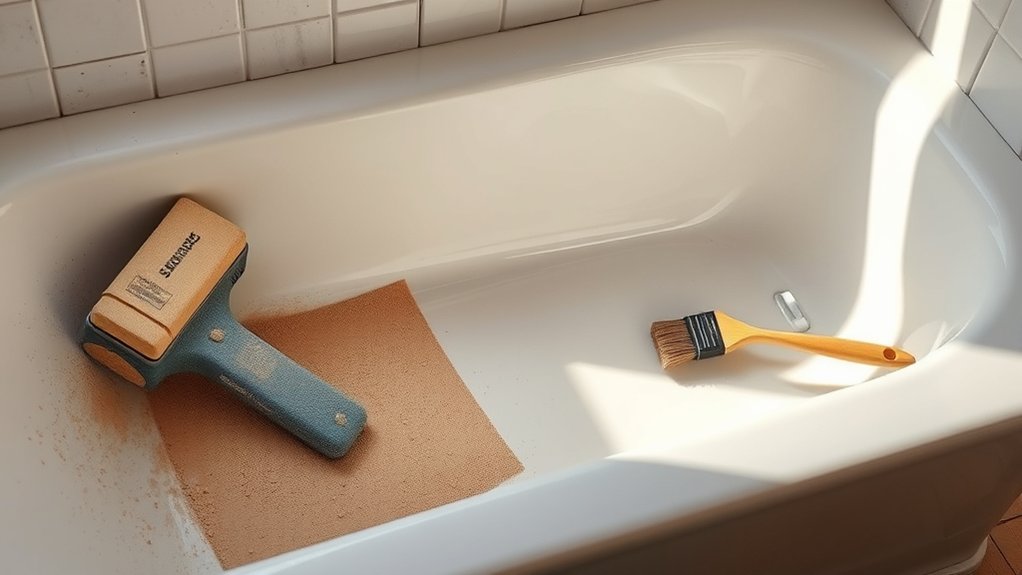
Once you recognize the signs that your fiberglass bathtub needs resurfacing, the next step involves deciding whether to handle the process yourself or hire a professional. DIY trends have made resurfacing kits widely available, allowing you to save on contractor pricing.
Deciding between DIY or hiring a professional is key once you spot your fiberglass bathtub needs resurfacing.
However, DIY requires technical skill, time, and proper ventilation to avoid uneven finishes or peeling. Professionals bring expertise, specialized tools, and durable materials, ensuring a long-lasting, smooth surface.
On the downside, contractor pricing can be significant, but it covers labor, materials, and guarantees. Consider your experience level, time constraints, and budget. If precision and durability are your priorities, hiring a pro is advisable.
If you’re comfortable with meticulous preparation and detail, DIY can work but it carries higher risks of imperfect results.
How to Assess Your Fiberglass Bathtub Before Resurfacing
Before starting the resurfacing process, you’ll need to carefully evaluate your fiberglass bathtub’s condition to determine the scope of work required. Inspect for cracks, chips, or deep scratches that may need repair before refinishing.
Check for peeling or bubbling in the surface coating, signaling underlying damage. Avoid considering unrelated topics such as plumbing or unrelated off topic ideas during this assessment to stay focused.
Test the tub’s structural integrity by pressing gently on suspicious areas to detect softness or flexing. Measure the extent of discoloration and wear to decide if resurfacing is practical or if replacement is necessary.
This precise assessment ensures you address all necessary repairs, avoids surprises during the project, and guarantees a durable finish.
Materials and Tools Needed for Fiberglass Bathtub Resurfacing
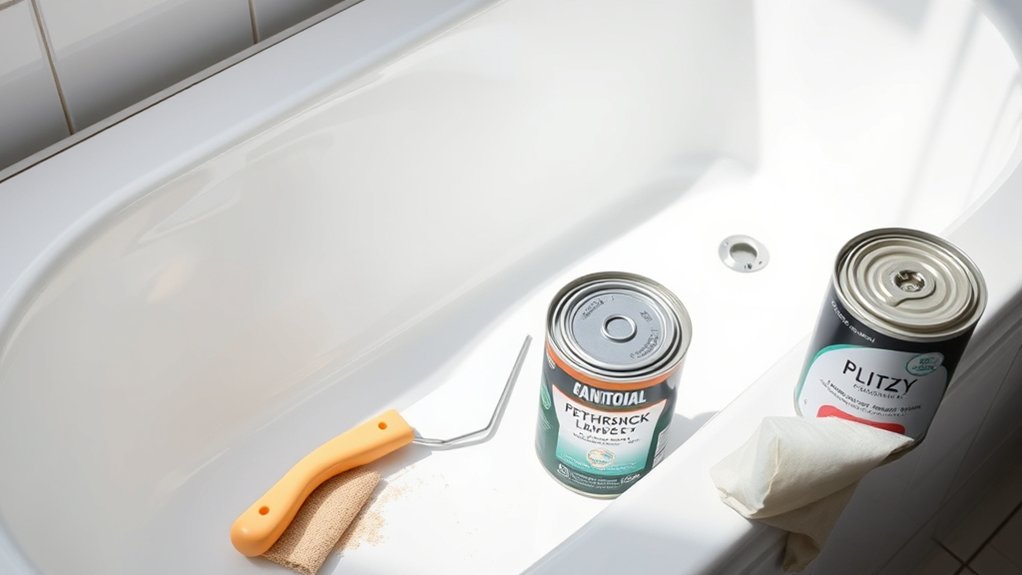
To resurface your fiberglass bathtub effectively, you’ll need specific materials like bonding agents, primer, and a durable topcoat designed for fiberglass. Alongside these, gather essential tools such as sandpaper, a putty knife, and spray equipment or brushes for application.
Preparing with the right supplies ensures a smooth, long-lasting finish.
Essential Resurfacing Materials
A successful fiberglass bathtub resurfacing project relies on having the right materials and tools at hand. First, you’ll need a high-quality fiberglass repair kit, including resin and hardener, to address any cracks or chips, debunking myths that fiberglass can’t be effectively restored.
Next, a gel coat or a specialized bathtub refinishing paint ensures a smooth, durable finish that enhances bathtub aesthetics. Use a suitable etching or bonding agent to promote adhesion between the old surface and new layers.
Don’t forget fine-grit sandpaper for prepping the surface by removing gloss and contaminants. Finally, a quality cleaner or degreaser eliminates residues that might interfere with bonding. Selecting these materials carefully ensures a resilient, visually appealing finish that defies common misconceptions about fiberglass’s limitations.
Required Tools Overview
Successful fiberglass bathtub resurfacing demands specific tools that ensure accuracy and efficiency throughout the process. Addressing budgeting challenges means investing in the right equipment upfront to avoid costly mistakes. You’ll also need to consider ventilation requirements carefully to maintain safety when working with strong fumes.
Here’s a concise list of essential tools:
- Orbital sander with fine-grit sandpaper for surface prep
- Respirator mask and ventilation fans to meet ventilation requirements
- High-quality paint sprayer or brushes for applying resurfacing compounds
- Protective gloves and goggles for safety during chemical handling
Using these tools efficiently will help you achieve a smooth, durable finish while navigating budgeting challenges and ensuring proper ventilation throughout your project.
How to Resurface Your Fiberglass Bathtub: Step-by-Step
How exactly do you transform a worn fiberglass bathtub into a smooth, like-new surface? Start by thoroughly cleaning the tub to remove soap scum and dirt. Skip irrelevant brainstorming or off-topic chatter that wastes time here.
Next, sand the surface with fine-grit sandpaper to create a rough texture for better adhesion. Wipe away dust with a damp cloth and allow it to dry completely.
Apply a bonding agent evenly, then use a high-quality fiberglass repair kit or epoxy paint, applying thin, consistent coats. Let each coat dry as per manufacturer instructions.
Finally, cure the surface fully before using the tub. Following these precise steps ensures a durable, professional finish without unnecessary complications or delays.
Common Mistakes to Avoid When Resurfacing Fiberglass Tubs
You can’t skip proper surface preparation if you want the finish to last. Make sure you use materials specifically designed for fiberglass tubs to avoid adhesion issues.
Also, always follow safety precautions to protect yourself from harmful fumes and chemicals.
Skipping Surface Preparation
Although it may be tempting to jump straight into applying new coatings, skipping surface preparation undermines the entire resurfacing process. Neglecting this step leads to poor adhesion, peeling, and uneven finishes.
Avoid irrelevant or off-topic discussion that distracts from proper prep techniques. Focus on essential surface prep to ensure durability.
Here’s what you must do before resurfacing:
- Thoroughly clean the tub to remove soap scum, oils, and residues.
- Sand the surface with appropriate grit to promote adhesion.
- Repair chips, cracks, or gouges with suitable fillers.
- Rinse and dry completely to eliminate dust and moisture.
Skipping any of these steps compromises the bond between the new coating and fiberglass, causing premature failure and costly rework.
Using Incorrect Materials
Why do incorrect materials cause so many resurfacing failures? Using products not designed for fiberglass leads to poor adhesion, cracking, and peeling. When you apply epoxy or paint meant for unrelated surfaces, you risk compromising the bathtub’s durability.
Avoid irrelevant topic research that confuses fiberglass-specific coatings with general-purpose paints. Sticking to materials explicitly formulated for fiberglass ensures chemical compatibility and proper curing. Don’t engage in unrelated discussion about cosmetic finishes that don’t address structural bonding.
Your resurfacing success depends on selecting primers, fillers, and topcoats engineered for fiberglass tubs. Always verify product specifications to prevent costly mistakes. Using the right materials maintains the bathtub’s integrity and extends its lifespan, while incorrect choices result in premature failure and wasted effort.
Ignoring Safety Precautions
Selecting the correct materials is only part of a successful fiberglass bathtub resurfacing. Ignoring safety precautions can lead to hazardous fumes, skin irritation, or ineffective results. Don’t fall for shortcuts myths that suggest skipping protective gear or ventilation.
To resurface safely and effectively, you must:
- Wear a respirator mask to avoid inhaling toxic fumes.
- Use chemical-resistant gloves and eye protection to prevent skin and eye damage.
- Ensure proper ventilation by opening windows or using fans.
- Follow manufacturer guidelines precisely to avoid chemical misuse.
How Long Does Fiberglass Bathtub Resurfacing Last?
How long you can expect a resurfaced fiberglass bathtub to last depends largely on the quality of materials used and the care taken during the refinishing process. Randomized testing has shown that professional-grade coatings typically endure 5 to 10 years under normal use, far outlasting DIY kits, despite unrelated gossip suggesting otherwise.
The lifespan also hinges on how well the surface bonds and resists wear.
| Material Quality | Application Method | Expected Lifespan |
|---|---|---|
| Professional-grade | Spray or brush-on | 7-10 years |
| DIY kits | Roll or brush-on | 3-5 years |
| Low-grade | Inconsistent coats | <3 years |
Choosing proven materials and precise application ensures durability.
How to Maintain Your Fiberglass Bathtub After Resurfacing
Protecting your resurfaced fiberglass bathtub starts with adopting a consistent cleaning routine that avoids abrasive tools and harsh chemicals. Just like repainting furniture requires gentle care to maintain finish integrity, your bathtub demands the same precision. Follow these maintenance steps:
- Use a soft cloth with mild, non-abrasive cleaners to prevent surface damage.
- Avoid bleach or ammonia-based products that can degrade the new finish.
- Reseal the surface periodically, similar to waterproofing concrete, to maintain water resistance.
- Dry the tub after each use to minimize water spots and mold growth.
Frequently Asked Questions
Is Fiberglass Bathtub Resurfacing Eco-Friendly?
Yes, fiberglass bathtub resurfacing offers eco friendly benefits by reducing waste and extending your tub’s life. It minimizes environmental impact compared to replacement, conserving resources and lowering landfill contributions.
This makes it a practical, sustainable choice for renovations.
Can Resurfacing Change the Color of My Bathtub?
Yes, fiberglass color change is possible through tub resurfacing. You can effectively update your bathtub’s appearance by applying specialized coatings, making tub resurfacing a viable solution for altering color without replacement or damage.
How Much Does Professional Resurfacing Typically Cost?
You can expect a professional resurfacing cost range between $300 and $700.
The duration of the project typically lasts 4 to 6 hours, depending on the bathtub’s condition and preparation requirements before refinishing.
Are There Health Risks During the Resurfacing Process?
Yes, you face health risks during resurfacing due to fumes from chemicals like acetone and epoxy. Ensure proper ventilation and use protective gear to mitigate exposure.
Material safety guidelines must be strictly followed to protect your health.
Can Resurfacing Fix Structural Damage in Fiberglass Tubs?
You can’t fix structural damage with resurfacing because fiberglass durability relies on its intact core. Resurfacing addresses surface wear only.
For cracks or breaks, you’ll need specialized repairs or replacement due to repair limitations.
Conclusion
Resurfacing your fiberglass bathtub is like giving your bathroom a well-deserved facelift without the full renovation drama. With the right prep, tools, and care, you can restore its shine and durability, extending its life by years.
Whether you DIY or hire a pro, remember: precision and patience are key. Treat your tub like a classic car—regular maintenance and respect preserve its value and beauty.
By understanding how to properly resurface a fiberglass bathtub, you can make every soak feel like a fresh start while saving time and money in the long run.
Leave a Reply