Are We in a Meteor Shower
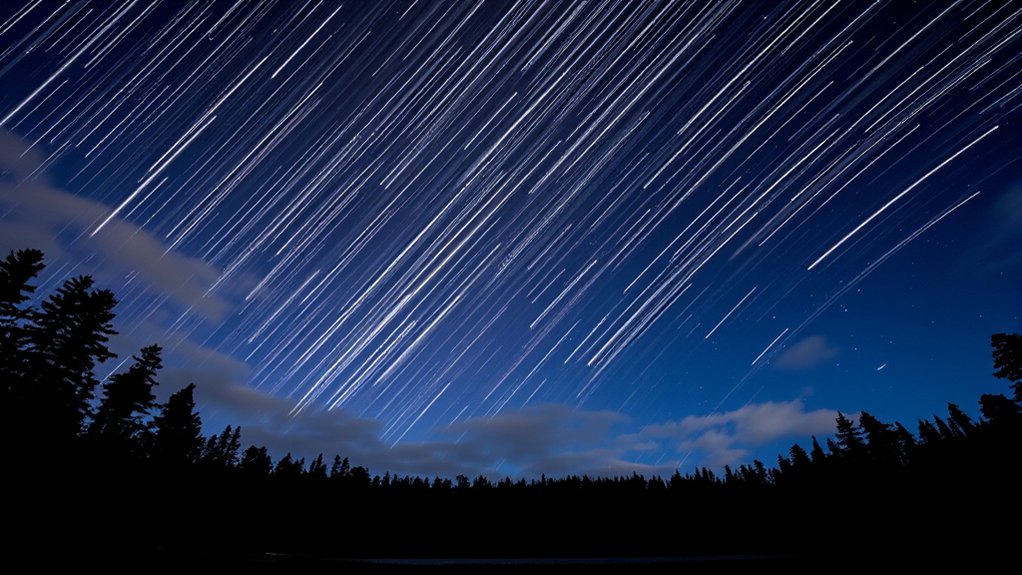
You might wonder, are we in a meteor shower tonight? Whether you see meteors depends on Earth’s position relative to debris trails left by comets or asteroids. These showers peak at specific times, producing meteors radiating from a fixed point.
Outside those windows, only sporadic meteors appear. Understanding this pattern requires analyzing orbital mechanics, shower calendars, and local conditions. These factors can reveal when a genuine meteor shower will light up the night.
Key Takeaways
- Meteor showers occur when Earth passes through debris trails left by comets or asteroids in its orbit.
- Astronomical forecasts provide current meteor shower activity, including timing and expected meteor rates tonight.
- The radiant point coordinates help identify if meteors visible tonight belong to an active shower.
- Local weather, sky clarity, and moon phase influence visibility during a meteor shower night.
- Peak meteor shower activity lasts several days and is predictable based on Earth’s position in debris streams.
What Causes Meteor Showers: And When Do They Happen
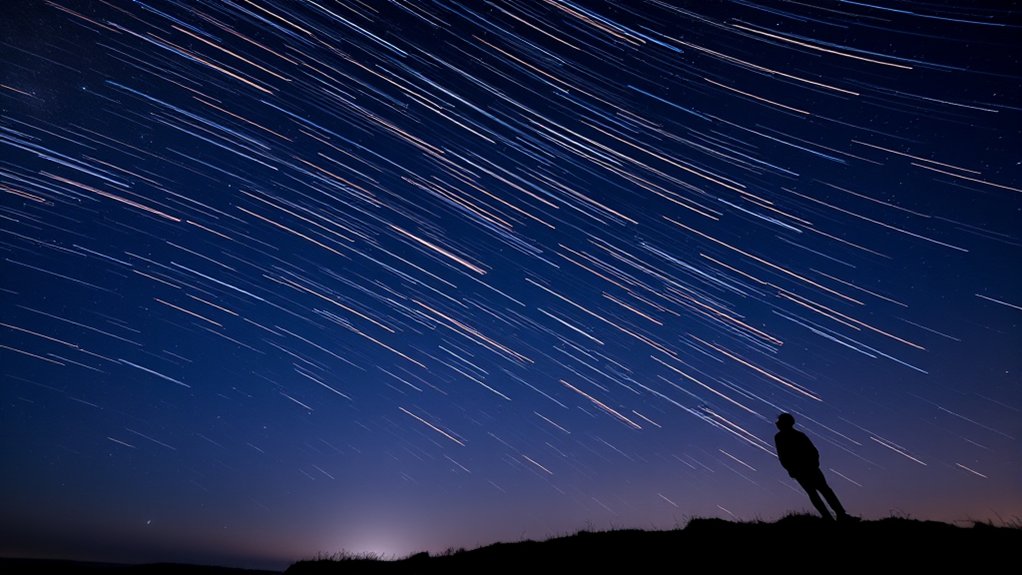
How do meteor showers occur, and when can you expect to see them? Meteor showers happen when Earth passes through debris left by comets or asteroids. These small particles, known as meteoroids, enter our atmosphere at high speeds, burning up and creating visible streaks.
Meteor showers occur as Earth travels through comet or asteroid debris, creating streaks of burning meteoroids in the sky.
The primary causes of meteoroids during showers are the remnants of these celestial bodies shedding material along their orbits. You can anticipate meteor showers at specific times annually when Earth intersects these debris trails.
Observing meteor rates depends on factors like the density of debris, Earth’s position in orbit, and atmospheric conditions. By analyzing these variables, you can predict peak activity periods, which often last several days.
Understanding these mechanics allows you to identify when meteor showers will be most intense and visible.
How to Tell If There’s a Meteor Shower Tonight
When can you expect to see a meteor shower tonight? To determine this, you need to analyze several factors. First, check astronomical forecasts from reliable sources that provide precise timing and meteor rates.
Understanding the difference between meteor shower tonight versus early staging is critical; early staging refers to preliminary activity before the peak, which may yield fewer meteors. Use radiant point coordinates to identify where meteors will appear in the sky.
Also, assess local weather conditions, sky clarity, and light pollution levels, as these directly affect visibility. Finally, consider the moon phase because a bright moon can obscure fainter meteors.
Popular Meteor Showers Throughout the Year

Which meteor showers can you expect to see throughout the year? Understanding these events requires distinguishing between comet vs meteor: meteors originate from orbital debris shed by comets. When Earth intersects these debris streams, you witness meteor showers.
Key annual showers include:
- Quadrantids (January): Intense but brief, linked to asteroid 2003 EH1.
- Lyrids (April): Moderate activity from Comet Thatcher’s debris.
- Perseids (August): One of the most prolific, caused by Comet Swift-Tuttle.
- Orionids (October): Originates from Comet Halley’s orbital debris.
- Geminids (December): Unique as debris stems from asteroid 3200 Phaethon.
Each shower’s intensity depends on Earth’s path through dense debris fields. Tracking these showers helps you anticipate meteor activity precisely, enhancing observation accuracy.
Best Places and Times to Watch Meteor Showers
Knowing the timing and origin of meteor showers sets the stage for selecting essential viewing conditions. To maximize visibility, you should target the best locations, areas with minimal light pollution such as rural or elevated sites, where clear skies are more frequent. Urban environments severely hinder observation due to artificial lighting.
Meteor showers peak typically after midnight, when the radiant point rises highest in the sky, improving meteor detection rates. Additionally, avoid nights with a bright moon, as its glare diminishes faint meteor visibility.
Checking local weather forecasts to confirm cloud-free conditions is vital; even minor cloud cover can obscure meteors. By combining these factors—ideal timing, minimal light interference, and clear skies, you can optimize your meteor shower viewing experience with precision and reliability.
Tips for Photographing and Tracking Meteor Showers
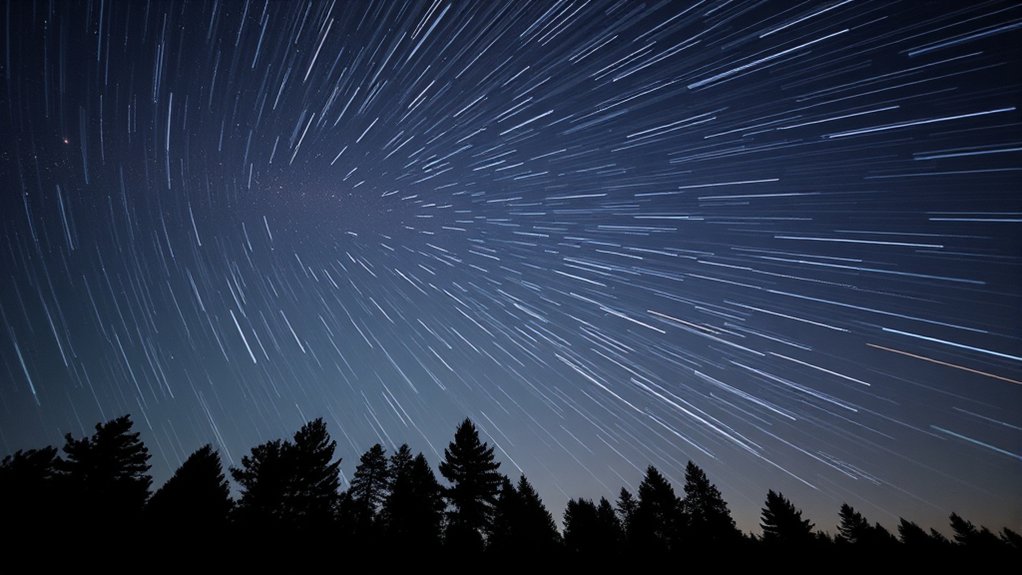
How can you effectively capture and track meteors during a shower? To optimize your results, apply these tips for capturing meteors and tracking meteor streams with precision. First, use a wide-angle lens to maximize sky coverage and increase meteor detection chances.
Second, set your camera to manual focus at infinity to maintain sharpness on fast-moving meteors. Third, employ long exposure times (15-30 seconds) to collect sufficient light while avoiding star trails. Fourth, position your tripod steadily and aim near the radiant point where meteor streams appear densest.
Finally, record metadata like time, location, and camera settings to correlate with known meteor activity for accurate analysis.
- Use a wide-angle lens for broad sky coverage
- Manually focus at infinity for sharpness
- Apply 15-30 second exposures to capture light trails
- Aim near the meteor shower’s radiant point
- Log metadata for precise tracking and analysis
Frequently Asked Questions
Can Meteor Showers Pose Any Danger to People on Earth?
You won’t face meteoroid hazards from meteor showers since particles burn in the atmosphere. Shower naming conventions help track risks, but Earth’s atmosphere protects you from damage during typical meteor shower events.
Do Meteor Showers Affect Satellite or Space Station Operations?
Like dodging a cosmic hailstorm, you rely on satellite tracking to navigate meteor shower safety. These showers can disrupt operations, so you adjust spacecraft trajectories and timing meticulously to safeguard satellites and the space station.
How Do Meteor Showers Get Their Names?
You name meteor showers based on their radiant origins, the specific sky constellation they appear to emanate from. Naming conventions follow this precise method, linking each shower directly to its radiant point for clear scientific identification.
Can Meteor Showers Be Heard as Well as Seen?
You won’t catch meteor showers whispering audibly; their sound perception is elusive. Though visually striking, meteors burn too high for you to hear them, as atmospheric density prevents sound waves from reaching your ears.
Are Meteor Showers Related to Asteroids or Comets?
Yes, meteor showers originate from comet debris or, less commonly, asteroid fragments. You’ll find these parent bodies shed particles along their orbits, which Earth encounters, causing visible meteor showers during specific times annually.