What Type of Bathtub Lasts the Longest
When choosing a bathtub, durability is a top priority you can’t overlook, especially when considering what type of bathtub lasts the longest. Different materials offer varying lifespans and maintenance demands, which directly affect how long your tub will serve you.
Understanding these distinctions helps you make an informed decision that balances longevity with practicality. Among the options, one type stands out for lasting markedly longer, thanks to its unique composition and resilience—yet there are factors beyond material that also influence durability.
Key Takeaways
- Cast iron bathtubs last the longest, typically exceeding 50 years due to their dense, durable composition and enamel coating.
- Solid surface bathtubs offer durability comparable to cast iron with excellent wear, stain, and impact resistance.
- Enamel-coated steel tubs provide robust durability and excellent heat retention but require careful installation to avoid chipping and rust.
- Acrylic and fiberglass tubs last about 10 to 15 years with proper care, despite common misconceptions about their weaknesses.
- Durable tubs with eco-friendly coatings resist stains, scratches, and wear, extending lifespan and reducing maintenance needs.
What Durability Means for Bathtubs: Key Factors to Consider
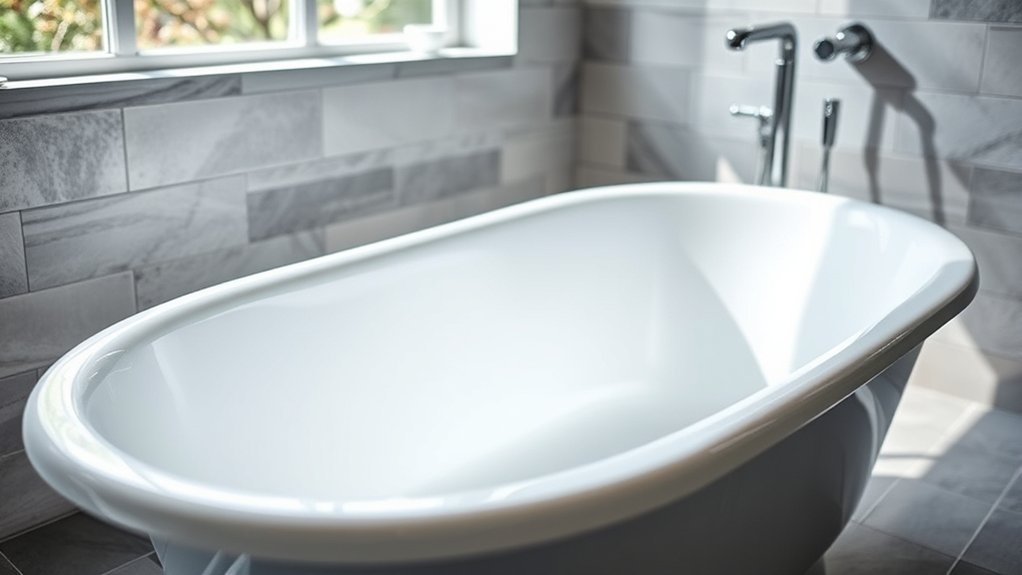
What exactly defines durability in a bathtub? Durability hinges on resistance to wear, chipping, cracking, and fading over time. You need to assess how materials withstand daily use, cleaning agents, and water exposure.
Durability in bathtubs means resisting wear, chipping, cracking, and fading from everyday use and cleaning.
Eco friendly coatings have become key in enhancing durability while minimizing environmental impact. These coatings resist stains and scratches, extending the tub’s functional lifespan without releasing harmful chemicals.
When selecting a bathtub, budget considerations also play a critical role. Durable tubs with eco friendly finishes may have higher upfront costs but reduce replacement frequency and maintenance expenses.
Understanding durability means balancing material strength, protective coatings, and cost-efficiency to ensure long-lasting performance. You should prioritize these factors to choose a bathtub that fulfills both longevity and sustainability goals effectively.
Comparing Bathtub Materials by Durability and Lifespan
Although selecting a bathtub involves various considerations, understanding the durability and lifespan of different materials is crucial to making an informed choice. You’ll find that materials like acrylic, fiberglass, steel, and cast iron vary significantly in their resistance to wear and structural integrity.
Acrylic and fiberglass often face durability misconceptions; they’re thought to deteriorate quickly, but proper maintenance extends their lifespan considerably. Steel bathtubs offer solid durability but may be prone to chipping and rust if not installed correctly.
Installation myths, such as the belief that all materials require the same support and care, can lead to premature damage. By comparing material properties, including impact resistance, corrosion susceptibility, and maintenance needs, you can select a bathtub that balances longevity with your specific usage and budget requirements.
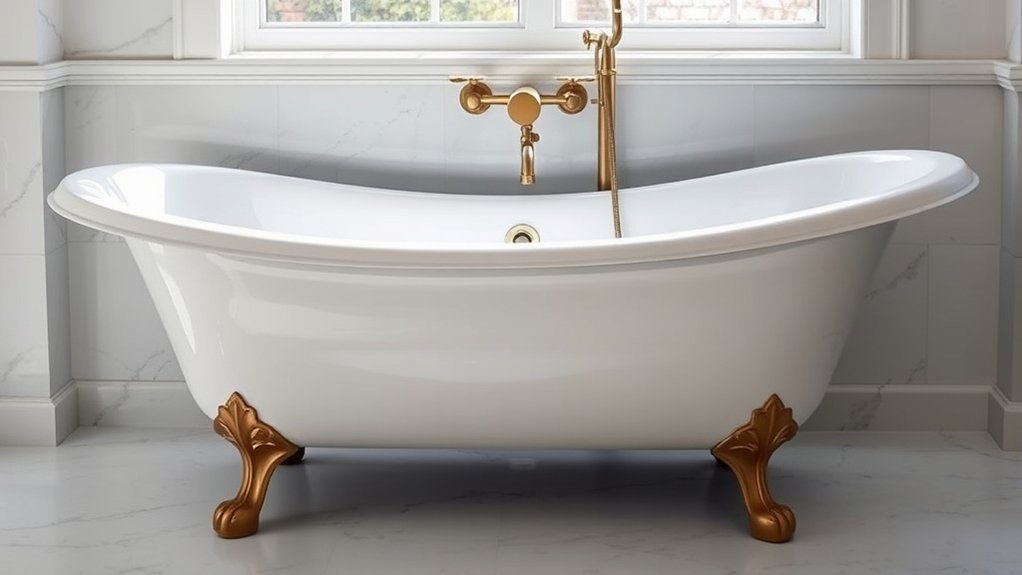
Why Cast Iron Bathtubs Last Longest
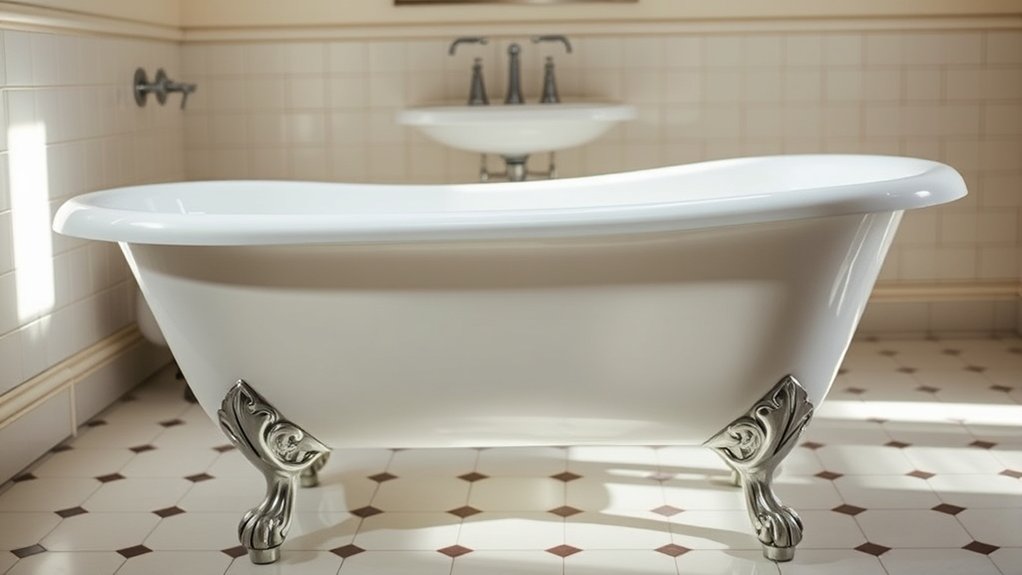
You’ll find cast iron bathtubs last the longest because their dense, durable composition resists cracking and chipping. They retain heat more effectively, maintaining water temperature for extended periods.
Plus, their surface withstands daily wear and chemical exposure better than most materials.
Durable Material Composition
Why do cast iron bathtubs outlast most other materials? It’s due to their unique durable material composition. Cast iron combines a high percentage of iron with carbon and silicon, creating a dense, heavy structure that resists chipping and cracking.
The enamel coating bonded to the cast iron surface enhances protection against corrosion and wear, aligning with durability definitions emphasizing resistance to physical and chemical damage. When evaluating lifespan benchmarks, cast iron tubs typically exceed 50 years, far surpassing acrylic or fiberglass alternatives.
This superior structural integrity ensures stability under heavy loads and frequent use, maintaining form and finish over decades. When you choose cast iron, you invest in a bathtub engineered for longevity, meeting and exceeding durability standards in residential bathrooms.
Superior Heat Retention
How does superior heat retention contribute to the longevity of cast iron bathtubs? Cast iron’s dense composition allows it to retain heat far better than alternative materials. This consistent temperature reduces thermal stress caused by rapid cooling and reheating cycles, which can lead to cracking or weakening over time.
Contrary to durability myths that suggest all materials endure similarly under heat variations, cast iron’s thermal properties directly enhance its structural integrity. By maintaining stable heat, the enamel coating adheres more effectively, preventing premature chipping and corrosion.
When you choose a cast iron bathtub, you benefit from this inherent heat retention, which not only improves comfort but also extends the tub’s lifespan by minimizing material fatigue. This precise thermal behavior is a key factor in why cast iron bathtubs last longest.
Resistant To Wear
What makes cast iron bathtubs remarkably resistant to wear? Their core material, a dense iron alloy, provides exceptional hardness and structural integrity, protecting against chipping, cracking, and denting.
Unlike other materials that degrade over time, cast iron’s enamel coating fuses to the iron surface at high temperatures, creating a chemically bonded shield that resists abrasion and staining.
You might encounter durability myths suggesting cast iron requires excessive upkeep, but these are maintenance myths. In reality, regular cleaning with non-abrasive agents is sufficient to preserve its finish.
This combination of a robust substrate and a resilient enamel layer explains why cast iron bathtubs endure everyday use longer than alternatives.
When selecting a bathtub that stands the test of time, understanding this wear resistance clarifies why cast iron remains unmatched.
Acrylic Bathtubs: Lifespan and Maintenance Tips
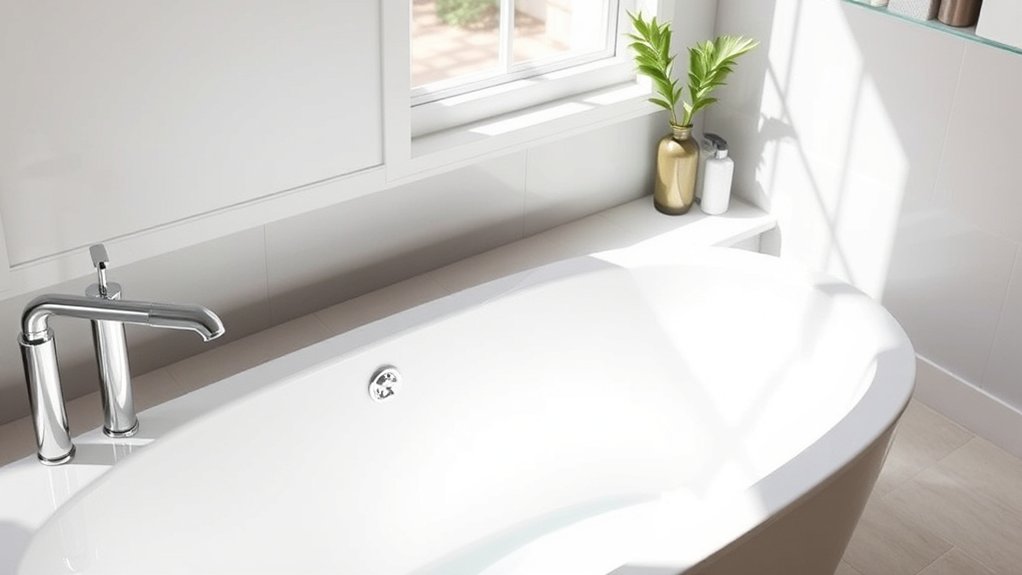
When considering the lifespan of acrylic bathtubs, you’ll find they typically last between 10 to 15 years with proper care. Many durability myths and lifespan myths exaggerate acrylic’s weaknesses, but with correct maintenance, it remains a reliable choice.
To maximize lifespan, you should:
- Clean regularly with non-abrasive, pH-neutral cleaners to prevent surface damage.
- Avoid harsh chemicals and sharp tools which can scratch or dull the finish.
- Address minor cracks or chips promptly with acrylic repair kits to prevent water infiltration.
Fiberglass Bathtubs: Pros and Cons for Durability
While acrylic bathtubs offer a balance of durability and ease of maintenance, fiberglass bathtubs present a different set of attributes that affect their longevity. Fiberglass tubs benefit from quick installation due to their lightweight construction, saving you time during setup.
However, their surface is more prone to scratches and cracks compared to other materials. To maintain durability, you’ll need frequent sealing to prevent moisture infiltration, which can degrade the underlying structure over time.
Although affordable and easy to repair with resin kits, fiberglass tubs typically have a shorter lifespan, often lasting 10–15 years with proper care. If you prioritize initial cost and installation speed, fiberglass is suitable, but be prepared for ongoing maintenance to prolong its service life.
Enamel-Coated Steel Tubs: Durability and Care
How does an enamel-coated steel bathtub stand up to daily use and wear? You’ll find it remarkably durable due to its robust steel base paired with a hard porcelain enamel finish. This combination resists chipping and scratching better than fiberglass, making it a reliable choice during home remodeling.
To maintain its longevity, consider these key care tips:
- Avoid dropping heavy objects to prevent enamel cracks.
- Use non-abrasive cleaners to preserve the glossy finish.
- Keep bathroom storage organized to minimize accidental damage.
Its dense steel core also provides excellent heat retention, enhancing comfort. While it’s heavier and less flexible than acrylic, its durability and ease of cleaning make it a practical option if you want a long-lasting bathtub in your bathroom remodeling project.
Solid Surface Bathtubs as a Durable Modern Choice
You’ll appreciate that solid surface bathtubs combine natural minerals with resins to create a robust, non-porous material. This composition offers excellent resistance to scratches, stains, and daily wear, ensuring long-term durability.
Plus, their smooth surface simplifies maintenance, helping your tub stay pristine for years.
Material Composition Benefits
What makes solid surface bathtubs a standout choice in durability is their unique material composition. Unlike traditional cast iron, which boasts impressive durability and excellent heat retention, solid surface materials combine resin and natural minerals to optimize performance.
Here’s what you need to know:
- Structural Integrity: The composite matrix offers strength comparable to cast iron but with reduced weight, simplifying installation.
- Thermal Performance: Solid surface retains heat efficiently, ensuring your bathwater stays warm longer without the cold shock typical of acrylic tubs.
- Customizability: The homogeneous material allows for seamless repairs and reshaping without compromising durability, unlike layered surfaces.
Resistance to Wear
Why does resistance to wear matter when choosing a bathtub? You want a tub that withstands daily use without showing damage. Solid surface bathtubs excel here due to stringent durability testing and quality material sourcing.
These tubs resist scratches, stains, and abrasions better than many alternatives, ensuring lasting performance.
| Property | Solid Surface Bathtub | Traditional Materials |
|---|---|---|
| Scratch Resistance | High | Medium to Low |
| Stain Resistance | Excellent | Moderate |
| Impact Resistance | Strong | Variable |
The manufacturing process includes rigorous durability testing to confirm that sourced materials maintain integrity under stress. This ensures your bathtub stays resilient over time, making solid surface tubs a modern, durable choice.
Maintenance and Longevity
Building on their superior resistance to wear, solid surface bathtubs also offer streamlined maintenance and extended longevity. You’ll find that durability myths surrounding these tubs often overstate complex upkeep needs. In reality, simple maintenance routines preserve their integrity effectively.
To maximize lifespan, follow these key steps:
- Clean regularly with non-abrasive, pH-neutral cleaners to prevent surface degradation.
- Avoid harsh chemicals and abrasive tools that can cause scratches or dullness.
- Address minor scratches promptly using manufacturer-recommended repair kits to maintain a smooth finish.
How Installation and Daily Use Impact Bathtub Longevity
Although a bathtub’s material quality is essential, its longevity heavily depends on proper installation and consistent daily care. You must address installation challenges such as securing the tub firmly and ensuring correct plumbing connections to prevent leaks and structural damage.
Bathroom layout constraints can complicate installation, requiring precise measurements and adjustments to avoid undue stress on the bathtub’s edges or base. During daily use, avoid harsh chemicals and abrasive cleaning tools that degrade finishes and weaken materials over time.
Additionally, controlling water temperature and minimizing exposure to heavy impacts preserve the tub’s integrity. By navigating installation complexities carefully and adopting mindful daily habits, you can significantly extend your bathtub’s functional lifespan, maintaining both its appearance and structural soundness.
Signs Your Bathtub Is Wearing Out and How to Extend Its Life
How can you tell when your bathtub is starting to wear out? Identifying signs early helps you maintain its durability and embrace new trends that might extend its life. Look for these indicators:
- Surface degradation: Cracks, chips, or persistent stains signal weakening material, common in the oldest baths.
- Water retention issues: Slow drainage or pooling water suggests worn seals or damaged plumbing connections.
- Structural instability: Noticeable creaking or wobbling indicates compromised support beneath the tub.
To extend your bathtub’s lifespan, regularly clean with non-abrasive products, reseal joints as needed, and consider refinishing surfaces instead of full replacement. Staying informed about new trends in materials and coatings can also help you upgrade selectively, preserving function without sacrificing style.
Frequently Asked Questions
How Much Does a Durable Bathtub Typically Cost?
You’ll typically pay between $600 and $2,500 for bathtubs made from long lasting materials like cast iron or acrylic.
Pricing trends show that durability often increases upfront cost but reduces long-term maintenance expenses.
Can Bathtub Durability Affect Home Resale Value?
Yes, bathtub durability impacts resale value markedly. When you choose a long-lasting, high-quality tub, it reduces maintenance concerns for buyers, enhancing your home’s appeal and justifying a higher resale price through perceived quality and reliability.
Are There Eco-Friendly Durable Bathtub Options?
Imagine choosing a recycled stone resin tub, an eco-friendly, durable option. You’ll find price-conscious buyers appreciate its longevity, despite minor durability trade-offs compared to cast iron, balancing sustainability with long-term value effectively.
What Styles of Bathtubs Are Most Durable?
You’ll find freestanding and alcove bathtubs made from durable materials like cast iron or solid surface offer longevity. Follow maintenance tips like regular cleaning and avoiding harsh chemicals to preserve their strength and appearance effectively.
How Do Warranties Vary for Different Bathtub Materials?
Warranties dance to material performance’s tune. Cast iron boasts decades, acrylic offers moderate coverage, while fiberglass warranties are shorter.
You’ll find warranty differences reflect durability, so choose wisely based on how long you expect your bathtub to last.
Conclusion
When you choose a cast iron bathtub, you’re choosing unmatched durability and heat retention that outlasts other materials. Its dense composition and enamel coating resist wear, chipping, and corrosion—coinciding perfectly with your need for longevity and strength.
While acrylic and fiberglass offer ease, they don’t match cast iron’s decades-long performance. Proper installation and careful care coincide with its robust nature, ensuring your bathtub remains reliable, functional, and beautiful for years to come.
For those seeking the type of bathtub that lasts the longest, cast iron stands out as the superior choice.