Are Shower Niches Hard to Clean
You might find shower niches hard to clean compared to flat tile surfaces because their recessed design tends to trap moisture and soap scum in corners and grout lines. This buildup can be more stubborn and requires extra attention.
Limited access makes thorough scrubbing more difficult, often requiring specific tools and techniques. Small brushes or specialized cleaning solutions may be needed to reach tight spots effectively.
Understanding these challenges and how they differ from regular tile maintenance can help you keep your shower niches in better condition over time. Regular cleaning and proper ventilation are key to preventing mold and mildew buildup.
Key Takeaways
- Shower niches trap moisture and soap residue, making them prone to soap scum, mold, and mildew buildup.
- Tight corners and recessed design limit access, complicating thorough cleaning and drying.
- Glass and decorative tiles in niches require gentle cleaning to avoid scratches while maintaining shine.
- Regular wiping, proper ventilation, and mold-resistant cleaners are essential to prevent mildew growth.
- Choosing non-porous materials and simpler niche designs can significantly ease cleaning and maintenance efforts.
Do Shower Niches Take More Work to Clean?
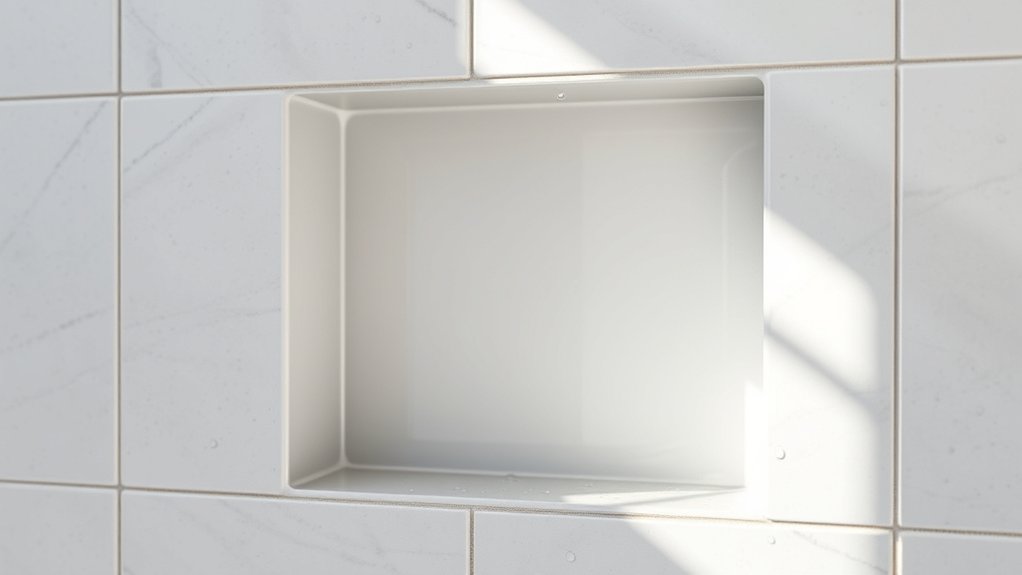
How much extra effort do shower niches require when it comes to cleaning? Generally, shower niches demand a bit more attention due to their recessed design, which can accumulate soap scum and water spots more easily.
When you clean, you might notice increased cleaning noise, especially if you’re scrubbing glass tiles that line the niche; the sound of your brush or sponge against glass can be more pronounced than on standard wall tiles. Glass tiles, while visually appealing, need gentle yet thorough cleaning to avoid scratches and maintain their shine.
You’ll find that niches often require careful, regular wiping to prevent buildup in corners and grout lines. Overall, while they add some cleaning steps, the extra work is manageable with consistent care.
How Cleaning Shower Niches Differs From Regular Tiles
Why do shower niches require a different cleaning approach than regular tiles? Unlike flat tile surfaces, niches have recessed spaces that trap moisture and soap residue, increasing maintenance challenges versus aesthetics.
Shower niches trap moisture and soap residue differently than flat tiles, requiring a specialized cleaning approach.
When cleaning niches, you need to consider:
- Access: Tight corners and edges demand more precise tools and techniques than broad tile surfaces.
- Material sensitivity: Niches often use decorative materials requiring gentler cleaning agents compared to standard tile grout.
- Water flow: Limited drainage in niches means water and grime linger longer, needing more frequent attention.
These differences mean you can’t apply general tile cleaning tips versus niches interchangeably. Understanding these nuances helps you maintain both the functionality and appearance of your shower niche efficiently, balancing maintenance challenges with preserving its aesthetic appeal.
Cleaning Problems You’ll Face With Shower Niches
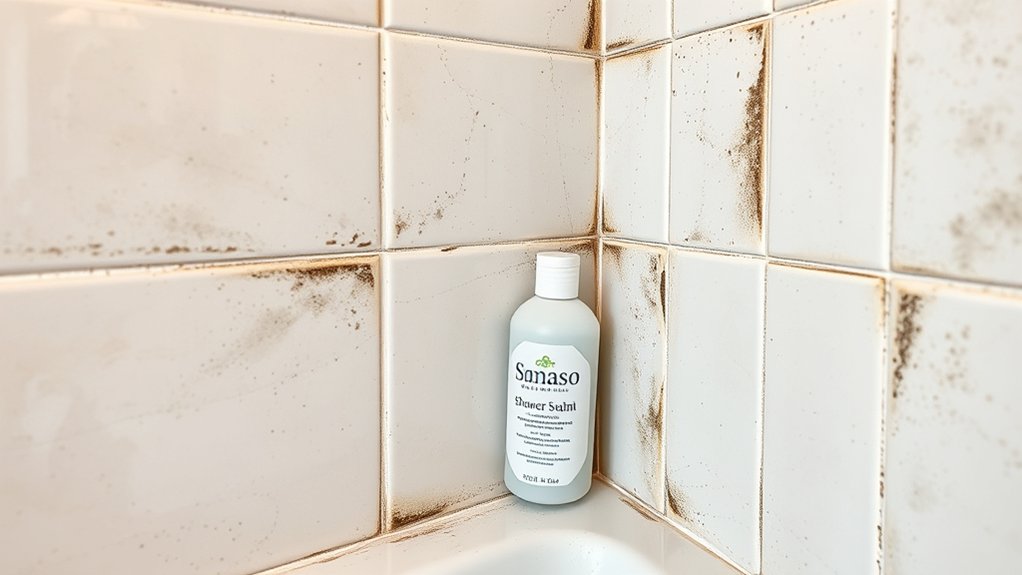
You’ll often deal with soap scum buildup in shower niches, which can be stubborn to remove. Mold and mildew tend to grow in the damp, enclosed space, creating hygiene concerns.
Plus, the hard-to-reach corners make thorough cleaning a real challenge.
Soap Scum Buildup
Where does that stubborn film on your shower niche come from? Soap scum and hard water buildup are the main culprits. Soap scum forms when soap interacts with minerals in water, leaving a white or grayish residue.
Hard water buildup results from mineral deposits, often calcium and magnesium, accumulating over time. Both create a tough layer that’s hard to wipe away.
You’ll notice soap scum buildup especially on:
- Niche corners and edges where water pools
- Tiles with textured surfaces that trap residue
- Areas exposed to frequent soap use and water spray
To keep your shower niche clean, you’ll need regular scrubbing and possibly stronger cleaners designed to break down mineral deposits and soap scum effectively. Ignoring these will make cleaning more difficult over time.
Mold and Mildew Growth
How does mold and mildew manage to thrive in your shower niche despite regular cleaning? The answer lies in the constant moisture and limited airflow within these recessed spaces. Mold controls become challenging because water tends to pool in corners and grout lines, creating an ideal environment for fungal growth.
Even with routine cleaning, mildew prevention requires attention to drying the niche thoroughly after each use. You’ll need to use mold-resistant sealants and clean with products designed to inhibit fungal spores. Without these steps, mold can quickly establish itself, leading to discoloration and potential health risks.
Effective mildew prevention means combining proper ventilation with cleaning strategies that target both visible mold and hidden spores lurking beneath the surface of your shower niche.
Hard-to-Reach Corners
Why do shower niches often pose such a cleaning challenge? The hard-to-reach corners within these recessed spaces make niche cleaning tricky. These tight angles collect soap scum, grime, and moisture, which are difficult to clear without proper tools or techniques.
When tackling hard-to-reach corners, consider:
- Using small brushes or angled scrubbers to access narrow crevices.
- Applying cleaning solutions that loosen buildup without excessive scrubbing.
- Ensuring thorough rinsing to prevent residue accumulation in corners.
These corners are prone to overlooked dirt because you can’t easily see or reach them. Regular attention and specialized tools are essential to maintain cleanliness and prevent mold or mildew growth in your shower niche. Addressing these spots effectively reduces long-term cleaning challenges.
Best Cleaning Tools for Shower Niches
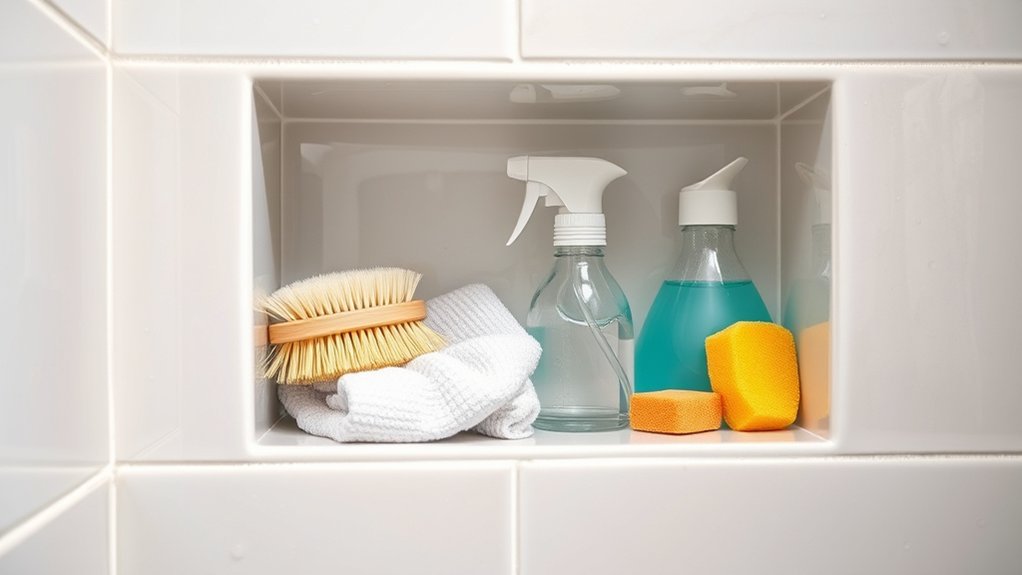
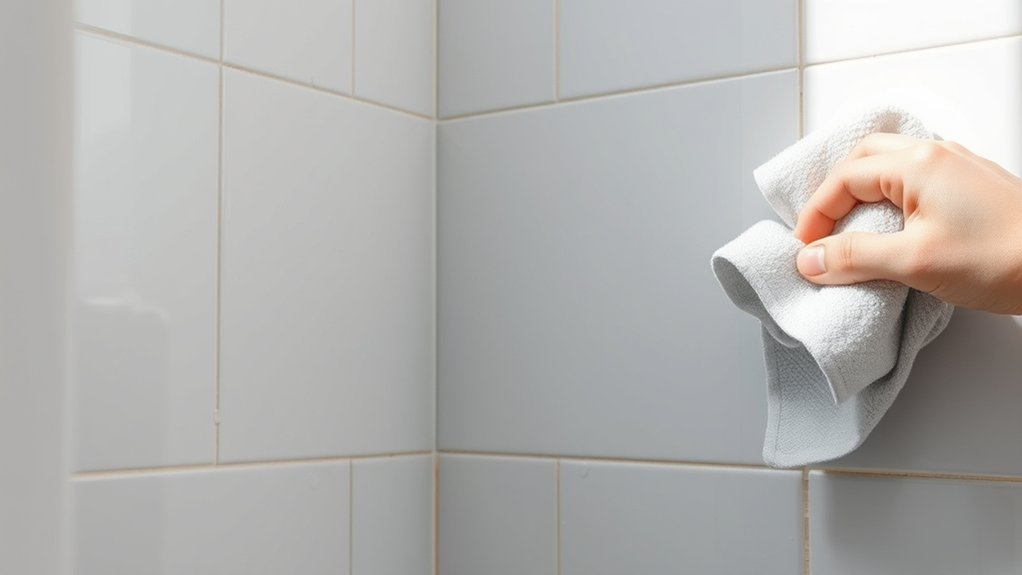
You’ll want to use soft-bristle brushes to reach corners without damaging surfaces. Microfiber cleaning cloths effectively remove residue and prevent streaks.
Pair these with mold-resistant cleaning solutions to keep your shower niche hygienic and buildup-free.
Soft-Bristle Brushes
What makes soft-bristle brushes ideal for cleaning shower niches is their ability to reach into corners and crevices without damaging tile or grout. When you use soft bristle brushes, you can effectively remove soap scum, mildew, and dirt buildup while preserving your niche’s surface integrity.
Proper niche ventilation complements this by reducing moisture, which helps prevent mold growth after cleaning.
Consider these benefits of soft-bristle brushes for your shower niche:
- Gentle on surfaces, preventing scratches on tile and grout
- Flexible enough to access hard-to-reach areas and edges
- Compatible with various cleaning solutions without degrading bristles
Microfiber Cleaning Cloths
While soft-bristle brushes excel at reaching corners and scrubbing away buildup, microfiber cleaning cloths offer a gentle yet effective way to wipe down shower niches without leaving streaks or lint behind.
You’ll appreciate that these cloths are made from eco friendly fabrics, which reduce environmental impact compared to traditional synthetic materials. Their dense fibers trap dirt, soap scum, and moisture efficiently, minimizing residue.
Microfiber’s natural stain resistance means you won’t need harsh chemicals to maintain cleanliness, preserving your shower niche’s surface integrity. Additionally, these cloths dry quickly, reducing the risk of mildew growth between uses.
Mold-Resistant Cleaning Solutions
How can you effectively prevent mold buildup in your shower niche? Using mold-resistant cleaning solutions is key to maintaining a clean, hygienic space. These solutions target moisture and inhibit mold growth, which is essential for grout maintenance and mold prevention.
To keep your shower niche mold-free, incorporate these tools:
- Silicone-based sealants: Create a waterproof barrier that reduces moisture penetration.
- Antifungal sprays: Specifically formulated to kill mold spores and prevent regrowth.
- pH-balanced cleaners: Gentle on grout but effective against mildew and soap scum.
Regular use of these products, combined with proper ventilation and drying, will help you maintain grout integrity and reduce mold risks. This approach ensures your shower niche stays cleaner and easier to manage over time.
Removing Soap Scum and Grime From Shower Niches
When tackling soap scum and grime in shower niches, you’ll want to focus on selecting the right cleaning agents and tools. Consider the niche materials, such as ceramic, stone, or tile, to avoid damage.
Use cleaning agitation techniques like scrubbing with a soft brush or sponge to effectively remove buildup without scratching surfaces. Avoid harsh abrasives on delicate materials.
A combination of mild detergents or vinegar solutions works well for most niches.
| Cleaning Agent | Recommended Tools |
|---|---|
| Mild detergent | Soft brush, sponge |
| White vinegar | Non-abrasive cloth |
| Commercial cleaner* | Nylon scrubber |
*Choose cleaners suitable for your niche materials. Regular cleaning with proper agitation minimizes soap scum accumulation and keeps niches pristine.
Tips to Prevent Mold and Mildew in Shower Niches
Why does mold and mildew often thrive in shower niches? These recessed spaces trap moisture and warmth, creating an ideal environment for growth. To prevent this, focus on cleaning frequency and material choices.
Shower niches trap moisture and warmth, making them perfect spots for mold and mildew growth.
Clean your niche regularly to avoid buildup, and opt for mold-resistant materials like ceramic or glass tiles.
Here are three tips to help you keep mold and mildew at bay:
- Increase cleaning frequency by wiping down niches weekly to remove soap residue and water.
- Choose non-porous, mold-resistant materials that don’t absorb moisture.
- Ensure proper ventilation in your bathroom to speed up drying times.
Daily Habits to Keep Shower Niches Spotless
What daily actions can you take to keep your shower niches spotless? Start by wiping down the niche after each use to prevent soap scum buildup. Adjust your cleaning frequency based on the niche material; porous surfaces like natural stone need gentler, more frequent cleaning, while ceramic or glass require less frequent attention.
Use a squeegee or microfiber cloth to remove water droplets, reducing mineral deposits.
Here’s a quick guide:
| Action | Frequency | Suitable Niche Material |
|---|---|---|
| Wipe Dry | Daily | All materials |
| Mild Cleaner | Weekly | Porous (stone, grout) |
| Squeegee | After Each Use | Glass, ceramic |
| Deep Clean | Monthly | All materials |
Consistent daily habits minimize buildup and preserve your niche’s appearance.
Should You Choose Shower Niches Based on Cleaning Ease?
How much should cleaning ease influence your choice of shower niches? It should play a significant role in your decision. Selecting niches that align with your cleaning schedule ensures maintenance doesn’t become a burden.
Consider the following factors when choosing:
Niche placement: Position niches where water drainage is optimal to reduce soap scum buildup and mold growth.
Size and shape: Opt for simpler designs with smooth surfaces that are easier to wipe down quickly.
Material choice: Use non-porous, water-resistant materials that withstand frequent cleaning without damage.
Frequently Asked Questions
What Materials Are Best for Building Shower Niches?
You should use stone tile or ceramic glass for durability, combined with epoxy grout to resist mold and stains. An acrylic liner adds waterproofing, making your shower niche sturdy, easy to clean, and long-lasting.
Can Shower Niches Increase Bathroom Resale Value?
Yes, shower niches are worth the investment because they enhance your bathroom’s functionality and aesthetic appeal. This can boost resale value by attracting buyers who appreciate built-in storage and a modern, organized shower space.
How Deep Should a Shower Niche Be?
Think of your shower niche as a treasure chest; its depth considerations should be around 3.5 to 4.5 inches to fit essentials snugly. Prioritize material durability to guarantee it withstands moisture and daily use effortlessly.
Are Shower Niches Waterproof or Do They Need Sealing?
Shower niches aren’t inherently waterproof, so you’ll need proper waterproofing. For effective shower niche maintenance, apply waterproof membranes and sealant to prevent water damage and mold.
This ensures long-lasting durability and protection within your shower space.
Can Shower Niches Be Installed in Existing Showers?
Yes, you can retrofit shower niches in existing showers, install proper waterproofing, and add shower lighting or niche lighting for functionality and ambiance.
Just plan carefully to avoid damaging tiles or plumbing behind walls.