Are Most Shower Heads Universal
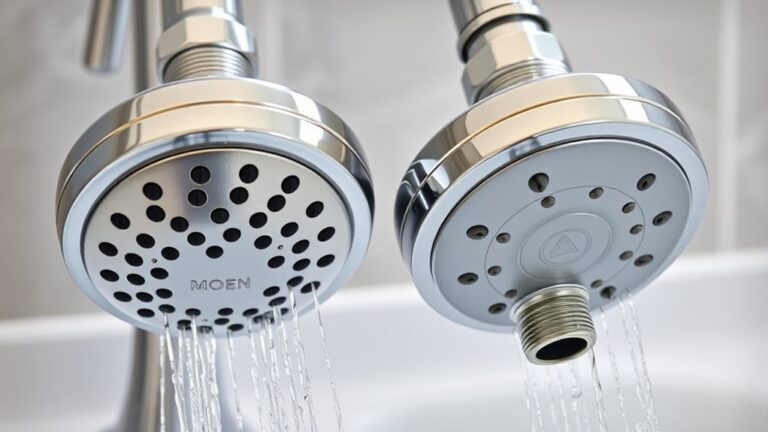
If you’re considering a new shower head, you might assume most shower heads are universal and will fit your existing setup without issues. While many do use a standard 1/2-inch connection, variations in thread type and plumbing standards can complicate compatibility.
Understanding these differences and knowing when adapters are necessary can save you time and frustration. Let’s explore what “universal” really means and how to ensure your new shower head fits perfectly.
Key Takeaways
- Most shower heads use standard 1/2-inch NPT threads, making them compatible with common residential plumbing without adapters.
- “Universal” means standard thread size and type compatibility, not that every shower head fits every plumbing setup.
- Adapters may be needed for older, commercial, or non-standard plumbing connections and thread types like BSP or slip-fit.
- Quick-connect and push-to-connect fittings offer easy installation but depend on the existing plumbing system’s specifications.
- Always verify thread size, pipe diameter, and water pressure to ensure shower head compatibility and optimal performance.
What Does “Universal” Mean for Shower Heads?
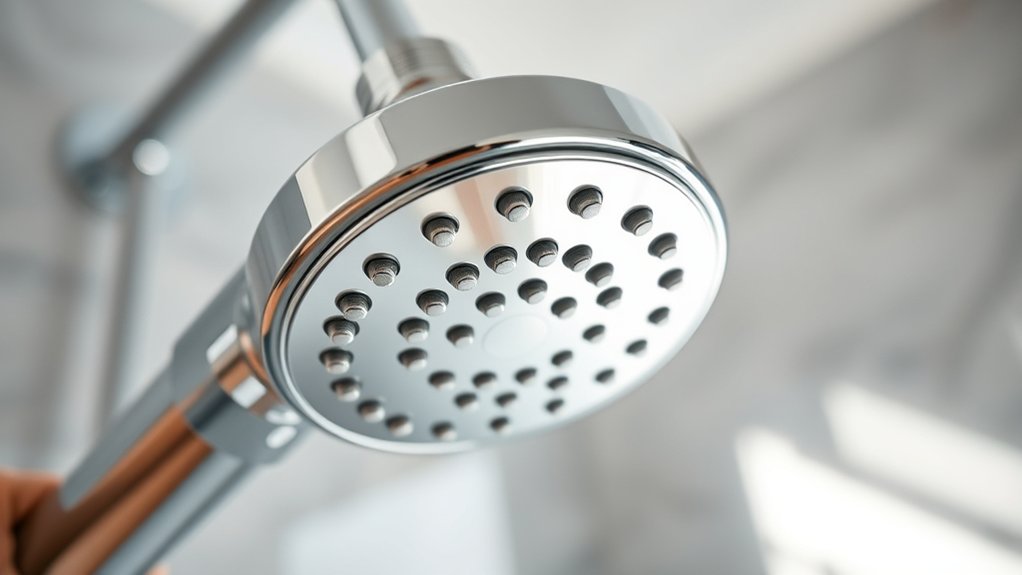
What exactly does “universal” mean when it comes to shower heads? In technical terms, it implies compatibility across multiple plumbing systems, allowing you to install a shower head without needing adapters or modifications.
However, unlike an unrelated topic with random pairing, shower head universality depends on standardized thread types and sizes, ensuring secure connections. You should understand that “universal” doesn’t mean every shower head fits every setup, but rather that most are designed to fit common fixtures.
This precision avoids confusion when selecting replacements or upgrades. So, when you hear “universal,” think standardized dimensions and threading, not random compatibility. This clarity helps you choose the right shower head confidently, avoiding potential mismatches or leaks during installation.
Which Shower Head Sizes and Thread Types Are Most Common?
You’ll find most shower heads use a standard 1/2-inch NPT thread size, ensuring broad compatibility with typical shower pipes. These common thread types simplify installation and replacement across different models.
Understanding these sizes helps you select shower heads that fit without additional adapters.
Standard Shower Head Sizes
Shower head sizes and thread types follow specific standards to guarantee compatibility across most plumbing fixtures. When selecting a shower head, knowing these standards ensures a proper fit and optimal performance, especially considering factors like city water pressure and rainfall aesthetics.
Here are the most common standard shower head sizes:
- 2.5-inch diameter Compact, ideal for low water pressure setups.
- 4-inch diameter Standard size balancing water flow and coverage.
- 6 to 8-inch diameter Larger models emphasizing rainfall aesthetics.
- 12-inch and above Ultra-wide, designed for luxurious, spa-like experiences.
Understanding these sizes helps you choose a shower head that matches your plumbing and desired water flow without compromising efficiency or style.
Common Thread Types
How do you guarantee your new shower head will fit seamlessly onto your existing plumbing? Understanding common thread types is key. Most shower heads, especially novel showerheads designed with eco trends in mind, use standard thread sizes to ensure compatibility.
The two predominant thread types are NPT (National Pipe Thread) and BSP (British Standard Pipe). Here’s a quick reference:
| Thread Type | Size (inches) | Application |
|---|---|---|
| NPT | 1/2 | US residential plumbing |
| BSP | 1/2 | UK and international |
| NPT | 3/4 | Commercial setups |
| BSP | 3/4 | Industrial plumbing |
| NPT | 1/8 | Specialty connections |
Knowing these thread types helps you select a shower head that fits without leaks or adapters.
Compatibility With Pipes
Which shower head sizes and thread types guarantee seamless compatibility with your existing plumbing system? Understanding common standards helps debunk compatibility myths and navigates universal limitations.
Most shower heads use one of two thread sizes: 1/2-inch NPT (National Pipe Thread) and occasionally 3/4-inch, though the latter is less common. Here’s what you should know:
1. 1/2-inch NPT
The industry standard thread size for residential shower heads, ensuring broad compatibility.
2. 3/4-inch NPT
Typically found in commercial or specialized plumbing setups.
3. Thread Pitch
Standardized at 14 threads per inch (TPI) for NPT, critical for secure fittings.
4. Metric Threads
Rare in the U.S., but present in some imported units, posing universal limitations.
Stick to these standards to avoid costly mismatches.
How to Check Your Plumbing for Shower Head Compatibility
Where do you start when determining if your plumbing can support a new shower head? Begin by inspecting the existing pipe size and connection type to ensure compatibility. Check for corrosion or damage that might affect installation.
Also, consider bathroom aesthetics and water saving features, which influence your choice.
| Parameter | What to Check |
|---|---|
| Pipe Diameter | Standard sizes: 1/2″ or 3/4″ |
| Connection Type | Threaded or slip-fit |
| Water Pressure | Ideal range: 45-60 psi |
| Pipe Condition | No leaks, corrosion, or wear |
Confirming these factors ensures your plumbing supports your new shower head’s functionality and design goals without modifications.
Can You Use Adapters to Fit Any Shower Head?
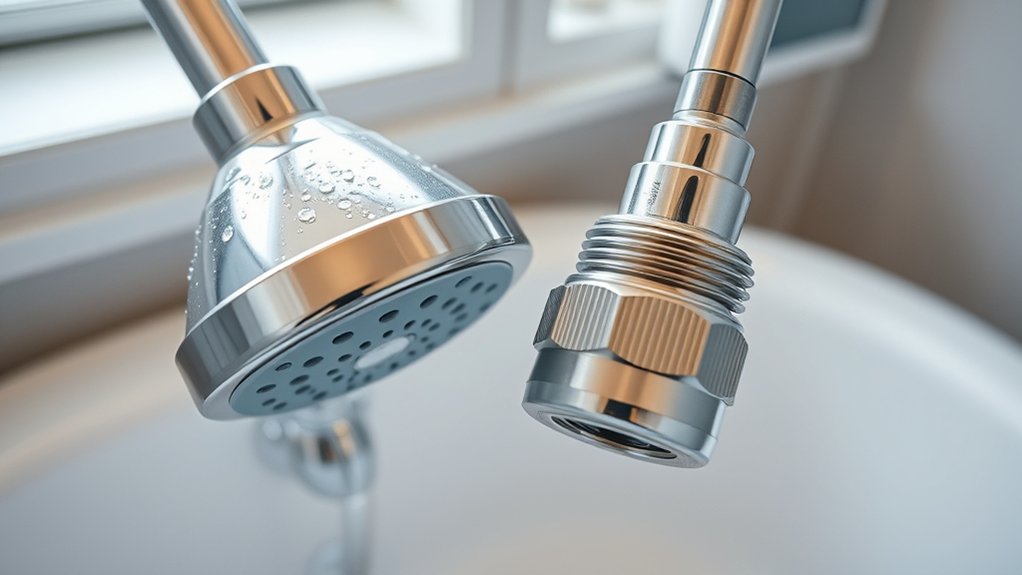
After verifying your plumbing’s pipe size and connection type, you might find that your new shower head doesn’t fit perfectly. Luckily, adapters can help bridge compatibility gaps, enhancing universal compatibility. When selecting an adapter, consider these key points:
Adapters can bridge compatibility gaps when your new shower head doesn’t fit your existing plumbing.
- Confirm the thread type and size of both your shower arm and the new shower head to ensure proper matching.
- Use adapters made from durable materials like brass or stainless steel to maintain longevity and prevent leaks.
- Check that the adapter doesn’t restrict water flow excessively, preserving optimal water pressure.
- Install Teflon tape on threaded connections to prevent leaks and ensure a tight seal.
When Don’t Universal Shower Heads Work in Your Bathroom?
Why might a universal shower head fail to fit or function properly in your bathroom? The main issue is thread mismatch, where the shower arm’s threading doesn’t align with the universal shower head’s standard threads. This universal vs incompatible conflict prevents secure installation or causes leaks.
Additionally, some older or custom plumbing systems use non-standard thread sizes or designs, making universal fittings unsuitable.
| Issue | Cause | Result |
|---|---|---|
| Thread mismatch | Non-standard threads | Leaks or no fit |
| Size discrepancy | Larger/smaller diameter | Loose or forced fitting |
| Connection shape | Uncommon threading type | Incompatibility |
| Material difference | Corroded or damaged | Poor seal or breakage |
| Adapter absence | No suitable adapter | No installation possible |
Understanding these helps you avoid purchasing incompatible shower heads.
What Types of Shower Head Connections Are There Beyond Standard Threads?
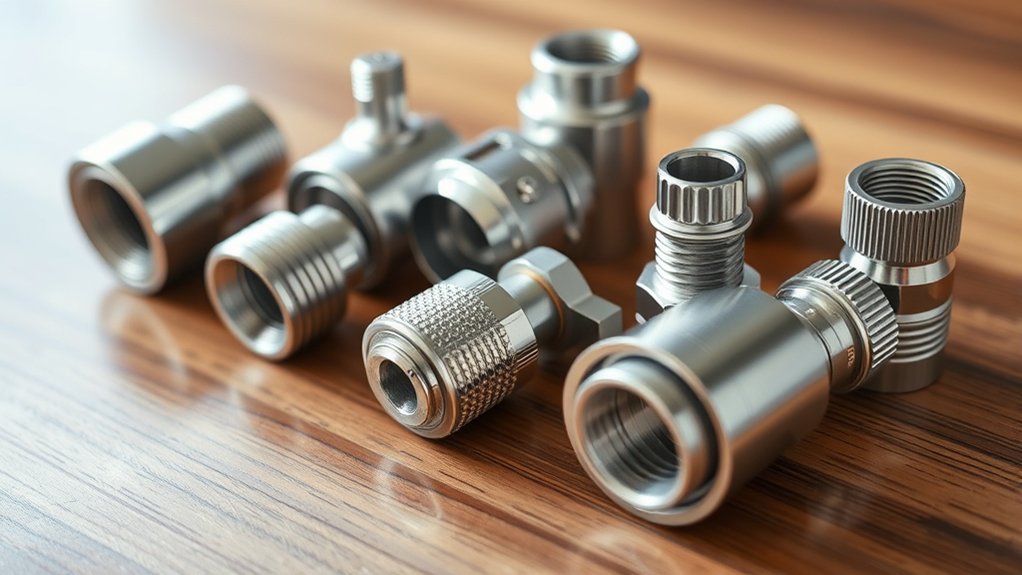
You might encounter shower heads that connect without standard threads, such as slip-on connections that rely on friction or seals for attachment.
Quick-connect fittings offer a tool-free way to install or remove shower heads with locking mechanisms. In some cases, custom adapter solutions are necessary to bridge compatibility gaps between different connection types.
Slip-On Connections Explained
How do slip-on connections differ from the standard threaded fittings commonly found on shower heads? Unlike threaded connections, slip-on connections slide directly over the shower arm or pipe without requiring screwing. This design helps you avoid thread mismatches, which can cause leaks or improper fit.
Slip-on connections rely on compression fittings or internal seals to create a watertight bond.
Key characteristics of slip-on connections include:
- Quick installation without rotating parts
- Reduced risk of cross-threading or damaged threads
- Compatibility with non-standard or worn pipes
- Dependence on additional sealing elements like O-rings or gaskets
Understanding slip-on connections expands your options beyond traditional threads, especially when dealing with older plumbing or custom setups.
Quick-Connect Fittings Overview
Where can you find shower head connections that go beyond the standard threaded and slip-on types? Quick-connect fittings offer an innovative alternative, enabling fast, tool-free installation. These systems use specially designed couplings that snap together, ensuring a secure seal suitable for various pipe materials like copper, PVC, or PEX.
Unlike traditional threads, quick-connects maintain consistent water pressure by minimizing leakage risks. They accommodate different pipe diameters and often incorporate built-in O-rings or gaskets for enhanced sealing. This design reduces installation time and simplifies maintenance without compromising durability.
However, compatibility depends on the specific plumbing setup, so you’ll need to verify that your existing pipe materials and water pressure range align with the quick-connect system’s specifications. Quick-connect fittings provide a modern, reliable connection beyond standard threading.
Custom Adapter Solutions
Beyond standard threaded connections, what options exist for adapting shower heads to unique plumbing setups? When standard fittings don’t match, custom adapters bridge the gap. You need to consider these specialized connection types:
- Compression fittings – use a compressive ring to seal pipe joints without threads.
- Push-to-connect adapters – enable quick installation with no tools required.
- Flange adapters – accommodate wall-mounted or concealed plumbing variations.
- Thread size converters – adapt between metric and imperial thread standards.
These solutions prevent unrelated topic tangents or irrelevant discussion that often arise when dealing with non-standard plumbing. By selecting the right custom adapter, you ensure compatibility and maintain water-tight seals, even with unconventional setups.
Understanding these options helps you avoid installation errors and reduces the need for plumbing modifications.
How to Choose the Right Shower Head for Your Setup
What factors determine the best shower head for your bathroom setup? First, consider the universal design compatibility. Most shower heads fit standard 1/2-inch plumbing connections, but verifying this ensures a seamless fit.
Start by confirming your shower head fits the standard 1/2-inch plumbing connection for easy installation.
Next, assess your water pressure. If it’s low, opt for a shower head engineered to maximize flow efficiency without sacrificing spray quality. High water pressure can handle multi-function heads offering varied spray patterns.
Also, evaluate your bathroom’s space and mounting options. Choose between fixed, handheld, or dual setups based on convenience and ergonomics.
Finally, factor in material durability and maintenance requirements to match your usage. By analyzing these elements, you’ll select a shower head that delivers optimal performance, fits your plumbing, and enhances your shower experience.
How to Install a New Shower Head Without Hassle
How do you install a new shower head without hassle? First, confirm shower compatibility by checking the thread size. Most use 1/2-inch NPT, but verify to avoid leaks. Here are four steps to guide you:
- Remove the old shower head using an adjustable wrench; protect surfaces with a cloth.
- Clean the shower arm threads thoroughly to remove old tape or debris.
- Apply plumber’s tape in a clockwise direction to guarantee a watertight seal.
- Screw on the new shower head by hand, then tighten slightly with a wrench without over-tightening.
Using these two word discussion ideas, “thread size” and “plumber’s tape,” guarantees you address key technical points. This precise approach guarantees a secure, leak-free installation every time.
Frequently Asked Questions
Do Universal Shower Heads Affect Water Pressure?
You’ll feel like you’re showering with a fire hose or a gentle mist. Universal compatibility can wildly vary water pressure impact.
Most universal shower heads balance pressure, but installation and plumbing conditions critically influence your actual water pressure experience.
Are Universal Shower Heads More Expensive Than Regular Ones?
You won’t find universal compatibility shower heads considerably more expensive than regular ones. Their pricing depends on design and features, but installation considerations remain straightforward. This makes them a cost-effective choice without extra financial burden.
Can Universal Shower Heads Help Save Water?
You can save up to 30% water with universal compatibility shower heads, thanks to advanced flow restrictors. Their water saving potential efficiently reduces consumption without sacrificing pressure, making them a precise, technical solution for eco-friendly bathroom upgrades.
Do Universal Shower Heads Require Special Maintenance?
Universal shower heads don’t require special maintenance beyond standard cleaning to prevent mineral buildup.
Thanks to their universal compatibility, you can easily maintain them using common methods without worrying about unique maintenance requirements or tools.
Are Universal Shower Heads Compatible With Handheld Units?
Of course, universal compatibility means your handheld unit won’t fit without adapters.
You’ll appreciate that handheld compatibility often relies on standard threading, but don’t expect every universal shower head to perfectly match without checking specs first.