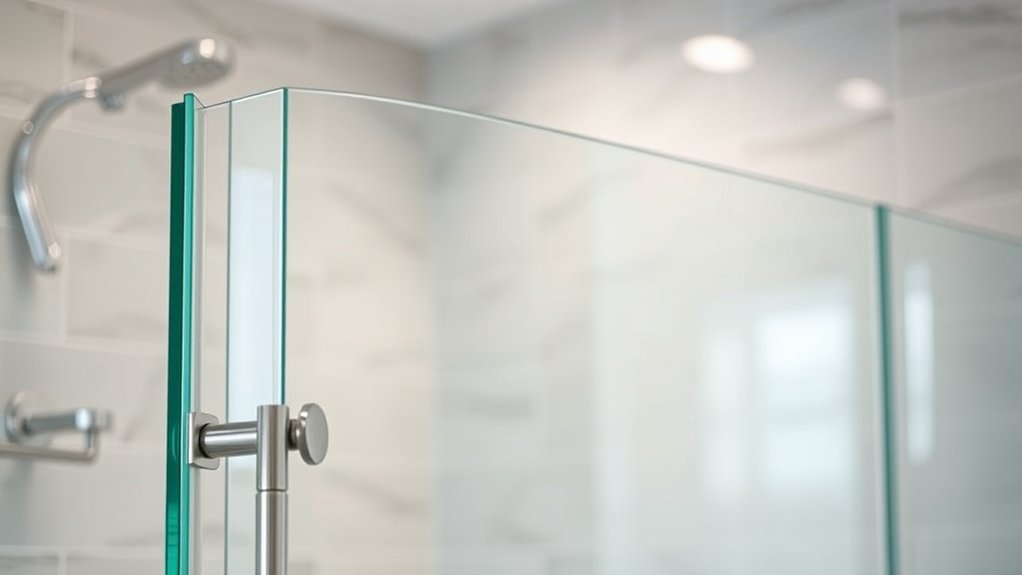
Are Frameless Shower Doors Safe
Are frameless shower doors safe? You might think they are as fragile as glass itself, but there’s more to their safety than meets the eye. When you choose the right materials and guarantee expert installation, these doors can be both sturdy and secure.
However, without careful attention to mounting and maintenance, problems like leaks or instability can arise. Let’s explore what makes frameless shower doors safe and when they might not be the best choice.
Key Takeaways
- Frameless shower doors use thick tempered or laminated glass that shatters into blunt pieces, minimizing injury risk.
- Proper professional installation ensures secure mounting, precise alignment, and effective water containment to prevent leaks and slips.
- High-quality waterproof seals and adhesives maintain a watertight barrier, reducing mold and slippery floor hazards.
- Regular maintenance and inspections help identify glass damage and hardware issues, enhancing long-term safety.
- Frameless doors offer safe, sleek design when installed and maintained correctly, avoiding common risks like water damage and instability.
Are Frameless Shower Doors Safe?
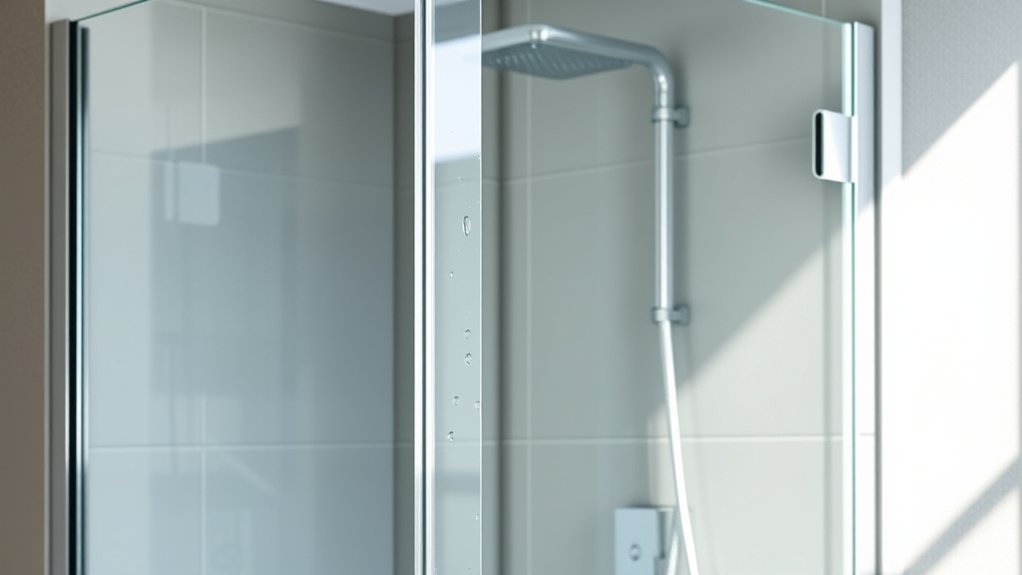
How safe are frameless shower doors, really? When you consider safe glazing standards, frameless shower doors are designed with tempered or laminated glass, which significantly reduces injury risk if broken. This safe glazing ensures the glass shatters into small, blunt pieces rather than sharp shards, protecting you from severe cuts.
You should also know that frameless doors, while sleek, rely heavily on precise installation to minimize water leakage. Proper seals and hinges are crucial to keep water contained, preventing slippery floors and potential mold issues.
While frameless doors might seem more fragile without a frame, their safety depends on the quality of glass and installation. So, if you choose a trusted installer and verify safe glazing certifications, frameless shower doors can be both stylish and secure.
Materials That Make Frameless Shower Doors Safe
Understanding the safety of frameless shower doors starts with the materials used in their construction. You want to look for tempered glass with an appropriate glass thickness, usually between 3/8 and 1/2 inch, to ensure durability and resistance to impact. This thickness provides strength without making the door excessively heavy or fragile.
Additionally, waterproofing adhesion plays a crucial role in safety by preventing water leakage that could cause slippery floors and potential accidents. High-quality silicone seals and adhesives maintain a watertight barrier, keeping water confined within the shower area.
When these materials are carefully selected and combined, your frameless shower door remains strong, stable, and safe to use, offering both aesthetic appeal and reliable protection against hazards.
Why Proper Installation Matters for Frameless Shower Door Safety
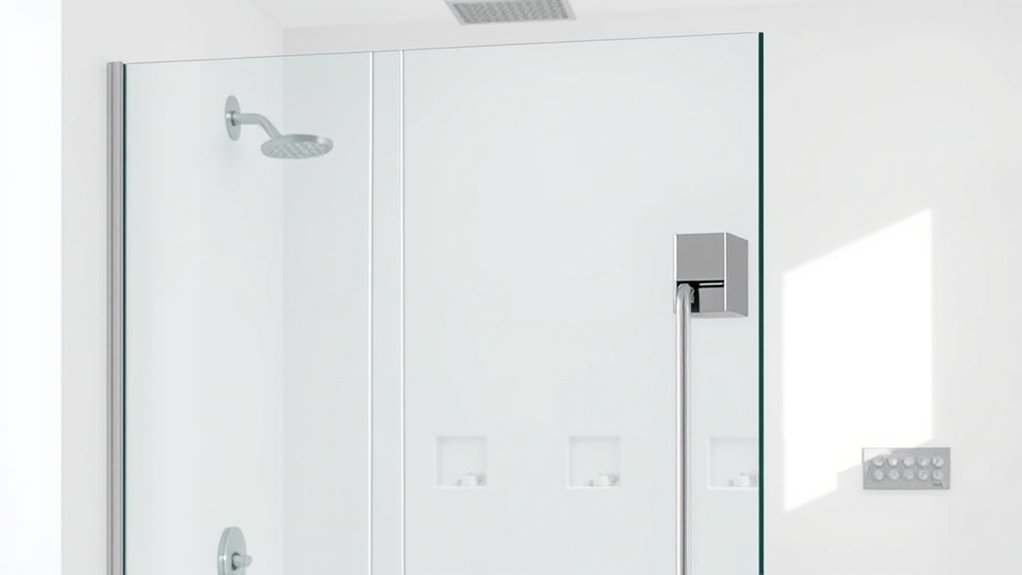
You need secure mounting techniques to ensure your frameless shower door stays stable and safe. Professional installation brings the expertise required to handle precise measurements and proper hardware placement.
This reduces the risk of accidents and guarantees your door functions smoothly over time.
Secure Mounting Techniques
Why does proper installation play such a pivotal role in the safety of frameless shower doors? Without secure mounting techniques, your door risks instability, which can lead to accidents. It’s crucial to focus on relevant details, avoiding unrelated topics or irrelevant discussion that distract from safety essentials.
To ensure secure mounting, you should:
- Use high-quality hinges anchored firmly into wall studs.
- Apply strong, corrosion-resistant screws and hardware.
- Seal all edges properly to prevent moisture damage undermining the structure.
- Align and level the door precisely to eliminate undue stress on glass panels.
Professional Installation Benefits
How can professional installation make a difference in the safety of your frameless shower door? Proper installation ensures secure mounting and precise alignment, which are essential for the durability and safety of your door.
Experts handle frictionless frames with care, preventing damage and ensuring smooth operation. They also help you choose glamorous options that fit your bathroom’s style without compromising safety.
| Benefit | Impact on Safety |
|---|---|
| Secure Mounting | Prevents door loosening or falling |
| Precise Alignment | Ensures smooth, safe door movement |
| Expert Handling | Protects delicate glass and frames |
Common Risks and Solutions for Frameless Shower Doors
Where do the main safety concerns with frameless shower doors lie? Unlike an unrelated topic like kitchen design, safety here focuses on glass integrity and installation precision. You’ll want to be aware of:
- Glass Breakage Tempered glass reduces risk but inspect regularly for chips.
- Improper Installation Even a small misalignment can cause door failure.
- Slippery Surfaces Water on glass and floor can lead to falls.
- Lack of Handles or Supports Increases chances of losing balance.
To solve these, ensure professional installation, use non-slip mats, and choose doors with sturdy handles. Regular maintenance checks and prompt repairs will also keep your frameless shower safe and functional.
Frameless vs. Framed Shower Door Safety
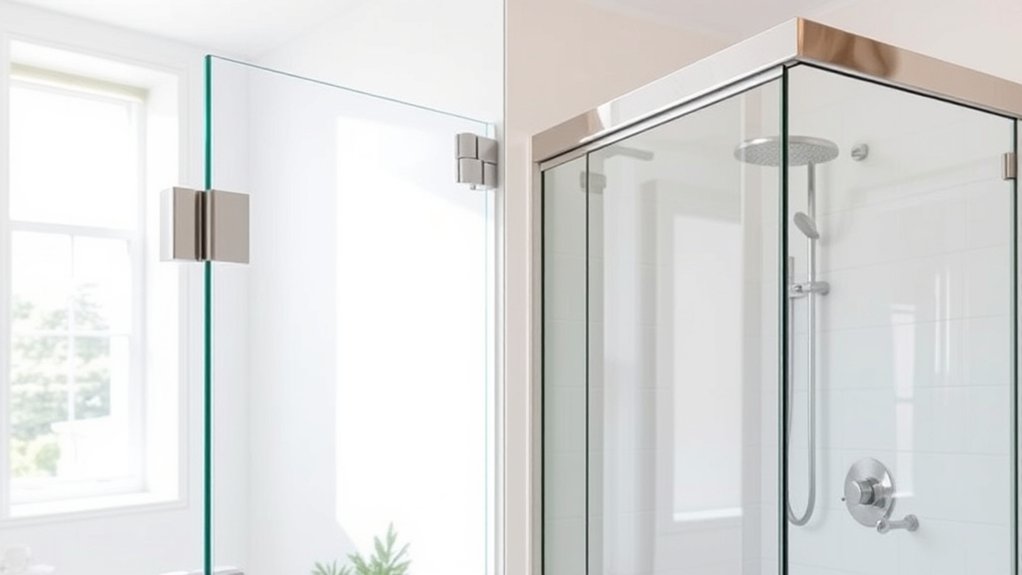
Understanding the safety differences between frameless and framed shower doors helps you make an informed choice for your bathroom. Frameless doors feature a frictionless design with minimal hardware, relying on thick tempered glass for strength. This design reduces pinch points but requires precise installation to handle thermal expansion, as glass can expand and contract with temperature changes.
Framed doors, by contrast, have metal frames that provide structural support and absorb some stress from thermal expansion, making them slightly more forgiving under fluctuating temperatures. However, frames can trap water and cause corrosion over time.
Ultimately, frameless doors offer sleek aesthetics with solid safety when properly installed, while framed doors provide additional reinforcement but may have maintenance concerns. You’ll want to weigh these factors based on your bathroom’s environment and your safety priorities.
Maintenance Tips and When to Avoid Frameless Shower Doors
You’ll want to clean frameless shower doors regularly with non-abrasive products to keep the glass clear and the hardware functioning smoothly.
Avoid using them in households with small children or elderly individuals who might struggle with the heavy, thick glass. Also, skip frameless doors if your bathroom layout doesn’t allow for proper door swing or secure installation.
Cleaning And Care
How often should you clean frameless shower doors to keep them looking pristine and functioning properly? Ideally, wipe the glass after each use and deep clean weekly. Pay attention to the glass thickness and safe hinges to avoid damage during cleaning.
Here’s how to care for your frameless shower doors:
- Use a soft cloth and mild, non-abrasive cleaner to protect the glass thickness.
- Dry hinges carefully to maintain safe hinges and prevent rust.
- Avoid harsh chemicals or scrubbing pads that can scratch or weaken the glass.
- Check seals and hinges regularly to ensure they’re secure and functioning properly.
Consistent care keeps your shower doors both safe and visually appealing.
Situations To Avoid
Regular cleaning and careful maintenance help keep frameless shower doors in great shape, but there are specific situations you should steer clear of to prevent damage or safety risks. Avoid using abrasive cleaners or tools, as they can scratch or weaken the glass.
Don’t ignore loose hinges or seals; addressing these promptly prevents accidents. Also, frameless shower doors aren’t ideal in homes with small children or elderly individuals prone to slipping, as the absence of a sturdy frame can increase injury risk.
Avoid unrelated topics like general bathroom decor or irrelevant discussion about framed doors when focusing on maintenance. Staying focused on practical care and safety will help you keep your frameless shower door secure and functional for years to come.
Frequently Asked Questions
How Much Do Frameless Shower Doors Typically Cost?
You’ll find frameless pricing usually ranges from $700 to $2,000, depending on customization options like glass thickness, hardware, and size. Choosing the right features guarantees your shower door fits both style and budget perfectly.
Can Frameless Shower Doors Be Customized in Size and Design?
You’ll find frameless shower doors offer excellent customization options and design flexibility, letting you tailor size, glass type, and hardware precisely to your space. This versatility ensures a perfect, personalized fit for your bathroom’s style and layout.
Are Frameless Shower Doors Compatible With All Bathroom Layouts?
You’ll find frameless door layouts highly adaptable, fitting most bathroom renovations. Their sleek design works well in tight or open spaces, but you’ll need precise measurements and professional advice to guarantee perfect alignment and functionality.
What Is the Average Lifespan of a Frameless Shower Door?
Think of your frameless shower door as a sturdy ship; with an average lifespan around 15-20 years, its corrosion resistance keeps it sailing strong through daily moisture. This ensures long-lasting function and style in your bathroom.
Do Frameless Shower Doors Increase Home Resale Value?
You’ll find frameless aesthetics boost your home’s appeal, making it more modern and spacious. This upgrade positively influences resale impact, attracting buyers who appreciate sleek design, so installing one often increases your home’s market value.