Tag: walk-in tub

  • What Is the Best Walk in Bathtub

    What Is the Best Walk in Bathtub

    Choosing the best walk-in bathtub means balancing safety with comfort, yet many models fall short in one or both areas. When searching for the best walk-in bathtub, you’ll want to focus on features like anti-slip surfaces, low-threshold entry, and grab bars without sacrificing ergonomic design and hydrotherapy options.

    Understanding these technical details can help you avoid costly mistakes and ensure your investment truly meets your needs. Let’s explore what makes a walk-in bathtub stand out.

    Key Takeaways

    • The best walk-in tubs feature slip-resistant flooring, low-threshold entry, and strategically placed grab bars for maximum safety.
    • Hydrotherapy jets, ergonomic seating, and heated surfaces enhance comfort and relaxation in top models.
    • Size and door design should match bathroom space, ensuring easy accessibility and effective water sealing.
    • Trusted brands like Kohler and Safe Step offer durable materials, certifications, and solid warranty coverage.
    • Professional installation by licensed plumbers with lighting upgrades ensures safety, proper drainage, and compliance with codes.

    Why Choose a Walk-In Bathtub for Your Bathroom?

    walk in tub boosts safety accessibility

    Why should you consider a walk-in bathtub for your bathroom? Primarily, it enhances safety by eliminating the need to step over a high tub wall, reducing slip risks. These tubs also improve accessibility, especially for individuals with mobility challenges.

    When installing a walk-in bathtub, you’ll likely need plumbing upgrades to accommodate specialized features like quick-drain systems and hydrotherapy jets. Proper bathroom lighting is essential to complement the new tub, ensuring visibility and reducing accident risks.

    Upgraded lighting fixtures can be integrated seamlessly with the tub’s design, enhancing both functionality and ambiance. Overall, choosing a walk-in bathtub means investing in a safer, more user-friendly bathing solution that aligns with modern plumbing standards and optimized bathroom lighting for an improved bathing experience.

    How to Choose the Right Walk-In Bathtub: Key Criteria

    When choosing a walk-in bathtub, prioritize essential safety features like slip-resistant flooring and secure grab bars to prevent falls.

    You’ll also need to consider the size of the tub to ensure it fits your bathroom space without compromising accessibility.

    Evaluating these factors carefully will help you select a model that meets both your safety needs and spatial constraints.

    Safety Features Importance

    How can you guarantee maximum safety while using a walk-in bathtub? Focus on critical safety features designed to reduce slips, falls, and other hazards. Choose tub materials with non-slip surfaces and sturdy construction for durability and stability.

    Adequate bathroom lighting is essential. Bright, evenly distributed light minimizes accidents by improving visibility.

    Safety Feature Importance
    Slip-Resistant Floor Prevents falls on wet surfaces
    Grab Bars Provides support entering/exiting tub
    Low Step-In Threshold Reduces tripping risk

    These features, combined with proper bathroom lighting and quality tub materials, enhance safety significantly. Prioritizing them ensures your walk-in bathtub is both secure and user-friendly, offering peace of mind every time you bathe.

    Size And Accessibility

    Where should you start when selecting the right size and accessibility features for your walk-in bathtub? Begin by measuring your bathroom space accurately to ensure the tub fits without obstructing movement or appliance maintenance access.

    Consider door width and entry height to accommodate mobility aids comfortably. Accessibility hinges on low-threshold entry, built-in grab bars, and slip-resistant floors, enhancing safety and ease of use.

    Also, evaluate interior colorways that contrast with bathroom flooring to improve visibility and reduce fall risk. Choose a model with ergonomic seating tailored to your body size for maximum comfort.

    Balancing these factors ensures your walk-in bathtub meets spatial constraints and functional needs efficiently, promoting long-term usability and safety in your bathing routine.

    Essential Features to Look for in Walk-In Bathtubs

    walk in tub safety features

    When evaluating walk-in bathtubs, you need to prioritize safety features like slip-resistant floors, secure grab bars, and easy-to-operate doors. Comfort elements such as ergonomic seating and adjustable water controls also play a critical role in usability.

    Accessibility options, including low step-in thresholds and adequate space for mobility aids, ensure the bathtub meets your specific needs.

    Safety Features Overview

    Why prioritize safety features in a walk-in bathtub? Because these elements significantly reduce the risk of slips, falls, and injuries, ensuring you can bathe securely. Key safety features include anti-slip flooring, low-threshold entry, and well-placed grab bars.

    Additionally, quick-drain systems help prevent prolonged standing on wet surfaces, minimizing hazards. It’s essential to understand maintenance myths that might lead you to overlook necessary upkeep, impacting safety over time.

    Pay close attention to warranty coverage, which often includes safety components and can protect you against defects. By focusing on these features, you ensure your walk-in bathtub not only meets safety standards but also offers peace of mind with reliable, long-lasting protection tailored to your needs.

    Don’t compromise on these critical safety details.

    Comfort And Accessibility

    How can you guarantee your walk-in bathtub provides both comfort and accessibility without sacrificing functionality? Focus on the latest comfort trends, such as ergonomic seating, adjustable headrests, and heated surfaces, which enhance user experience significantly.

    Prioritize accessibility design by ensuring low-threshold entry, wide doors with secure seals, and strategically placed grab bars for stability. Non-slip flooring and easy-to-reach controls further improve safety and ease of use.

    Additionally, consider tubs with built-in transfer benches or swiveling seats to accommodate limited mobility. By integrating these comfort trends with thoughtful accessibility design, your walk-in bathtub will offer a seamless blend of relaxation and practical usability, meeting both your comfort needs and mobility requirements efficiently.

    Walk-In Bathtub Door Designs: Pros and Cons

    Which walk-in bathtub door design best suits your needs depends on several key factors such as space, ease of use, and sealing effectiveness. Hinged doors, the most common type, offer a traditional swinging mechanism that provides a tight seal but requires clearance space outside the tub.

    Sliding doors save space by moving horizontally, ideal for compact bathrooms, though their seals can be prone to leaks if not well maintained. Some walk-in bathtubs feature outward-opening doors with low thresholds, improving accessibility but demanding more floor space.

    When choosing a walk-in bathtub door, consider the door’s material, locking mechanism, and gasket quality to ensure durability and watertight integrity. Your ideal door balances operational convenience with effective sealing to prevent water escape during use.

    Must-Have Safety Features in Walk-In Bathtubs

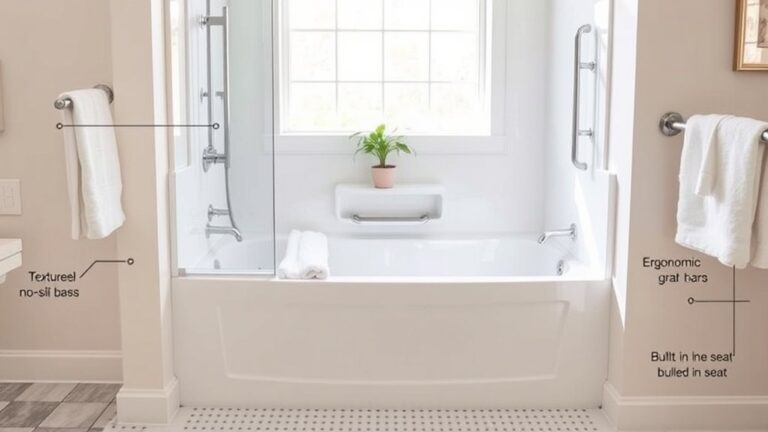
    slip resistant tub with grab bars

    Ensuring maximum safety in walk-in bathtubs is essential for preventing accidents and providing peace of mind during use. When planning bathroom remodeling or bathtub installation, prioritize these must-have safety features to enhance functionality and reduce risk.

    1. Slip-Resistant Flooring: Look for textured, slip-resistant surfaces inside the tub to minimize falls during entry, exit, and bathing.
    2. Grab Bars and Handrails: Strategically placed grab bars provide stability and support, especially important for users with limited mobility.
    3. Low-Threshold Entry: A low or zero-step threshold reduces tripping hazards, making it easier to enter and exit the tub safely.

    Integrating these features during bathtub installation ensures your remodel focuses on safety without compromising usability, delivering a secure bathing environment tailored to your needs.

    Hydrotherapy and Comfort Options for Walk-In Bathtubs

    Why settle for basic bathing when walk-in bathtubs can offer advanced hydrotherapy and comfort features designed to promote relaxation and therapeutic benefits? Modern walk-in tubs integrate hydrotherapy jets that provide targeted massage to soothe muscle tension and improve circulation.

    Don’t let hydrotherapy myths deter you; these systems are clinically designed for safety and efficacy. Features like adjustable temperature controls, air bubble systems, and ergonomic seating enhance your comfort, allowing extended soak times without fatigue.

    Understanding spa etiquette can help you maximize these benefits. Maintain clean water, avoid overuse, and follow recommended session durations to prevent skin irritation.

    Size and Shape Options to Fit Your Bathroom Space

    How do you select the ideal size and shape of a walk-in bathtub to fit your bathroom space efficiently? Start by measuring your available floor space precisely, accounting for door swings and plumbing. Consider how bathroom lighting and tile patterns will interact with the bathtub’s contours and placement to maintain aesthetic harmony.

    1. Compact models: Ideal for smaller bathrooms, these tubs maximize space without sacrificing functionality.
    2. Rectangular tubs: Offer a traditional shape that fits seamlessly against walls, optimizing layout and plumbing.
    3. Corner tubs: Utilize corner spaces effectively, enhancing flow and complementing tile patterns uniquely.

    Top Walk-In Bathtub Brands and How to Finance Your Purchase

    Which walk-in bathtub brand offers the best combination of quality, safety features, and customer support? Brands like Kohler, American Standard, and Safe Step excel in durable materials, slip-resistant surfaces, and compliance with plumbing codes. Their models often integrate adjustable seating and optimized bathroom lighting to enhance safety and comfort.

    When choosing a brand, verify certifications and warranty terms to ensure long-term reliability. Financing your purchase is straightforward through manufacturer programs or third-party lenders, often offering low-interest rates and flexible terms.

    Before installation, consult a licensed plumber to confirm adherence to local plumbing codes, ensuring proper water pressure and drainage. Additionally, coordinate bathroom lighting upgrades to improve visibility around the tub, reducing fall risks. This approach guarantees a safe, compliant, and well-supported walk-in bathtub investment.

    Frequently Asked Questions

    How Do I Maintain and Clean a Walk-In Bathtub?

    Stick to a regular cleaning schedule using non-abrasive cleaners to avoid damage. Rinse thoroughly after each use.

    Inspect and replace slip resistant mats regularly to maintain safety and prevent mold buildup in your walk-in bathtub.

    Can Walk-In Bathtubs Help With Arthritis Pain Relief?

    Like a gentle wave easing muscle tension, walk-in bathtubs provide arthritis relief through warm hydrotherapy. Their safety features, including non-slip surfaces and grab bars, ensure secure support while reducing joint pain and stiffness effectively.

    Are Walk-In Bathtubs Suitable for Pets?

    You’ll find walk-in bathtubs suitable for pets if you prioritize pets safety and ensure pet accessibility. Features like low thresholds and non-slip surfaces make them practical for bathing pets comfortably and securely.

    What Is the Typical Installation Time for a Walk-In Bathtub?

    You can expect a typical installation timeframe of 4 to 8 hours, depending on plumbing modifications and space constraints.

    Considerations include ensuring proper sealing, ventilation, and electrical work to meet safety and functionality standards.

    Do Walk-In Bathtubs Require Special Plumbing Modifications?

    If your existing plumbing lacks a suitable drain location, you’ll need walk in bathtub plumbing modifications. These can extend installation timing by a day or two, ensuring proper water flow and safety compliance during setup.

    Conclusion

    Choosing the best walk-in bathtub means balancing safety with comfort, and convenience with durability. While a poorly designed tub risks slips and frustration, the right one offers secure entry, ergonomic seating, and soothing hydrotherapy jets.

    Don’t sacrifice reliability for style—opt for trusted brands with solid warranties and professional installation. By carefully considering features and space, you transform your bathroom from a hazard into a haven.

    Every soak becomes safe, relaxing, and rejuvenating when you select the best walk-in bathtub tailored to your needs.